
Maragogipe Coffee is a natural mutant variety of Coffea arabica, distinguished from other Arabica varieties primarily by its unusually large beans, leaves, and internode spacing. Its full scientific designation is Coffea arabica L. var. maragogipe A. Fern. ex A. Frohner. The variety is also known by the alternate spelling Maragogype, and is commonly referred to in the trade as the “Elephant Bean” on account of its gigantic coffee bean size, which can be roughly twice that of standard Arabica beans. Maragogipe is classified within the Typica lineage of Arabica varieties.
Infobox: At a Glance
| Attribute | Detail |
| Common name | Maragogipe (also spelled Maragogype) |
| Nickname | Elephant Bean |
| Species | Coffea arabica |
| Scientific/variety name | Coffea arabica L. var. maragogipe A. Fern. ex A. Frohner |
| Genetic origin | Natural mutation of Typica |
| Place of discovery | Maragogipe, Bahia, Brazil |
| Year of discovery | 1870 |
| Plant stature | Tall |
| Leaf tip color | Bronze |
| Bean size | Very large |
| Yield potential | Low |
| Quality potential | Very good (at high altitude) |
| Disease resistance | Susceptible to coffee leaf rust, coffee berry disease, and nematodes |
| Notable offspring | Pacamara and Maracaturra |
| Main growing regions | Brazil, Mexico, Guatemala, Nicaragua, El Salvador, Colombia, Hawaii |
Etymology
The name “Maragogipe” is taken directly from the municipality of Maragogipe in the Recôncavo region of Bahia, Brazil, where the variety was first identified. The alternate spelling “Maragogype” is a phonetic variant that has become common in English-language trade and roasting literature, particularly in the United States and Central America. Both spellings refer to the same variety. The nickname “Elephant Bean” is a purely descriptive trade term referring to the size of the seed rather than any taxonomic distinction.
History
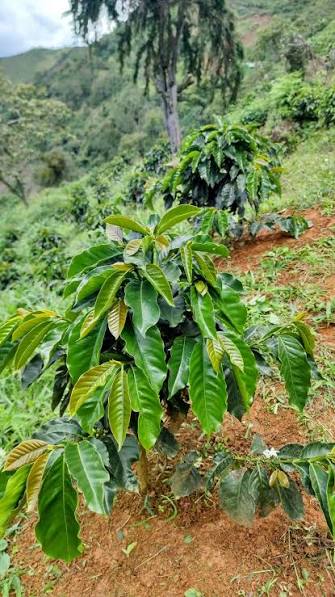
Maragogipe was first identified in 1870 near the town of Maragogipe in Bahia, in northeastern Brazil, where it was found growing among a field of Typica coffee plants. It was recognized as a stable, spontaneous mutation of Typica rather than a deliberately bred hybrid, controlled by a single dominant gene that affects the size of the whole plant — leaves, internodes, and cherries — not only the beans. Coffee had reached Brazil in the 18th century, with Typica seed stock originally introduced from French Guiana and planted in Pará before spreading to Bahia.
Following its discovery, Maragogipe was propagated from Brazil to other coffee-producing countries in Latin America over the following decades, including Mexico, Guatemala, Nicaragua, El Salvador, and Colombia. Up until the mid-20th century, it was commonly interplanted in small numbers within larger fields of other varieties across these regions.
From the 1950s onward, its low yields and vulnerability to disease led many farmers to replace it with higher-yielding varieties such as Mundo Novo, Caturra, and Bourbon. In 1958, the Salvadoran Institute for Coffee Research (ISIC) crossed Maragogipe with Pacas, a Bourbon mutation, to develop the Pacamara variety. A separate cross of Maragogipe with Caturra, developed in Nicaragua, produced the Maracaturra variety. Because of these crosses, Maragogipe is considered a parent lineage within the modern large-bean specialty coffee category.
Maragogipe Coffee Characteristics
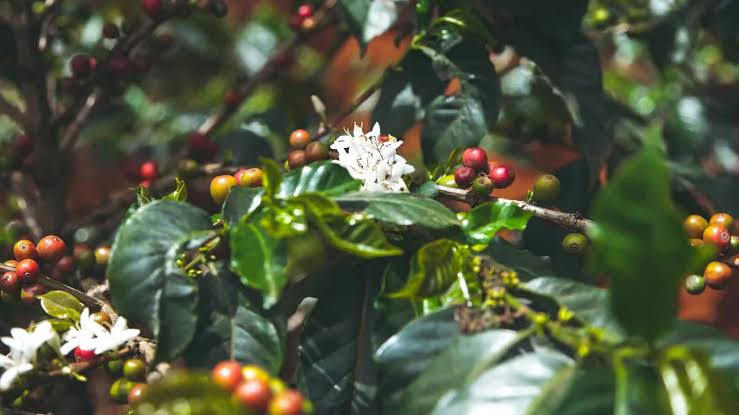
Plant and stem: Maragogipe plants are notably taller than standard Typica or Bourbon plants, with long internode spacing between nodes on the stem. This elongated structure gives the plant a lanky, “giant” appearance relative to other Arabica varieties.
Bark: As with other Arabica varieties, the bark of young Maragogipe stems is smooth and greenish-brown, becoming greyer and more textured as the plant matures.
Roots: Maragogipe develops the typical taproot-and-lateral-root system common to Coffea arabica, though its roots are reported to be more sensitive to nematode infestation than those of some other varieties. Cultivation begins with a coffee seedling raised in a nursery before transplanting to the field.
Leaves: The leaves are considerably larger than those of standard Arabica varieties, with bronze-colored leaf tips on new growth, a trait characteristic of the Typica lineage from which it descends. Leaf structure and size follow the same enlarged-plant pattern produced by the variety’s governing gene.
Flowers: Maragogipe produces white, fragrant coffee flowers typical of Coffea arabica, which self-pollinate to form the developing cherry.
Coffee cherries and beans: The most distinctive characteristic of the variety is the size of its cherries and beans. Maragogipe beans are commonly 30–40 percent larger than standard Arabica beans, and can reach roughly twice the size in some reports. The beans also have a comparatively porous structure, which affects how they absorb heat during roasting and how they express flavors from the soil in which they were grown.
Growing Conditions
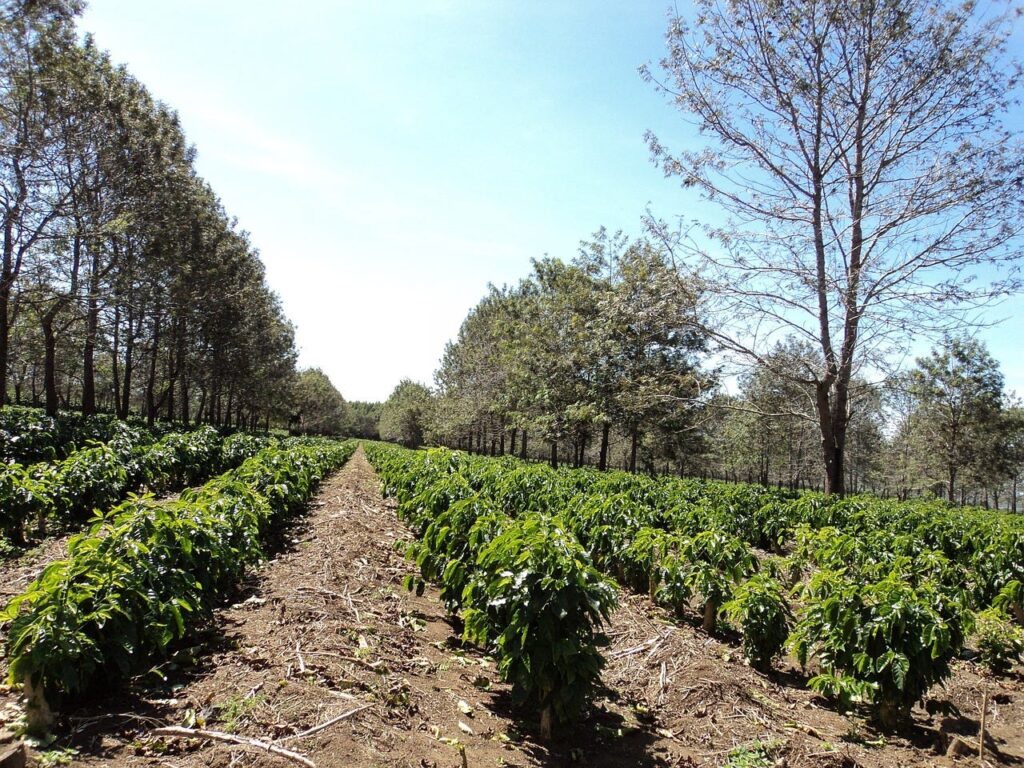
Maragogipe performs best in rich, well-drained volcanic soils, which provide the minerals that contribute to its flavor development. The variety is reported to favor high-altitude cultivation, generally at elevations that allow slower, cooler ripening of the cherry, which improves cup quality. It grows under warm, humid climatic conditions and benefits from partial shade, making it suited to agroforestry-style cultivation.
Because of its tall stature and wide leaf canopy, Maragogipe is typically planted with wider spacing than more compact modern varieties such as Catuai or Caturra, to accommodate its size and reduce competition for light and nutrients. The plant is slow to mature, generally requiring around five years to reach full cherry-bearing size, and requires careful fertilization and agronomic management due to its comparatively low natural vigor.
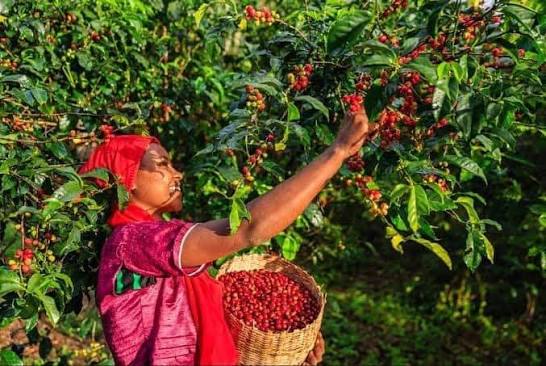
Harvesting is done by hand, using selective picking rather than strip picking or machine harvesting, owing to the small scale on which the variety is typically grown and the uneven ripening common among its large cherries. Harvested cherries are most often processed using the washed process, though natural process and honey process lots are also produced by some growers.
Diseases
Maragogipe is considered highly susceptible to several major coffee diseases and pests. It has low resistance to coffee leaf rust (Hemileia vastatrix), the disease historically referred to as “la roya,” which has been a significant factor in farmers replacing Maragogipe with rust-tolerant varieties since the mid-20th century. It is also susceptible to coffee berry disease (Colletotrichum kahawae) and to nematode infestation affecting its root system. These vulnerabilities, combined with its low yield potential, are the principal agronomic reasons the variety has never been cultivated at large commercial scale.
Maragogipe Coffee Global Production (as of 2026)
Maragogipe accounts for a very small share of overall global Arabica production and is not tracked as a discrete category in most national or international coffee statistics, since output is limited to smallholder and specialty-focused farms rather than large estates. Its main areas of contemporary cultivation are Brazil (particularly Bahia), the Chiapas region of Mexico, and the Huehuetenango and Antigua growing regions of Guatemala, with smaller volumes in Nicaragua, El Salvador, Colombia, Panama, and Hawaii.
Production in Brazil, its country of origin, has declined substantially since the 1950s as growers shifted to higher-yielding varieties such as Mundo Novo. Because of its low yield and demanding cultivation requirements, Maragogipe is grown almost exclusively for the specialty market, where its rarity and bean size command a price premium over standard Arabica lots.
Comparison with Similar Cultivars/Varieties
| Variety | Genetic Origin | Bean Size | Yield | Disease Resistance | Typical Regions |
| Maragogipe | Natural mutation of Typica | Very large | Low | Susceptible to rust, CBD, nematodes | Brazil, Mexico, Guatemala |
| Typica | Original Arabica landrace lineage | Standard | Low to moderate | Susceptible to rust | Widespread historically |
| Bourbon | Natural mutation, distinct from Typica | Standard | Moderate | Susceptible to rust | Brazil, East Africa, Central America |
| Pacamara | Hybrid of Pacas × Maragogipe | Very large | Moderate | Susceptible to rust | El Salvador, Guatemala, Honduras |
| Maracaturra | Hybrid of Maragogipe × Caturra | Large | Moderate to high | Susceptible to rust | Nicaragua, Brazil |
| Caturra | Compact mutation of Bourbon | Standard | High | Susceptible to rust | Colombia, Central America |
| Mundo Novo | Natural hybrid of Typica × Bourbon | Standard | High | Moderate | Brazil |
| SL28 | Kenyan selection | Standard | Moderate | Susceptible to rust | Kenya |
See Also
- Typica
- Bourbon
- Pacamara Coffee
- Caturra
- Mundo Novo Coffee
- Geisha Coffee
- Heirloom Coffee
- Ethiopian Landrace Coffee
- Sumatra Coffee
- Java Coffee
References
- World Coffee Research. “Maragogipe.” Arabica Coffee Variety Catalog. https://varieties.worldcoffeeresearch.org/varieties/maragogipe
- World Coffee Research. “Coffee Variety Catalog.” https://varieties.worldcoffeeresearch.org/arabica/varieties
- Wikipedia. “Maragogipe Coffee.” https://en.wikipedia.org/wiki/Maragogipe_Coffee
- Wikipedia. “Maracaturra Coffee.” https://en.wikipedia.org/wiki/Maracaturra_coffee
- Perfect Daily Grind. “What Is Maragogipe & How Big Is the Market for It in Specialty Coffee?” https://perfectdailygrind.com/2023/04/what-is-maragogipe-coffee/
- Ozone Coffee Roasters. “Maragogype Coffee Varietal: The Elephant Bean Explained.” https://ozonecoffee.co.uk/blogs/varietals/coffee-varietal-maragogype
- Volcano Coffee Works. “What Is Maragogype Coffee?” https://volcanocoffeeworks.com/blogs/journal/what-is-maragogype-coffee
- Seattle Coffee Roasters. “Maragogipe Coffee Beans: The Rare and Distinctive Brazilian Variety.” https://seattlecoffeeroasters.com/beans/types/maragogipe-coffee-beans/
- Podium Coffee Club. “Maragogipe: The Elephant Bean and What It Tells Us About Coffee Genetics.” https://podiumcoffeeclub.com/blogs/blog/maragogipe-coffee
- Roastmasters. “Nicaragua Massive Maragogype.” https://www.roastmasters.com/nicaragua-maragogype.html
- Ratiocraft. “Maragogipe: The Gentle Giant of the Coffee World.” https://ratiocraft.com/varieties/maragogipe