
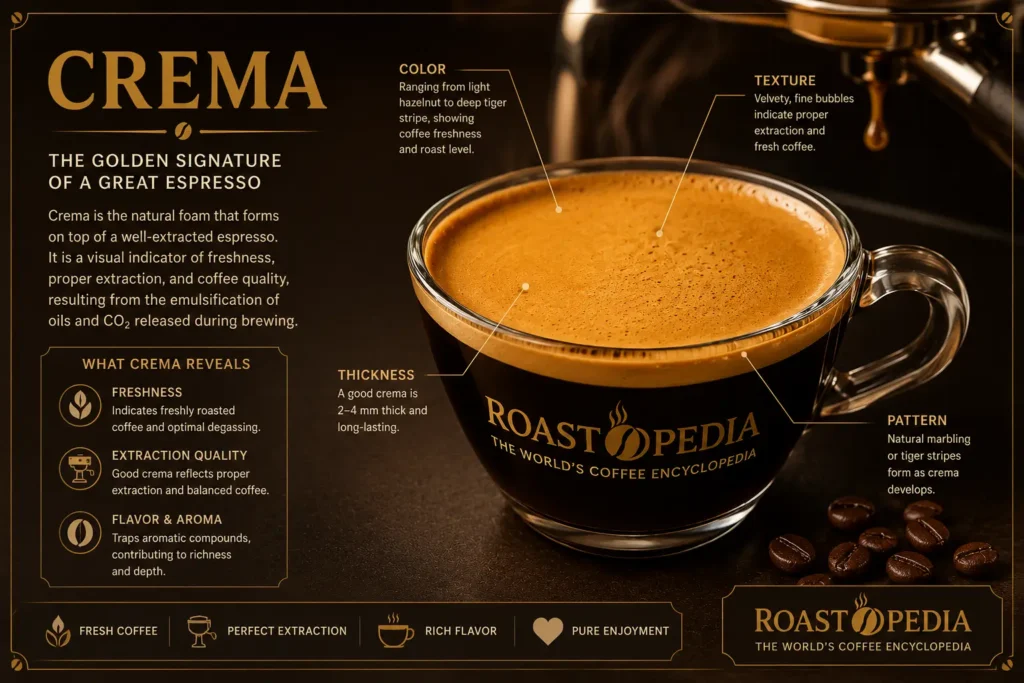
Crema is the dense, reddish-brown foam that rests atop a freshly extracted shot of espresso. This complex emulsion consists of carbon dioxide bubbles trapped within a suspension of coffee oils and microscopic solids. It serves as a visual and tactile indicator of the coffee’s freshness and the technical quality of the extraction.
Origin & History
The modern concept of crema emerged in 1948 with the invention of the lever-operated espresso machine by Achille Gaggia. Before this technological leap, coffee machines relied on steam pressure, which produced a drink more similar to modern drip coffee than espresso. Gaggia’s spring-piston mechanism introduced enough pressure to emulsify the oils and create the signature foam.
Italian consumers initially viewed this mysterious froth with suspicion because it differed so greatly from the clear coffee of the previous era. Gaggia responded by marketing the beverage as “caffè crema” to suggest that the coffee was so high in quality it produced its own natural cream. This brilliant branding strategy successfully transformed a technical byproduct into a symbol of premium luxury and craftsmanship.
Scientific understanding of the foam’s composition matured significantly as the specialty coffee industry adopted more rigorous laboratory analysis. Researchers identified that the presence of lipids and proteins is essential for stabilizing the bubble structure against rapid collapse. These discoveries have enabled modern manufacturers to design machines that maximize crema texture and longevity.
Etymology
The word crema traces directly to the Italian noun for cream, which refers to the thick, fatty layer found in dairy products. While espresso crema contains no actual milk products, the name perfectly captures the visual and tactile resemblance to heavy cream. This linguistic metaphor has been adopted globally as the standard technical term for the foam.
Lexical evolution of the term within the English language occurred alongside the rise of espresso bars in the middle of the twentieth century. It distinguishes the high-pressure foam of an espresso from the lighter bubbles found on a standard cup of black coffee. This distinction is vital for maintaining professional standards in the classification of diverse brewing methods.
Global markets use the term consistently to signify the presence of a correct high-pressure extraction. Alternative names like “foam” or “froth” are generally avoided because they fail to convey the specific chemical and physical properties of the emulsion. The word “crema” remains a universal marker of identity for the espresso-based beverage family.
Professional Evolution
Technical evaluation of crema has shifted from a simple binary check to a detailed analysis of color, persistence, and elasticity. Baristas now look for a “tiger striping” effect where dark and light marbling indicates a complex and balanced extraction. This visual scrutiny allows for a quick assessment of a shot’s potential flavor before it is even tasted.
Competitions have formalized the role of the foam by requiring judges to evaluate the quality and longevity of the crema during sensory rounds. Participants must demonstrate that their chosen roast and technique can produce a stable layer that persists for several minutes. Such high standards have driven roasters to experiment with specific blends designed to optimize the visual presentation.
Digital imaging and sensory sensors are beginning to provide objective data on crema quality in commercial environments. Some advanced espresso machines can now measure the thickness and color of the foam to alert the operator to deviations in performance. This integration of data ensures that the sensory experience remains consistent across different shifts and locations.
Chemical Composition
Carbon dioxide is the primary gas responsible for the formation of the bubbles during the high-pressure brewing cycle. This gas is a natural byproduct of the roasting process and is trapped within the cellular structure of the roasted bean. When pressurized water hits the grounds, the CO2 is forced out and emulsified into a stable foam.
Lipids and fatty acids provide the structural framework that prevents the gas bubbles from immediately bursting. These oils act as a surfactant, lowering the surface tension of the liquid and allowing the foam to remain stable for several minutes. The concentration of these oils is significantly higher in certain coffee varieties and roast profiles.
Microscopic fragments of coffee beans and insoluble fibers contribute to the opacity and dark color of the foam. These solids are suspended within the liquid walls of the bubbles, adding a gritty but pleasing weight to the mouthfeel. Balancing these solids against the liquid components is the secret to achieving a velvety and resilient texture.
Factors Affecting Production
Freshness of roasted coffee is the most significant variable in determining the volume and quality of the crema produced. Recently roasted beans contain a high concentration of carbon dioxide, which leads to a thick and voluminous foam layer. As the coffee ages and the gas escapes, the resulting crema becomes thin, watery, and short-lived.
Roast level influences the color and persistence of the foam through the chemical changes that occur during the heating process. Darker roasts tend to produce a more abundant crema due to the increased porosity of the bean and the higher oil content. Light roasts often yield a thinner, paler layer that highlights the bright acidity of the coffee.
Variety and species also play a major role, with Robusta coffee being famous for producing a particularly dense and long-lasting foam. Arabica coffee generally produces a more refined and aromatic crema that is thinner but more complex in its flavor contribution. Many traditional Italian espresso blends include a small percentage of Robusta specifically to enhance the crema’s appearance.
Sensory Requirements
Identifying the ideal mahogany or hazelnut color is the first step in the sensory evaluation of a professional espresso shot. If the crema is too light, it may indicate under-extraction or the use of stale coffee beans. A dark, blackish rim suggests over-extraction or a brewing temperature that was too high for the chosen roast.
Persistence is measured by how long the foam remains intact before it begins to break apart and reveal the liquid below. A high-quality crema should be able to support a spoonful of sugar for several seconds before the grains sink into the drink. This physical strength is a direct indicator of the chemical balance and technical precision of the brew.
Mouthfeel and texture are the primary ways that the foam influences the actual tasting experience of the espresso. The crema provides a creamy, syrupy weight that coats the tongue and allows the flavors to linger longer in the mouth. It also acts as a lid that traps the volatile aromatic compounds, intensifying the smell of the coffee.
Notable Facts
The presence of crema does not always guarantee that a coffee will taste good, as it can sometimes mask defects in the underlying liquid. Some experts even recommend stirring the foam back into the drink or skimming it off to achieve a cleaner flavor profile. This debate highlights the subjective and complex nature of the relationship between appearance and taste.
International Barista Championship rules once strictly penalized the absence of crema, but modern judging focuses more on the actual balance of the cup. While still important for presentation, the foam is now seen as just one component of a successful extraction. This change acknowledges that some exceptional coffees may naturally produce less foam than others.
Innovations in pressurized portafilters can create an artificial “faux-crema” by forcing air into the liquid through a small valve. This visual trick provides the appearance of a high-pressure extraction even when the grind or tamping is incorrect. Professionals generally avoid these devices because the resulting foam lacks the complex oils and solids of true crema.
Related Concepts
Tiger Striping refers to the beautiful marbling of dark and light brown colors that appears in a well-extracted espresso stream. This visual phenomenon is caused by the alternating release of different chemical compounds and oils during the brew. It is the most sought-after visual indicator of a successful and balanced extraction.
Degassing is the natural process where carbon dioxide slowly leaves the roasted bean over several weeks. Controlling this process is essential for ensuring that the coffee is at its peak performance for crema production. Most specialty roasters recommend a “resting period” of several days after roasting to allow the gas levels to stabilize.
Body is the term used to describe the physical weight and texture of the coffee on the tongue. Crema is a major contributor to the perceived body of an espresso, providing a richness that is not found in other brewing methods. A thick and oily foam is often equated with a “full-bodied” and satisfying coffee experience.