
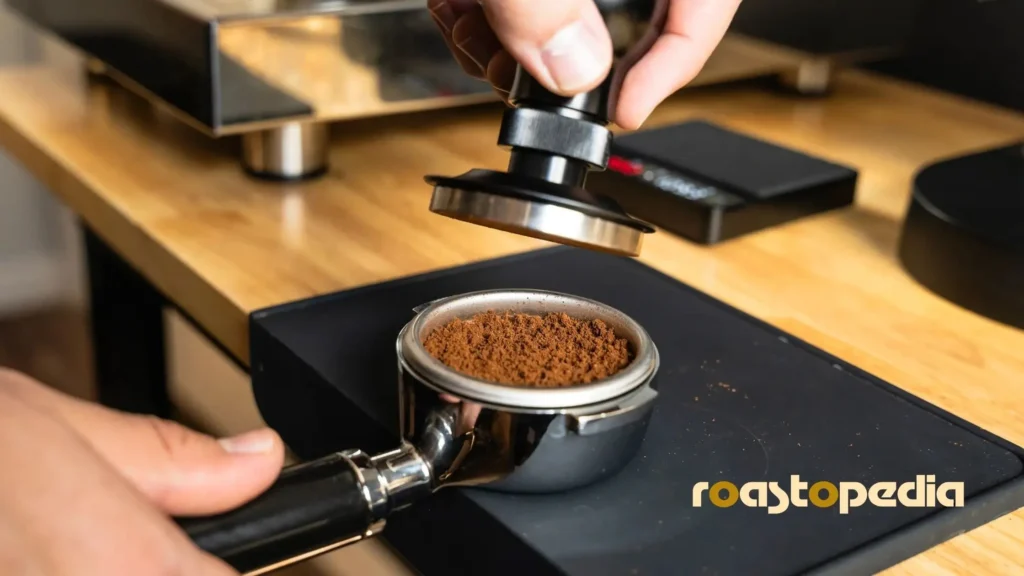
A tamper mat is a protective accessory used in the preparation of espresso to provide a stable and non-slip surface for the tamping process. This tool is typically made from heavy-duty silicone, rubber, or leather and serves as a buffer between the portafilter and the service counter. It prevents physical damage to the workstation while ensuring that the barista can apply vertical pressure with maximum safety and precision.
Origin & History
The early decades of the Italian espresso tradition did not feature specialized surfaces for the compression of coffee grounds. Operators often tamped directly on wooden or marble countertops, which led to significant wear and structural damage over time. These hard surfaces also increased the likelihood of the portafilter slipping, which could result in uneven extraction or minor injuries to the barista.
Specialized tamping mats gained prominence during the late twentieth century as the specialty coffee movement prioritized equipment stewardship and ergonomic safety. Manufacturers began producing thick rubber pads specifically designed to accommodate the spouts and handles of professional portafilters. This era transformed the tamping area from a messy and hazardous zone into an organized and protected workspace.
Recent innovations in material science have introduced high-grade, food-safe silicone as the preferred choice for commercial tamping mats. This material offers superior heat resistance and a high coefficient of friction, ensuring the mat remains anchored to the counter even under heavy use. Such advancements reflect a broader industry commitment to the long-term sustainability of both the cafe’s physical infrastructure and its human workforce.
Etymology
The name tamper mat is entirely descriptive, combining the tool being used with the physical object providing the surface. The word “tamper” refers to the weighted piston used for compression, while “mat” traces back to the Old English ‘matte,’ meaning a piece of coarse fabric or woven material. This functional name highlights the accessory’s primary role as a base for the tamping interaction.
Global usage of the term within the coffee industry is universal, though it is occasionally referred to as a “tamping pad” or “bench mat.” In some technical catalogs, it is listed as an “espresso workstation protector” to emphasize its broader role in managing the cleanliness and organization of the bar. Understanding these various designations is helpful for anyone designing or maintaining a professional coffee environment.
Technical nomenclature often differentiates between “flat mats” and “corner mats” based on their physical shape and intended placement. A corner mat features a specialized overhang that grips the edge of the service counter, providing additional stability and protecting the vertical face of the bench. This distinction is vital for ensuring that the chosen mat matches the specific dimensions and layout of the coffee station.
Professional Evolution
Technical standards for barista ergonomics have highlighted the importance of a well-positioned tamping mat for preventing long-term physical strain. Professionals are taught to align the mat with their shoulder and elbow to ensure a straight vertical force during compression. This focus on bodily alignment reduces the risk of repetitive strain injuries, which are common among high-volume coffee workers.
The rise of the specialty coffee movement has encouraged the development of “integrated” tamping stations that combine a mat with a holder for the tamper and distribution tools. These organized systems reduce clutter on the bar and provide a dedicated sensory zone for coffee preparation. Such specialization allows for a more efficient and aesthetically pleasing workflow that benefits both the barista and the guest.
Digital bar designs and high-end home setups have prioritized the visual quality of the tamping mat as a design element. Some boutique manufacturers offer mats made from handcrafted leather or custom-molded silicone in a variety of colors to match the cafe’s branding. This elevation of a simple utility item into a piece of professional equipment reflects the maturity and sophistication of the modern coffee market.
Technical Responsibilities
Maintaining the cleanliness of the tamping mat is a critical part of the daily closing routine in any professional environment. Coffee grounds and oils can accumulate on the surface, creating a sticky residue that can interfere with the levelness of the tamp. Most silicone mats are dishwasher-safe, allowing for a deep sanitization that removes any potential for bacterial growth or unpleasant odors.
Inspecting the mat for signs of thinning or physical degradation is a routine maintenance task that ensures continued counter protection. Over time, the constant pressure from the portafilter spouts can wear down the material, reducing its ability to absorb shock. Replacing a worn-out mat is an inexpensive way to prevent permanent and costly damage to the service counter.
Management of the “mat placement” ensures that the tamping area remains dry and free of excess water from the espresso machine. If moisture is allowed to collect under the mat, it can damage the underlying counter material, especially if it is made of wood or porous stone. Regularly lifting and drying the mat prevents this hidden form of property damage and maintains a hygienic workspace.
Design & Mechanics
Friction is the primary physical force that a tamping mat uses to provide a stable base for the espresso preparation. The underside of the mat is often textured or treated with a high-grip coating to prevent it from sliding across the counter during use. This stability is essential for ensuring that the barista can apply the thirty pounds of pressure required for a perfect extraction.
Shock absorption is achieved through the use of thick, resilient materials that dissipate the energy of the tamping impact. This prevents the force of the tamp from being transmitted directly into the service counter, which could otherwise lead to cracks or dents. A good tamping mat should feel firm enough to provide feedback but soft enough to protect the workstation’s infrastructure.
Recessed rings or indentations are often molded into the surface of the mat to provide a dedicated home for the tamper when it is not in use. This prevents the tamper from rolling off the counter or coming into contact with contaminated surfaces. These small design features contribute to a more organized and professional workflow that minimizes wasted motion and equipment wear.
Notable Facts
The corner tamping mat was specifically designed to help baristas who prefer to tamp with the portafilter spouts hanging over the edge of the bench. By providing a padded vertical lip, the mat protects the front edge of the counter from being scratched by the heavy metal of the portafilter. This design has become a standard feature in high-volume commercial cafes around the world.
Vegetable-tanned leather mats are a popular choice for high-end “slow bars” due to their natural beauty and their ability to develop a unique patina over time. While they require more careful maintenance than silicone, they offer a tactile and sensory experience that many enthusiasts find superior. These artisanal options highlight the intersection of traditional craftsmanship and modern coffee science.
International Barista Championship rules do not strictly mandate the use of a tamping mat, but almost all competitors use one to ensure a flawless and professional performance. The mat serves as a visual anchor for the “tamping zone,” helping the competitor stay organized under the pressure of the stage. This attention to workstation management is a key part of the technical score in global competitions.
Related Concepts
The portafilter is the primary tool that interacts with the tamping mat during the coffee preparation cycle. The weight and shape of the portafilter body determine how much shock absorption is required from the mat to protect the counter. Both tools must be in good condition to ensure a consistent and level tamping result.
Tamper is the weighted piston that is used on the mat to compress the coffee grounds into a puck. The mat provides a stable base that allows the tamper to function correctly and achieve a perfectly horizontal surface. Most professional baristas keep their tamper resting on the mat whenever it is not in their hand.
Bench Protection refers to the broader goal of maintaining the physical integrity of the coffee bar through the use of mats, trays, and splash guards. A high-quality tamping mat is the most important part of this strategy, as it bears the brunt of the most forceful interaction on the bar. Investing in good protection is a sign of a sustainable and professional coffee operation.