
Coffee leaf rust (Spanish: la roya; scientific name of the causal agent: Hemileia vastatrix) is the single most economically destructive foliar disease of Coffea Arabica worldwide. It is a fungal disease that attacks the leaves of coffee plants, reducing their capacity for photosynthesis, causing premature leaf drop, and — in severe outbreaks — killing entire trees or wiping out regional harvests.
Since its first scientific description in 1869, coffee leaf rust has reshaped the economic history of the Coffee Belt, driven the creation of Robusta as a commercial alternative to Arabica, and remains one of the central pressures behind modern coffee plant breeding, climate change, and coffee research.
Overview
| Common name | Coffee leaf rust, CLR, la roya, Devastating Emily |
| Causal agent | Hemileia vastatrix Berk. & Broome |
| Type of organism | Obligate biotrophic fungus (order Pucciniales, phylum Basidiomycota) |
| Primary hosts | Coffea arabica (highly susceptible); Coffea canephora (Robusta, generally more tolerant) |
| Plant part affected | Leaves (undersides), occasionally young stems |
| First described | 1869, Ceylon (now Sri Lanka) and East Africa |
| Discoverers | Miles Joseph Berkeley and Christopher Edmund Broome (formal description); George Thwaites (early identification in Ceylon) |
| Yield loss potential | Up to 35% in a single season; total crop failure possible in extreme, uncontrolled outbreaks |
| Distribution | Present in virtually every coffee-producing country except Hawaii |
Causal Agent and Taxonomy
Coffee leaf rust is caused by Hemileia vastatrix, a member of the fungal order Pucciniales (the “rust fungi”) within the phylum Basidiomycota. The species name vastatrix is Latin for “female devastator,” a name that reflects the severity of the damage the fungus inflicts on susceptible coffee plantations. The fungus is an obligate biotroph, meaning it can only grow, feed, and reproduce on living host tissue; it cannot be cultured indefinitely on artificial media the way many other plant pathogens can.
H. vastatrix is unusual among rust fungi for its very large genome (approximately 797 megabase pairs) relative to its comparatively limited outward genetic variation. Despite this, the species harbors substantial pathological diversity, with more than 50 documented physiological races, each capable of overcoming different combinations of resistance genes in coffee cultivars. This diversity is a central reason the disease has proven so difficult to control through resistant varieties alone, since new races can emerge that defeat resistance previously considered durable.
A related but far less economically important species, Hemileia coffeicola, also infects coffee but has never achieved the global distribution or destructive impact of H. vastatrix.
Host Range and Susceptibility
Hemileia vastatrix infects species within the genus Coffea, but susceptibility varies sharply between the two commercially dominant species:
- Coffea arabica (Arabica) — Highly susceptible. Nearly all traditional Arabica varieties (Typica, Bourbon, Caturra, and their descendants) carry little to no natural resistance, which is why Arabica-growing regions have historically suffered the most severe epidemics.
- Coffea canephora (Robusta) — Generally more tolerant or resistant, though not immune. Robusta’s relative resistance is one reason the species became commercially important after the Ceylon epidemic devastated Arabica plantations there.
- Wild and hybrid Coffea germplasm, including the naturally occurring interspecific hybrid known as Híbrido de Timor (a spontaneous Arabica–Robusta cross discovered in Timor), has provided important sources of durable resistance genes used in modern coffee breeding programs, such as the Colombian Variedad Colombia, released in 1982 after research beginning in 1970.
Symptoms and Part of the Plant Affected
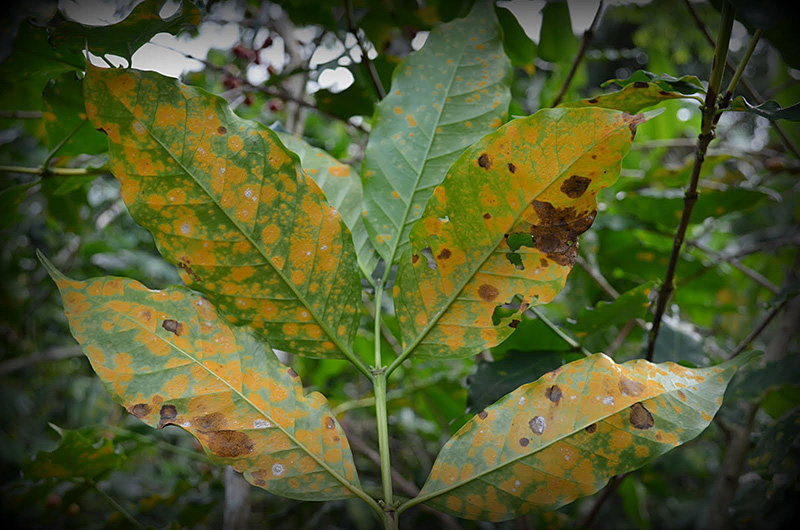
Coffee leaf rust attacks the leaves of the coffee plant, and specifically the underside (abaxial surface) of the leaf, though symptoms are visible from both sides.
- Initial symptoms: Small, pale-yellow, chlorotic (yellowing) spots appear on the upper leaf surface, often only a few millimeters wide.
- Development of uredinia: On the underside of the leaf, directly beneath the yellow spots, the fungus produces suprastomatal, bouquet-shaped clusters of spore-bearing structures called uredinia, which appear as powdery, orange-to-yellow pustules.
- Spore release: Each pustule can contain roughly 100–200 orange, dust-like spores called urediniospores, which are the primary agents of disease spread. Infection of a new leaf typically requires a minimum of 15–20 spores to germinate successfully.
- Progression and defoliation: As lesions enlarge and coalesce, the affected leaf tissue dies (necrosis), and severely infected leaves drop prematurely from the plant — a process known as defoliation.
- Whole-plant effects: Because the fungus destroys functional leaf area, the coffee plant’s capacity for photosynthesis collapses. This weakens the plant, reduces the energy available for cherry (fruit) development, and produces beans of lower weight, incomplete sugar development, and diminished flavor complexity even when some cherries do mature. Repeated, severe defoliation over successive seasons can kill the tree outright — an epidemiological pattern researchers describe as polyetic, since the impact of one year’s infection carries over and compounds in subsequent years.
Life Cycle and Spread
Hemileia vastatrix is described as a hemicyclic rust fungus, meaning it does not complete the full, complex multi-spore-stage life cycle typical of many rust fungi. Instead, its epidemiology is dominated almost entirely by the urediniospore (asexual) stage, which functions as the primary — and often only practically significant — source of new infections in the field.
The disease cycle depends heavily on environmental conditions:
- Moisture: Urediniospores require a film of liquid water on the leaf surface to germinate; free-standing water from rain, dew, or irrigation is essential.
- Temperature: The fungus develops optimally between roughly 21–25°C, though it can tolerate and spread across a broader range of about 15–28°C.
- Wind and human activity: Once released from a pustule, spores are dispersed short distances by rain-splash and wind, and over long distances by human movement — on clothing, tools, vehicles, and infected plant material — which is how the disease has repeatedly jumped between continents.
This combination of a susceptible host, a favorable environment, and a virulent pathogen population is often summarized using a disease triangle model, a standard framework in plant pathology for understanding when and why epidemics occur.
Historical Discovery: The Ceylon Epidemic
Coffee leaf rust was first documented in May 1869 at the Galloola Estate in the Madulsima district of Uva, in the British colony of Ceylon (present-day Sri Lanka), when estate superintendent Donald Reid noticed unfamiliar yellowing on coffee leaves. The pathogen was subsequently identified by the botanist George Thwaites and formally described later that year by British mycologists Miles Joseph Berkeley and Christopher Edmund Broome, who gave it the name Hemileia vastatrix.
Around the same period, similar symptoms had already been noted on coffee near Lake Victoria in East Africa as early as 1861, suggesting the region may represent part of the pathogen’s original range, likely coevolved with wild coffee populations in the highlands of present-day Ethiopia.
Ceylon in the 1860s was dominated by vast, uniform, full-sun monoculture plantations of Arabica coffee, a system that had replaced traditional shade-grown cultivation after roughly 100,000 hectares of forest were cleared between 1830 and 1870. This genetic uniformity and the elimination of natural shade cover — which would otherwise have moderated humidity and spore dispersal — created near-ideal conditions for the fungus. Within five years, infection had spread to virtually every coffee district on the island, and by 1873 the disease was present on nearly every estate.
Average yields fell from roughly 4.5 hundredweight per acre to about 2 hundredweight within a decade. Within less than two decades, coffee leaf rust had destroyed the great majority of Ceylon’s coffee industry, with historical estimates suggesting losses of around 90% of the island’s production.
Faced with ruin, planters abandoned coffee almost entirely and converted their estates to tea cultivation, permanently transforming Sri Lanka from a coffee-producing nation into one of the world’s major tea producers. The social consequences included major financial losses, falling quality and market value of the coffee that remained, and significant rural-to-urban migration as plantation labor collapsed.
From Ceylon and East Africa, H. vastatrix spread progressively to coffee-growing regions across Asia and Africa over the following decades, reaching most of the world’s coffee-producing countries by the late 20th century. By around 1990, the disease had been recorded in essentially every coffee-producing country except the U.S. state of Hawaii.
Arrival in the Americas and “The Big Rust”
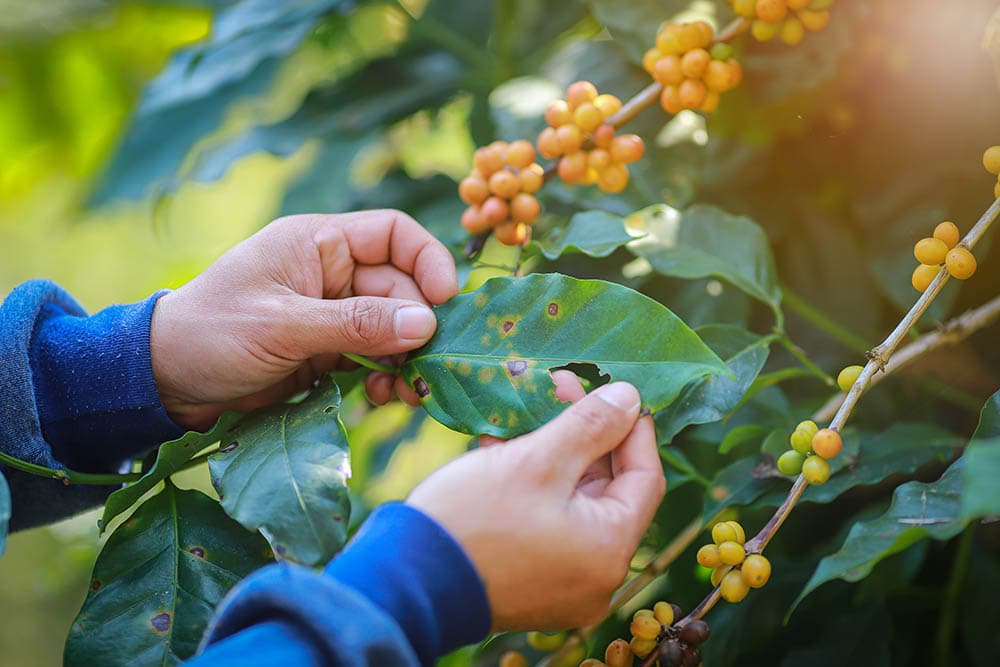
Coffee leaf rust reached the Americas in the 1970s, first appearing in Brazil before spreading through Latin America and the Caribbean over subsequent decades. For many years it was kept comparatively in check through routine fungicide application and cultural practices such as pruning and shade management.
This changed dramatically beginning around 2008, when Colombia suffered a severe multi-year rust epidemic (2008–2011) that reduced national production by an estimated 31% on average compared with 2007 levels. An even larger crisis, often referred to as “The Big Rust” or, regionally, “La Roya,” struck Central America, Mexico, and later Peru and Ecuador starting in late 2012. Within about a year, the disease had spread across the region; within five years, it had affected an estimated 70% of farms across Central America. The epidemic caused more than US$3 billion in combined damage and lost income and cost over 1.7 million coffee workers their jobs.
Regional production fell by roughly 16% in 2013 compared with 2011–2012, and several governments, including those of Guatemala, Mexico, and Costa Rica, declared national states of emergency. Contributing factors identified by researchers included reduced fertilizer use following the 2008 global financial crisis (which weakened plant vigor), aging coffee stock, and meteorological anomalies linked to broader climate change and coffee patterns, although some studies found no direct effect of changing climate on the fungus’s own germination biology.
Geographic Distribution within the Coffee Belt
Coffee leaf rust is present in nearly all producing regions of the global Coffee Belt, the band of tropical and subtropical territory roughly between the Tropics of Cancer and Capricorn where coffee is commercially cultivated. Its severity, however, varies by region:
- East Africa (Ethiopia, Kenya, Uganda) — Considered part of the pathogen’s likely center of origin, coevolved with wild Coffea populations; endemic at generally manageable background levels in many areas.
- South and Southeast Asia (Sri Lanka, India, Indonesia, the Philippines) — Site of the first major recorded epidemic (Ceylon, 1869) and continued presence at varying intensity since.
- Latin America and the Caribbean (Brazil, Colombia, Central America, Mexico, the Caribbean, Peru, Ecuador) — Arrived comparatively recently (1970s onward) but has produced some of the most economically damaging modern epidemics, notably Colombia (2008–2011) and the Central American “Big Rust” (2012–2014).
- Hawaii, USA — Historically one of the last major coffee-growing regions to remain free of the disease, though its isolation has made ongoing biosecurity a priority for the local Kona coffee industry.
Economic and Social Impact
Coffee leaf rust is widely regarded by plant pathologists as the most important disease of Arabica coffee worldwide, both historically and in the present day. Its impacts extend well beyond direct crop loss:
- Yield loss: Individual epidemics can reduce yields by up to 35% in a single season, with compounding, multi-year effects on plant health and future harvests.
- Quality loss: Surviving cherries on rust-weakened plants often ripen incompletely, producing lighter, less sweet, and less aromatically complex beans, which lowers their market value.
- Livelihoods: Because roughly 25 million smallholder farming households worldwide depend on coffee, and the crop is frequently grown on farms of less than 10 hectares, rust epidemics translate directly into lost income, unemployment for hired pickers and farm labor, and in severe cases, food insecurity for producing communities.
- Migration: Both the 19th-century Ceylon epidemic and the 21st-century Central American “Big Rust” triggered significant rural-to-urban and, in the latter case, international migration as coffee-dependent households lost their primary source of income.
- Structural transformation: The Ceylon epidemic permanently redirected an entire national economy from coffee to tea. In Central America, the 2012–2013 epidemic accelerated renewed investment in resistant cultivars, agroforestry, and diversified farm income.
Control and Management
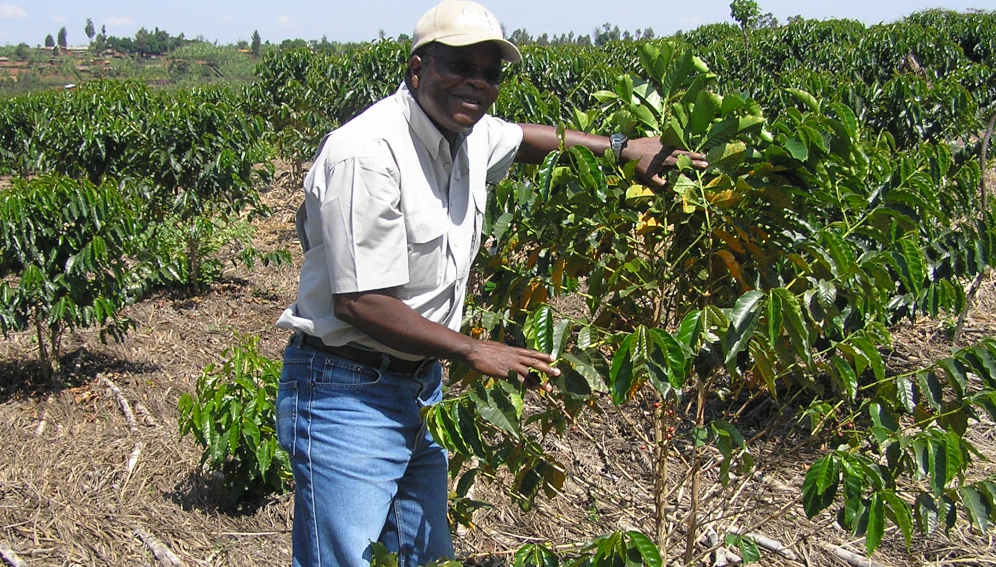
No single method fully eliminates coffee leaf rust risk; effective management typically combines several approaches:
- Resistant cultivars: Considered by researchers to be the most effective and durable long-term control strategy. Varieties bred from the Híbrido de Timor and similar resistant sources — including Colombia’s Variedad Colombia and later Castillo varieties, and Central American varieties such as Lempira and Catisic — have been deployed for more than 30 years in some breeding programs, though new physiological races of the fungus can eventually overcome specific resistance genes.
- Fungicides: Copper-based and systemic fungicides remain a widely used, immediate control measure, particularly during favorable weather windows for infection, though cost, resistance development, and environmental concerns limit their use, especially among smallholders.
- Cultural and agroforestry practices: Managing shade cover, plant spacing, and nutrition (particularly nitrogen and potassium) to improve plant vigor and reduce leaf-surface moisture; removing and destroying heavily infected leaf litter; and diversifying farms with shade trees and intercropping to reduce the risk of the kind of uniform monoculture that fueled the Ceylon epidemic.
- Monitoring and forecasting: Field surveillance and epidemiological models based on the “disease triangle” (host, pathogen, and environment) are used to predict outbreak risk and time fungicide applications more efficiently.
- Biological control: Ongoing research into naturally occurring hyperparasitic fungi (organisms that themselves attack H. vastatrix) and antifungal bacterial compounds represents an emerging, lower-input avenue of control.
Significance in Coffee History and Science
Because it was one of the first major plant epidemics to be studied scientifically in near-real time, the Ceylon outbreak of coffee leaf rust is frequently cited as a foundational case study in the modern discipline of plant pathology. Its economic aftermath is also credited with catalyzing the global rise of Robusta coffee as a commercially significant species, since its comparative tolerance to H. vastatrix made it an attractive alternative in regions devastated by rust.
In the 21st century, coffee leaf rust remains a central case study in discussions of climate change and coffee, since shifting temperature and rainfall patterns are widely expected to expand the range and severity of future outbreaks, including into higher-altitude regions historically considered too cool for the fungus to thrive.
See Also
- Coffea arabica (Arabica)
- Coffea canephora (Robusta)
- Coffee Leaf
- Coffee Cherry
- Coffee Belt
- Coffee Wilt Disease
- Coffee Berry Disease
- Brown Eye Spot
- Coffee Flower
- Coffee Bean
- Coffee Pulp
- Coffee Plant
References
- Talhinhas, P. et al. “The coffee leaf rust pathogen Hemileia vastatrix: one and a half centuries around the tropics.” Molecular Plant Pathology, 2017. Available via PubMed: https://pubmed.ncbi.nlm.nih.gov/27885775/
- “The Coffee Leaf Rust pathogen Hemileia vastatrix: One and a half centuries around the tropics.” ResearchGate. https://www.researchgate.net/publication/310836202
- “Coffee-Leaf Disease of Ceylon and Southern India.” Nature, 1879. https://www.nature.com/articles/020557a0
- “The coffee leaf rust crisis in Ceylon: history and impact on coffee.” Coffee Sapiens. https://www.coffeesapiens.org/en/the-coffee-leaf-rust-crisis-in-ceylon-impact-and-current-solutions/
- “The Collapse of Coffee in Ceylon, c.1869–1890: Disease, Empire, and Plantation Transformation.” History of Ceylon Tea. https://www.historyofceylontea.com/ceylon-publications/feature-articles/the-collapse-of-coffee-in-ceylon-c-1869-1890-disease-empire-and-plantation-transformation.html
- “Coffee Leaf Rust and the Limits of Genetic Resistance.” Sam Knowlton, 2026. https://samknowlton.substack.com/p/coffee-leaf-rust-and-the-limits-of
- “Coffee Leaf Rust (Hemileia vastatrix) Disease in Coffee Plants and Perspectives by the Disease Control.” ScienceDirect, 2024. https://www.sciencedirect.com/org/science/article/pii/S0031945724000078
- “The history of Rust, the birth of Robusta, and the legacy of Ceylon.” DRWakefield. https://drwakefield.com/news-and-views/the-history-of-rust-the-birth-of-robusta-and-the-legacy-of-ceylon/
- “World Coffee Research publishes manual for coffee leaf rust.” World Coffee Research, 2016. https://worldcoffeeresearch.org/news/2016/world-coffee-research-publishes-manual-for-coffee-leaf-rust
- “Battling the Coffee Rust: Photos of Farmers Fighting an Epidemic.” Modern Farmer. https://modernfarmer.com/2014/08/battling-rust-coffee-growers-struggle-epidemic/
- “Roya, Coffee Leaf Rust – Fungus threatens coffee cultivation.” Kaffeemacher. https://kaffeemacher.de/en/blogs/kaffeewissen/kaffeerost
- Avelino, J. et al. “The coffee rust crises in Colombia and Central America (2008–2013): impacts, plausible causes and proposed solutions.” Food Security, 2015. https://link.springer.com/article/10.1007/s12571-015-0446-9
- “Epidemics and the future of coffee production.” PNAS, 2021. https://www.pnas.org/doi/10.1073/pnas.2023212118
- “Influence of Environmental Conditions and Genetic Background of Arabica Coffee on Leaf Rust Pathogenesis.” PMC. https://www.ncbi.nlm.nih.gov/pmc/articles/PMC5712408/
- “Infection model for analyzing biological control of coffee rust using bacterial anti-fungal compounds.” arXiv. https://arxiv.org/pdf/1712.08958
- “La Roya, coffee’s prehistoric enemy.” Palma Coffee. https://www.palmacoffee.com/post/coffee-leaf-rust-coffeea-arabica-s-prehistoric-enemy
- “tracking ‘la roya’ – the fungus threatening coffee’s future.” University of Michigan, Sustainable Food Systems. https://sites.lsa.umich.edu/sustainablefoodsystems/2015/09/18/coffee-killer-tracking-la-roya-the-fungus-threatening-coffees-future/