
Altitude in coffee refers to the elevation at which coffee is grown above sea level. It is one of the most important environmental factors affecting coffee flavor and quality. Higher altitudes often produce beans with greater complexity and acidity.
Coffee grown at high elevations matures more slowly because of cooler temperatures. This slower development allows the coffee cherries to build denser beans and more concentrated flavors. As a result, many specialty coffees are cultivated in mountainous regions.
Altitude is commonly measured in meters or feet above sea level. Coffee labels sometimes include altitude information to highlight quality and growing conditions.
Why it Matters in Coffee
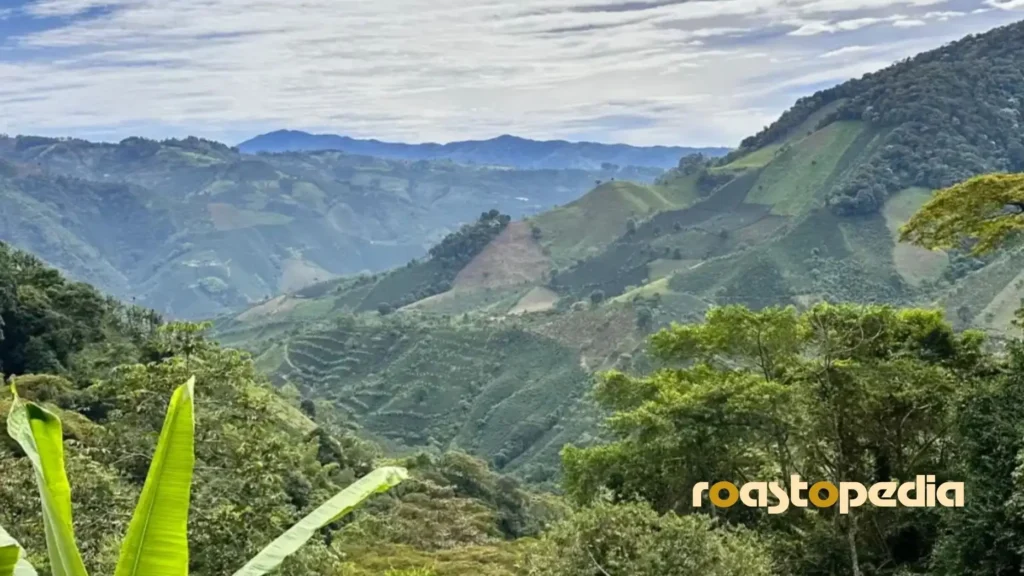
Altitude significantly affects how coffee tastes. High-altitude coffees are often associated with bright acidity, floral aromas, and complex flavor profiles. Lower-altitude coffees may produce milder and less vibrant flavors.
Specialty coffee buyers and roasters pay close attention to altitude when sourcing beans. High-elevation farms are often valued for their potential to produce exceptional coffee quality.
Altitude also affects bean density. Dense beans generally roast differently and may preserve flavors more effectively during roasting. This characteristic is highly appreciated in specialty coffee roasting.
How it Appears in Practice
Coffee farms located in mountainous regions often grow coffee at elevations above 1,200 meters. Countries such as Ethiopia, Colombia, Kenya, and Guatemala are famous for high-altitude coffee production.
Altitude information sometimes appears on specialty coffee packaging. Roasters may mention elevation ranges to help explain flavor characteristics and bean quality.
Farmers at higher altitudes usually face more challenging growing conditions. Cooler climates, steep terrain, and slower growth cycles can increase production costs and labor demands.
Examples in Coffee
Ethiopian highland coffees are well known for their floral and citrus-like qualities developed at high elevations. Colombian coffees grown in mountainous regions often display balanced acidity and sweetness. Kenyan coffees cultivated at high altitudes are frequently praised for vibrant fruit notes.
Low-altitude coffees can still be enjoyable, especially when processed and roasted well. However, they may not always show the same flavor intensity associated with high-grown specialty coffee.
Many coffee competitions feature beans from high-altitude farms. These coffees often stand out because of their clarity, complexity, and refined flavor profiles.
Common Misunderstandings
One common misconception is that a higher altitude automatically guarantees better coffee. While altitude can improve flavor potential, farming practices, processing, and roasting also play major roles in quality.
Another misunderstanding is that all high-altitude coffees taste the same. Flavor still depends heavily on origin, variety, soil, climate, and processing method.
Some people also confuse altitude with roast level. Altitude refers to growing conditions, while roast level refers to how the coffee beans are roasted after harvest.