
Backflushing is a critical maintenance procedure used to cleanse the internal plumbing and valves of an espresso machine. This technical process involves forcing water and specialized detergents backward through the group head while a blind filter is engaged. It remains the primary method for ensuring that a professional brewing system remains free from rancid coffee oils and debris.
Origin & History
The technical requirement for this procedure emerged during the middle of the twentieth century with the invention of the three-way solenoid valve. This mechanical innovation allowed for the immediate relief of pressure within the portafilter once the brewing cycle concluded. Before this development, baristas had to wait several minutes for the pressure to dissipate naturally to avoid a messy explosion of grounds.
Engineers realized that this convenience introduced a new challenge by creating a pathway for coffee oils to travel into the machine’s interior. Every time the pressure was released, small amounts of oily liquid were sucked back into the exhaust passage and the solenoid housing. These residues eventually began to oxidize and rot, imparting bitter and metallic flavors to the fresh coffee being brewed.
Manufacturers developed backflushing as a proactive solution to maintain the hygiene of these hidden internal passages. They realized that by reversing the flow of the pump, they could purge the system of these contaminants without disassembling the entire group head. This discovery institutionalized a new standard of equipment care that transformed the longevity and consistency of the modern espresso bar.
Etymology
Lexical roots of the term are derived from the industrial engineering practice of reversing the direction of a fluid stream to clear a filter. The word “back” implies a directional shift against the normal path of travel, while “flush” signifies a sudden and forceful surge of liquid. Combining these two elements creates a precise description of the hydraulic cleaning action performed by the machine.
Technical usage of the word became widespread as the specialty coffee industry adopted more rigorous scientific terminology in its training manuals. It distinguishes this intensive internal cleaning from the simple external wiping of the shower screen or the group head. This linguistic specificity helps professionals communicate clearly about the depth and frequency of their maintenance routines.
Global adoption has kept the name consistent across international borders, often remaining untranslated in many non-English speaking specialty markets. It serves as a universal marker for a specific level of technical competence and care within the coffee community. Understanding this term is a fundamental requirement for anyone aspiring to operate a commercial or high-end domestic espresso system.
Mechanics of the Three-Way Valve
Mechanical operation of the three-way solenoid valve serves as the physical engine that makes backflushing possible. This valve features three distinct ports that manage the flow of water between the boiler, the group head, and the exhaust outlet. When the brewing cycle is active, the valve closes the exhaust path and opens the passage to the coffee.
Deactivation of the pump causes the valve to instantly shift its internal piston to seal the boiler port and open the exhaust line. This sudden change in hydraulics allows the high pressure trapped in the portafilter to rush toward the drip tray. This movement creates the “backwards” flow that pulls coffee particles and oils into the internal channels of the group head.
Using a blind filter during this stage prevents any water from escaping through the bottom of the basket, maximizing the internal pressure. This force ensures that the cleaning solution can reach the furthest recesses of the solenoid housing and the dispersion block. Without this mechanical seal, the water would follow the path of least resistance and fail to cleanse the internal plumbing.
Chemical Synergy
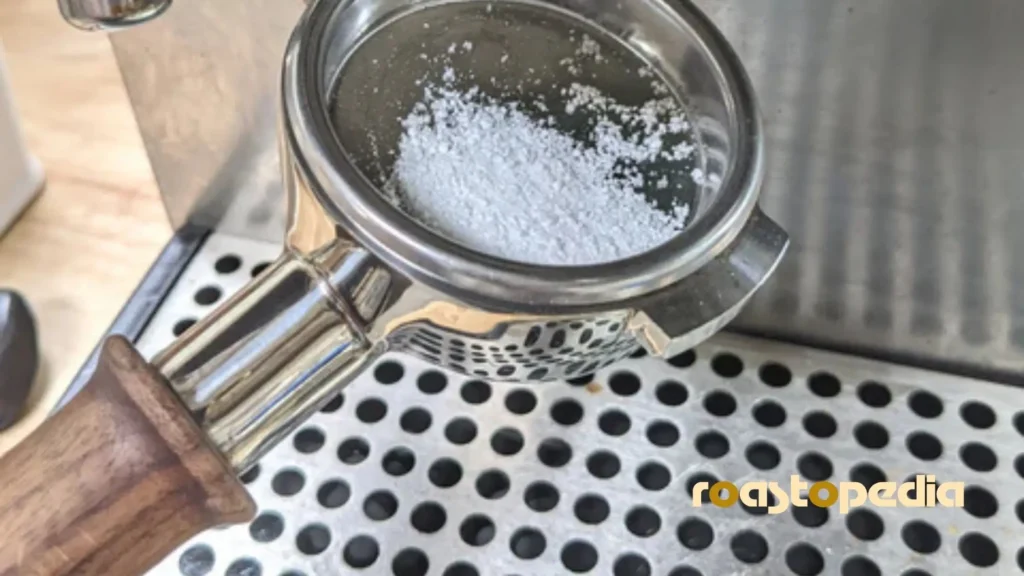
Specialized detergents are required to break down the resilient and insoluble oils that coffee leaves behind during the extraction process. These powders are formulated to be highly alkaline and fast-dissolving, allowing them to strip away organic matter without damaging the metal components. Standard soaps or mild cleaners are insufficient for removing the baked-on carbon and lipids found inside a hot machine.
Reaction between the hot water and the detergent creates a pressurized foam that penetrates the narrow passages of the brewing assembly. This chemical interaction softens the hardened coffee residues, making them easy to flush away during the subsequent rinse cycles. Professionals must balance the amount of chemicals used to ensure total cleaning without leaving behind any harmful or soapy aftertaste.
Continuous rinsing after the chemical stage is essential for removing every trace of the detergent from the internal valves. Any residual cleaner will not only ruin the flavor of the next shot but can also lead to the corrosion of brass and copper surfaces. A disciplined approach to the “clear water rinse” is the hallmark of a technician who values both hygiene and equipment health.
Professional Standards
Daily execution of backflushing is a non-negotiable standard for any cafe that aims to serve specialty-grade coffee. Most professional environments require a chemical flush at the end of every business day to reset the machine for the following morning. This ritual ensures that the first customer of the day receives a beverage that is free from the taint of yesterday’s service.
Interval rinsing with clear water is also recommended throughout the day during busy shifts to maintain a neutral flavor profile. This “water-only” procedure removes loose particles before they have a chance to bond to the hot metal surfaces. It serves as a quick and effective way to reset the palate of the machine between different single-origin coffee offerings.
Training programs for new baristas place a heavy emphasis on the physical safety of backflushing. The sudden release of pressure can occasionally cause hot water or steam to spray from the exhaust if the portafilter is not securely locked. Mastery of this procedure protects the operator from injury while safeguarding the commercial investment of the cafe owner.
Preservation of Flavor
Sensory impact of a dirty machine is often described as a flat, ashy, or metallic bitterness that overrides the natural sweetness of the coffee. These unpleasant notes are the result of rancid oils and oxidized solids that have been baked into the internal plumbing over several days. Even the highest quality beans will taste poor if they are forced to travel through a contaminated group head.
Cleanliness allows for the full expression of the terroir and the specific roasting profile intended by the producer. When the internal passages are clear, the barista can accurately identify the subtle nuances of acidity and aroma that define a premium harvest. Maintaining this sensory transparency is the primary motivation for the daily labor of backflushing.
Consistency between different brewing stations is achieved only when each group head is held to the same rigorous hygiene standards. If one station is neglected, it will produce a fundamentally different flavor than its counterparts, frustrating the efforts of the quality control team. Uniformity across the bar is a sign of a professional operation that respects the technical requirements of the craft.
Maintenance Risks and Failures
Neglecting backflushing will eventually lead to the physical failure of the three-way solenoid valve. Hardened coffee oils can act like glue, causing the internal piston to stick or fail to seal correctly under pressure. This mechanical breakdown often manifests as a constant drip from the group head or a failure to relieve pressure after a shot.
Accumulation of solid debris behind the shower screen can also lead to the permanent clogging of the machine’s internal flow restrictors. These tiny openings are essential for managing the water flow rate, and any blockage will result in uneven and unpredictable extraction times. Repairing these issues often requires an expensive and time-consuming disassembly of the entire brewing system.
Long-term exposure to rancid oils can cause the pitting and corrosion of the chrome plating and the underlying brass components. This structural damage is irreversible and can permanently degrade the value and performance of a professional espresso machine. Prevention through regular cleaning is always more cost-effective than the alternative of major equipment restoration.
Notable Facts
The E61 group head features a unique mechanical pre-infusion chamber that naturally assists in this cleaning process through its hydraulic design. This iconic assembly uses a series of springs and valves rather than a solenoid to manage the relief of pressure. Its physical complexity requires a slightly different approach to maintenance, but the goal of internal purity remains identical.
High-speed cameras have captured the violent nature of the pressure release that occurs when backflushing is completed. The water moves with incredible velocity through the exhaust ports, carrying away a dense cloud of brown residue during the first few cycles. This visual evidence provides a powerful reminder of why the procedure is so effective at stripping away contaminants.
Some ancient espresso machines lacked any form of internal pressure relief, making them impossible to clean using this modern method. These machines required the operator to manually scrub the group head and disassemble the components for soaking on a weekly basis. Modern internal cleaning is a testament to the industrial progress that has made professional coffee quality more accessible to the world.
Related Concepts
Blind Filter is the primary tool used to create the total seal required for successful backflushing. It is a solid stainless steel basket that prevents any liquid from escaping the portafilter during the high-pressure phase of the cycle. Without this specialized accessory, the procedure would be nothing more than a standard group head rinse.
Group Head Gasket serves as the critical seal that prevents the pressurized cleaning solution from leaking around the edges of the portafilter. During backflushing, the gasket is subjected to the machine’s maximum operating pressure, making its integrity more important than ever. A worn or leaking gasket will prevent the machine from achieving the force needed for a deep internal clean.
Backpressure is the physical force that builds up against the blind filter and drives the water through the internal passages. Managing this force correctly is the secret to a thorough cleaning that reaches every hidden valve and joint. Understanding how to manipulate this pressure allows the barista to maintain their equipment with the precision of a trained technician.