
Dosing is the process of measuring and introducing a predetermined quantity of coffee beans or ground coffee for brewing. The term is most commonly associated with espresso preparation, where the mass of coffee placed into the portafilter basket is a critical variable influencing extraction, beverage strength, flavor balance, and consistency.
More broadly, dosing applies to all brewing methods, including filter coffee, immersion brewing, and cold brew production.
In modern coffee preparation, dosing is typically expressed by weight rather than volume. The widespread adoption of digital scales within the specialty coffee industry has transformed dosing from an approximate practice into a standardized and measurable component of coffee brewing.
Etymology
The term dose originates from the Greek word dosis, meaning “a giving” or “portion given.” Through Latin and later French usage, the term came to denote a measured quantity of a substance administered for a specific purpose. In coffee terminology, dosing refers to the act of measuring and dispensing a defined amount of coffee prior to extraction or brewing.
History and Development
The concept of dosing has existed since the earliest preparation of coffee beverages. Historically, coffee was often measured using spoons, scoops, cups, or other household utensils. These methods provided only approximate quantities and frequently resulted in variations in beverage quality.
The development of commercial espresso machines during the twentieth century increased the importance of accurate dosing. Early espresso preparation relied heavily on the skill and judgment of baristas, who manually determined the amount of coffee to place in the portafilter. As espresso culture expanded, manufacturers began producing baskets designed to accommodate standardized coffee quantities.
The rise of specialty coffee in the late twentieth and early twenty-first centuries further emphasized precision. Coffee professionals increasingly adopted digital scales and brewing ratios to improve consistency and facilitate quality control.
Today, dosing is regarded as one of the fundamental variables of coffee preparation alongside grind size, water temperature, extraction time, and brew ratio.
Description and Principles
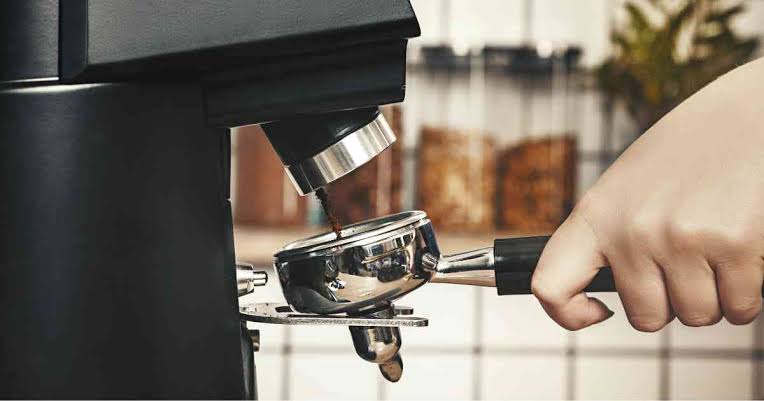
Dosing involves determining the quantity of coffee required for a particular brewing method and ensuring that the measured amount is accurately introduced into the brewing apparatus.
The quantity of coffee used affects several aspects of extraction, including:
- Beverage strength
- Extraction yield
- Flavor intensity
- Body and mouthfeel
- Balance between acidity, sweetness, and bitterness
An insufficient dose may produce a beverage perceived as weak, watery, or underdeveloped. Conversely, an excessive dose may result in uneven extraction, excessive strength, or undesirable bitterness depending on the brewing method employed.
Because coffee extraction is influenced by multiple variables, dosing is generally considered within the context of a brewing recipe rather than as an isolated parameter.
Dosing in Espresso Preparation
Dosing is particularly important in espresso production because espresso is prepared using pressurized water passing through a compact bed of finely ground coffee.
Espresso doses are typically categorized according to basket size:
- Single basket: approximately 7–10 grams
- Double basket: approximately 14–20 grams
- Triple basket: approximately 18–24 grams or more
The precise dose selected depends on the basket design, coffee variety, roast level, grinder characteristics, and the desired beverage profile.
In specialty coffee, espresso recipes are commonly expressed as a relationship between dose and beverage yield. For example, an espresso recipe may call for 18 grams of ground coffee to produce 36 grams of liquid espresso.
Maintaining a consistent dose allows baristas to evaluate and adjust other brewing variables with greater accuracy.
Modern espresso grinders often incorporate timed or weight-based dosing systems that automatically dispense predetermined quantities of ground coffee, reducing variability between preparations.
Dosing in Manual Brewing Methods
Dosing also plays a central role in non-espresso brewing methods.
For pour-over coffee, immersion brewing, and batch brewing systems, the coffee dose is typically determined according to a brew ratio. A brew ratio describes the relationship between the mass of coffee and the mass of water used during brewing.
Common ratios include:
- 1:15
- 1:16
- 1:17
- 1:18
For example, a brewer using a 1:16 ratio may combine 20 grams of coffee with 320 grams of water.
The selected dose influences the concentration and sensory characteristics of the final beverage. Higher doses generally produce stronger and fuller-bodied coffee, while lower doses often result in lighter-bodied and less concentrated brews.
Because manual brewing methods rely heavily on consistency, accurate dosing is widely regarded as essential for reproducible results.
Factors Affecting Dose Selection
The optimal coffee dose varies according to several factors.
Brewing Method
Different brewing methods require different quantities of coffee. Espresso preparation generally requires a concentrated dose relative to beverage volume, whereas drip and immersion methods use larger quantities of water and different extraction dynamics.
Roast Level
Roast degree may influence the preferred dose. Some roasters and baristas adjust doses when working with light or dark-roasted coffees to achieve desired extraction characteristics and flavor balance.
Coffee Density
Bean density varies according to species, cultivar, growing conditions, and processing methods. Differences in density may affect how coffee occupies space within brewing equipment and can influence dose selection.
Desired Beverage Strength
Consumer preference remains an important factor. Some brewing recipes are designed to produce highly concentrated beverages, while others prioritize clarity, balance, or delicacy.
Equipment Design
The dimensions of espresso baskets, brewing chambers, and filter systems may establish practical limits regarding the amount of coffee that can be effectively used.
Importance of Accurate Dosing
Accurate dosing is regarded as a cornerstone of quality control within the coffee industry. Consistent measurement allows coffee professionals to reproduce brewing recipes, evaluate extraction performance, and compare results across multiple preparations.
In commercial settings, precise dosing also contributes to inventory management and cost control. Even small variations in dose can accumulate into significant differences in coffee consumption over time.
Within specialty coffee competitions and professional cupping environments, strict adherence to predetermined coffee quantities helps ensure fairness, repeatability, and meaningful sensory evaluation.
Related Concepts
- Brew Ratio
- Extraction
- Yield
- Grinding
- Distribution
- Tamping
- Dialing In
- Espresso
- Cupping
- Coffee Strength
References
- Illy, Ernesto; Viani, Rinantonio. Espresso Coffee: The Science of Quality. Academic Press.
- Rao, Scott. The Professional Barista’s Handbook. Scott Rao Publishing.
- Rao, Scott. Coffee Roasting: Best Practices. Scott Rao Publishing.
- Specialty Coffee Association (SCA). Coffee Brewing Standards and Protocols.
- Clarke, R. J.; Vitzthum, O. G. Coffee: Recent Developments. Blackwell Science.
- Petracco, Marco. “Technology IV: Beverage Preparation.” In Espresso Coffee: The Science of Quality.
- Lingle, Ted R. The Coffee Cupper’s Handbook. Specialty Coffee Association.
- Specialty Coffee Association. Brewing Foundation Educational Materials.