
Rate of Rise (RoR) is the primary mathematical and thermodynamic metric used to measure the speed at which the internal temperature of coffee beans increases during the roasting cycle. It is expressed as the change in temperature over a specific interval of time, typically measured in degrees per minute or per thirty-second interval.
In the context of industrial roasting, this value represents the thermal momentum of the batch and serves as the fundamental indicator of energy transfer efficiency between the roasting apparatus and the seeds. Mastery of this metric allows for the precise manipulation of chemical development phases, ensuring that the beans reach their intended sensory maturity without undergoing thermal stalling or excessive carbonization.
Overview
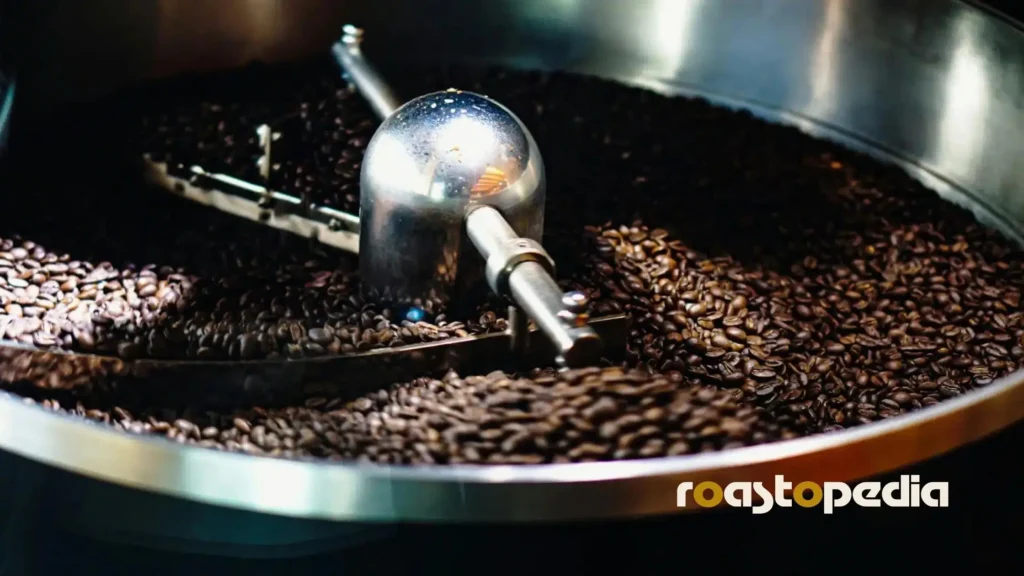
Thermodynamic control during roasting is predicated on the ability to interpret and respond to the RoR in real-time. This metric is not a direct measurement of bean temperature but rather a derivative value that reveals the acceleration or deceleration of the roast’s thermal progress.
A high RoR indicates rapid heat absorption and faster chemical transitions, while a declining RoR signals a controlled deceleration as the beans approach critical milestones like First Crack. By monitoring this curve, roasters can predict the trajectory of the roast and make proactive adjustments to the fuel or airflow systems. The consistency of the RoR across multiple batches is the technical standard for professional production quality in the specialty coffee sector.
Historical Development
Systematic tracking of roasting speed emerged as a formalized discipline during the late twentieth century with the introduction of digital probe technology. Before the advent of high-resolution thermocouples, roasters relied on analog thermometers and physical stopwatches to estimate the pace of the roast.
These early methods provided only a rudimentary understanding of momentum, often resulting in inconsistent development and high variability between batches. The transition from visual and auditory cues to data-driven profiling was accelerated by the specialty coffee movement’s demand for repeatable, high-clarity flavor profiles that could be documented and shared across the global industry.
Significant advancements in software engineering during the early 2000s allowed for the creation of visual roast logs that plotted the RoR as a distinct curve on a graph. This technological leap enabled roasters to identify “flat spots” or “flicks” in temperature that were previously invisible to the naked eye.
Research conducted by prominent roasting theorists further codified the relationship between the shape of the RoR curve and the resulting chemical complexity of the coffee. Today, digital data logging is considered an essential component of any commercial roasting facility, transforming the role of the operator from a manual laborer into a data analyst focused on thermodynamic precision.
Linguistic Foundations
The terminology used to describe roasting momentum is rooted in the mathematical language of rates and derivatives. Unlike static temperature readings, which describe a state of being, the “Rate of Rise” describes a state of change, reflecting the dynamic nature of heat transfer in a rotating drum. In professional environments, the term is frequently shortened to its acronym, RoR, which has become a universal shorthand for thermal velocity.
This vocabulary allows specialists to communicate complex ideas about energy management with high precision, such as describing a “crashing” rate versus a “stalled” rate during critical development windows.
Linguistic nuances in the industry also distinguish between “Environmental RoR” and “Bean RoR,” which refer to the air temperature within the drum versus the internal temperature of the coffee itself. These distinctions are vital for understanding the thermal lag that occurs as the beans absorb energy from their surroundings.
By utilizing such specific terminology, the roasting community maintains a rigorous technical standard that separates professional analysis from casual observation. The accuracy of this language ensures that the documentation of a roast profile remains a reliable technical record for future reproduction or troubleshooting.
Technical Progression
Advanced roasting technology now incorporates sophisticated PID (Proportional-Integral-Derivative) controllers that can automatically adjust energy input to maintain a target RoR. This progression has significantly reduced the likelihood of human error during the critical transition into the exothermic phases of the roast.
Early mechanical roasters required constant manual intervention, but contemporary systems allow for the pre-programming of a specific “Delta-T” curve. This level of automation ensures that the internal cellular structure of the bean is heated evenly, preventing the “scorching” associated with uncontrolled thermal acceleration.
Innovation in probe design has also improved the accuracy of RoR data by minimizing the “noise” or lag traditionally associated with thick metal thermocouples. Modern thin-diameter probes respond almost instantly to changes in the roasting environment, providing a more granular view of the thermodynamic transitions occurring inside the drum.
This technical clarity is especially important during the brief window after the Maillard reaction begins and before the structural rupture of the crack. The ability to measure these subtle shifts allows for a more nuanced management of the bean’s chemical potential, directly influencing the clarity of the notes on the Coffee Flavor Wheel.
Operational Execution
Managing the RoR requires a proactive approach to energy management, where the roaster anticipates the thermal needs of the beans several minutes in advance. This is particularly challenging during the transition from the endothermic Drying Phase to the exothermic development phase.
If the RoR is too high as the batch enters this window, the beans may develop an “ashy” or “burnt” profile due to excessive surface heat. Conversely, a collapsing RoR can lead to a “baked” roast, where the lack of momentum prevents the full development of the sugars and acids, resulting in a thin and papery mouthfeel in the final Extraction.
Operational proficiency is also measured by the roaster’s ability to “smooth” the RoR curve to avoid sharp fluctuations that signal uneven heat transfer. Consistent airflow management is the primary tool for achieving this stability, as it allows the operator to remove excess thermal energy from the drum without extinguishing the burner.
This technical skill is often the primary focus of professional apprenticeship and certification, as it represents the highest level of mastery in the production environment. A perfectly executed RoR curve is the physical proof of a roaster’s technical control over the volatile and unpredictable nature of fire and air.
Analytical Demands
Interpreting an RoR graph requires a deep understanding of the chemical transitions that correspond to specific thermal events. For example, a sudden drop in the rate during the middle of the roast may indicate the evaporation of moisture or a change in the bean’s density as it expands.
Analytical specialists look for a “smoothly declining” RoR curve, which is generally associated with the most balanced and transparent flavor profiles. Any deviation from this ideal curve must be analyzed to determine its impact on the final product’s acidity, body, and sweetness. This analytical rigor is what distinguishes specialty production from bulk commercial roasting.
Technicians also utilize the RoR to calibrate their equipment and ensure that the sensors are providing an accurate representation of the batch’s state. If two identical roasters produce different RoR values for the same coffee, it signals a need for maintenance or sensor adjustment.
This level of technical scrutiny is essential for maintaining brand consistency across multiple roasting locations or production lines. By treating the RoR as a foundational analytical metric, the industry can ensure that the “origin story” of the coffee—represented by its unique chemistry—is preserved and highlighted through every stage of its thermal transformation.
Kinetic Principles
The physics of RoR management is governed by the principles of heat transfer: conduction, convection, and radiation. In a traditional drum Roaster, the RoR is a product of all three forces acting simultaneously upon the bean mass. Convection typically provides the majority of the energy, as hot air circulates through the tumbling beans, while conduction occurs during physical contact with the heated metal drum.
The efficiency of this transfer is dictated by the temperature gradient, or the difference between the drum environment and the bean core. As the beans heat up, this gradient narrows, which naturally causes the RoR to decline unless additional energy is applied.
Thermodynamic momentum is further influenced by the specific heat capacity of the coffee, which changes as moisture is lost and the bean’s density decreases. A roaster must account for these kinetic shifts to prevent the batch from “stalling” after the initial drying is complete.
The management of this momentum is a pure application of kinetic energy principles, where the objective is to keep the molecules in a constant state of productive transformation. Failure to maintain the correct kinetic balance can result in the uneven development of the Melanoidins, leading to a fragmented and incoherent sensory profile in the cup.
Documented Milestones
Documentary evidence from industrial roasting studies indicates that a typical specialty roast profile will start with a high RoR (often exceeding 15°C/min) before gradually tapering as it reaches the development phase. The “Turnaround Point,” where the probe temperature begins to rise after the initial drop from the bean charge, is the first critical milestone for calculating the RoR.
Following this, the rate typically plateaus or slightly declines until the onset of the Maillard reaction. This recorded data provides a benchmark for evaluating the efficiency of the heating system and the thermal responsiveness of the coffee variety being processed.
Another documented milestone is the “Flick,” which is a sudden, uncontrolled spike in the RoR that occurs immediately after the crack. This phenomenon is caused by the release of built-up exothermic energy and steam from the bean’s interior. Technical reports emphasize that failing to anticipate and mitigate this spike can lead to the carbonization of the bean’s surface oils, resulting in a “roasty” defect.
By studying these documented milestones, roasters can develop a predictive model for their craft, turning a series of chemical reactions into a repeatable industrial procedure with a 99% accuracy rate across multiple production cycles.
Integrated Frameworks
Rate of Rise is the central link in a technical framework that connects the physical apparatus to the chemical sensory output. It is influenced by the initial temperature of the Arabica Coffee seeds and dictates the speed of the Degassing process following the roast.
Furthermore, the RoR during the development phase determines the final concentration of organic acids, which is a key attribute measured during professional Cupping. This integrated approach ensures that every variable in the roasting facility is aligned to maximize the coffee’s inherent quality.
The management of roasting speed also impacts the structural integrity of the bean, which in turn affects the Extraction efficiency in the café. A coffee with a stable, well-managed RoR will have a more uniform porosity, allowing for a more predictable dissolution of compounds during the brewing cycle.
Conversely, a roast with an erratic or stalled RoR will often exhibit “dead spots” of under-developed material that can ruin the balance of a high-end espresso. This technical interlinking between the roast profile and the final liquid beverage is the foundational principle upon which the specialty coffee industry is built.