
Coffee Leaf Scorch (CLS), known in Portuguese as crestamento and in Spanish as crespera del cafeto, is a bacterial disease of coffee caused by the xylem-limited pathogen Xylella fastidiosa subsp. pauca. The disease causes leaf scorching, canopy dieback, and stunted growth in Arabica and Robusta coffee plants, and is considered one of the more economically threatening bacterial diseases affecting coffee production in the Americas. Unlike many coffee pathogens, CLS is caused by a bacterium rather than a fungus, and it is transmitted exclusively by sap-feeding insect vectors rather than by wind, rain splash, or direct contact.
Causal Agent and Taxonomy
Coffee Leaf Scorch is caused by Xylella fastidiosa subsp. pauca, a gram-negative, xylem-limited bacterium in the family Lysobacteraceae (formerly grouped with the Xanthomonadaceae). X. fastidiosa is currently divided into several recognized and proposed subspecies — fastidiosa, multiplex, pauca, sandyi, morus, and tashke — distinguished largely by genetic lineage and host range rather than by visible morphology.
The pauca subspecies is the lineage responsible for Coffee Leaf Scorch, and it is closely related to the strain that causes Citrus Variegated Chlorosis (CVC) in sweet orange and, more recently, Olive Quick Decline Syndrome in the Mediterranean.
The bacterium colonizes the xylem vessels of its host plant, where it forms biofilms that physically obstruct the upward flow of water and dissolved minerals from root to leaf. Because X. fastidiosa is prone to intersubspecific recombination, researchers believe the coffee-infecting and citrus-infecting lineages diverged relatively recently through mutation and gene flow between closely related strains sharing the same sharpshooter vectors and, in Brazil, the same agricultural landscape.
Host Range and Susceptibility
Xylella fastidiosa as a species has an unusually broad host range, having been detected in well over 100, and by some estimates over 600, plant species worldwide, including grapevine (Pierce’s disease), citrus, almond, olive, oleander, and various shade and ornamental trees. Subspecies pauca, however, has a comparatively narrower economic host range centered on coffee and citrus.
Within coffee, both Coffea arabica (Arabica) and Coffea canephora (Robusta) can be infected, though field response varies considerably by cultivar, region, and strain. In Brazil, cultivars such as ‘Mundo Novo’ have shown clear symptomatic infection under both natural and experimental inoculation.
In Costa Rica, by contrast, coffee plants colonized by the pathogen are frequently asymptomatic or display only mild symptoms, suggesting that host susceptibility, strain aggressiveness, and environmental conditions all influence disease expression.
Citrus and coffee frequently grow in proximity in parts of Brazil, and although the same sharpshooter vectors can move between the two crops, genetic studies of coffee-associated and citrus-associated X. fastidiosa populations indicate that the two host-adapted populations do not readily cross-infect one another in the field.
Symptoms and Part of the Plant Affected
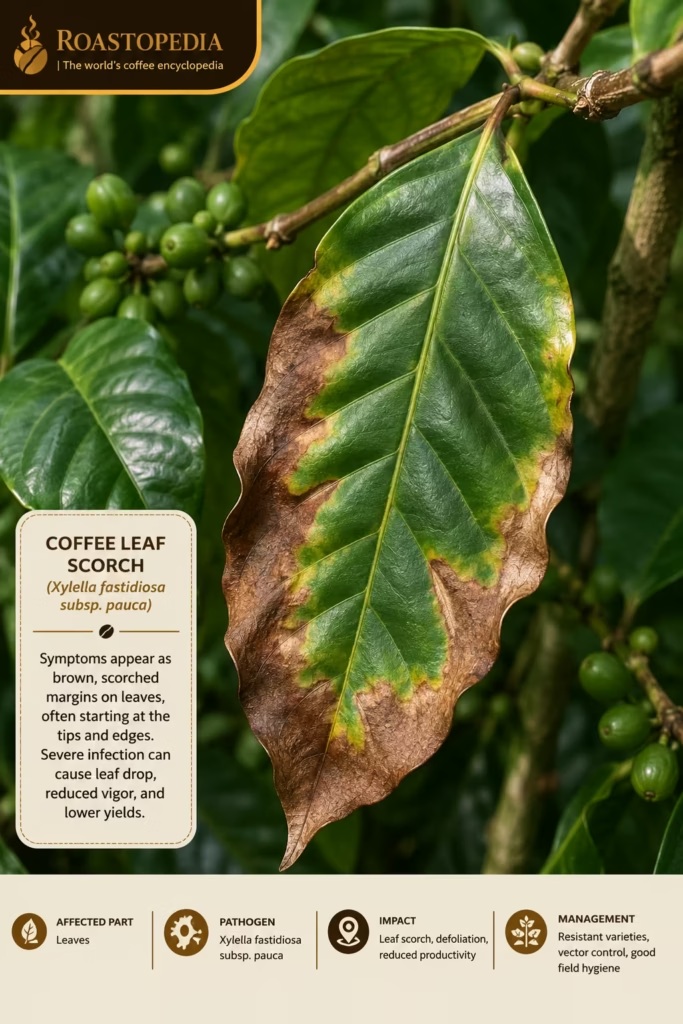
CLS primarily affects the leaves, branches, and canopy structure of the coffee plant. Because the bacterium clogs the xylem, symptoms resemble drought stress or nutrient deficiency more than a typical fungal leaf spot. Reported symptoms include:
- Leaf scorching — marginal and interveinal necrosis giving leaves a burnt or scorched appearance
- Leaf curling and deformation, with leaves that are small, pale green to yellow, and chlorotic
- Apical necrosis of shoot tips
- “Witches’ brooms” and tufts (tufos) — clusters of closely spaced, stunted leaves retained only at the distal ends of branches after defoliation elsewhere
- Internode shortening, giving affected branches a compact, bushy appearance
- Canopy dieback, progressing in severe cases to death of entire shoots
- Premature leaf drop and overall plant stunting, with reduced fruit production in advanced infections
Symptom severity varies widely by region: Brazilian outbreaks tend to show pronounced dieback and tuft formation, while infections in Costa Rica are frequently mild or symptomless, complicating field diagnosis and making laboratory confirmation (ELISA or PCR-based testing) important for reliable identification.
Life Cycle and Spread
X. fastidiosa subsp. pauca does not spread through spores, wind, or rain like the fungal pathogens responsible for diseases such as Coffee Leaf Rust or American Leaf Spot. Instead, it is an obligate xylem inhabitant transmitted exclusively by xylem-sap-feeding insects, chiefly sharpshooter leafhoppers (Hemiptera: Cicadellidae, subfamily Cicadellinae) and, in some regions, spittlebugs (Aphrophoridae).
The transmission cycle works as follows:
- A vector insect feeds on the xylem sap of an infected coffee, citrus, or weed host, acquiring bacterial cells.
- The bacterium attaches to and multiplies within the insect’s foregut (the disease is not systemic within the vector and is not passed to offspring).
- The insect moves to a healthy plant and, while probing or feeding, inoculates the new host with bacteria.
- Within the new host, the bacterium colonizes the xylem vessels, forming biofilms that spread systemically and progressively restrict water transport, producing the scorch and dieback symptoms described above.
In Brazil, the sharpshooter Dilobopterus costalimai has been documented as a vector capable of transmitting a coffee-infecting strain of the bacterium. In Costa Rica, researchers have confirmed at least eight leafhopper species present in coffee plantations as capable vectors of X. fastidiosa.
Because many weeds and non-crop plants can serve as symptomless reservoir hosts, and because vectors readily move between coffee, citrus, and surrounding vegetation, eradication of the pathogen from an infected region is extremely difficult once it becomes established; management therefore focuses heavily on prevention and vector control rather than cure.
Historical Discovery
Xylella fastidiosa was first formally described and named in 1987, following decades of prior recognition (as early as the 1970s and 1980s) that a fastidious, xylem-limited bacterium was responsible for Pierce’s disease of grapevine in the United States. Its association with coffee, however, came somewhat later.
Coffee Leaf Scorch was first reported in Brazil in 1995, when a distinct strain capable of infecting coffee was identified and linked to outbreaks affecting Coffea arabica in São Paulo State.
Early taxonomic and pathological work by researchers such as Beretta (1996), De Lima et al. (1998), and Paradela-Filho et al. (1995) established the causal link between X. fastidiosa and the scorch symptoms observed in Brazilian coffee plantations, distinguishing CLS from the closely related Citrus Variegated Chlorosis that was simultaneously devastating sweet orange orchards in the same region.
Arrival in the Americas
Xylella fastidiosa is native to the Americas, and Coffee Leaf Scorch has, to date, remained essentially confined to the Western Hemisphere. Following its initial identification in Brazil in 1995, the disease — or the pathogen capable of causing it — was subsequently documented in additional countries across South and Central America and the Caribbean basin:
- Brazil — first confirmed host of CLS (1995), remains the country with the most extensively documented outbreaks, concentrated in São Paulo State where coffee and citrus are grown in close proximity.
- Costa Rica — X. fastidiosa was confirmed infecting coffee, producing the locally named disease “crespera del cafeto“; Costa Rica hosts both an endemic subspecies (fastidiosa) and an introduced pauca lineage believed to have arrived from South America.
- Puerto Rico — CLS symptoms have been associated with ELISA-confirmed X. fastidiosa infection and an abundance of hemipteran vectors in the island’s mountainous coffee-growing zones, an economically and ecologically important agroecosystem for the territory.
- Ecuador — genomic surveillance work has tracked the presence and potential further movement of coffee-associated X. fastidiosa pauca strains within the country.
- Other reports across the Caribbean basin and Central America have linked outbreaks to the same pauca lineage first characterized in Brazil.
Unlike Coffee Leaf Rust, which spread globally from Africa, or Coffee Berry Disease, which is centered on Africa, Coffee Leaf Scorch has not been confirmed to have reached coffee-growing regions in Africa or Asia as of current published literature; its known distribution remains limited to the Americas.
Related X. fastidiosa subspecies, however (particularly pauca strain CoDiRO, associated with Olive Quick Decline Syndrome, and subsp. fastidiosa linked to Pierce’s disease), have caused serious outbreaks in olives and grapevines in southern Europe (notably Apulia, Italy, and parts of Spain), underscoring the broader global quarantine concern surrounding the X. fastidiosa species complex even where coffee itself has not yet been affected outside the Americas.
Geographic Distribution within the Coffee Belt
Within the Coffee Belt, confirmed Coffee Leaf Scorch activity is concentrated in:
- South America — principally Brazil (São Paulo State and neighboring coffee- and citrus-growing regions), with genomic surveillance also extending to Ecuador.
- Central America — Costa Rica, where the pathogen is present throughout coffee-producing areas of the Central Valley.
- The Caribbean — Puerto Rico, where the disease affects the island’s traditional mountain coffee zones.
Because transmission depends on local sharpshooter and spittlebug vector populations and on the proximity of alternate hosts such as citrus and weeds, disease pressure is patchy even within affected countries rather than uniform across an entire coffee-growing region. Continued anthropogenic movement of plant and seed material is considered a significant risk factor for further spread of aggressive pauca strains into new coffee-growing areas of the Americas.
Economic and Social Impact
Coffee Leaf Scorch is recognized as a serious threat to smallholder and commercial coffee economies in the countries where it occurs. In Puerto Rico, the 2012 coffee harvest was reported as the lowest in the island’s history, a decline attributed in part to biotic production problems including CLS, layered on top of broader economic pressures facing the island’s mountainous, ecologically important coffee agroecosystem.
In Costa Rica, severe X. fastidiosa infection has been linked to sharply reduced fruit production and increased costs associated with renovating and replanting affected farms.
Beyond direct yield loss, the disease carries broader economic risks: increased production costs from replanting, the abandonment of chronically affected orchards, reduced quality and marketability of affected cherries, and quarantine or trade restrictions tied to the wider X. fastidiosa species complex, which is also a regulated quarantine pathogen in many countries due to its impact on grapes, citrus, and olives.
Because eradication of an established X. fastidiosa population from a landscape is extremely difficult, the risk of new, more aggressive strains displacing existing populations represents an ongoing economic uncertainty for coffee-growing regions within its known range.
Control and Management
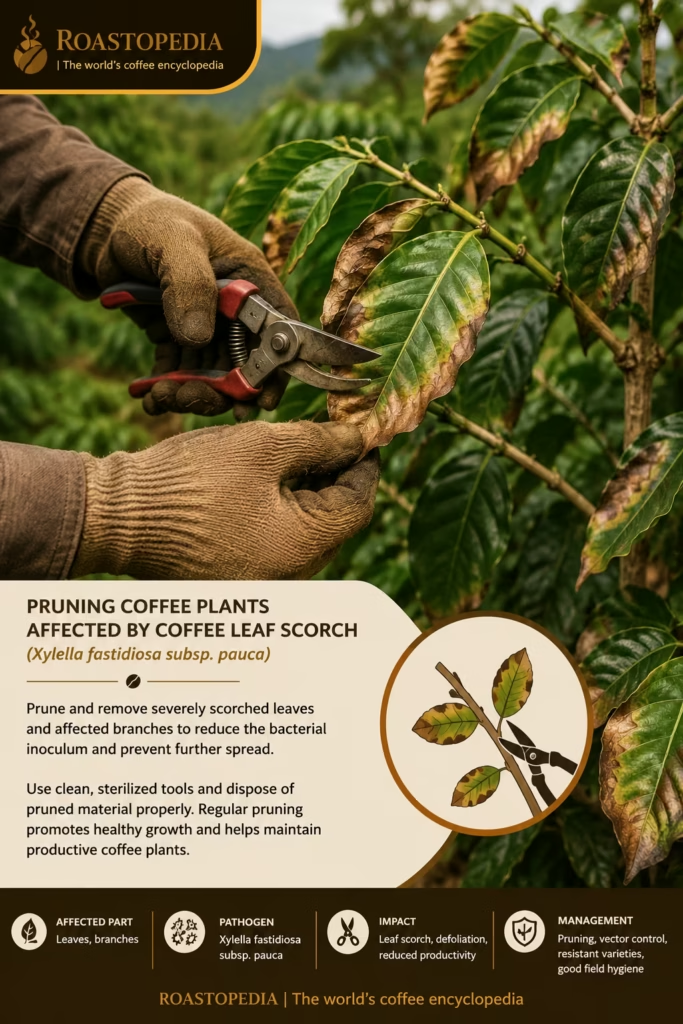
Because X. fastidiosa cannot be cured once it has colonized a plant’s xylem, and because field eradication of the pathogen is very difficult, management of Coffee Leaf Scorch emphasizes prevention, vector suppression, and phytosanitary controls rather than curative treatment:
- Vector management — controlling populations of sharpshooter leafhoppers and spittlebugs in and around coffee plantations, since these insects are the sole means of natural transmission.
- Removal of alternate hosts and reservoirs — managing weeds and nearby host plants (including citrus, where grown in proximity) that can harbor the bacterium and sustain vector populations.
- Use of clean planting material — avoiding the movement of infected seedlings, budwood, or nursery stock between farms and regions, since anthropogenic plant movement is considered a major driver of new outbreaks.
- Diagnostic surveillance — because symptoms can be mild or absent (as documented in Costa Rica), laboratory confirmation via ELISA or PCR-based molecular testing is important for accurately tracking disease presence and informing management decisions.
- Removal of severely affected plants — pruning or removing heavily symptomatic branches and, in advanced cases, entire trees to reduce inoculum and vector feeding sites.
- Quarantine and regulatory measures — given X. fastidiosa‘s status as a regulated pathogen affecting multiple crops (coffee, citrus, grapes, olives), many countries maintain phytosanitary inspection and quarantine protocols aimed at preventing introduction of new or more aggressive strains.
Ongoing research also includes efforts to develop rapid, field-deployable diagnostic tools (such as lab-on-a-chip electrochemical assays) to support faster and more affordable large-scale monitoring of X. fastidiosa in coffee-growing regions.
Significance in Coffee History and Science
Coffee Leaf Scorch holds a distinctive place in coffee pathology as one of the few major coffee diseases caused by a bacterium rather than a fungus, virus, or nematode, placing it in a very different scientific and management category from diseases such as Coffee Leaf Rust, Coffee Berry Disease, or Coffee Wilt Disease. Its causal agent, Xylella fastidiosa, is scientifically notable in its own right: the pauca subspecies strain 9a5c, associated with Citrus Variegated Chlorosis, was the first phytopathogenic bacterium ever to have its complete genome sequenced, a landmark achievement in plant pathology published in Nature in 2000 that helped establish genomic approaches as a standard tool for studying bacterial plant diseases.
CLS also illustrates the broader scientific and agricultural significance of the X. fastidiosa species complex, which additionally causes Pierce’s disease of grapevine, almond leaf scorch, oleander leaf scorch, and Olive Quick Decline Syndrome — making it one of the most economically damaging plant-pathogenic bacterial groups affecting agriculture worldwide.
The comparative study of coffee-associated and citrus-associated X. fastidiosa populations in Brazil has, in turn, contributed to a broader scientific understanding of host specialization, vector ecology, and the genetic recombination processes that allow xylem-limited bacteria to adapt to new crop hosts — research with implications well beyond the coffee sector.
See Also
- Phoma Leaf Spot (Phoma costarricensis and related species)
- Bacterial Blight of Coffee (Pseudomonas syringae pv. garcae)
- Coffee Ringspot Disease (Coffee ringspot virus)
- Brown Eye Spot (Cercospora coffeicola)
- American Leaf Spot (Mycena citricolor)
- Coffee Wilt Disease (Fusarium xylarioides)
- Coffee Berry Disease (Colletotrichum kahawae)
- Coffee Leaf Rust (Hemileia vastatrix)
References
- De Lima, J.E.O., Miranda, V.S., Hartung, J.S., Brlansky, R.H., Coutinho, A., Roberto, S.R., & Carlos, E.F. (1998). Coffee leaf scorch bacterium: axenic culture, pathogenicity, and comparison with Xylella fastidiosa of citrus. Plant Disease.
- Beretta, M.J.G. (1996). Xylella fastidiosa isolated from coffee plants with leaf scorch symptoms in São Paulo, Brazil. Fitopatologia Brasileira.
- Rodríguez, C.J., Pereira, R., Chagas, C.M., & Beretta, M.J.G. (2001). First report of Xylella fastidiosa infecting coffee in Costa Rica. Plant Disease.
- Simpson, A.J.G., Reinach, F.C., Arruda, P., et al. (2000). The genome sequence of the plant pathogen Xylella fastidiosa. Nature, 406, 151–157.
- Bolaños-Carriel, C., Guerra, E.G., Veneros, J., Guadalupe, G.A., & García, L. (2025). Comparative genomics of Xylella fastidiosa subsp. pauca and insights on its current and potential movements in Ecuador. OnLine Journal of Biological Sciences, 25(1), 115–124.
- Sicard, A., Zeilinger, A.R., Vanhove, M., Schartel, T.E., Beal, D.J., Daugherty, M.P., & Almeida, R.P.P. (2018). Xylella fastidiosa: insights into an emerging plant pathogen. Annual Review of Phytopathology, 56, 181–202.
- Bolaños, A., et al. Spatial distribution of coffee trees (Coffea arabica L.) potentially diseased with coffee leaf scorch caused by Xylella fastidiosa in Puerto Rico. Journal of Agriculture of the University of Puerto Rico.
- Chiriacò, M.S., Luvisi, A., Primiceri, E., Sabella, E., De Bellis, L., & Maruccio, G. (2018). Development of a lab-on-a-chip method for rapid assay of Xylella fastidiosa subsp. pauca strain CoDiRO. Scientific Reports, 8, 7376.