
Phoma Leaf Spot, also known as Phoma spot, ascochyta spot, or tip blight, is a fungal disease of coffee caused primarily by the pathogen Phoma costarricensis, along with the closely related and often co-occurring species Phoma tarda (syn. Ascochyta tarda). The disease is one of the most economically significant foliar and dieback problems affecting coffee at higher, cooler elevations of the Coffee Belt, particularly in Brazil, where it damages leaves, green shoots, flowers, and fruit.
Causal Agent and Taxonomy
Phoma Leaf Spot is caused chiefly by Phoma costarricensis Echandi (1957), a member of the order Pleosporales and family Didymellaceae. A second, closely related fungus, Phoma tarda (R.B. Stewart) H. Verm.—synonymous with Ascochyta tarda Stewart and Ascochyta coffeae Hennings—is also implicated in the disease complex, particularly in tip blight and dieback symptoms, and is often discussed alongside P. costarricensis because the two produce very similar lesions and are frequently isolated together from diseased coffee tissue.
Both fungi belong to the broad genus Phoma, a group of pycnidial coelomycetes historically associated with a wide range of leaf spot, blight, and canker diseases across many plant families. Taxonomic revisions of the genus Phoma over the past several decades have reassigned many species to related genera within the Didymellaceae, and P. costarricensis itself has occasionally been treated under alternate generic combinations in the mycological literature, though “Phoma costarricensis” remains the name most widely used in coffee pathology.
Host Range and Susceptibility
Phoma costarricensis was long regarded as a coffee-specific pathogen, primarily affecting Coffea arabica (Arabica) and, to a lesser degree, Coffea canephora (Robusta), particularly the conilon robusta grown in Brazil.
However, more recent reports have expanded the known host range considerably: the fungus has been documented causing leaf spot on Delphinium malabaricum in India’s Western Ghats and on date palm in Iraq, indicating that P. costarricensis is a broader opportunistic pathogen capable of infecting unrelated ornamental and horticultural crops under favorable conditions.
Within coffee, susceptibility is strongly influenced by cultivar, plant nutritional status, and cultivation altitude, with young, tender tissue and nitrogen-imbalanced plantings showing greater vulnerability.
Symptoms and Part of the Plant Affected
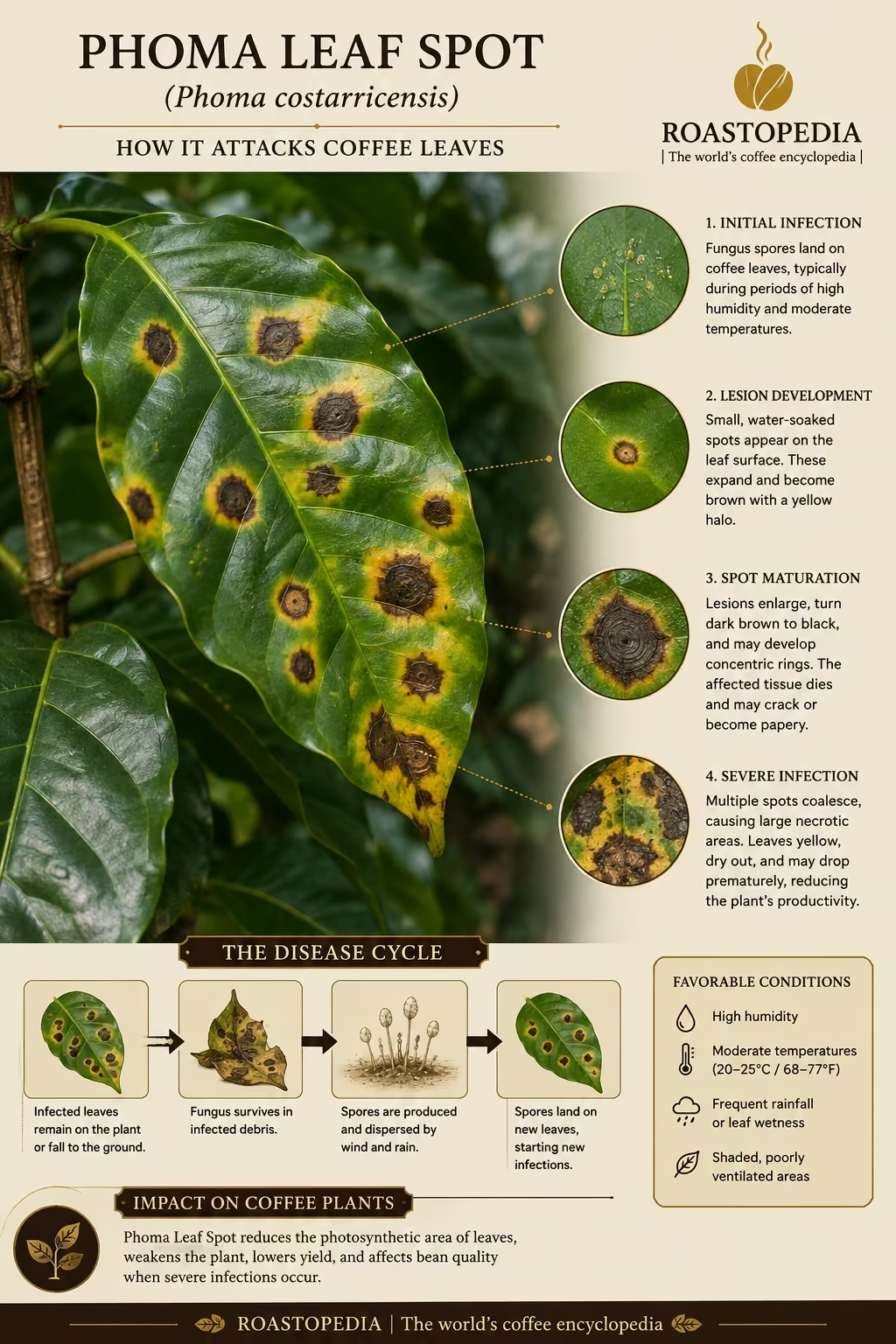
The disease affects leaves, green branches, flower rosettes, and fruit. On mature leaves (typically the second pair and beyond), it produces circular, dark, necrotic spots that can expand to roughly two centimeters in diameter, often with a lighter center and darker margin.
On young shoots and branches, the fungus causes sunken, dark lesions that can girdle the stem entirely, producing the characteristic “dry shoot” or tip blight symptom in which the growing tip wilts and dies back.
Infection of flower rosettes leads to necrosis of flower buds, indirect flower drop, and reduced fruit set, while infected berries may become blemished or, in severe cases, mummify on the branch. Collectively, the damage causes premature defoliation, loss of productive branch tissue, and diminished yield in the following harvest cycle.
Life Cycle and Spread
Phoma costarricensis and P. tarda survive as mycelium and produce asexual fruiting structures called pycnidia within infected leaf and branch tissue, from which spores (conidia) are released during wet conditions.
Infection is favored by cool temperatures below roughly 20°C, relative humidity below about 70%, and strong winds, particularly at altitudes above 900 meters, where at least four hours of continuous leaf wetness—whether from rain, mist, or dew—is sufficient to trigger germination and penetration, even in the absence of direct rainfall.
Spores are dispersed locally by wind-driven rain splash and can also be spread mechanically via contaminated pruning tools and field equipment. Disease pressure builds during cool, cloudy, humid periods and subsequently weakens plants, which can leave them more vulnerable to further stress once drier conditions return.
Historical Discovery
Phoma costarricensis was first formally described by the plant pathologist Echandi in 1957, based on material from Costa Rica, giving the species its epithet. The related fungus now recognized as Phoma tarda was first observed several years earlier, in Ethiopia in 1954, initially described as Ascochyta tarda by Stewart before later reclassification into the genus Phoma.
Together, these two closely related discoveries—one in Central America and one in East Africa—mark the formal scientific recognition of what is now understood as a single disease complex affecting coffee across multiple continents.
Arrival in Africa, Asia, and the Americas
Because Phoma tarda was first documented in Ethiopia (1954) and Phoma costarricensis in Costa Rica (1957), the disease complex was effectively recognized on two continents—Africa and South America—within a few years of each other, suggesting either independent origins of related Phoma species or an already-established, under-recognized presence of the pathogen complex in coffee-growing regions prior to formal taxonomic description.
The disease became particularly well established and economically important in Brazil, where it is considered one of the country’s most significant coffee diseases.
In Asia, P. costarricensis has more recently been confirmed outside of coffee altogether, with first reports of the fungus causing leaf spot on the ornamental plant Delphinium malabaricum in India (2012) and on date palm in Iraq (2021), demonstrating the pathogen’s spread and adaptability well beyond its original coffee-associated range.
Geographic Distribution within the Coffee Belt
Within the Coffee Belt, Phoma Leaf Spot is most severe in higher-altitude, cooler coffee-growing zones, since the fungus thrives under cool temperatures, high humidity, and extended leaf wetness rather than the warm, wet conditions favored by many other tropical coffee pathogens.
Brazil—especially in high-elevation arabica zones of states such as Minas Gerais and in conilon robusta regions such as Espírito Santo—represents the best-documented and most heavily affected production area.
The disease and its associated fungi have also been reported across other coffee-growing regions of Africa (following its original identification in Ethiopia) and Central America (following its description in Costa Rica), and it is generally recognized as a disease of montane and highland coffee cultivation, in contrast to lowland disease pressures more typical of purely tropical, low-elevation growing zones.
Economic and Social Impact
Phoma Leaf Spot ranks among the most economically important coffee diseases in Brazil, the world’s largest coffee producer, where it can cause substantial defoliation, loss of flower buds, reduced fruit set, and dieback of productive branches. Because the disease targets flowering structures and young shoots—the tissue directly responsible for the following season’s harvest—its impact is often felt not only in the current crop but in reduced yield potential the following year.
For smallholder and family farms at higher, cooler elevations, where the disease is most active, unmanaged outbreaks can translate into meaningful income loss, compounding the economic vulnerability already faced by coffee-growing communities dependent on a single perennial crop.
Control and Management
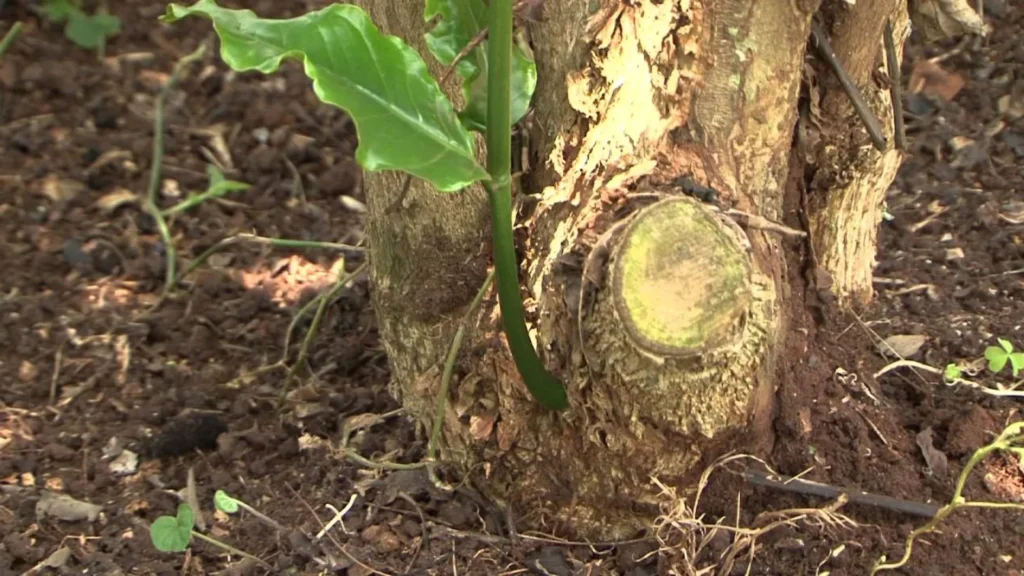
Management of Phoma Leaf Spot relies on an integrated approach combining cultural, nutritional, and chemical strategies. Because disease severity is strongly linked to nitrogen and potassium nutrition, balanced fertilization programs are used to reduce plant susceptibility.
Pruning and removal of infected shoots and mummified fruit help reduce inoculum carried over between seasons, and improving airflow within the canopy through appropriate spacing and pruning can shorten the duration of leaf wetness after rain or mist events.
Fungicide applications, particularly copper-based products, are used preventively in regions and seasons with high disease risk, timed around periods of cool, humid weather. Research into biological and botanical alternatives—including extracts derived from citrus biomass, coffee berry husks, and rust-affected coffee leaves—has also shown some suppressive effect against Phoma costarricensis in experimental trials, offering a potential lower-input complement to conventional fungicide programs.
Significance in Coffee History and Science
Phoma Leaf Spot occupies a distinctive place in coffee pathology as a disease driven primarily by cool, humid conditions rather than the hot, wet tropical conditions associated with many other major coffee diseases, making it especially relevant to the growing understanding of how altitude and microclimate shape disease pressure across the Coffee Belt.
Its near-simultaneous description in Costa Rica and Ethiopia in the 1950s reflects a broader mid-twentieth-century era of intensive coffee pathology research, as producing countries sought to formally catalog the fungal threats affecting the crop.
More recently, the discovery of P. costarricensis infecting unrelated hosts such as ornamental delphiniums and date palms has prompted renewed scientific interest in the pathogen’s host range and evolutionary flexibility, illustrating how coffee-associated fungi can serve as reservoirs of broader agricultural risk beyond the crop in which they were first identified.
See Also
- Brown Eye Spot (Cercospora coffeicola)
- American Leaf Spot (Mycena citricolor)
- Coffee Wilt Disease (Fusarium xylarioides)
- Coffee Berry Disease (Colletotrichum kahawae)
- Coffee Leaf Rust (Hemileia vastatrix)
- Bacterial Blight of Coffee (Pseudomonas syringae pv. garcae)
References
- CABI. “Phoma costarricensis (leaf blight: coffee).” CABI Compendium / Invasive Species Compendium, datasheet 40417.
- Pereira, M.C. and Reis, P.R. “Phoma Spot or Ascochyta Spot of Coffee.” Cultivar Magazine, CropTest.
- Manea, A.O., Fayyadh, M.A., and Salih, Y.A. (2021). “The First Report of Phoma costarricensis as a Causal Agent of Leaf Spot Disease of Date Palm in Iraq.” International Journal of Agricultural and Statistical Sciences, 17(Suppl. 1), 2195–2199.
- Patil, V.B., Mali, A.M., Mahamuni, R.J., Chavan, N.S., and Kamble, S.S. (2012). “First Report of Leaf Spot Caused by Phoma costarricensis on Delphinium malabaricum in Western Ghats of India.” Plant Disease, 96(7), 1074.
- Barguil, B.M., Resende, M.L.V., Resende, R.S., Beserra Júnior, J.E.A., and Salgado, S.M.L. (2005). “Effect of Extracts from Citric Biomass, Rusted Coffee Leaves and Coffee Berry Husks on Phoma costaricensis of Coffee Plants.” Fitopatologia Brasileira, 30(5), 535–537.
- Lorenzetti, E.R., Pozza, E.A., Souza, P.E., Santos, L.A., Alves, E., Silva, A.C., Maia, F.G.M., and Carvalho, R.R.C. (2015). “Effect of Temperature and Leaf Wetness on Phoma tarda and Phoma Spot in Coffee Seedlings.” Coffee Science, 10(1), 1–9.
- Salgado, M., Pozza, E.A., Lima, L.M., Pereira, R.T.G., and Pfenning, L.H. (2009). “Escala Diagramática para Avaliação da Severidade da Mancha de Phoma do Cafeeiro.” Tropical Plant Pathology, 34(6), 422–427.
- “Spatial Distribution of Phoma Leaf Spot of Coffee and Relationship with Environmental and Host Variables.” Revista de Agricultura Neotropical, 11(3), e8565 (2024).