
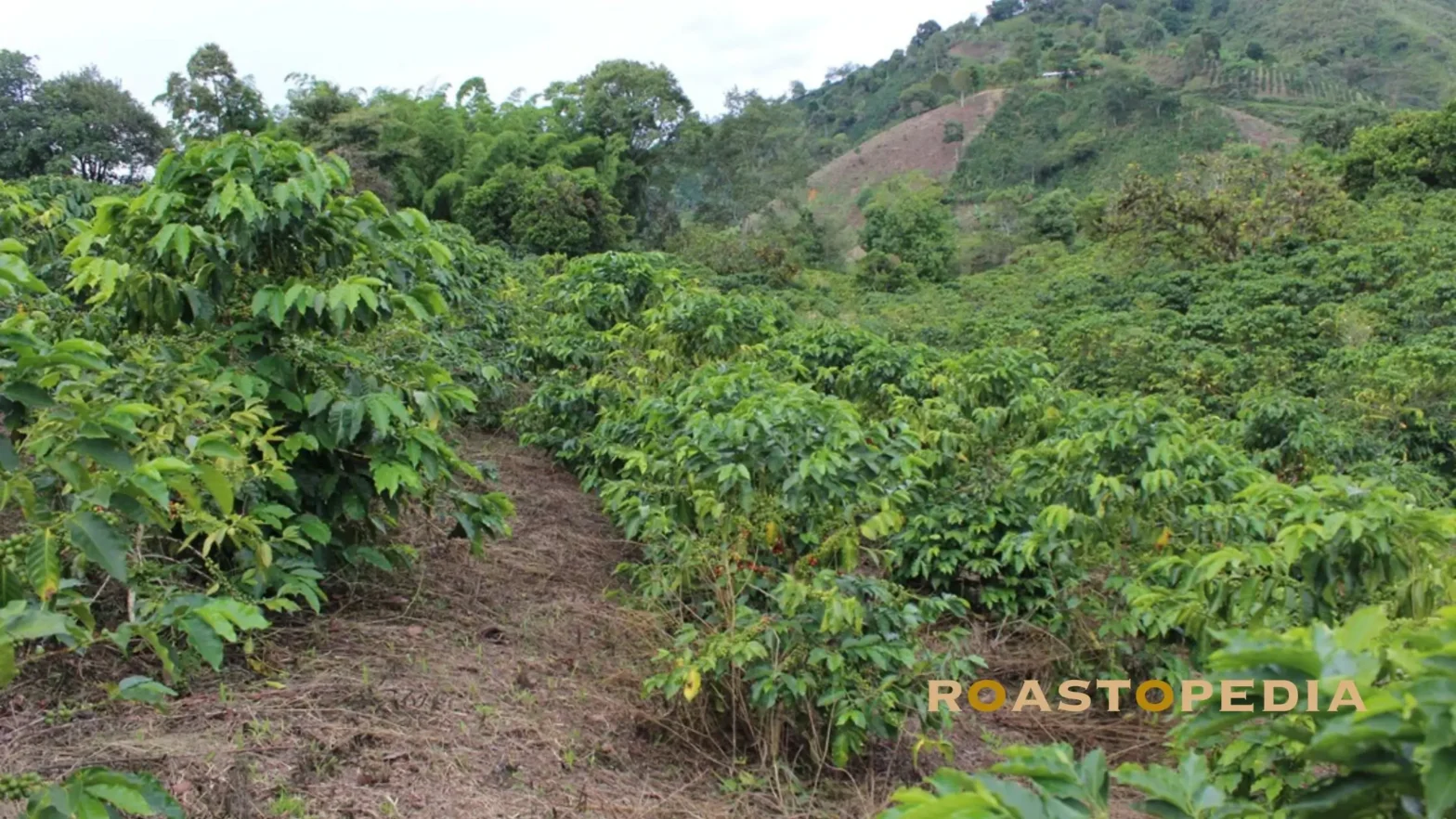
Long before a green coffee bean reaches the roaster’s drum, its flavor destiny has already been written. It is inscribed in the mineral-rich ash of ancient volcanoes, in the interplay of equatorial sun and cool highland mist, in the composition of microbe-laden forest soil, and in the altitude at which a cherry ripened over months rather than weeks. This invisible authorship — the aggregate influence of place on flavor — is what the coffee world borrows, with full credit, from French viticulture and calls terroir.
The word terroir (pronounced tehr-WAHR) derives from the Latin terra, meaning earth. In wine, it has been a guiding principle for centuries; Bordeaux estates were sold by parish name as far back as the Middle Ages, and prices already reflected what consumers instinctively understood — that some places produce better, more distinctive products than others. The logic is no different for coffee. A Yirgacheffe and a Sumatran Mandheling may both be 100% Arabica, identically roasted, and brewed the same way, and yet taste as dissimilar as a Burgundy Pinot Noir tastes from a Barossa Valley Shiraz. The roaster does not manufacture that difference; they reveal it. Understanding terroir is, therefore, understanding the first — and perhaps most consequential — chapter in any coffee’s story.
Defining Terroir in the Context of Coffee
In wine, terroir is generally understood as the combination of soil, topography, climate, and human agricultural tradition that gives a wine its sense of somewhereness — the quality of tasting like a particular place. Coffee terroir operates on the same principle, but with one important qualification: unlike a grape, which is pressed and fermented directly, a coffee cherry undergoes significant post-harvest processing (washing, drying, hulling, and then roasting) before it becomes a beverage. This has led some researchers to debate whether terroir in coffee should be defined solely by environmental pre-harvest conditions or whether it must also encompass the post-harvest handling that takes place on or near the farm.
The most rigorous contemporary scientific framework, articulated in a peer-reviewed analysis published in Foods (2022), proposes that coffee terroir should be assessed using descriptive sensory analysis — the cupping method at a medium-light roast level (see Coffee Roast Level)— while recognizing that post-harvest processing, coffee variety, environmental conditions, and farm management all contribute collectively to the final terroir expression. This is a more expansive definition than wine uses, and for good reason: in many producing regions, the method of processing (washed, natural, honey) is itself determined by environmental factors such as rainfall patterns and ambient humidity, making it as “natural” a product of place as the soil beneath the trees.
Coffee terroir encompasses four primary pillars: altitude and topography, soil composition, climate and microclimate, and genetic variety in its environmental context. Each will be examined in depth.
Pillar I: Altitude and Topography
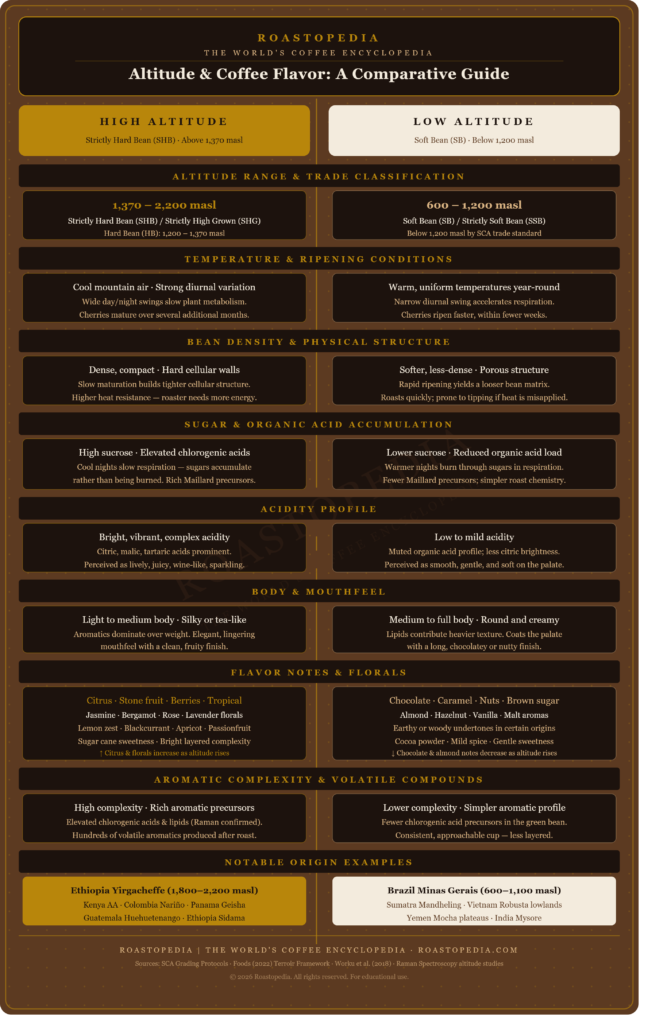
Of all the variables that shape coffee flavor before roasting, altitude is among the most measurable, most studied, and most dramatic in its effects. Coffee professionals classify bean density by growing altitude as a matter of standard trade practice:
- Soft Bean (SB) / Strictly Soft Bean (SSB): Below 1,200 meters above sea level (masl)
- Hard Bean (HB) / High Grown (HG): 1,200–1,370 masl
- Strictly Hard Bean (SHB) / Strictly High Grown (SHG): Above 1,370 masl
These are not merely commercial labels; they describe a real and documented biochemical reality. At higher altitudes, temperatures are cooler, atmospheric pressure is lower, and the diurnal temperature variation — the swing between daytime highs and nighttime lows — is more pronounced. Coffee cherries that ripen under these conditions do so more slowly. That extended maturation window allows the developing seed to accumulate greater concentrations of the sugars, organic acids, and aromatic precursor compounds that ultimately produce a complex, vibrant cup.
Spectroscopic analysis using Raman spectroscopy has confirmed that increased altitude correlates with elevated concentrations of chlorogenic acids and lipids in the green bean. The flavor consequences are equally well-documented: as altitude increases, chocolate and almond notes decrease in prominence, while citric, floral, and sugar cane notes become more prominent. In practical terms, this is why a washed Ethiopian Yirgacheffe grown at 1,800–2,200 masl delivers jasmine, bergamot, and bright lemon acidity, while a Brazilian natural-process coffee from 900 masl in Minas Gerais delivers chocolate, nuts, and low acidity — even before the roaster has touched either one.
Research comparing coffees grown at 1,000–1,750 cm⁻¹ ranges of altitude further confirms that cooler mountain temperatures slow plant metabolism, promoting the accumulation of complex sugars in the cherry. Those sugars function as Maillard reaction precursors during roasting, ultimately generating hundreds of volatile aromatic compounds. Altitude, then, is not merely the context in which a coffee grows; it is a biological timer that governs the entire chemistry of the seed.
Topography beyond raw elevation also matters. Slope aspect — the direction a hillside faces — governs sun exposure. In the Southern Hemisphere, north-facing slopes receive more direct sunlight; in the Northern Hemisphere, south-facing slopes do. This asymmetry affects canopy temperature, soil moisture evaporation rates, and the thermal budget available to maturing cherries. Within a single cooperative, lots from different slope aspects can exhibit perceptibly different flavor profiles even when grown at identical elevations and with identical agricultural practices.
Pillar II: Soil Composition
Soil is the primary mediating layer between geography and plant. It provides water, structural support, and — critically — the mineral and nutrient profile that a coffee plant draws upon to build its seeds. The scientific literature is nuanced on this point: while it is widely understood that soil composition influences bean quality, the precise causal mechanisms between specific soil minerals and specific flavor notes have proven difficult to isolate, partly because soil, climate, altitude, and variety interact in complex, interdependent ways.
What the research does confirm is that the mineral and metal compositions of coffee plants reflect the bioavailable nutrients present in the soils in which they grow, a principle that has been validated across multiple analytical methods including ICP-AES elemental profiling, fatty acid analysis, and chlorogenic acid profiling. Potassium is consistently identified as the predominant mineral element in green coffee beans, and its concentration varies meaningfully by geographic origin and soil type.
Several soil categories are recognized as particularly favorable for coffee:
Volcanic Soil
Volcanic soils — found in abundance in Guatemala, Colombia, Ethiopia, Kenya, Sumatra, and Hawaii — are among the most prized for coffee cultivation. Rich in minerals, well-draining, and replenished over millennia by lava deposits, volcanic soils contribute to the brightness and complexity associated with coffees from these regions. The volcanic terroir of Colombia’s Nariño region, for instance — where farms sit at 1,500–2,200 masl on Andean volcanic slopes — produces coffees renowned for layered flavor profiles combining sweetness, bright acidity, and complexity that coffee connoisseurs specifically seek out. Guatemala’s Antigua region, nestled among active volcanoes, is similarly associated with coffees exhibiting smoky undertones, chocolate sweetness, and notable acidity.
Iron-Rich Red and Clay Soils
Kenya’s distinctive coffees — characterized by notes of blackcurrant, black cherry, tomato, and wine-like acidity — are inseparable from the red clay and iron-rich volcanic soils of the Central Highlands around Mount Kenya. These soils, combined with a rigorous wet-processing (washed) tradition and elite cultivars like SL28 and SL34 (selected by Scott Laboratories in the 1930s specifically to thrive in this terroir), are collectively responsible for what Kenyan coffee professionals consider a flavor fingerprint found nowhere else on earth.
Sandy and Loamy Soils
Sandy or loamy soils, which drain freely and tend to be lower in total mineral content, often produce coffees with more delicate floral or citrusy notes — characteristics associated with lighter body and higher perceived acidity. These soils do not retain moisture as well as volcanic or clay soils, which creates additional stress on the plant that can paradoxically concentrate flavor compounds in the seed.
Soil and Origin Traceability
The connection between soil and flavor is sufficiently robust that researchers have successfully used elemental profiles to perform geographic origin classification of coffee. A study using three chemical families — chlorogenic acids, fatty acids, and elemental mineral analysis — successfully discriminated between Colombian coffees grown in three distinct locations (Naranjal, Paraguaicito, and Rosario), with elemental analysis providing excellent classification of geographic origin even while being unable to distinguish between Arabica varieties. Separately, a study using nuclear magnetic resonance (NMR) spectroscopy found that chlorogenic acids and lactate characterized African coffee origins, acetate and trigonelline characterized Asian origins, and fatty acid chains characterized American origins — a finding that speaks to the depth at which terroir leaves its chemical signature in the bean.
Pillar III: Climate and Microclimate
Climate — encompassing temperature, rainfall, humidity, and the seasonal rhythms that govern a coffee plant’s annual cycle — is perhaps the most comprehensive driver of terroir. The Specialty Coffee Association and World Coffee Research both identify a relatively narrow climatic window within which high-quality Arabica thrives: mean annual temperatures between 18°C and 25°C, annual rainfall of 1,200–2,500 mm, and a distinct dry period that triggers flowering. Coffea canephora (Robusta) tolerates warmer and more humid conditions, generally up to 24–26°C.
Within these broad climatic parameters, however, it is the details that matter most.
Diurnal Temperature Variation
The swing between warm daytime temperatures and cool nighttime temperatures — the diurnal range — is a key driver of flavor complexity. During warm days, photosynthesis runs at capacity, generating the carbohydrates and organic acids that the plant translocates to developing seeds. During cool nights, plant respiration slows dramatically, meaning fewer of those accumulated compounds are consumed. The result is a seed that is, in biochemical terms, denser and more complex than one developed under uniformly warm conditions. This is one of the primary reasons high-altitude coffees taste more complex: altitude amplifies diurnal variation.
Research on agroforestry systems confirms that shade tree cover reduces the magnitude of diurnal temperature variation, moderating both peak daytime heat and nighttime cooling, which in turn affects ripening speed and cherry development. Shaded coffee plants in agroforestry systems tend to produce larger cherries due to this slower maturation — a documented physical consequence of microclimate management.
Rainfall Patterns and Water Stress
Seasonal rainfall provides the hydration needed for cherry development, while strategically timed dry periods serve essential agricultural functions: they stress the plant into flowering synchrony and allow for structured harvest and drying operations. In regions like Ethiopia’s Yirgacheffe and Sidama zones, the temperate climate and seasonal rainfall patterns contribute directly to the development of the floral and fruity notes that distinguish these coffees. In Colombia’s Huila department — which benefits from two harvest cycles per year due to its unique topography and rainfall patterns — producers can offer fresh crop coffee twice annually, a commercial and sensory advantage directly attributable to climate.
In contrast, Indonesia’s Sumatra — home to the Mandheling and Gayo regions — is characterized by high humidity and heavy rainfall, which has historically necessitated the “wet-hulled” Giling Basah processing method. This method, in which the parchment is removed while the bean still contains significant moisture, contributes the heavy body, low acidity, and earthy, herbaceous characteristics that define Sumatran coffee’s identity. The processing method is, in this case, an adaptation to and product of climate — making it as much a part of Sumatran terroir as the volcanic soil itself.
Microclimates
Within a single mountain range, distinct microclimates can produce dramatically different cups. Guatemala’s Huehuetenango region — perched at 1,500–2,000 masl but protected from Pacific and Atlantic moisture by the Cuchumatanes mountain range — experiences a hot, dry microclimate fed by winds descending from Mexico that prevent frost and maintain the high-altitude conditions that normally only exist farther above sea level. This microclimate is considered one of Guatemala’s most distinctive, producing coffees with pronounced fruity notes, floral aromatics, and a refined sweetness that differs substantially from the smoked chocolate profiles of lower-altitude Antigua farms only a few hundred kilometers away.
Colombia’s Nariño region provides another textbook microclimate example. The Andes here create a paradox: warm air ascends from the valleys, allowing coffee to be grown at unusually high altitudes (up to 2,200 masl) without frost damage, while the cool nights ensure slow cherry maturation. The result is what many cuppers describe as one of the most complex terroirs in the world.
Pillar IV: Coffee Variety in Its Environmental Context
Terroir does not operate on generic “coffee.” It operates on specific genetic varieties — cultivars — each of which carries its own biochemical tendencies that interact with the environmental context in different ways. The same Bourbon variety grown in Ethiopia’s mineral-rich organic soils may express pronounced floral and fruity notes; grown in the Colombian Andes, the same Bourbon tends toward sweeter caramel and chocolate profiles. Terroir and variety are not independent variables; they are a conversation.
The major Arabica cultivar families include:
- Typica: One of the oldest cultivated varieties, spread from Yemen through India and Indonesia to the Americas. Generally produces clean, bright cups with good sweetness; susceptible to disease.
- Bourbon: A natural mutation of Typica discovered on Réunion Island. Slightly smaller bean, higher sweetness, and a genetic parent to dozens of important cultivars including Caturra, Mundo Novo, and Yellow Bourbon.
- Caturra: A compact Bourbon mutation common in Colombia and Costa Rica. Produces sweet, bright cups and thrives in this region’s specific altitudinal and climatic conditions.
- SL28 and SL34: Scott Laboratories cultivars developed specifically for Kenya’s soils and altitude ranges in the 1930s. Their signature blackcurrant and berry notes are inseparable from Kenyan terroir — the variety was bred for the place, making the variety-terroir conversation unusually tight.
- Geisha (Gesha): Originally from the Gesha forest in southwestern Ethiopia, this variety produces extremely aromatic, tea-like cups. Its explosive success at the Best of Panama (BoP) competition in 2004 — where it sold at auction for record prices — demonstrated that a specific variety, placed in the specific microclimate of Panama’s Boquete highlands, could express terroir with unusual clarity.
- Heirloom Ethiopian varieties: Ethiopia hosts thousands of genetically distinct coffee varieties, many of them still undescribed by science. These wild or semi-wild cultivars interact with Ethiopia’s diverse regional terroirs to produce the enormous flavor diversity for which the country is globally known.
The cultivar-terroir interaction also has a chemical dimension. Research comparing Arabica varieties’ composition found that different varieties exhibit significantly different chlorogenic acid and fatty acid profiles, and that these differences interact with growing environment in ways that cannot be reduced to variety alone. In other words, the same variety grown in different terroirs will differ, and different varieties grown in the same terroir will differ — but the combination of variety and terroir produces outcomes that neither factor could predict in isolation.
Terroir in Major Coffee-Producing Regions
The following overview applies the four pillars of terroir analysis to the world’s most celebrated coffee origins, illustrating how each region’s unique environmental signature translates into specific flavor profiles.
Ethiopia
Widely recognized as the birthplace of coffee, Ethiopia’s high altitudes (1,500–2,200 masl), diverse heirloom varieties, and varied regional climates produce some of the world’s most distinctive cups. Ethiopia’s specialty coffees from Harrar, Yirgacheffe (spelled Yerga Cheffe in some contexts), and Sidama carry premium prices in global markets and are recognized for uniqueness of flavor that has been confirmed by metabolomics research.
- Yirgacheffe: Bright, floral, and tea-like; jasmine, bergamot, lemon. Washed processing highlights the region’s characteristically clean acidity.
- Sidama: Balanced fruitiness, good body, identifiable sweetness; medium acidity.
- Harrar: Medium-sized greenish-yellow beans; creamy body, fruity characteristics, distinctive mocha flavor profile with medium acidity.
Kenya
Kenya’s iron-rich volcanic soils on the slopes of Mount Kenya, combined with high elevations and rigorous wet-processing traditions, produce coffees that are regarded among the world’s finest for their intensity and complexity. Kenyan AA — the country’s top grade — is known for juicy blackcurrant and black cherry notes, full body, and a wine-like acidity that persists through roasting.
Colombia
Colombia’s Andean topography creates a vast landscape of microclimates and altitude ranges that sustain a diverse flavor palette. The country’s unique geography — with mountains running north to south through the center — means that farms on either side of a ridge may experience different rainfall patterns, temperature ranges, and sun exposure. Coffees from Huila, Nariño, Antioquia, and Cauca each carry distinct regional identifiers, united by the country’s signature balanced acidity and clean sweetness.
Guatemala
Guatemala’s volcanic landscape and highly varied microclimates — from the perpetually smoky, chocolate-rich cups of Antigua to the fruity, floral offerings of high-altitude Huehuetenango — illustrate how a single country can harbor multiple distinct terroirs. The volcanic soils that underlie most of the country’s coffee lands contribute mineral complexity, while the dual presence of Pacific and Caribbean climate systems creates regional variation at a scale unusually compressed for the country’s size.
Sumatra (Indonesia)
Sumatran terroir is among the most distinctive in the world — a product not only of soil and altitude but of the wet-hulled processing method that is itself a climate adaptation. The Gayo highlands of Aceh province, where Gayo coffees are grown at 1,200–1,500 masl in volcanic soils, produce the heavy-bodied, low-acid, earthy and herbaceous cups for which Sumatra is known. The Mandheling region, in North Sumatra, contributes similar profile characteristics with added notes of dark chocolate and cedar.
Brazil
As the world’s largest coffee producer, Brazil’s terroir is defined as much by its constraints as by its gifts. Large flat plateaus, relatively low altitudes (600–1,100 masl in most regions), and consistent year-round warmth produce beans with lower acidity, rounder body, and dominant notes of chocolate, nuts, and caramel. The Cerrado Mineiro, Sul de Minas, and Mogiana regions of Minas Gerais state are particularly celebrated, with increasing specialty-tier offerings as producers invest in higher-altitude plots and more selective processing.
The Chemistry of Terroir: What the Science Reveals
The sensory reality of terroir is ultimately a chemical reality. Researchers have identified and quantified a range of specific compounds whose concentrations vary predictably with origin, altitude, and soil type, and which connect the geography of a farm to the flavor in a cup.
Chlorogenic acids (CGAs) are among the most studied. These phenolic compounds — primarily caffeoylquinic acid (CQA) and dicaffeoylquinic acid (diCQA) — influence acidity, bitterness, and astringency in the brewed cup, and are significantly affected by altitude and soil mineral composition. The concentration of chlorogenic acids varies depending on the type of bean, altitude, soil minerals, and processing method. Research published in peer-reviewed journals confirms that altitude correlates with chlorogenic acid concentration, though the direction of correlation can vary by variety and region — underscoring that terroir is always a systems interaction rather than a single-variable outcome.
Organic acids — including citric, malic, tartaric, oxalic, and fumaric acids — are foundational to coffee acidity and perceived juiciness. High concentrations of fumaric, tartaric, and oxalic acids are directly associated with high-quality coffee, as these acids enhance flavor and contribute a greater sensation of juiciness and a richer cup profile. These acids are themselves influenced by the carbohydrate metabolism of the cherry during maturation — which is, in turn, a function of temperature, altitude, and ripening rate.
Sucrose is of particular importance because it functions as the primary precursor to many acids and aromatic compounds formed during roasting, including acetic, formic, lactic, and glycolic acids. Coffee grown in higher-altitude, cooler conditions tends to accumulate more sucrose during the slower maturation period, which then produces more of these flavor-active compounds during roasting. This is why the same roast profile applied to a high-altitude bean and a low-altitude bean will yield different results: the roaster is working with different starting material.
Volatile aromatic compounds — pyrazines, furans, aldehydes, ketones, and sulfur-containing molecules — are produced during roasting from precursors built up during cherry development. These precursors are shaped by terroir. A 2012 NMR spectroscopy study was able to distinguish African, Asian, and American coffees based on their non-volatile metabolite profiles in green beans — before any roasting occurred — confirming that terroir leaves a measurable chemical imprint that the roaster then develops, but cannot create from nothing.
Isotope ratios have also emerged as a promising tool for terroir verification. Analysis using isotope ratio mass spectrometry (IRMS) has shown distinct δ¹⁵N and δ¹³C values between Arabica and Robusta varieties grown in different regions, supporting the use of isotopic markers for coffee authenticity verification and origin traceability. Potassium — consistently identified as the predominant mineral element in green coffee beans — shows significant variation by geographic origin and agricultural practice, further enabling scientific terroir authentication.
Terroir and the Roaster’s Role
Terroir isn’t something a roaster creates. It is something the roaster works with — or against.
A skilled roaster who understands the terroir of the green coffee they are handling will roast in a way that honors the origin’s inherent strengths. A light-to-medium roast of a high-altitude Ethiopian washed coffee will amplify the floral aromatics and citric acidity that the terroir built; a dark roast of the same bean will obliterate them, substituting roast-derived bitterness and carbon notes for the terroir’s natural expression. Neither is objectively wrong, but they represent fundamentally different philosophies — one of revelation, one of transformation.
The third-wave specialty coffee movement has made origin transparency and terroir reverence central to its identity. Single-origin offerings, lot-specific traceability, and the Specialty Coffee Association’s cupping protocols are all infrastructures designed to protect and communicate terroir. The shift toward lighter roast profiles that has defined the past two decades of specialty coffee is, at its core, a vote for terroir — a commitment to letting the place speak rather than letting the drum roar louder.
This does not diminish the craft of roasting. Quite the opposite: it demands more precision, more knowledge of origin, and more sensitivity to what each green coffee carries biochemically. The roaster is not a manufacturer; they are a translator.
Terroir, Processing, and the Limits of the Concept
Any honest account of coffee terroir must acknowledge its limitations. Unlike wine grapes, which go directly from vine to press, coffee seeds pass through significant agricultural transformation between harvest and export. The choice of processing method — washed, natural, honey, anaerobic, wet-hulled — can have flavor effects large enough to mask or amplify terroir signals. A naturally processed Ethiopian coffee and a washed Ethiopian coffee from the same farm, harvested in the same season, will taste markedly different: the washed lot will express clean florals and citric acidity; the natural lot will express fruity sweetness and wine-like body.
Researchers studying the sensory descriptors of coffees processed by different methods find that washing tends to add fruity, sweet, floral, caramel, and acidity notes — because fermentation-generated compounds diffuse into the green bean during processing, altering their chemical composition. This means the processing method is not neutral — it adds its own flavor dimension, separate from what the terrain provided. Whether that is considered “part of terroir” or “external to terroir” depends on the definitional framework used, but it must be understood as a flavor variable by any serious student of coffee origin.
What no processing method can do is add flavor complexity that the terroir failed to supply. High-altitude, slowly matured, biochemically rich green coffee can be degraded by poor processing; low-altitude, thin, biochemically impoverished coffee cannot be improved into a complex cup by good processing. Terroir sets the ceiling.
Climate Change: A Threat to Coffee Terroir
The microclimatic stability that defines great coffee terroir — consistent diurnal temperature variation, predictable rainfall, stable altitude-temperature relationships — is under documented and accelerating threat from climate change. Rising temperatures speed up plant metabolism, which reduces bean quality and makes plants more susceptible to pests and disease. Erratic rainfall undermines the dry periods essential for processing. Higher temperatures at lower altitudes effectively eliminate viable growing zones.
World Coffee Research and SCA projections indicate that significant portions of currently optimal coffee-growing land will become unsuitable for Arabica by mid-century under business-as-usual emissions scenarios. Some regions will see growing zones shift upslope — but the upper limit of viable altitude exists, and the pace of required adaptation far outstrips the coffee plant’s natural evolutionary rate.
What this means for terroir is stark: the terroirs that produce the world’s most distinctive coffees are not permanent. They are contingent on climate conditions that are changing. Preserving coffee terroir is, in this sense, inseparable from the broader work of climate mitigation, agricultural resilience, and support for the farming communities whose relationship with specific landscapes has been built across generations.
Why Terroir Matters to Every Person in the Coffee Chain
For the farmer: Understanding terroir is understanding the asset that their specific geography represents. A farmer who can articulate the altitude, soil type, microclimate, and variety of their production has the tools to seek specialty-tier pricing and direct-trade relationships. Terroir is the value proposition.
For the importer and green buyer: Terroir knowledge allows for informed sourcing decisions that match specific green coffees to specific roasters’ creative visions. A buyer who understands that a given Colombian micro-lot from a north-facing slope at 1,900 masl in Nariño will carry high sucrose and chlorogenic acid concentrations can communicate that to a roaster with confidence.
For the roaster: Terroir literacy transforms the approach to profile development. It shifts the question from “how should I roast this” to “what is already in this coffee, and how do I reveal it rather than replace it?” This is a more demanding and more rewarding form of craft.
For the barista: Terroir is the most powerful storytelling tool in coffee. A barista who can explain to a customer that the jasmine notes in their pour-over are there because the coffee grew at 2,000 meters in volcanic Ethiopian soil, ripened slowly over months of cool highland nights, and was washed in mountain stream water is not simply reciting trivia — they are connecting the person in front of them to a specific place on the planet.
For the consumer: In an era of increasing transparency and provenance awareness, terroir gives coffee its most compelling identity. It is what distinguishes a cup from a commodity and an origin from an ingredient.
Conclusion
Terroir is the first language of coffee — the language spoken by soil and sky, by altitude and rain, by volcanic minerals and cool highland darkness, before any human hand intervenes. By the time a green coffee bean arrives at a roastery, it is already, in some essential chemical and sensory sense, the cup it will become. The roaster, the barista, the brewer — all of them work downstream of this fundamental fact.
To understand terroir is to understand that flavor is not invented; it is uncovered. Every cup of great coffee is a form of geography made drinkable — a specific place, a specific season, a specific set of conditions that conspired to fill a seed with exactly the sugars, acids, lipids, and aromatic precursors that produce something extraordinary. That is the premise, the promise, and the profound responsibility of origin-aware coffee culture.
Respecting terroir means respecting the land, the climate, and the farmers whose knowledge of both is irreplaceable. It means understanding that what happens before the roaster gets involved is not preliminary — it is primary.
See Also
- The Role of Roast Level in Coffee Flavor Development — How the roaster translates what terroir provides into what the consumer tastes; Maillard reactions, caramelization, and the thermal transformation of green coffee chemistry.
- Does Grind Size Change Caffeine Extraction in Light Roast Coffee? — The role of particle size in extracting the compounds that terroir and roasting together produce.
- Does Light Roast Coffee Have More Caffeine Than Medium Roast? — The biochemistry of caffeine in relation to roast profile and its connection to altitude and variety.
- Coffee Processing Methods: Washed, Natural, and Honey Explained — How post-harvest processing interacts with terroir to shape the final flavor expression of a coffee.
- Single-Origin Coffee: What it Means and Why It Matters — The commercial and sensory case for single-origin transparency, and how terroir traceability drives specialty coffee pricing and consumer trust.
- Specialty Coffee Grading and Cupping: How Quality is Assessed (future Academy article) — The SCA cupping protocol as the primary sensory tool for evaluating terroir expression, from green analysis to cup score.
- Climate Change and the Future of Coffee Terroir (future Academy article) — How rising temperatures and erratic rainfall threaten the microclimatic stability that defines coffee’s most celebrated growing regions, and what producers and institutions are doing about it.
References
- Joët, T., Laffargue, A., Descroix, F., Doulbeau, S., Bertrand, B., de Kochko, A., & Dussert, S. (2010). Influence of environmental factors, wet processing and their interactions on the biochemical composition of green Arabica coffee beans. Food Chemistry, 118(3), 693–701. https://doi.org/10.1016/j.foodchem.2009.05.048
- Bertrand, B., Boulanger, R., Dussert, S., Ribeyre, F., Berthiot, L., Descroix, F., & Joët, T. (2012). Climatic factors directly impact the volatile organic compound fingerprint in green Arabica coffee bean as well as coffee beverage quality. Food Chemistry, 135(4), 2575–2583. https://doi.org/10.1016/j.foodchem.2012.06.060
- Poisson, L., Blank, I., Dunkel, A., & Hofmann, T. (2017). The chemistry of roasting — decoding flavor formation. In The Craft and Science of Coffee (pp. 273–309). Academic Press. https://doi.org/10.1016/B978-0-12-803520-7.00012-6
- Borém, F. M., Figueiredo, L. P., Ribeiro, F. C., Taveira, J. H. S., Giomo, G. S., & Salva, T. J. G. (2016). The relationship between organic acids, sucrose and the quality of specialty coffees. African Journal of Agricultural Research, 11(8), 709–717. https://doi.org/10.5897/AJAR2015.10539
- Avelino, J., Barboza, B., Araya, J. C., Fonseca, C., Davrieux, F., Guyot, B., & Cilas, C. (2005). Effects of slope exposure, altitude and yield on coffee quality in two altitude terroirs of Costa Rica, Orosi and Santa María de Dota. Journal of the Science of Food and Agriculture, 85(11), 1869–1876. https://doi.org/10.1002/jsfa.2188
- Worku, M., de Meulenaer, B., Duchateau, L., & Boeckx, P. (2018). Effect of altitude on biochemical composition and quality of green arabica coffee beans. Food Chemistry, 261, 1–11. https://doi.org/10.1016/j.foodchem.2018.04.042
- Decazy, F., Avelino, J., Guyot, B., Perriot, J. J., Pineda, C., & Cilas, C. (2003). Quality of different Honduran coffees in relation to several environments. Journal of Food Science, 68(7), 2356–2361. https://doi.org/10.1111/j.1365-2621.2003.tb05772.x
- Cucullu, A. F., Pearce, S. C., & Pons, W. A. (1967). Determination of sucrose in green coffee by gas-liquid chromatography. Journal of Agricultural and Food Chemistry, 15(1), 86–89. https://doi.org/10.1021/jf60149a019
- Alonso-Salces, R. M., Serra, F., Reniero, F., & Héberger, K. (2009). Botanical and geographical characterization of green coffee (Coffea arabica and Coffea canephora): Chemometric evaluation of phenolic and methylxanthine contents. Journal of Agricultural and Food Chemistry, 57(10), 4224–4235. https://doi.org/10.1021/jf804194h
- Diaz-Garcia, L., Oberthür, T., Läderach, P., & Rahn, E. (2008). Comparison of the Effectiveness of Fatty Acids, Chlorogenic Acids, and Elements for the Chemometric Discrimination of Coffee (Coffea arabica L.) Varieties and Growing Origins. Journal of Agricultural and Food Chemistry, 56(8), 2973–2980. https://doi.org/10.1021/jf703305b
- Farah, A., & Donangelo, C. M. (2006). Phenolic compounds in coffee. Brazilian Journal of Plant Physiology, 18(1), 23–36. https://doi.org/10.1590/S1677-04202006000100003
- Ginz, M., Balzer, H. H., Bradbury, A. G., & Maier, H. G. (2000). Formation of aliphatic acids by carbohydrate degradation during roasting of coffee. European Food Research and Technology, 211(6), 404–410. https://doi.org/10.1007/s002170050048
- Teutscherova, N., Vazquez, E., Masaguer, A., Navas, M., Scullion, J., Johnson, D., & Benito, M. (2017). Comparison of soil microbial activity under conventional and reduced tillage practices. Organic Agriculture, 7(3), 195–209. (On the role of soil biology in plant nutrient cycling, applicable to coffee agroforestry systems.)
- Läderach, P., Lundy, M., Jarvis, A., Ramirez, J., Perez Portilla, E., Schepp, K., & Eitzinger, A. (2011). Predicted impact of climate change on coffee supply chains. In The Economic, Social and Political Elements of Climate Change (pp. 703–723). Springer. https://doi.org/10.1007/978-3-642-14776-0_39
- Bote, A. D., & Vos, J. (2016). Tree management and environmental conditions affect coffee (Coffea arabica L.) bean quality. NJAS – Wageningen Journal of Life Sciences, 78, 1–8. https://doi.org/10.1016/j.njas.2016.03.003
- Niether, W., Glawe, A., Pfohl, K., Adamtey, N., Isaac, M. E., Schneider, M., Karlovsky, P., Pawelzik, E., & Smit, I. (2020). The effect of short-term vs. long-term soil moisture stress on the physiology and metabolome of Coffea arabica. Plant Science, 293, 110423. https://doi.org/10.1016/j.plantsci.2020.110423
- Aaron, G. (2023). Coffee Terroir and Its Assessment. Foods, 11(4), 2738 [PMC9265435]. Published in MDPI Foods, National Institutes of Health PubMed Central. https://pmc.ncbi.nlm.nih.gov/articles/PMC9265435/
- Specialty Coffee Association. (2022). Coffee Standards: Green Coffee Classification and Grading Protocols. SCA Publications, Santa Ana, CA. https://sca.coffee/research/coffee-standards
- Sautier, M., Mérot-L’Anthoën, N., & Montagnon, C. (2011). Discrimination of coffee origins using chemical markers and chemometrics. Food Research International, 44(1), 257–264. https://doi.org/10.1016/j.foodres.2010.11.030
- Tolessa, K., Rademaker, M., De Baets, B., & Boeckx, P. (2017). Prediction of specialty coffee cup quality based on near infrared spectra of green coffee beans. Talanta, 150, 367–374. https://doi.org/10.1016/j.talanta.2015.12.038