
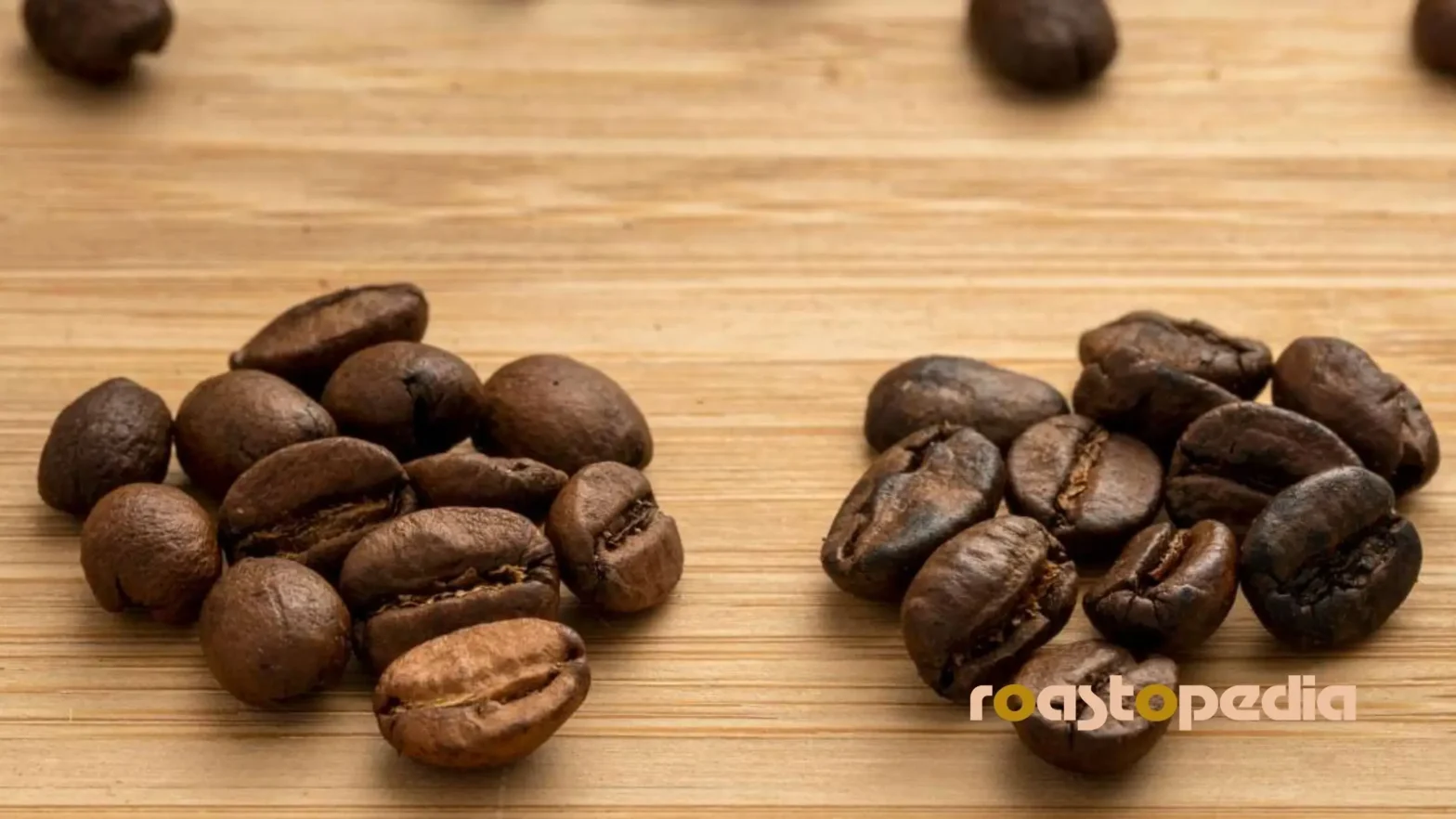
Roast level is the single most transformative variable in a coffee’s journey from farm to cup. The same green bean — grown in the same soil, processed the same way, harvested on the same day — can taste like blueberries and jasmine at a light roast, like milk chocolate and brown sugar at a medium roast, and like dark cocoa and smoke at a dark roast. None of those flavors exist in the raw green bean. Every single one is created in the roaster, through a precise cascade of chemical reactions triggered by heat. Understanding how roast level drives flavor development isn’t just academic — it’s the key to choosing, brewing, and appreciating coffee with real intention.
What Happens Inside a Coffee Bean During Roasting?
Before you can understand how roast levels shape flavor, you need to understand what roasting actually does to a coffee bean at the molecular level. Green coffee beans are dense, nearly flavorless, and smell faintly of grass. They are packed with flavor precursors — compounds that don’t yet taste or smell like coffee, but will become coffee’s flavor under heat. These precursors include carbohydrates (especially sucrose and reducing sugars), free amino acids, proteins, chlorogenic acids, lipids, and alkaloids like caffeine and trigonelline.
When heat is applied, these precursors are transformed through a series of interrelated chemical reactions. The three most significant are:
The Maillard Reaction
The Maillard reaction is the engine of coffee flavor. It begins when beans are heated to approximately 150–200°C (302–392°F), the point at which carbonyl groups from reducing sugars react with amino groups from proteins and free amino acids. The result is a cascade of hundreds of new aromatic and flavor compounds — pyrazines, furans, thiols, pyrroles, pyridines, and melanoidins — that form the structural backbone of roasted coffee’s aroma and taste.
Scientists estimate that more than 500 aroma compounds originate from Maillard pathways alone. These compounds produce the nutty, biscuity, chocolaty, savory, and caramel notes that define developed coffee. Melanoidins — the brown polymers produced in bulk by the Maillard reaction — also affect mouthfeel, body, and antioxidant content.
Crucially, the Maillard reaction is not a single event; it is a window that roasters manage with precision. A roast that moves through this window too quickly produces a thin, underdeveloped cup. One that lingers too long pushes into bitter, carbonized territory.
The reaction is also origin-dependent. Every coffee variety carries a unique ratio of amino acids and reducing sugars. A Kenyan SL28 will respond differently to the same roast curve than a Sumatran Mandheling — same chemistry, meaningfully different result.
Caramelization
Caramelization is a separate process that happens alongside the Maillard reaction, at slightly higher temperatures. Where the Maillard reaction requires amino acids and sugars, caramelization is the thermal breakdown of sugars alone. The sucrose in the green bean decomposes under heat, producing the sweet, toasty, toffee-like notes commonly associated with medium and medium-dark roasts.
Caramelization and the Maillard reaction are cousins, not twins. The best medium roasts achieve a balance of both: strong Maillard development layered beneath just enough caramelization to deepen sweetness without burning it away. A roast that leans too heavily on caramelization without adequate Maillard development can taste one-dimensional — sweet on the surface but lacking depth.
Strecker Degradation
Operating within the broader Maillard framework, Strecker degradation involves the reaction of alpha-amino acids with alpha-dicarbonyl compounds. This produces aldehydes and organic acids that contribute significantly to coffee’s aroma complexity. Specific amino acid pathways also generate thiazoles, thiazoline, pyrroline, and pyridines — compounds responsible for some of coffee’s most distinctive aromatic nuances.
The Three Stages of a Roast
A coffee roast progresses through three recognizable phases, and where a roaster stops the process determines the roast level — and therefore the flavor.
Stage 1: The Drying Phase (~100–150°C / 212–302°F)
In the drying phase, beans absorb heat and lose moisture. They shift from pale green to a straw yellow and emit grassy aromas as chlorophyll breaks down. Not much flavor chemistry is happening yet — the primary goal is even moisture removal, which prepares the bean for the reactions to come. Uneven drying at this stage can lead to uneven flavor development later, with some beans scorching while others remain underdeveloped.
Stage 2: The Browning Phase (~150–200°C / 302–392°F)
This is where the Maillard reaction runs in full force. Beans shift from yellow through tan to light brown, and the aroma transforms from grassy to grain-like to something recognizably coffee-like. Caramelization of sucrose also begins here. The browning phase is where most of coffee’s aromatic complexity is built, and it’s the stage roasters monitor most closely.
Stage 3: The Development Phase (First Crack Onward)
At roughly 196–205°C (385–401°F), beans reach “first crack” — an audible popping sound caused by expanding steam fracturing the bean’s cellular structure. This is the moment when the roaster must make the most consequential decision: stop now (light roast), continue through first crack (medium roast), or push toward and beyond “second crack” (dark roast). Every second past first crack deepens flavor development — and changes the cup dramatically.
Light Roast: Origin in the Foreground
A light roast stops shortly after first crack, typically between 356–401°F (180–205°C). At this stage, the Maillard window has been relatively brief. Many of the volatile aromatic compounds tied to the bean’s origin — its terroir, variety, and processing — are still intact, because the heat hasn’t had time to drive them off or convert them into secondary roast flavors.
What you taste: Floral, fruity, and citrus notes dominate. Coffees from Ethiopia might express jasmine and bergamot. A Kenyan bean might offer blackcurrant and grapefruit. A natural-processed Colombian might show strawberry and tropical fruit. These are not flavors added by the roaster — they are unlocked from compounds already present in the green bean. A multivariate analysis published in Espublisher found that light roasts developed distinctly floral and fruity aromas, while medium roasts showed a more balanced sweet-and-roasted profile, and dark roasts yielded prominent smoky and chocolate-like notes.
Acidity: Light roasts are characteristically bright and acidic. They retain the highest concentrations of chlorogenic acids (CGAs) — polyphenols that make up roughly 6–12% of a green bean’s weight and are a key driver of perceived acidity and fruity sharpness. As roasting progresses, these acids begin to degrade, so the lightest roasts preserve the most.
Body: Light roasts typically have a lighter, crisper mouthfeel. Less melanoidin formation means less body-building material in the cup.
The tradeoff: The brief Maillard phase in a light roast means sweetness and body are less developed. Some drinkers find very light roasts undercooked and thin. The skill of a light-roast specialist lies in roasting just long enough to develop complexity without obliterating origin character.
Medium Roast: The Chemistry of Balance
A medium roast develops past first crack but stops before second crack, typically between 410–428°F (210–220°C). This is where the Maillard reaction runs into more complex chemical territory, and where caramelization begins contributing meaningfully to the cup.
What you taste: Sweetness deepens. Chocolate, caramel, toasted almonds, brown sugar, and red fruit notes emerge. The cup is more balanced — less piercing acidity than a light roast, more complexity than a dark roast. Research published across multiple studies confirms that medium roasts represent a kind of chemical equilibrium: enough chlorogenic acids remain for complexity, but their breakdown products (caffeic acid and quinic acid) have stabilized, rounding the cup’s edge. The result is a coffee that feels balanced rather than aggressive.
Acidity: Moderate. Chlorogenic acid levels decline by approximately 0.4 mg/mL when moving from light to medium roast, according to a ScienceDirect study on brewed coffee acids. This softens perceived brightness and makes medium roasts the most approachable for a broad range of palates.
Body: Fuller than a light roast, due to more melanoidin development. Medium roasts also retain meaningful origin character, making them versatile across brewing methods.
The sweet spot: Many roasters and researchers consider medium roast the most forgiving window for most origins and most brewing methods. It’s not coincidental that medium roast is America’s most popular roast level.
Dark Roast: When the Roast Becomes the Flavor
A dark roast continues past first crack and into — or beyond — second crack, reaching temperatures of 437–446°F (225–230°C) and higher. At this stage, the prolonged heat begins to break down many of the delicate Maillard compounds formed earlier, replacing them with the byproducts of caramelization and, eventually, pyrolysis (the thermal decomposition of organic compounds).
What you taste: Bold, intense flavors dominate — bittersweet chocolate, smoke, dark caramel, sometimes spice. Origin character fades significantly. You are tasting the roast process more than the bean itself. This is not a flaw — it is a deliberate transformation that many coffee drinkers love — but it means a dark-roasted Ethiopian and a dark-roasted Colombian may taste more similar than different.
Acidity: Low. By the dark roast stage, most chlorogenic acids have been degraded by heat. The quinic acid produced by CGA breakdown does contribute a sharp, sometimes harsh edge to very dark roasts — which is why poorly executed dark roasts can taste simultaneously bitter and sour.
Body: Full and heavy, due to maximum melanoidin development and the presence of oils on the bean surface (a visual signal that the bean’s cellular structure has broken down enough to release lipids).
The tradeoff: At extreme dark roast temperatures, some caffeine also begins to sublimate — though this effect is modest and doesn’t account for significant caffeine loss. More meaningfully, virtually all origin nuance is gone. Dark roast is a stylistic choice, not a superior one.
The Chemistry of Chlorogenic Acids Across Roast Levels
Chlorogenic acids deserve their own section because they are arguably the most roast-sensitive flavor compounds in coffee. Present at 6–12% of green bean weight, CGAs influence perceived acidity, bitterness, and flavor complexity in ways that shift dramatically with roast level.
During roasting, CGAs begin to degrade almost immediately as heat increases, breaking down into caffeic acid (which contributes fruity sharpness) and quinic acid (which contributes astringency and bitterness). The balance between these breakdown products is a major determinant of whether a coffee tastes lively, smooth, or harsh.
A study published in Food Chemistry confirmed that chlorogenic, citric, and malic acids are all degraded during roasting, while quinic acid actually increases due to CGA breakdown — which helps explain why some very dark roasts develop a distinctive sour-bitter edge despite low overall acidity.
High-altitude coffees — Ethiopians, Guatemalans, Kenyans — tend to contain more CGAs, which is why these origins particularly reward lighter roast treatment. Their chlorogenic acid richness, when preserved, produces the distinctive floral and fruity brightness associated with top-tier single-origin coffees. Roasting them dark doesn’t destroy the caffeine; it destroys the character.
Roast Level, Aroma Compounds, and the Volatile Spectrum
Beyond chlorogenic acids and Maillard products, roast level shapes the volatile spectrum of coffee — the hundreds of aromatic compounds that reach your nose before your tongue even tastes anything.
Key volatile compound classes and how they shift with roast:
| Compound Class | Primary Flavors | Behavior with Increasing Roast |
| Pyrazines | Nutty, earthy, roasted grain | Increase through medium, plateau in dark |
| Furans | Caramel, bread, sweet | Increase in light-medium, degrade in dark |
| Thiols | Sulfurous, roasted coffee | Peak in medium roast |
| Pyrroles | Chocolate, earthy | Increase with roast |
| Aldehydes | Floral, fruity, grassy | High in light, degrade in medium-dark |
| Melanoidins | Body, mouthfeel | Increase progressively with roast |
Light roasts retain more aldehydes (fruity, floral) and fewer pyrazines (roasted grain). Dark roasts accumulate pyrroles and melanoidins while losing the volatile aldehydes. This chemical shift explains — at the molecular level — why the sensory experience of light and dark roasts feels so completely different.
What Roasters Are Actually Controlling
A roast profile is essentially a recipe for managing the Maillard window, caramelization rate, and volatile compound development — using three primary levers:
1. Heat input (rate of rise): How quickly the bean temperature climbs determines which reactions are triggered and for how long. A fast rise pushes quickly through the Maillard window; a slower rise allows more development at each temperature.
2. Airflow: Airflow affects both heat transfer and the removal of moisture and off-gases (notably CO₂) from the roasting environment. Reducing airflow can concentrate flavors; increasing it can promote a cleaner cup.
3. Development time ratio (DTR): This is the percentage of total roast time spent after first crack. Most specialty roasters target a DTR of 20–25% for medium roasts. Too short a DTR produces underdeveloped, bready, or grassy notes. Too long drives into bitter, flat, over-roasted territory.
The skill of roasting is not just applying heat — it is applying heat precisely, understanding how each origin’s unique chemical composition will respond to a given profile, and making real-time adjustments that no automated system can fully replace.
Roast Level and Brewing Method: A Critical Pairing
Roast level also interacts with brewing method in ways that compound its flavor impact.
- Light roast and pour-over/filter: The slow, controlled extraction of pour-over is well suited to the complex, high-acidity compounds in light roast. It preserves clarity and highlights origin notes.
- Medium roast and drip/AeroPress: Medium roast’s balanced chemistry works across most methods. Drip machines deliver consistent extraction that complements their approachable sweetness.
- Dark roast and espresso: The short extraction time of espresso (25–30 seconds) suits the readily soluble compounds in dark roast. The reduced chlorogenic acid content means less bitterness at high concentration, and the full body holds up in milk drinks.
- Dark roast and French press: The metal filter of a French press allows oils and fine particles into the cup, which amplifies dark roast’s heavy body and bold flavors.
Mismatching roast and method — particularly running a light roast through espresso — can produce a sharp, sour, under-extracted result if the grind and parameters aren’t adjusted accordingly.
Conclusion
Roast level is not a preference — it is a scientific decision with measurable chemical consequences. Light roast preserves origin character by limiting Maillard development and retaining chlorogenic acids, producing brightness and complexity tied to the bean’s terroir. Medium roast extends the Maillard window into deeper sweetness and body while maintaining a bridge to origin flavor. Dark roast prioritizes the roasting process itself, replacing origin nuance with the bold, smoky, chocolaty character produced by caramelization and pyrolysis.
None of these is objectively better. They are different expressions of the same chemistry. The best roast for any coffee is the one that most faithfully honors the bean’s potential — and the roaster’s craft is knowing, cup by cup, where that line falls.
See Also
- Does Grind Size Change Caffeine Extraction in Light Roast Coffee?
- Understanding Chlorogenic Acids: Health Benefits and Flavor Impact
- The Science of Coffee Extraction: Brew Variables Explained
- Does Light Roast Coffee Have More Caffeine Than Medium Roast?
- How Soil, Altitude, and Climate Determine Coffee Flavor at Origin
- Caramelization vs. the Maillard Reaction: What’s the Difference?
- How Water Temperature Affects Coffee Extraction
- Green Coffee: What’s Inside the Bean Before Roasting?
- Matching Roast Level to Brewing Method
References
- Wei, F. & Tanokura, M. (2025). “Effect of roasting on chemical composition of coffee.” Food Chemistry, ScienceDirect. https://www.sciencedirect.com/science/article/abs/pii/S0308814625004194
- Maillard Reaction Precursors and Arabica Coffee Quality. (2023). Future Foods, ScienceDirect. https://www.sciencedirect.com/science/article/abs/pii/S2949824423000022
- ScienceDirect. (2025). “Generation of Maillard reaction-derived flavour compounds in coffee analogues.” Food Chemistry. https://www.sciencedirect.com/science/article/pii/S0308814625028031
- ScienceDirect. (2024). “Kinetic modelling of Maillard reaction products and protein content during roasting of coffee beans.” LWT – Food Science and Technology. https://www.sciencedirect.com/science/article/pii/S0023643824012337
- American Chemical Society. “Why Does Your Coffee Taste and Smell Delicious?” ACS Reactions Infographic. https://www.acs.org/content/dam/acsorg/pressroom/reactions/infographics/why-does-your-coffee-taste-and-smell-delicious.pdf
- Espublisher. (2025). “A Multivariate Analysis of Roasting Induced Flavor and Volatile Characteristics in Coffee.” Food and Agricultural Forum, 9(3). https://www.espublisher.com/uploads/article_pdf/faf1717.pdf
- Headcount Coffee. (2025). “How Chlorogenic Acids Shape Coffee Acidity — And How Roasting Transforms Them.” https://www.headcountcoffee.com/blogs/coffee-news/how-chlorogenic-acids-shape-coffee-acidity-and-how-roasting-transforms-them
- Headcount Coffee. (2025). “The Maillard Reaction in Coffee Roasting: The Chemistry Behind Your Cup.” https://www.headcountcoffee.com/blogs/coffee-news/the-maillard-reaction-in-coffee-roasting-the-chemistry-behind-your-cup
- ScienceDirect / Future Foods. (2023). “Acids in brewed coffees: Chemical composition and sensory threshold.” https://www.sciencedirect.com/science/article/pii/S2665927123000539
- PMC. (2023). “Acids in brewed coffees: Chemical composition and sensory threshold.” PubMed Central PMC10074501. https://pmc.ncbi.nlm.nih.gov/articles/PMC10074501/
- PMC / NCBI. (2024). “Alterations in pH of Coffee Bean Extract and Properties of Chlorogenic Acid Based on the Roasting Degree.” PMC11171841. https://www.ncbi.nlm.nih.gov/pmc/articles/PMC11171841/
- Specialty Coffee Association. (2021). “Acids in Coffee: A Review of Sensory Measurements and Meta-Analysis of Chemical Composition.” https://sca.coffee/sca-news/2021/10/19/acids-in-coffee-a-review-of-sensory-measurements-and-meta-analysis-of-chemical-composition
- General Warfield’s Coffee. (2025). “The Maillard Reaction and the Art of Coffee Roasting.” https://generalwarfieldscoffee.com/blogs/our-blog/master-artisan-roasting
- Achilles Coffee Roasters. (2025). “How Roast Profiles Influence Coffee Flavor: Light vs. Medium vs. Dark.” https://achillescoffeeroasters.com/blogs/specialty-coffee-blog/how-roast-profiles-influence-coffee-flavor-light-vs-medium-vs-dark
- CoffeeRoast Co. (2024). “The Maillard Reaction in Coffee: How Heat Builds Flavor.” https://coffeeroastco.com/blogs/coffee-roast-co-blog/the-maillard-reaction-in-coffee
- Clive Coffee. (2024). “How Roasting Affects Coffee Flavor & Taste.” https://clivecoffee.com/blogs/learn/the-impact-of-roasting-on-coffee-flavors-taste