
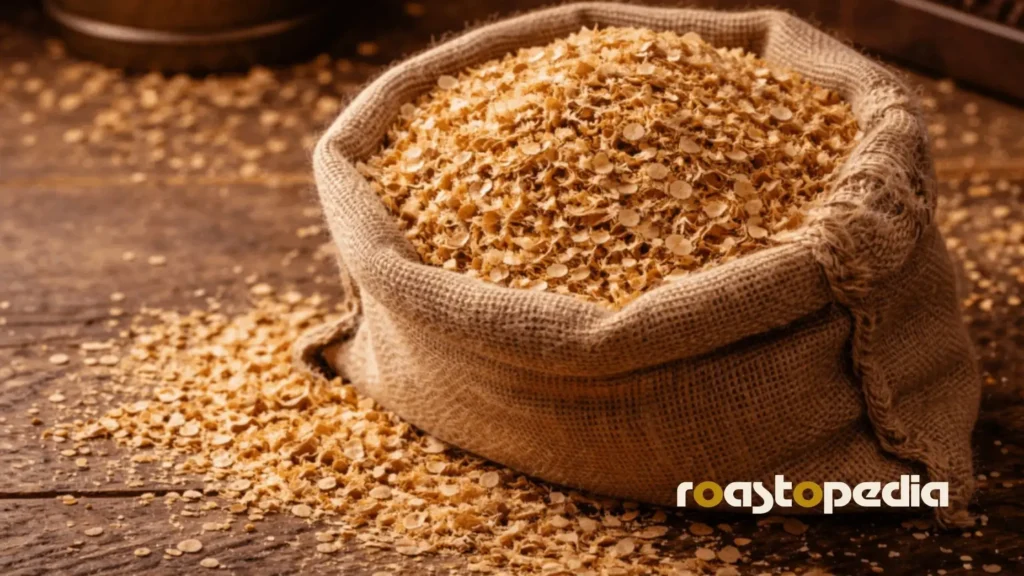
Chaff, also called exocarp, is the papery, epidermal layer of the coffee seed that detaches during the thermal expansion of the roasting process. This material is scientifically identified as the silver skin or spermoderm, representing the final protective integument surrounding the coffee endosperm.
It is a lightweight, cellulose-based byproduct that must be systematically removed to ensure the physical and sensory integrity of the final roasted product.
Origin and Patent History
Chaff removal technology transitioned from manual winnowing to integrated mechanical filtration during the mid-nineteenth century. Early industrial roasters struggled with the accumulation of flammable debris within the roasting chamber and exhaust flues. This logistical challenge necessitated the invention of specialized systems to isolate and collect the lightweight silver skin.
Jabez Burns secured several influential patents in the United States starting in 1864 for self-contained roasting machines. His designs prioritized the continuous agitation of the beans to facilitate the efficient detachment of the silver skin. These machines included the first functional mechanisms for the mechanical separation of chaff from the primary roasting environment.
The cyclone separator became the industry standard for chaff collection following its invention by O.M. Morse in 1886. This apparatus utilizes centrifugal force to separate solid particles from high-velocity air streams within a conical chamber. Morse’s discovery revolutionized the management of industrial dust and byproducts across various manufacturing sectors, including coffee roasting.
Subsequent patent developments focused on improving the safety and efficiency of chaff collection in large-scale facilities. Modern systems incorporate spark arrestors and water-quenching mechanisms to mitigate the extreme fire risk associated with concentrated silver skin. These innovations have allowed for the continuous operation of high-capacity roasting plants in urban environments.
Functional Evolution
Management of chaff has evolved from a secondary cleanliness concern into a critical safety and quality parameter. Early roasters often allowed the silver skin to remain within the roasting drum throughout the entire cycle. This practice resulted in frequent internal fires and a significant degradation of the coffee’s aromatic clarity.
The evolution of exhaust technology introduced the concept of positive-pressure ventilation to pull the silver skin away from the heat source. Roasters began to realize that the immediate removal of chaff was essential for maintaining a clean thermal environment. This functional shift allowed for the development of more complex and delicate roast profiles without the interference of burning debris.
Digital monitoring systems now provide real-time data on the volume and velocity of chaff removal within the roasting system. These advanced sensors detect potential blockages in the exhaust flues to prevent dangerous pressure imbalances. The integration of these safety protocols reflects the increasing technical sophistication of the modern roasting industry.
Contemporary facilities often utilize chaff compaction systems to reduce the volume of the waste material for easier disposal. These machines compress the lightweight silver skin into dense pellets or blocks. This functional refinement addresses the logistical challenges of managing large quantities of low-density organic waste in commercial settings.
Apparatus Description
The primary mechanical apparatus for chaff management in modern roasting is the cyclone separator. This vertical conical chamber is connected to the roaster’s exhaust system via a high-velocity duct. It leverages the principles of centrifugal sedimentation to isolate the silver skin from the moving airstream.
Air enters the cyclone at a tangent, creating a powerful vortex that forces the heavier particles toward the outer walls. The silver skin then loses velocity and falls into a collection bin located at the bottom of the cone. Clean air is simultaneously exhausted through a central tube at the top of the apparatus.
Secondary collection systems include the chaff drawer, which is situated directly beneath the roasting drum in smaller machines. This component captures the silver skin that falls through the perforations of the drum during the cooling phase. Frequent manual cleaning of this drawer is required to prevent the accumulation of flammable material near the burners.
Integrated cooling trays also feature independent vacuum systems to remove any residual chaff remaining on the beans after discharge. These systems utilize a powerful fan to pull air and debris through a screen at the base of the tray. This final stage of separation ensures that the beans are completely free of silver skin before packaging.
Extraction Narrative
Chaff presence within the ground coffee can significantly alter the physical dynamics of the extraction process. The lightweight and porous nature of the silver skin allows it to migrate to the top of the brew bed. This migration can interfere with the uniform flow of water through the coffee particles in various brewing methods.
The presence of excessive silver skin often leads to the formation of a “crust” that inhibits the efficient dissipation of carbon dioxide. This barrier can cause uneven saturation and unpredictable extraction rates during the initial blooming phase. Roasters and baristas prioritize clean chaff removal to ensure the repeatability of their brewing recipes.
Silver skin also possesses a high surface-to-mass ratio, which causes it to absorb and retain a disproportionate amount of brewing water. This characteristic can result in localized over-extraction of the cellulose material if the chaff is not properly filtered. Professional brewing standards emphasize the importance of a clean and uniform particle distribution for optimal results.
Mechanical removal of the silver skin before grinding is sometimes performed using specialized winnowing machines for competitive brewing. This meticulous process ensures that only the pure endosperm is processed by the grinder. This level of precision reflects the industry’s commitment to eliminating all variables that might distract from the intrinsic coffee flavor.
Sensory Output
The sensory impact of the silver skin is primarily characterized by the introduction of undesirable papery and cereal-like notes. When left in the roast, chaff often becomes scorched and imparts a bitter, astringent quality to the final beverage. This degradation of flavor clarity is the primary driver behind the rigorous removal of the material.
The presence of silver skin in the ground coffee can also lead to a dry, lingering sensation on the palate. This tactile defect is caused by the high cellulose content and residual organic acids found within the integument. Eliminating this material allows the delicate floral and fruity notes of the coffee to remain prominent.
Chaff can also contribute to a “hollow” or “thin” body in the brewed cup if it represents a significant portion of the total mass. This sensory defect occurs because the silver skin lacks the complex oils and soluble solids found in the coffee endosperm. Clean removal ensures that the beverage possesses the intended tactile depth and mouthfeel.
Professional tasters often use the term “chaffy” to describe a cup that exhibits these specific structural and aromatic defects. Identifying this characteristic is a critical part of the quality control process for both roasters and green coffee buyers. Maintaining a clean sensory profile is the hallmark of a successfully managed industrial roasting operation.
Notable Facts
Coffee beans typically lose approximately point five to one percent of their total mass through the detachment of the silver skin. While this percentage seems small, the low density of the material creates a massive physical volume for roasters to manage. A single day of high-volume production can yield hundreds of liters of concentrated organic debris.
Flammability of the silver skin is one of the most significant safety hazards in the commercial coffee roasting environment. The material has a very low ignition temperature and can smolder undetected within collection bins for several hours. Industrial facilities must implement strict fire suppression protocols to manage this persistent operational risk.
Agricultural use of the collected silver skin as a soil amendment is an increasingly common practice in coffee-growing regions. Chaff is rich in nitrogen and other essential micronutrients that support the healthy growth of various plant species. This circular economy model reduces the environmental impact of the roasting process by repurposing a waste byproduct.
Silver skin is also being explored as a potential source of dietary fiber and antioxidants for the commercial food industry. Its high concentration of polyphenols and phenolic acids makes it an attractive candidate for various health-focused applications. Ongoing research continues to uncover new functional uses for this traditionally undervalued roasting byproduct.
Historical Variations
Ancient coffee preparation methods often involved roasting the beans in the presence of the entire dried coffee fruit. This “natural” approach meant that the silver skin remained a permanent part of the domestic culinary experience. The transition to washed processing in the eighteenth century allowed for a more complete separation of the fruit and seed.
Winnowing by hand was the primary method for chaff removal in Arabian and Ethiopian households for several centuries. After roasting in a shallow pan, the beans were tossed into the air to allow the wind to carry away the light debris. This manual process required significant skill to ensure that no silver skin remained before the coffee was ground.
Civil War soldiers in the USA often used their issued hats or small blankets to winnow their roasted coffee over campfires. This improvised method was essential for improving the taste of the low-quality green beans provided in their standard rations. These historical variations highlight the universal human desire to refine the coffee experience through debris removal.
The introduction of the first mechanical winnowers in the nineteenth century marked the beginning of the modern industrial era. These machines used hand-cranked fans to create a controlled airstream for more consistent separation. This technical innovation laid the groundwork for the high-velocity exhaust systems used in every contemporary professional roasting facility.
Structural Composition and Cellularity
The composition of the silver skin consists primarily of complex carbohydrates and structural proteins designed to protect the developing seed. Hemicellulose and cellulose form the rigid framework of the integument, providing it with a high degree of thermal stability. This structural integrity allows the chaff to remain intact until the extreme pressure of the first crack occurs.
Microscopic examination of the silver skin reveals a honeycomb-like cellular structure similar to that of the coffee endosperm. This architecture is designed to manage the gas exchange and moisture regulation of the seed during its botanical development. Once the bean expands during roasting, this delicate matrix becomes brittle and separates from the underlying tissue.
Phenolic compounds are found in high concentrations within the silver skin to act as a natural defense against microbial activity. These molecules contribute to the astringent sensory markers associated with the presence of chaff in the brewed cup. The concentration of these chemicals varies significantly between different coffee cultivars and growing environments.
Structural differences between Arabica and Robusta silver skins are frequently noted by industrial roasters and botanists. Robusta chaff tends to be thicker and more resistant to detachment during the early stages of the roasting cycle.
Understanding these physical variations is essential for optimizing the airflow and agitation settings of the roasting equipment.
Thermal Behavior and Detachment
Detachment of the silver skin is a physical manifestation of the bean’s volumetric expansion during the roasting cycle. As the internal steam pressure builds, the bean swells and forces the outer integument to stretch beyond its elastic limit. This process usually reaches its peak intensity during the first acoustic rupture known as the first crack.
Thermal energy causes the cellulose structure of the chaff to become extremely brittle and prone to fragmentation. High-velocity airflow within the roasting chamber then lifts these fragments away from the surface of the moving beans. This immediate separation is critical for preventing the material from becoming trapped and scorched against the drum.
Moisture content of the green bean directly influences the timing and efficiency of the silver skin’s detachment. Beans with higher moisture levels often retain their chaff for a longer duration of the roasting cycle. Roasters must adjust their thermal application to ensure that the drying phase effectively prepares the integument for separation.
Conductive heat transfer is particularly effective at loosening the silver skin from the surface of the coffee seed. The direct contact with the heated metal drum facilitates the rapid drying and shrinkage of the epidermal layer. This physical transition is a key indicator that the beans are entering the critical development phase of the roast.
Industrial Waste Management
Management of industrial coffee waste has become a central focus for large-scale roasting facilities in urban centers. Chaff represents the most significant solid byproduct generated during the daily operation of a commercial roasting plant. Effective disposal requires a coordinated effort between the production team and external waste management services.
Compaction technology allows facilities to reduce the storage space required for the silver skin by nearly ninety percent. These systems use hydraulic pressure to transform the fluffy debris into dense, manageable units for transport. Compaction also reduces the fire risk by eliminating the air pockets found within loose piles of concentrated chaff.
Repurposing the silver skin as a fuel source for biomass energy production is an emerging trend in sustainable manufacturing. Chaff has a high caloric value and can be burned in specialized industrial furnaces to generate heat or electricity. This practice allows roasting facilities to offset their energy costs while reducing their environmental footprint.
Packaging the silver skin as animal bedding is another common and effective waste management strategy for smaller roasters. The absorbent and lightweight nature of the material makes it an ideal choice for various agricultural applications. These innovative solutions reflect the industry’s commitment to finding value in every stage of the coffee’s journey.
Fire Suppression and Safety
Fire suppression in the chaff collection system is a mandatory safety requirement for all professional roasting operations. Cyclone separators must be equipped with dedicated water-quenching systems or dry-chemical extinguishers to manage internal ignitions. These systems are often triggered automatically by heat sensors located within the exhaust ducting.
Accumulation of silver skin within the exhaust flues is the most common cause of catastrophic fires in roasting facilities. Regular inspection and cleaning of the entire ventilation system are essential for maintaining a safe production environment. Industrial standards emphasize the importance of a rigorous maintenance schedule to mitigate this persistent threat.
Roasters are also trained to monitor the color and smell of the exhaust air for any signs of smoldering debris. A change in the smoke’s appearance can indicate that chaff has ignited somewhere within the collection apparatus. Rapid intervention and the immediate shutdown of the heat source are required to prevent the fire from spreading.
The design of modern chaff bins often incorporates double-walled insulation to prevent heat transfer to the surrounding floor. These containers are also sealed to limit the availability of oxygen to any potential internal fires. This focus on safety engineering is what allows the coffee industry to operate reliably on an industrial scale.
Environmental Influence on Chaff Quality
Environmental conditions during the growth and processing of the coffee cherry determine the final characteristics of the silver skin. Highland coffees grown in cooler climates often develop thinner and more delicate integuments than lowland varieties. These physical differences affect how the chaff will respond to the intense heat of the roasting drum.
Soil composition and nutrient availability also influence the mineral content found within the cellular structure of the chaff. High levels of specific minerals can alter the thermal conductivity of the integument and affect the timing of its detachment. Scientific analysis of these variables helps roasters predict the behavior of new coffee origins.
Processing methods, such as the washed or natural process, have a profound impact on the amount of silver skin remaining on the bean. Washed coffees undergo a rigorous mechanical scrubbing that removes a significant portion of the outer layers. Natural process coffees retain more of their structural debris, requiring more aggressive management during the roast.
Climate change is also beginning to alter the physical development of the coffee seed and its protective layers. Changes in rainfall patterns and temperature can lead to irregular silver skin formation and inconsistent roasting behavior. Monitoring these environmental shifts is the next frontier for the global coffee industry and its technical researchers.