
Süvari Kahvesi, also known as Cavalry Coffee, is a large-format Turkish coffee preparation with documented roots in Ottoman military culture, particularly associated with the cavalry units (süvari in Ottoman Turkish) of the empire’s field armies.
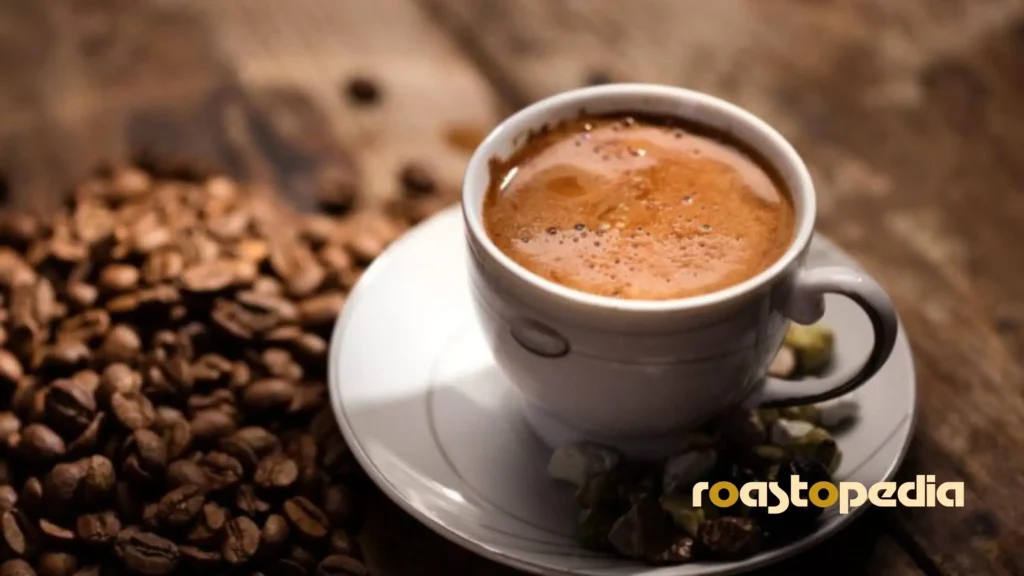
The drink emerged as a practical adaptation of the standard Türk Kahvesi to meet the needs of soldiers requiring larger, sustained quantities of caffeine during campaigns. Ottoman military supply records from the 18th and 19th centuries document significant coffee rations for cavalry units, with mobile brewing equipment (portable cezve sets) included in campaign supplies.
Today, Süvari Kahvesi survives as a regional specialty drink, particularly in areas with strong Ottoman military heritage, and has been revived as a novelty offering at traditional Turkish cafés.
Etymology
Süvari is an Ottoman and modern Turkish word for cavalryman or equestrian soldier, derived from the Persian sawār (سوار), meaning “rider” or “horseman.” The Persian root itself traces to the verb savārdan, “to ride.” The term was used in Ottoman military hierarchy to denote the elite mounted combat corps.
Süvari Kahvesi — “cavalry coffee” — thus carries connotations of strength, endurance, and martial purpose. The name positions the drink as a high-caffeine, substantial preparation suitable for men engaged in physical hardship, reflecting the cultural association between strong coffee and masculine vigor in Ottoman military contexts.
The Science of the Brew
The defining characteristic of Süvari Kahvesi is its volume: it is brewed and served in a substantially larger vessel than standard Türk Kahvesi — often a large cezve (büyük cezve) holding 150–200 ml, versus the standard 60–90 ml preparation. Some interpretations use a double dose of ground coffee per unit of water, increasing concentration while maintaining a larger volume.
The brewing technique mirrors Türk Kahvesi (cold-start, unfiltered, foam-cycle method), but longer heating time and higher coffee-to-water ratios produce a brew with higher TDS. The resulting caffeine content per serving (80–130 mg) is significantly higher than that of a standard Türk Kahvesi cup.
Some contemporary formulations blend different roast levels — lighter beans for brightness, darker beans for body.
Taste & Sensory Profile
Süvari Kahvesi is bolder, denser, and more bitter than standard Türk Kahvesi due to higher coffee-to-water ratios. The increased extraction time extracts a greater proportion of bitter quinolactones and melanoidins.
The body is full and almost chewy. Aroma is more pronounced — roasted grain, dark chocolate, and charred wood notes dominate. Acidity is moderate to low. The foam layer (köpük) is proportionally harder to sustain over a larger surface area, making a stable foam a marker of particular brewing skill.
Some preparations add cardamom, following a militarized version of the Osmanlı spice tradition.
Variations
Standard Süvari (large-volume, standard concentration), Double Süvari (large volume and double grounds — maximum-strength variation), Spiced Süvari (cardamom or clove added), and modern café adaptations that serve Süvari in oversized fincan cups with the ceremonial ritual of standard Türk Kahvesi intact.
Some café menus use “Süvari” loosely to indicate any oversized Turkish coffee without strict adherence to historical ratios.
Notable Facts
The Ottoman cavalry was one of the largest and most logistically complex military forces of the pre-modern world, and coffee logistics were a documented component of campaign planning. Maintaining caffeine access for soldiers was recognized as a morale and performance factor — an early example of what modern military science calls “nutritional performance optimization.”
The cezve used for Süvari Kahvesi in traditional settings was often made from copper alloy (copper-tin or copper-zinc), which has measurably better thermal conductivity than stainless steel, allowing more precise temperature management during the foam cycle.
Some historians argue that Süvari Kahvesi contributed to the diffusion of strong coffee culture into southeastern Europe via Ottoman military campaigns.
Related Drinks
Türk Kahvesi, Osmanlı Kahvesi, Mirra, Doppio Espresso (large-format strong coffee parallel), Greek Ellinikos Kafes.