
AeroPress is a manual coffee brewing apparatus invented by American engineer Alan Adler.
Origin & Patent History
Development of the device began in 2004 within a home workshop located in Los Altos, California. Adler sought a reliable method to reduce the bitterness often associated with traditional automatic drip extraction. The finished invention debuted officially at the Specialty Coffee Association of America trade show in late 2005.
Initial consumer interest remained modest before professional specialty baristas discovered the unique flexibility of the chamber.
Formal legal protection was secured through United States Patent number 7,849,784, which was granted in December 2010. This document describes a specific press apparatus that utilizes manual air pressure for beverage extraction. Manufacturing remained domestic to monitor production standards and polymer purity within the United States.
Early marketing relied on the inventor’s existing toy manufacturing enterprise, Aerobie Incorporated. Coffee traditionalists questioned the plastic construction before extensive independent testing proved its operational efficacy.
Global distribution networks expanded rapidly as the design won several international product design awards. This foundational period transformed the device from a quirky novelty into a mainstream industry staple.
The establishment of the World AeroPress Championship in 2008 accelerated its global prestige.
Three enthusiasts founded the competition in Oslo, Norway, to celebrate creative brewing techniques. This event grew from a small gathering into a massive international circuit with thousands of participants. Such competitive interest forced the device into the permanent lexicon of modern coffee preparation.
Functional Evolution
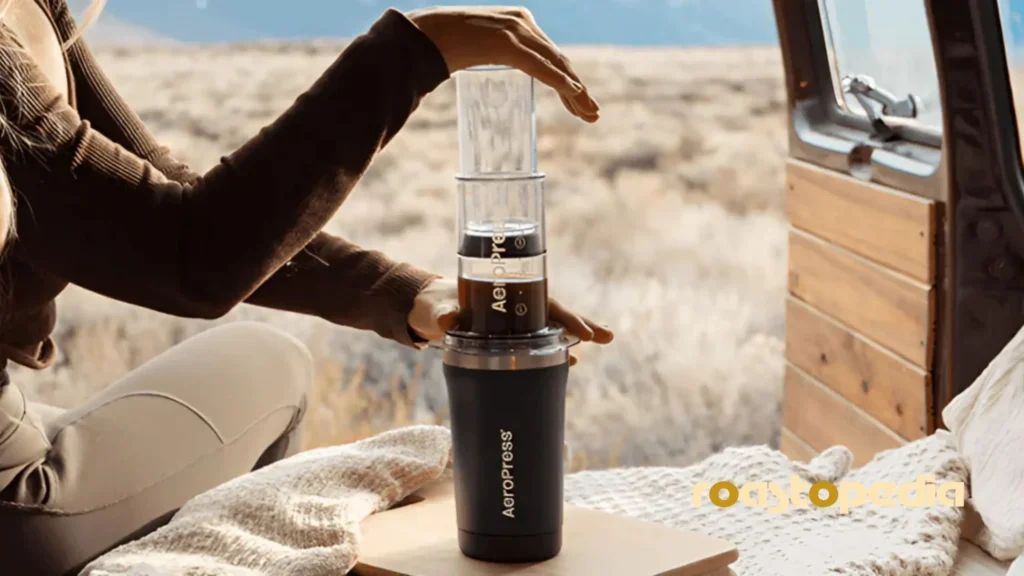
Commercial adoption forced the product to evolve far beyond its initial instructional guidelines. Adler originally intended for users to brew with low-temperature water and quick stirring cycles.
Independent brewers began experimenting with extended steep times to alter the flavor concentration. These grassroots experiments initiated a global shift in how the equipment is utilized daily.
The discovery of the inverted technique represented a major turning point in the user community. Enthusiasts turned the cylinder upside down to prevent water from leaking prematurely through the filter. This unauthorized modification allowed for complete control over the immersion period. Such functional shifts demonstrated the inherent versatility of the simple two-tube design.
Technological advancements in filtration further expanded the functional range of the apparatus. Paper micro-filters were the original standard, but third-party manufacturers introduced stainless steel mesh alternatives. These metal filters allowed for the passage of more oils and silt into the cup. Users could suddenly toggle between clean clarity and a heavy, textured body.
Professional baristas eventually integrated the device into high-end cafe service workflows. Its ability to produce single-cup extractions quickly made it a favorite for manual brew bars.
Specialized recipes emerged that involved bypass brewing, where concentrated coffee is diluted with fresh water. The evolution from a home kitchen tool to a professional instrument was complete.
Apparatus Description
The primary assembly consists of a cylindrical brewing chamber and a matching plunger. These components are engineered to create an airtight seal when nested together. A removable filter cap twists onto the bottom of the main chamber to secure the filter. This modular construction allows for rapid assembly and efficient cleaning after use.
A silicone or thermoplastic elastomer seal is attached to the base of the plunger. This flexible tip provides the necessary friction to generate air pressure during the downward stroke. Early models utilized a rubber gasket before transitioning to more durable synthetic materials. The seal ensures that no liquid or air escapes around the sides of the plunger.
Modern iterations of the body utilize high-grade, BPA-free polypropylene or Tritan copolyester. These materials are chosen for their exceptional heat resistance and impact durability. The translucent or transparent walls allow the user to monitor the water level and the stirring process. Polypropylene provides a matte, resilient finish that withstands frequent travel and outdoor use.
Accessory components include a dedicated stirrer, a measuring scoop, and a funnel. The stirrer is shaped specifically to avoid damaging the paper filter during the agitation phase.
A hexagonal funnel assists in loading grounds without spilling them onto the sealing surfaces. These auxiliary tools complete the physical ecosystem required for consistent operation.
Extraction Narrative
Extraction begins when hot water is added to the coffee grounds within the chamber. This initial contact triggers the release of soluble solids and aromatic compounds. The user typically agitates the mixture to ensure every particle is evenly saturated. This immersion phase allows for a uniform development of the flavor profile.
Manual pressure is applied to the plunger to initiate the percolation phase. This action forces the liquid through the micro-filter at the base of the chamber. The air trapped between the plunger and the water acts as a hydraulic cushion. Controlled force ensures that the water passes through the coffee bed at a steady rate.
Filtration occurs under a modest amount of pressure compared to traditional espresso machines. The paper micro-filter removes fine particles and certain bitter oils from the final beverage. This dual process of immersion followed by pressure filtration is unique to this specific apparatus. It combines the depth of a French press with the clarity of a paper filter.
The final stage of the narrative involves the characteristic hiss of escaping air. This sound indicates that all liquid has been successfully pushed through the coffee bed. Removing the filter cap reveals a compressed, dry puck of spent grounds. A simple press of the plunger ejects the waste directly into a bin.
Sensory Output
AeroPress extractions are noted for their exceptional clarity and lack of sediment. The paper micro-filter captures most of the insoluble solids and heavy lipids. This results in a bright, clean cup that highlights individual flavor notes. Such transparency is often compared to high-end pour-over brewing methods.
Low acidity and reduced bitterness are hallmark traits of the resulting beverage. The short contact time and lower brewing temperatures prevent the extraction of harsh tannins. This balance produces a smooth profile that is approachable for a wide range of palates. Many users find the coffee naturally sweet without the need for additives.
Texture and body can be adjusted through the application of different filtration media. Paper filters produce a light, tea-like consistency with a crisp finish. Metal filters increase the presence of diterpenes and fine particles for a richer mouthfeel. The apparatus provides a broad sensory spectrum within a single mechanical framework.
Concentrated output allows the beverage to serve as a base for various drink styles. The resulting “shot” of coffee possesses a high total dissolved solids percentage. Diluting this concentrate with water produces a clean, Americano-style long coffee. Adding steamed milk creates a textured beverage similar to a traditional latte.
Notable Facts
Alan Adler holds over 40 patents for various aerodynamic and mechanical inventions. His most famous pre-coffee success was the Aerobie Pro flying ring. This disc set a world record for the longest throw by a human. He applied similar engineering principles to solve the problem of uneven coffee extraction.
The first World AeroPress Championship took place in a small cafe in Oslo. Only three competitors participated in this inaugural 2008 event. Today, the competition spans over 60 countries and features national qualifiers. Winners receive a gold-plated trophy in the shape of the iconic brewer.
AeroPress is one of the few coffee makers featured in the permanent collection of museum design. It is recognized for its functional minimalism and innovative use of materials. Curators highlight its status as a revolutionary shift in early 21st-century domestic engineering. The device represents a perfect marriage of utility and industrial aesthetics.
Research indicates that the paper filter significantly reduces cafestol and kahweol levels. These diterpenes are known to increase cholesterol levels in some coffee drinkers. French press coffee contains significantly higher concentrations of these compounds due to metal filtration. This makes the apparatus a preferred choice for health-conscious enthusiasts.
Historical Variations
Original production models featured a clear polycarbonate body with blue lettering. These early units are now sought after by collectors for their historical significance. Concerns regarding BPA led the company to transition to a BPA-free copolyester in 2009. This material change ensured consumer safety while maintaining the transparent aesthetic.
A significant design shift occurred in 2014 with the adoption of grey polypropylene. This new material was more durable and resistant to the clouding caused by heat. The lettering transitioned from gold to red and eventually to a subtle embossed finish. These aesthetic tweaks reflected the brand’s maturation within the global marketplace.
Introduction of the AeroPress Go in 2019 catered specifically to the travel market. This compact version fits inside its own drinking mug for maximum portability. It features a smaller brewing capacity but utilizes the same mechanical principles. The Go model expanded the reach of the brand to hikers and frequent flyers.
Recent years have seen the release of the XL and Premium versions. The XL model doubled the brewing volume to satisfy those wanting larger servings. The Premium edition utilizes glass and stainless steel for a more luxurious kitchen aesthetic. These variations ensure the apparatus remains relevant to diverse user segments.