
Moccacino (also spelled Mochaccino or Mocaccino) is a warm espresso-based beverage that combines a shot of espresso with steamed milk, milk foam, and chocolate — typically in the form of cocoa powder, chocolate syrup, or melted chocolate.
It is widely regarded as a variation of the caffè latte, distinguished by its defining chocolate component, which lends the drink its characteristic sweetness and depth.
The name is a portmanteau derived from mocha — itself a reference to the Yemeni port city of Al-Mukha, historically associated with chocolate-flavored coffee — and cappuccino, reflecting the drink’s espresso-and-milk composition and its layered, frothy presentation.
Etymology and Name
The word moccacino blends two well-established coffee terms. “Mocha” traces its roots to Al-Mukha (Mocha), Yemen, a major 15th –17th century coffee export hub whose beans were prized for a naturally chocolatey flavor profile.
Over centuries, “mocha” evolved in culinary usage to describe any coffee-chocolate combination. “Cappuccino,” from the Italian word for the Capuchin friars (whose brown robes resembled the drink’s color), lends the second half of the portmanteau, signaling the drink’s espresso-and-milk base.
The blended term entered widespread use in the late 20th century alongside the global specialty coffee boom.
Composition and Preparation
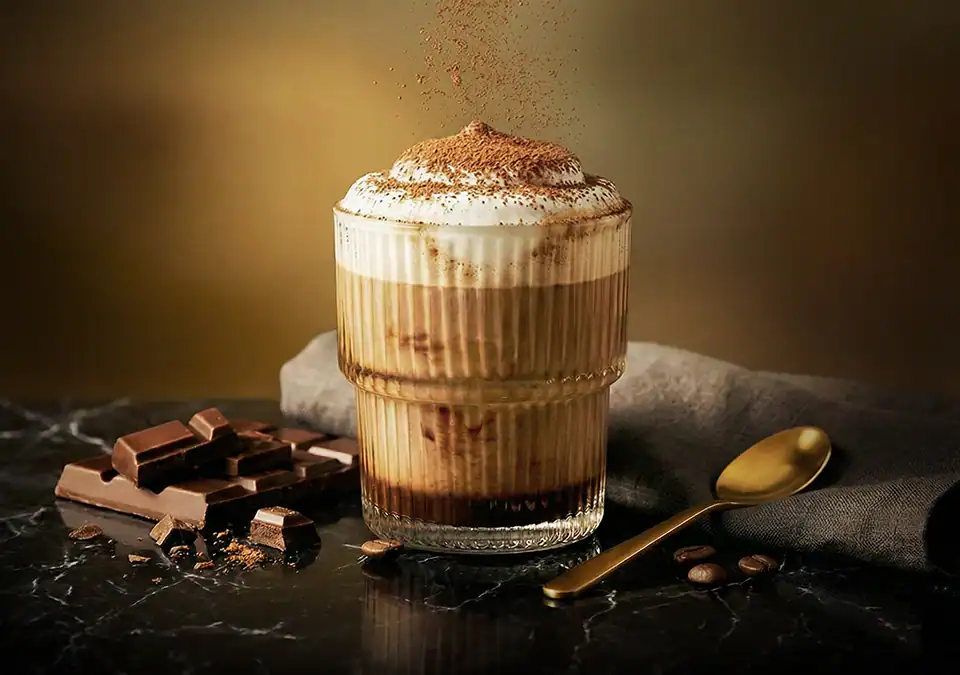
A standard moccacino is built in layers: chocolate is added first to the cup, followed by a pulled shot of espresso, then steamed milk, and finally a cap of frothed milk or whipped cream. The chocolate element varies widely by region and establishment — common forms include:
- Chocolate syrup (most common in commercial chains)
- Cocoa powder (stirred in or dusted on top)
- Melted dark or milk chocolate
- Hot cocoa mix
The ratio of espresso to milk is generally more generous with chocolate than a standard latte, and the overall flavor profile skews sweeter and richer. Some preparations include a dusting of cocoa or cinnamon on the foam as a finishing touch.
Distinction from Related Drinks
The moccacino is frequently confused with several related drinks. Unlike a caffè mocha — which typically refers to a larger, American-style drink with more milk and chocolate sauce — the moccacino is a smaller, more concentrated preparation closer in size to a cappuccino. It differs from a hot chocolate in that espresso is a primary ingredient, not an optional addition.
Compared to a latte, the moccacino introduces a third flavor dimension through chocolate, making it sweeter and less milk-forward.
Variations
The moccacino has spawned numerous regional and seasonal adaptations:
- Iced Moccacino — served over ice with cold milk or cold foam
- White Moccacino — uses white chocolate instead of dark or milk chocolate
- Vegan Moccacino — dairy milk replaced with oat, almond, or soy milk; dairy chocolate replaced with plant-based alternatives
- Spiced Moccacino — incorporates cinnamon, cardamom, or chili for added complexity
- Honey Moccacino — substitutes or supplements the chocolate sweetener with raw or infused honey
Cultural Significance and Global Presence
The moccacino rose to mainstream prominence in the 1990s and 2000s alongside the global expansion of specialty coffee culture. It became a gateway drink for consumers transitioning from sweetened commercial beverages to espresso-based coffee, owing to its approachable sweetness.
Today it appears on menus across Europe, North America, the Middle East, and Asia, often customized to local palates. In Italy, where coffee culture is highly traditional, the drink occupies a somewhat informal space — appreciated but not considered a canonical espresso preparation.
In the United States and the Gulf region, it is firmly embedded in café culture and frequently among the top-ordered espresso beverages.
Nutritional Profile
A standard moccacino made with whole milk, one shot of espresso, and one tablespoon of chocolate syrup contains approximately 200–300 calories, depending on cup size and milk type. The caffeine content mirrors that of a single or double espresso shot (60–120 mg).
Substituting plant-based milks or reducing chocolate can significantly alter the caloric and macronutrient profile.
See Also
- Caffè Latte
- Cappuccino
- Flat White
- Caffè Mocha
- Macchiato
- Cortado
- Americano
- Hot Chocolate
- Vienna Coffee
- Affogato
- Dirty Chai
- Café de Olla
- Dalgona Coffee
- Café au Lait
References
- Weinberg, B. A., & Bealer, B. K. (2001). The World of Caffeine: The Science and Culture of the World’s Most Popular Drug. Routledge.
- Pendergrast, M. (2010). Uncommon Grounds: The History of Coffee and How It Transformed Our World (Revised ed.). Basic Books.
- Davids, K. (2001). Espresso: Ultimate Coffee (2nd ed.). St. Martin’s Griffin.
- Illy, A., & Viani, R. (Eds.). (2005). Espresso Coffee: The Science of Quality (2nd ed.). Elsevier Academic Press.
- Wild, A. (2004). Coffee: A Dark History. W. W. Norton & Company.
- Morris, J. (2010). “Making Italian Espresso, Making Espresso Italian.” Food & History, 8(2), 155–183.
- Topik, S., & Guthman, W. G. (2003). The Global Coffee Economy in Africa, Asia, and Latin America, 1500–1989. Cambridge University Press.
- Specialty Coffee Association. (2022). World Coffee Portal: Global Espresso Beverage Trends Report. SCA Publications.
- Ukers, W. H. (1922). All About Coffee. The Tea and Coffee Trade Journal Company. (Reprinted 2012, Martino Fine Books.)
- Schomer, D. (1996). Espresso Coffee: Professional Techniques. Schomer Publications.
- Standage, T. (2005). A History of the World in 6 Glasses. Walker & Company.
- National Coffee Association USA. (2023). National Coffee Data Trends (NCDT) Report. NCA.
- Al-Amoudi, S. M. (2015). “Al-Mukha and the Origins of the Global Coffee Trade.” Arabian Studies in History, 4(1), 22–39.
- Hoffmann, J. (2014). The World Atlas of Coffee: From Beans to Brewing — Coffees Explored, Explained and Enjoyed. Mitchell Beazley.
- International Coffee Organization. (2023). Coffee Report and Outlook: Global Beverage Consumption Patterns. ICO. Retrieved from https://www.ico.org