
Jebena Coffee refers specifically to coffee brewed in a jebena — a hand-shaped clay pot that has been the primary coffee-brewing vessel in Ethiopia for at least a thousand years.
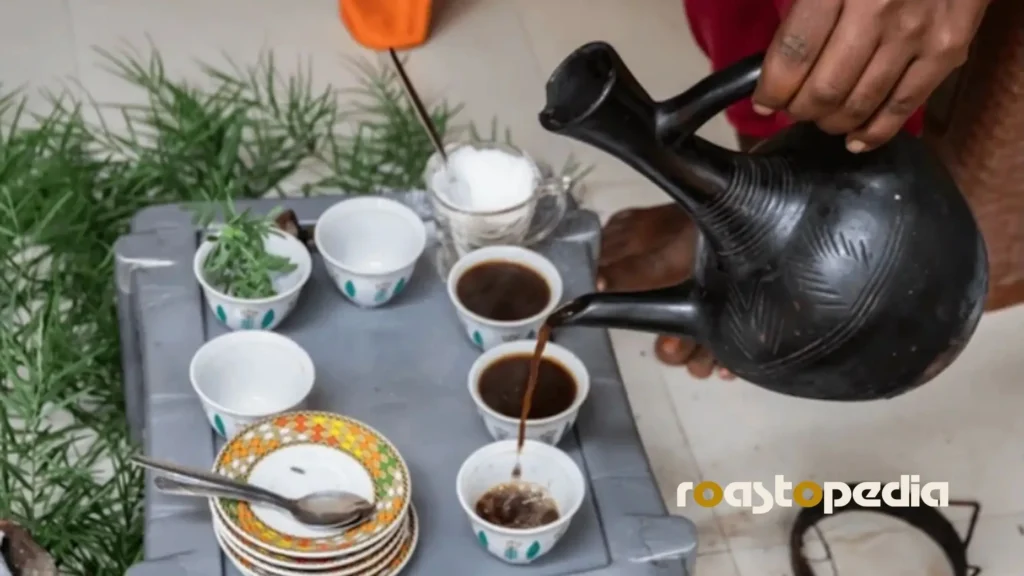
The term is often used interchangeably with ‘the Ethiopian coffee ceremony,’ though strictly speaking, jebena describes the vessel, and the ceremony it anchors is called the ‘bunna ceremony’ or ‘bunna tetu.’ Archaeological evidence of clay vessels consistent with jebena morphology has been identified in Ethiopian excavation sites dating to the early medieval period.
The ceremony surrounding jebena coffee was formally recognized by UNESCO in 2024 as an Intangible Cultural Heritage of Humanity, acknowledging its role as a living social institution practiced daily across Ethiopia’s urban and rural communities alike.
Jebena coffee is not merely a domestic practice; it is the medium through which community disputes are mediated, marriages are negotiated, and guests are honored. An Ethiopian who refuses an invitation to a jebena ceremony commits a significant social offense.
Etymology
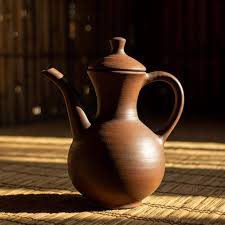
The word ‘jebena’ originates in the Amharic language and refers exclusively to the distinctive round-bottomed clay brewing pot. The term is used identically in Tigrinya and in many Oromo dialects, suggesting an ancient, pre-linguistic-divergence origin. ‘Jebena buna’ — coffee of the jebena — is the full phrase most commonly used when distinguishing this traditional preparation from the espresso-based and macchiato drinks that have proliferated in Ethiopian urban cafes since the Italian occupation of 1936–1941.
The Science of the Brew
| Stage | Method | Temperature / Time |
| Bean Selection | Whole green Arabica, hand-sorted | Ambient |
| Roasting | Open-flame charcoal pan roast | 200–230°C / 10–15 min |
| Grinding | Wooden mortar and pestle | Coarse, uneven grind |
| Brewing | Cold water + grounds in jebena, brought to boil | ~100°C / 15–20 min |
| Filtering | Woven grass stopper at jebena neck | Passive sedimentation |
| Serving | Poured into cini cups, 60–80 ml per serving | Hot |
The clay body of the jebena is unglazed and porous, which allows minimal evaporative cooling during brewing and imparts a subtle mineral character to the final cup. The round base maximizes surface area contact with hot coals, ensuring even heat distribution. Unlike metal brewing vessels, the clay does not introduce metallic off-notes, a property Ethiopian brewers have understood empirically for centuries. The narrow neck acts as a thermal chimney, reducing excessive evaporation while allowing aromatic compounds to concentrate within the vessel.
Taste & Sensory Profile
Jebena coffee is thick, aromatic, and deeply roasted in character. The clay vessel and charcoal roasting combine to produce a smoke-tinged, mineral-inflected cup that is categorically different from any espresso or filter preparation. Acidity is low; bitterness is prominent but rounded by the natural oils extracted during the coarse-grind, full-boil process. The aroma is intensified by the frankincense (lubaan) burned during the ceremony, creating a multisensory environment where coffee aroma intertwines with resinous smoke.
Sweetness is achieved entirely through added sugar; the coffee itself contributes no perceptible sweetness. The body is medium, and the cup contains visible fine sediment that settles during the brief rest between pouring and drinking.
Variations
Regional Jebena designs differ meaningfully. In Tigray province, jebenas are narrower and taller, producing a slightly less sediment-laden cup. Harari jebenas are decorated with geometric patterns and are often passed down as heirlooms. In Addis Ababa’s modern coffee houses, electric jebenas made from stainless steel or ceramic replicate the shape but sacrifice the clay’s mineral contribution. Some contemporary baristas in Ethiopia’s specialty coffee scene have begun using jebenas as pour-over vessels, reversing the flow of influence from traditional to modern preparation.
Obscure & Fascinating Facts
The jebena’s round base means it cannot stand unsupported on a flat surface — it must rest in a woven grass ring called a ‘rekebot,’ which is also the name for the tray on which the cini cups are arranged. This physical dependency between the jebena and its stand is sometimes cited by Ethiopian cultural scholars as a metaphor for the communal nature of the ceremony itself: neither the vessel nor the experience stands alone.
In 2021, Ethiopian Airlines began offering abbreviated jebena coffee ceremonies on selected international long-haul flights, bringing the ritual to an estimated 150,000 passengers annually — the first systematic introduction of the ceremony to a global audience at scale.
Related Drinks
- Buna — the general term for Ethiopian coffee, of which Jebena Coffee is the traditional form
- Abol — the first and strongest pour from the jebena ceremony
- Tona — the second pour, made with reboiled grounds
- Baraka — the third and final pour, lightest in intensity
- Buna be Tetu — jebena coffee prepared with a sprig of rue herb