
Cold drip, also known as Kyoto-style cold brew, Slow drip, or Dutch coffee, is a variation of cold brew in which cold water is released one drop at a time through a valve, flowing slowly and continuously through a bed of ground coffee over a period of 3 to 24 hours, using gravity as the sole force of extraction. See also: Cold Brew | Immersion Cold Brew.
Definition
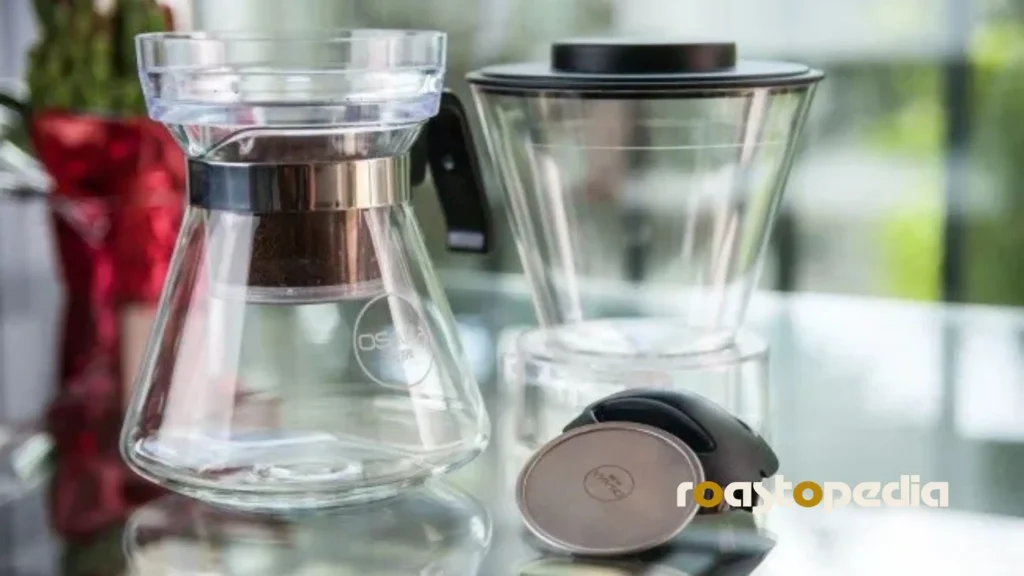
Cold drip is a percolation-based extraction method. Unlike immersion cold brew, where grounds are submerged in static water for the entire brew cycle, cold drip involves the continuous and controlled movement of fresh cold water through the coffee bed.
Each drop of water passes through the grounds, extracts soluble compounds, and falls into a collection vessel below, never remaining in prolonged contact with the grounds.
This continuous flow of fresh water — as opposed to the static saturation of immersion — produces a beverage with a distinctly different chemical and sensory profile.
Cold drip yields higher total dissolved solids (TDS) and a higher extraction rate than immersion cold brew brewed at the same temperature.
The result is a concentrate characterized by a clean, bright, and aromatic cup with elevated clarity and lighter body compared to immersion cold brew.
Etymology
The term “cold drip” describes the mechanical process: cold water dripping through coffee grounds. It entered specialty coffee vocabulary as a technical descriptor to distinguish the percolation method from immersion brewing.
“Kyoto-style” refers to the city of Kyoto, Japan, where the slow-drip method was refined, popularized, and given its distinctive tower form. The association with Kyoto reflects the city’s historical role as a center of Japanese craftsmanship and aesthetic refinement during the Edo period (1603–1868).
The term “Dutch coffee” — used widely across Asia, particularly in South Korea — traces back to the Dutch traders credited with introducing cold water coffee extraction to Japan in the 17th century. The name persists in Korean coffee culture, where cold drip coffee prepared in tower brewers is commercially sold under the “Dutch coffee” label.
The term “tower coffee” is also used in commercial contexts, referencing the signature three-chamber glass tower apparatus used to brew it.
History & Origins
The earliest documented cold coffee extraction traces to Japan in the 1600s, introduced by Dutch traders who required a method of preparing coffee aboard wooden sailing ships where open flame presented a fire hazard. The Dutch adapted cold water steeping techniques from existing Japanese cold-brewed tea traditions, applying them to roasted coffee.
Coffee arrived in Japan during the Edo period (1603–1868), an era in which traditional brewing methods relying on heat were often impractical. Japanese brewers, already skilled in cold-steeping tea in river water, applied these techniques to coffee.
Over time, the Japanese refined the original Dutch immersion approach into a more precise and controlled drip-by-drip process.
It was in Kyoto specifically that the slow-drip method evolved into the form recognizable today. Japanese craftsmen developed the three-chamber glass tower apparatus, transforming a utilitarian extraction process into a practice of visual and ceremonial precision.
The tower became an emblem of Kyoto coffee culture, displayed prominently in coffee shops throughout the city.
In 1840, the Mazagran — a cold coffee drink originating in Algeria and later popularized in France — further cemented cold coffee as a legitimate beverage category in Europe and the colonial world, though the slow-drip tower method remained distinctly Japanese.
Cold drip coffee remained largely unknown outside Japan and parts of Asia until the late 20th century. Counter Culture Coffee is credited by multiple industry sources with introducing Kyoto-style cold drip equipment to the United States in the late 1990s. The method gained mainstream specialty coffee recognition in the 2000s and 2010s, appearing in cafes across North America, Europe, and Australia.
Description
Cold drip produces a coffee beverage that is visually, aromatically, and chemically distinct from both hot-brewed coffee and immersion cold brew.
Cold dripping exhibits a higher extraction rate than immersion brewing at equivalent temperatures, resulting in higher TDS, extraction yield, and elevated concentrations of caffeine and caffeoylquinic acids (CQAs).
In terms of color, cold drip produces a lighter, more transparent brew than immersion cold brew.
Research comparing cold brew methods found that ice drip produced the lightest coffee color of the three methods evaluated, which also included traditional cold brew and high-pressure carbon dioxide extraction.
The aroma of cold drip coffee is notably more complex and volatile than that of immersion cold brew.
Linalool — a compound associated with floral and fruity notes —is said to be present exclusively in ice drip samples and absent in traditional immersion cold brew. This compound has an odor activity value (OAV) of 100.50 in cold drip, making it a key differentiating aromatic compound.
The mouthfeel of cold drip is lighter and less syrupy than that of immersion cold brew. Because fresh cold water is continuously introduced rather than sitting in prolonged contact with the grounds, fewer lipids and oils are extracted, producing a cleaner, thinner body.
Cold immersion and hot coffee beverages show higher sweetness, nutty, caramel, and malt attributes, while cold drip brews were perceived with more bitter and roasted flavors.
The Equipment: The Cold Drip Tower
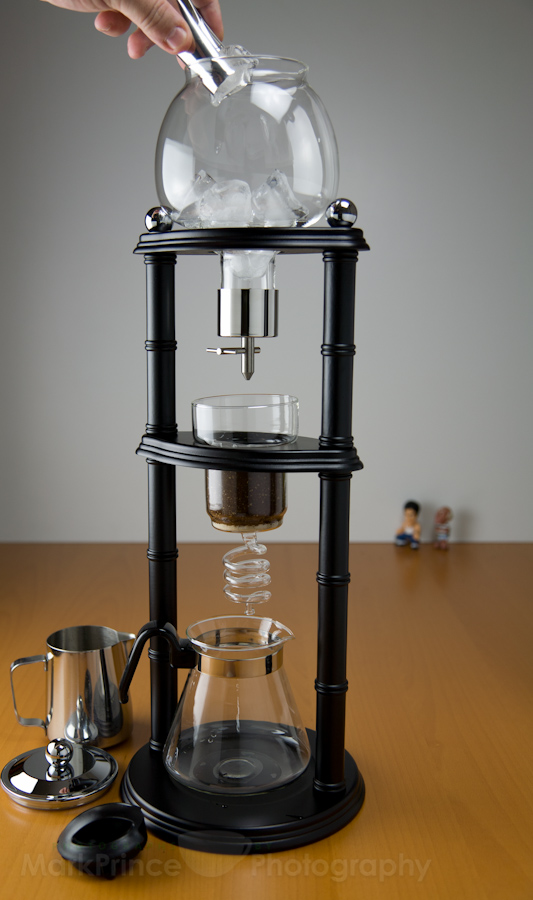
Cold drip cannot be produced without a specialized apparatus. The defining piece of equipment is the cold drip tower, also called a Kyoto tower, drip tower, or water drip coffee maker. The tower is a vertically arranged three-chamber system, typically constructed from borosilicate glass — the same heat-resistant, laboratory-grade material used in scientific instruments.
The upper chamber is a water reservoir, filled with cold water and ice. Ice is added not merely for temperature maintenance but to regulate the melt rate, ensuring a consistent and slow release of water throughout the brew. Some towers feature a glass globe design for the water chamber; others use a cylindrical vessel.
The middle chamber holds the ground coffee and a filter at its base. A valve positioned between the upper and middle chambers controls the drip rate, allowing the brewer to precisely regulate how fast water enters the coffee bed. This valve is the most technically critical component of the tower, as inconsistent drip rates produce uneven extraction and flavor instability.
The lower chamber is the collection carafe, where finished cold drip coffee accumulates over the course of the brew. Commercial cold drip towers displayed in specialty coffee shops can reach three to four feet in height, functioning simultaneously as functional equipment and visual spectacle. Home-scale towers are smaller in volume but identical in principle.
Major equipment manufacturers include Yama Glass, which pioneered the introduction of Kyoto-style towers to the Western market and produces hand-blown borosilicate towers ranging from approximately $150 to $400. Hario, a Japanese manufacturer, offers cold drip towers incorporating its precision engineering traditions at price points between $200 and $350. Commercial-grade towers from specialty manufacturers can exceed $1,000.
Preparation & Process
The standard cold drip process begins with selecting a medium-coarse grind, slightly finer than the coarse grind used in immersion cold brew. The grind must allow water to pass through slowly without clogging the filter or rushing through unimpeded.
A burr grinder is recommended over a blade grinder to ensure uniform particle size, which directly affects extraction consistency.
A paper or ceramic filter is placed at the base of the coffee chamber before adding the grounds. Paper filters, particularly unbleached versions, should be pre-rinsed with cold water to eliminate any papery taste that could transfer to the brew.
The coffee bed is then lightly pre-wetted with a small amount of cold water — a process known as blooming — to ensure even saturation and prevent channeling, where water carves a path through dry grounds rather than distributing evenly.
The water chamber is filled with cold filtered water and ice. The coffee-to-water ratio typically ranges from 1:5 to 1:10 by weight, with 1:10 being a widely used standard (approximately 80 grams of coffee per 800 grams of water). The valve is then adjusted to establish the drip rate.
A standard starting rate of one drop per second is recommended by most manufacturers and baristas, though some practitioners prefer 1.5 drops per second for a faster, lighter extraction.
Optimal water temperature for cold drip extraction ranges from 35°F to 45°F (1.7°C to 7.2°C), as established by equipment specifications from Barista Life. This temperature range ensures clean extraction without the thermal fluctuation that would occur if room-temperature water were used. Total brew time ranges from 3 to 12 hours depending on grind size, drip rate, and desired extraction strength.
Upon completion, the collected cold drip concentrate is stored in a sealed container in the refrigerator. Unlike immersion cold brew, cold drip coffee is not typically diluted as heavily before serving, as the extraction is more controlled and the resulting concentrate less dense. A Yama 6–8 cup tower produces approximately 32 ounces (950ml) of cold drip per batch, sufficient for 6 to 8 servings.
Key Characteristics
Extraction Method: Cold drip uses percolation — continuously moving water through grounds — rather than the static immersion of traditional cold brew. Research confirms that at equivalent temperatures, dripping exhibits a higher extraction rate than immersion brewing.
Flavor Profile: Cold drip produces brighter, more aromatic, and more complex flavors than immersion cold brew. Floral and fruity notes are more pronounced in cold drip due to the presence of linalool, a compound identified exclusively in cold drip samples in peer-reviewed comparative research. Bitter and roasted flavors are also more present in cold drip than in immersion cold brew.
Body and Clarity: Cold drip produces a lighter body and greater visual clarity than immersion cold brew. Fewer oils and lipids are extracted due to the shorter contact time between water and grounds at any given moment during the brew.
Caffeine: Research published in Foods found that cold drip brews displayed among the highest caffeine and caffeoylquinic acid concentrations of cold brew methods studied. The higher extraction rate of cold drip compared to immersion contributes to elevated caffeine levels per unit volume.
Drip Rate: The industry standard starting drip rate is one drop per second. Adjusted rates of 40 to 60 drops per minute have been documented as the range for balanced flavor development. Faster drip rates shorten brew time but reduce extraction intensity; slower rates increase extraction but risk over-extraction.
Brew Ratio: The recommended coffee-to-water ratio ranges from 1:5 to 1:10. An 80-gram to 800-gram (1:10) ratio is a widely accepted standard for home brewing on Kyoto-style towers.
Shelf Life: Cold drip coffee, stored in a sealed container in the refrigerator, remains fresh for 3 to 4 days, which is significantly shorter than immersion cold brew concentrate, which can last up to two weeks. The greater complexity of volatile aromatic compounds in cold drip contributes to faster flavor degradation.
Variations & Regional Differences
In Japan, cold drip coffee is produced in both traditional tower form and adapted home formats. Japanese manufacturer Hario produces a compact cold drip device that incorporates a French press spring plate in the filter chamber, retaining the drip principle while offering a more accessible form factor for home use.
In South Korea, cold drip coffee is marketed commercially as “Dutch coffee” and is widely available in bottled form in convenience stores and supermarkets. South Korean coffee culture adopted the Kyoto-style cold drip method extensively from the 2000s onward, and Dutch coffee has become a mainstream beverage category distinct from specialty coffee contexts.
In the United States, cold drip towers are primarily found in specialty coffee shops rather than mainstream chain establishments. The equipment’s visual drama and association with craft coffee culture have made it a feature piece in third-wave coffee cafes. Counter Culture Coffee is credited with introducing the equipment to the American market in the late 1990s.
In Australia and New Zealand, cold drip coffee has been incorporated into specialty coffee menus since the early 2010s, reflecting both countries’ strong specialty coffee culture and openness to Japanese brewing influences. Australian baristas have adapted the method to showcase single-origin beans from Ethiopia and Kenya.
In Europe, cold drip gained visibility through specialty coffee hubs in London, Copenhagen, and Berlin. European café adaptations frequently feature towers as decorative centerpieces, and the method is used predominantly for single-origin light-to-medium roast coffees where origin clarity is the primary goal.
Cultural Significance
Cold drip coffee in its Kyoto-style tower form occupies a unique position in coffee culture as both a beverage and an art object. The towering glass apparatus, with its slowly dripping water and darkening coffee bed, has been described as meditative and ceremonial by coffee professionals. It represents one of the clearest expressions of the Japanese cultural value of patience and precision applied to food and beverage craft.
The cold drip tower became an iconic feature of specialty coffee shop design globally in the 2010s. Its visual spectacle — particularly in large commercial tower formats measuring three to four feet tall — draws customer attention and communicates a commitment to craft that no other brewing apparatus replicates. The tower is simultaneously a functioning brewer and a marketing statement.
The cold brew coffee market was valued at USD 3.16 billion in 2024 and is projected to grow to USD 16.22 billion by 2032, according to industry reports cited in research published by the National Center for Biotechnology Information (NCBI). Cold drip constitutes a premium segment within this broader cold brew market, positioned above commodity immersion cold brew in terms of price, craft, and perceived exclusivity.
For the specialty coffee industry, cold drip has served as a vehicle for expressing terroir — the origin-specific flavor characteristics of single-origin coffees. The clean extraction of cold drip preserves delicate aromatic compounds that immersion brewing obscures, making it the preferred method for showcasing coffees from Ethiopia, Kenya, Colombia, and Guatemala.
The method also holds ecological significance in that it requires no electricity for heating water, no mechanical pump, and no pressurized system. Gravity alone powers the extraction, making cold drip one of the most energy-efficient coffee brewing methods in commercial use.
Common Misconceptions
Misconception 1 — Cold drip and immersion cold brew are the same: They are distinct brewing methods producing chemically different beverages. Cold drip uses percolation with continuously moving water; immersion cold brew uses static water in full contact with grounds. Research confirms that the two methods yield different TDS levels, flavor profiles, and aromatic compound distributions. Cold drip produces a brighter, more aromatic, higher-TDS brew; immersion cold brew produces a sweeter, heavier, lower-TDS brew.
Misconception 2 — Cold drip is always less acidic than hot coffee: Cold drip has lower titratable acidity than hot-brewed coffee, but it is not necessarily less acidic than immersion cold brew. Research published in ScienceDirect found no significant difference in pH between cold drip and immersion cold brew in some comparative studies. The perceived acidity differences between the two cold methods are linked to compound concentration rather than absolute pH.
Misconception 3 — Any grind size works for cold drip: Grind size is a critical variable in cold drip. Too fine a grind clogs the filter and slows or stops water flow entirely. Too coarse a grind causes water to rush through without adequate extraction, producing a thin, weak brew. A medium-coarse grind — slightly finer than that used for immersion cold brew — is the established standard.
Misconception 4 — Cold drip takes longer than immersion cold brew: Cold drip extraction times range from 3 to 12 hours, which can be significantly shorter than the 12 to 24 hours required for immersion cold brew. Brew time in cold drip is directly controlled by the drip rate valve, giving the brewer precise control over extraction duration.
Misconception 5 — Cold drip requires no skill or technique: Cold drip requires more active setup and monitoring than immersion cold brew. Drip rate calibration, even saturation of the coffee bed, prevention of channeling, and ice management in the water chamber are all variables that require attention and experience to manage consistently.
Related Terms
Cold Brew | Immersion Cold Brew | Percolation | Brew Ratio | Total Dissolved Solids (TDS) | Extraction Yield | Linalool | Chlorogenic Acids | Terroir | Specialty Coffee | Dutch Coffee | Toddy System | Kyoto Tower.