
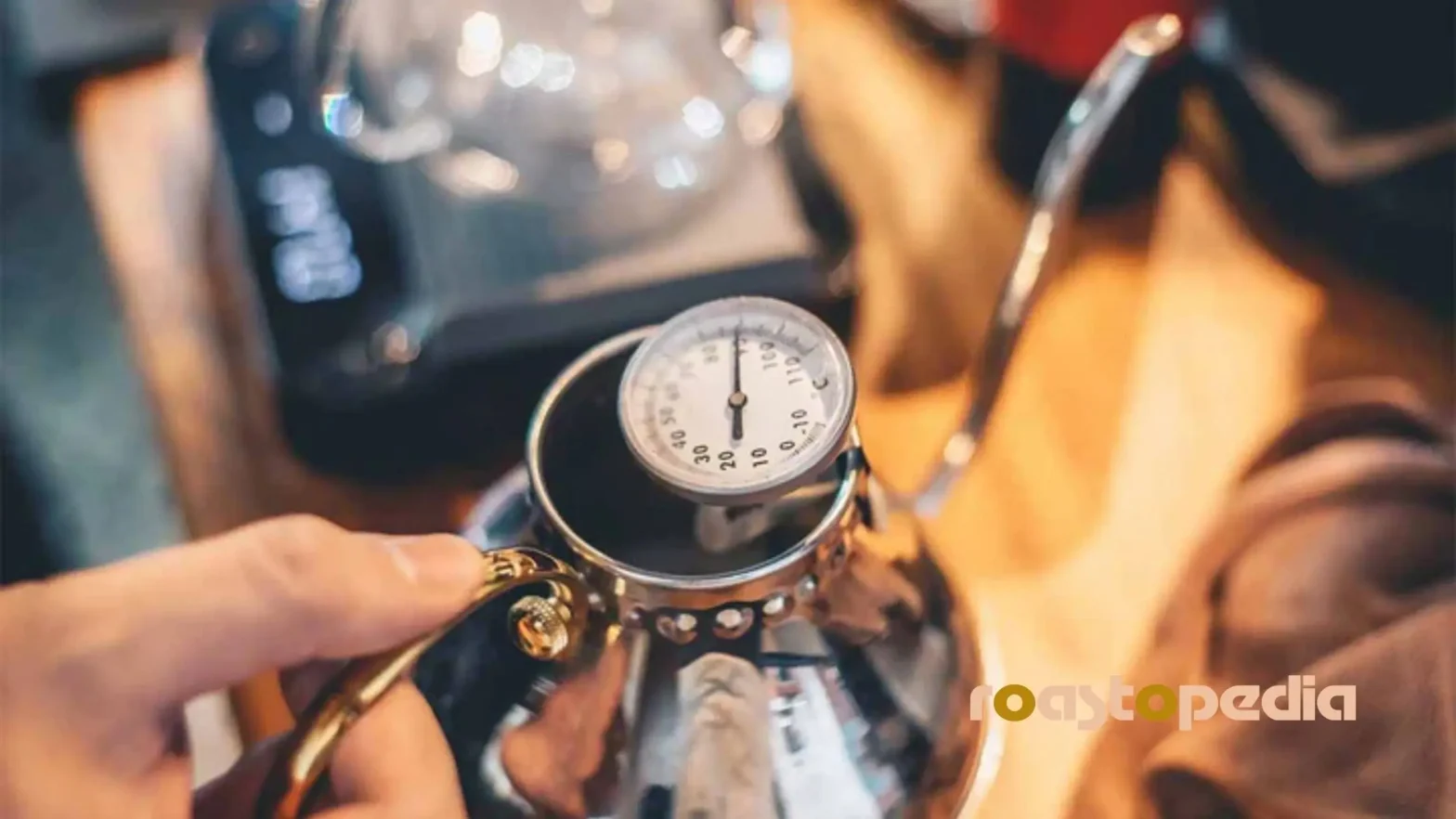
Water temperature is one of the most influential variables in coffee brewing and a fundamental determinant of coffee extraction. During brewing, water acts as a solvent, dissolving hundreds of compounds from roasted coffee and transporting them into the final beverage. The temperature of that water directly affects how quickly these compounds dissolve, which compounds are extracted, and the balance ultimately achieved in the cup.
Coffee extraction is a highly complex process involving acids, sugars, melanoidins, lipids, caffeine, volatile aromatic compounds, and numerous other substances formed during cultivation, processing, roasting, and grinding. Because these compounds differ significantly in their solubility, the temperature of the brewing water can profoundly alter flavor, aroma, body, sweetness, acidity, and bitterness.
In both professional and domestic brewing environments, water temperature is generally adjusted alongside grind size, brew ratio, brewing time, agitation, and water chemistry. While no single temperature is universally ideal for all coffees and brewing methods, decades of scientific research and industry experience have established a range within which most coffees achieve balanced extraction.
The Science of Coffee Extraction
Coffee extraction refers to the transfer of soluble material from roasted coffee grounds into brewing water. Roasted coffee contains a diverse mixture of compounds that differ greatly in chemical structure and behavior.
Some compounds dissolve readily with minimal thermal energy, while others require higher temperatures before they become sufficiently soluble. Organic acids, for example, tend to dissolve relatively quickly, whereas certain sugars, melanoidins, and heavier flavor compounds require greater energy input.
Temperature affects extraction through several mechanisms. Higher temperatures increase molecular motion, improve diffusion rates, reduce water viscosity, and enhance the solvent properties of water itself. As temperature rises, water penetrates coffee particles more effectively and dissolves compounds more rapidly.
The result is that hotter water generally extracts more material in a shorter period of time than cooler water. However, extraction is not simply a matter of quantity. The composition of the extracted material is equally important. A coffee that is extracted too little may taste sour and underdeveloped, while one extracted too aggressively may become bitter, harsh, or astringent.
For this reason, temperature is often regarded not merely as an extraction variable but as a flavor-management tool.
Why Water Temperature Matters
The influence of water temperature extends beyond extraction efficiency. It affects the sensory balance of the finished beverage.
At lower temperatures, extraction often favors bright organic acids while limiting the extraction of sugars and heavier compounds responsible for sweetness and body. The resulting cup may display vivid acidity but lack complexity or structure.
At higher temperatures, extraction becomes more comprehensive. Sweet compounds, caramelized sugars, melanoidins, and other desirable flavor components dissolve more readily. However, excessively high temperatures may also increase the extraction of bitter and astringent compounds.
Consequently, temperature influences every major sensory characteristic of coffee, including:
- Acidity
- Sweetness
- Bitterness
- Aroma
- Mouthfeel
- Body
- Aftertaste
Because these characteristics interact with one another, relatively small temperature changes can produce noticeable differences in flavor perception.
Water Temperature and the Solubility of Coffee Compounds
The chemistry of coffee extraction is governed largely by solubility. Solubility refers to the ability of a substance to dissolve in a solvent under specific conditions.
Many compounds found in roasted coffee become increasingly soluble as temperature rises. This principle explains why hot coffee can be brewed in minutes while cold brew often requires many hours.
Organic acids generally dissolve quickly and are extracted early in the brewing process. Sugars and caramelized compounds require somewhat greater energy. Larger molecular structures, including certain melanoidins formed during roasting, often require higher temperatures for efficient extraction.
The differing solubilities of coffee compounds mean that brewing temperature influences not only the quantity of extraction but also the composition of the extracted material.
A cup brewed at 88°C may contain a significantly different balance of compounds than one brewed at 95°C, even when all other brewing variables remain unchanged.
Optimal Water Temperature for Brewing Coffee
The generally accepted optimal water temperature for brewing coffee is 195°F to 205°F (90°C to 96°C). This range is widely used in specialty coffee because it provides enough thermal energy to efficiently dissolve desirable soluble compounds such as sugars, acids, and aromatic molecules, while avoiding excessive extraction of bitter and astringent substances.
Within this window, brewers can achieve a balanced cup where acidity, sweetness, and body are in harmony. Water below this range tends to under-extract coffee, producing sour, thin, or underdeveloped flavors, while water above it increases the risk of over-extraction, leading to bitterness and harshness. The exact ideal point within the range depends on factors such as roast level, grind size, and brewing method.
Why is the Water Temperature of 195°F to 205°F (90°C to 96°C) Considered Optimal for Coffee Brewing?
The brewing range of 195°F to 205°F (90°C to 96°C) is widely recognized throughout the specialty coffee industry as the optimal temperature window for coffee extraction. This recommendation is supported by research conducted by the Coffee Brewing Center, the Specialty Coffee Association (SCA), and numerous academic investigations into extraction chemistry.
The significance of this range lies in the balance it provides between extraction efficiency and flavor quality.
When water temperatures fall substantially below 195°F (90°C), extraction often becomes incomplete. The water may not possess sufficient thermal energy to effectively dissolve many sugars, melanoidins, and aromatic compounds that contribute sweetness, body, and complexity. Acids may dominate the flavor profile, producing cups that taste sour, thin, grassy, or underdeveloped.
Conversely, temperatures exceeding 205°F (96°C) can accelerate extraction to the point where undesirable compounds become increasingly prominent. Excessive extraction of bitter phenolics and roast-derived compounds may result in harshness, dryness, and reduced flavor clarity.
Within the range of 195°F to 205°F, water generally possesses enough thermal energy to dissolve desirable compounds efficiently while avoiding excessive extraction of unpleasant flavors. This range therefore represents a practical compromise between under-extraction and over-extraction.
The optimal temperature within this range depends on the coffee itself. Dense light-roasted coffees frequently benefit from temperatures near the upper end because their cellular structure remains relatively intact after roasting. Dark roasts, which are more porous and soluble, often perform better near the lower end of the range.
The recommended range should therefore be viewed as a guideline rather than an absolute rule. Skilled brewers routinely adjust temperature according to roast level, processing method, brewing equipment, and desired flavor profile.
Temperature and the Extraction of Acids
Acidity is one of the defining sensory attributes of coffee. Organic acids contribute brightness, vibrancy, and complexity to the beverage.
Compounds such as citric acid, malic acid, phosphoric acid, quinic acid, and acetic acid are extracted relatively easily. Because many acids dissolve readily, they often dominate extractions conducted at lower temperatures.
This phenomenon explains why coffee brewed with insufficient heat frequently tastes sour or sharp. Acids may be present in abundance while sweetness and body remain underdeveloped.
When brewing temperatures increase appropriately, additional compounds are extracted that balance acidity and create a more harmonious cup.
Temperature and the Extraction of Sugars
Sweetness is among the most desirable qualities in coffee.
Although roasted coffee contains relatively little sugar compared with many foods, numerous compounds contribute to the perception of sweetness. These include caramelized sugars, Maillard reaction products, and other roast-derived substances.
The extraction of these compounds generally improves as temperature rises within the recommended brewing range. As a result, coffees brewed at optimal temperatures often exhibit enhanced sweetness, improved balance, and greater flavor complexity.
Insufficient brewing temperatures may leave many of these compounds behind, resulting in cups that lack depth and structure.
Temperature and the Extraction of Bitter Compounds
Bitterness is a natural component of coffee and contributes to overall balance when present in moderation.
Compounds associated with bitterness include caffeine, phenolic substances, and degradation products of chlorogenic acids. While these compounds contribute desirable structure and intensity, excessive extraction may create harshness and astringency.
Higher brewing temperatures increase the likelihood of extracting these compounds in larger quantities. This is particularly evident when high temperatures are combined with fine grinding, prolonged brewing times, or excessive agitation.
The challenge for brewers is therefore not to eliminate bitterness entirely but to maintain an appropriate balance between bitterness, sweetness, and acidity.
Water Temperature and Roast Level
Roast level significantly influences how coffee responds to brewing temperature.
Light-roasted coffees tend to be denser and less soluble because they undergo less structural degradation during roasting. Their cellular walls remain relatively intact, making extraction more difficult. Consequently, these coffees often benefit from temperatures near the upper end of the recommended range.
Medium-roasted coffees generally exhibit balanced solubility and perform well across much of the traditional brewing range.
Dark-roasted coffees are more porous and fragile due to extensive roasting. Their increased solubility often allows successful extraction at slightly lower temperatures. Using excessively hot water with dark roasts may increase bitterness and obscure desirable flavor characteristics.
For this reason, many professional brewers select temperatures according to roast level rather than applying a single temperature to every coffee.
Water Temperature Across Brewing Methods
Pour-Over Brewing
Pour-over methods such as V60 and Chemex typically use temperatures between 92°C and 96°C.
Because contact time is relatively short, adequate heat helps ensure complete extraction. Light-roasted coffees often perform especially well near the upper end of this range.
French Press
French press brewing uses longer immersion times and often benefits from slightly lower temperatures.
Common ranges include:
- 90–93°C (194–200°F)
The extended contact time compensates for reduced extraction speed.
Espresso
Espresso machines generally brew within a temperature range of approximately 90°C to 96°C at the coffee puck.
Even small temperature adjustments can significantly alter sweetness, acidity, and body because espresso extraction occurs rapidly under pressure.
AeroPress
AeroPress recipes vary widely.
Depending on roast level and desired profile, temperatures may range from:
- 80°C to 96°C
The flexibility of immersion brewing allows successful extraction across a broader temperature spectrum.
Cold Brew
Cold brew employs temperatures far below conventional brewing ranges and relies on long extraction periods, often lasting 12–24 hours.
The resulting beverage generally exhibits:
- Lower perceived acidity
- Smooth body
- Reduced bitterness
- Distinct extraction chemistry
The extraction profile differs substantially from hot-brewed coffee.
Temperature Stability and Thermal Loss
Brewing temperature is not simply the temperature measured in a kettle. Throughout brewing, heat is continuously lost to the surrounding environment and to brewing equipment itself.
Ceramic drippers, glass brewers, metal vessels, and coffee grounds all absorb heat. Consequently, the actual temperature of the brewing slurry is often significantly lower than the temperature of the water initially poured.
Professional brewers frequently preheat brewing equipment to minimize thermal loss and maintain extraction consistency. This practice is particularly important when brewing light-roasted coffees, which often require greater thermal energy.
Temperature stability is also a major consideration in espresso machine design. Modern commercial machines incorporate sophisticated temperature-control systems intended to minimize fluctuations during extraction.
Water Temperature and Other Brewing Variables
Water temperature does not operate independently.
Its effects are closely intertwined with grind size, brewing time, coffee-to-water ratio, agitation, and water chemistry.
A finer grind increases extraction by exposing more surface area. If combined with high temperatures, the result may be over-extraction. Conversely, coarse grinds often require higher temperatures to achieve adequate extraction.
Similarly, longer brewing times can compensate for lower temperatures, while shorter brewing times often benefit from increased thermal energy.
These interactions explain why temperature should always be evaluated as part of a broader brewing system rather than as an isolated variable.
Common Misconceptions About Brewing Temperature
One of the most persistent myths in coffee preparation is that boiling water automatically burns coffee.
In reality, water itself does not burn coffee grounds during brewing. Rather, excessively high temperatures may alter extraction balance and emphasize undesirable flavors.
Many light-roasted specialty coffees are successfully brewed using water immediately off the boil. In such cases, the additional thermal energy can improve extraction and reveal flavors that would otherwise remain inaccessible.
Another common misconception is that hotter water always produces stronger coffee. While higher temperatures generally increase extraction, strength is influenced by multiple variables, including dose, grind size, brewing ratio, and extraction yield.
Scientific Research on Brewing Temperature
Modern understanding of brewing temperature has emerged from decades of scientific investigation.
Early work conducted by Ernest Earl Lockhart and the Coffee Brewing Center established many of the foundational principles underlying extraction theory and brewing control charts.
Subsequent research by the Specialty Coffee Association contributed to the development of standardized brewing recommendations that remain influential throughout the industry.
Scientific studies by Andrea Illy, Luciano Navarini, Christopher Hendon, Britta Folmer, and numerous other researchers have expanded knowledge of extraction chemistry, espresso dynamics, aroma development, and the interaction between brewing variables.
Collectively, this body of research demonstrates that water temperature is among the most powerful and controllable variables available to coffee brewers.
See Also
- Coffee Extraction
- Water Temperature
- Grind Size
- Coffee Blooming
- Coffee Degassing
- Under-Extraction
- Over-Extraction
- Cold Drip (Kyoto-style Cold Brew)
References
- Lockhart, E. E. Coffee Brewing Control Charts. Coffee Brewing Institute.
- Specialty Coffee Association. Brewing Best Practices and Golden Cup Standards.
- Illy, Andrea & Viani, Rinantonio. Espresso Coffee: The Science of Quality. Academic Press.
- Folmer, Britta. The Craft and Science of Coffee. Academic Press.
- Clarke, R. J., & Macrae, R. Coffee: Chemistry. Elsevier Applied Science.
- Farah, Adriana. Coffee: Emerging Health Effects and Disease Prevention. Wiley-Blackwell.
- Navarini, Luciano et al. Research on espresso extraction chemistry.
- Hendon, Christopher H. Research on coffee extraction and brewing science.
- Rao, Scott. The Coffee Roaster’s Companion.
- Rao, Scott. Everything but Espresso.
- Specialty Coffee Association. Water Quality Handbook.
- Sivetz, Michael. Coffee Technology.
- Pendergrast, Mark. Uncommon Grounds: The History of Coffee and How It Transformed Our World.
- International Organization for Standardization (ISO). Coffee preparation standards.
- Coffee Brewing Center. Technical Brewing Reports.
- National Coffee Association USA. Brewing Guidelines.
- International Coffee Organization. Coffee processing and quality publications.
- Ludwig, I. A., et al. “Coffee: Biochemistry and Potential Impact on Health.”
- Gloess, A. N., et al. Studies on coffee flavor chemistry and brewing variables.
- Caporaso, Nicola et al. Research on coffee aroma compounds and extraction.
- Yeretzian, Chahan. Research on coffee aroma and volatile compounds.
- Moon, J. K., & Shibamoto, T. Studies on coffee chemistry and roasting products.
- Petracco, Marino. “Technology IV: Beverage Preparation.”
- Specialty Coffee Association of Europe. Brewing and sensory evaluation materials.
- International Scientific Association for Coffee (ASIC). Conference proceedings on coffee extraction and brewing science.