
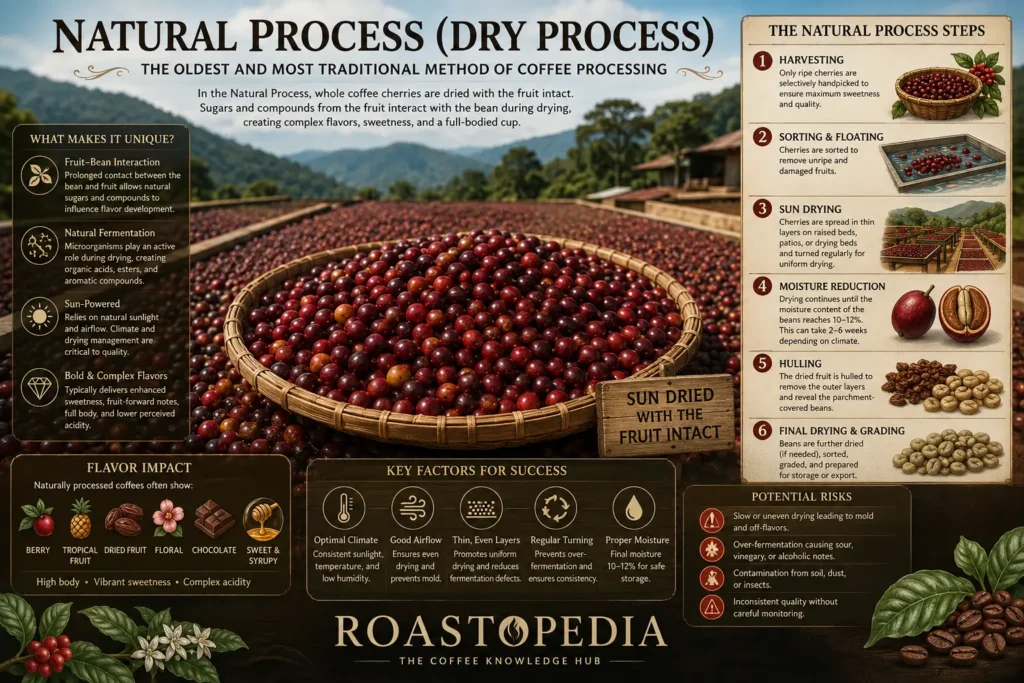
The Natural Process, also known as the Dry Process, is the oldest known method of coffee processing and one of the most influential techniques in the history of coffee production. In this method, freshly harvested coffee cherries are dried largely intact, with the seed remaining enclosed within the fruit throughout most or all of the drying period. After drying reaches the desired moisture content, the dried outer layers—including the skin (see Chaff), pulp, mucilage, and parchment—are mechanically removed to reveal the green coffee bean.
Unlike washed processing, which removes fruit material before drying, or honey processing, which removes only selected layers, natural processing relies on the gradual dehydration of the entire coffee cherry. Throughout drying, the coffee seed remains in prolonged contact with the fruit tissues that surround it. This extended interaction contributes significantly to the sensory characteristics commonly associated with naturally processed coffees, including elevated fruit intensity, increased perceived sweetness, fuller body, and distinctive fermentation-derived flavor compounds.
Natural processing is practiced throughout the coffee-producing world (see The Coffee Belt) and is particularly significant in regions where water availability is limited or where climatic conditions permit reliable sun drying. Historically dominant in many producing countries, the method remains a major processing approach in nations such as Brazil, Ethiopia, Yemen, and numerous emerging specialty coffee origins.
The Natural Process is not a singular technique but rather a broad category encompassing numerous regional traditions, drying systems, fermentation regimes, and quality-control practices. Variations within the category may produce coffees ranging from exceptionally clean and refined to intensely fruit-driven and highly fermented.
Terminology
Several terms are used interchangeably to describe this processing method:
- Natural Process
- Dry Process
- Sun-Dried Coffee
- Naturally Processed Coffee
- Dry-Fermented Coffee (occasionally used in technical literature)
The term Natural Process is predominant within the specialty coffee industry, while Dry Process remains common in agricultural research, historical documents, and international trade classifications.
The terminology derives from the central characteristic of the method: coffee cherries are dried naturally with minimal removal of fruit material before dehydration occurs.
Coffee Before Modern Processing
The Natural Process predates all other major coffee processing methods and likely emerged alongside the earliest cultivation of coffee itself.
Coffee is believed to have originated in the highland forests of present-day Ethiopia. Before the development of sophisticated processing technologies, harvested cherries would have naturally dried under the environmental conditions available to farmers and traders. The simplest method of preserving coffee for transportation involved spreading cherries in the sun until sufficient moisture had evaporated to prevent spoilage.
Because the coffee seed is naturally protected by multiple layers of biological material, drying the entire fruit required relatively little technological intervention. For early coffee-producing societies, the Natural Process represented an efficient means of preserving coffee without specialized equipment.
Ethiopia and Early Coffee Traditions
Historical evidence suggests that naturally dried coffee cherries were utilized in Ethiopia long before coffee became a globally traded commodity.
In several Ethiopian traditions, dried coffee cherries were consumed directly or incorporated into food preparations. Historical accounts describe the use of dried cherries mixed with animal fat to create energy-dense travel provisions. While some details remain debated among historians, the drying of whole cherries appears deeply intertwined with the earliest known uses of coffee.
As coffee cultivation expanded from Ethiopia into Yemen, naturally dried coffees became foundational to regional coffee commerce.
Yemen and the Rise of the Coffee Trade
The coffee trade that developed through Yemen between the fifteenth and seventeenth centuries relied heavily upon naturally processed coffees.
The arid climate of Yemen was particularly suited to dry processing. Limited rainfall reduced the risk of spoilage during drying, while scarce water resources discouraged the widespread adoption of water-intensive processing systems.
The port of Mocha became one of the most influential centers in global coffee history. Coffees exported through this route were overwhelmingly processed using variations of the Natural Process. Consequently, many of the flavor characteristics associated with historic Yemeni and early Ethiopian coffees became embedded in global perceptions of coffee quality.
Expansion Across the Coffee Belt
As coffee cultivation spread throughout Asia, Africa, and the Americas, natural processing accompanied it.
Before the invention of modern depulping equipment in the eighteenth and nineteenth centuries, natural processing remained the dominant method in many regions.
The method became especially significant in:
- Brazil
- Ethiopia
- Yemen
- Eritrea
- Uganda
- India
- Indonesia
- Parts of Central America
Although washed processing later gained prominence in many countries, natural processing remained central wherever climate and economics favored dry handling of coffee cherries.
Botanical Foundations
The Coffee Cherry
The coffee cherry consists of multiple layers surrounding the seed.
From exterior to interior, these include:
- Exocarp (skin)
- Mesocarp (pulp)
- Mucilage
- Parchment
- Silver skin
- Seed (coffee bean)
Each layer contains varying concentrations of:
- Sugars
- Organic acids
- Water
- Minerals
- Phenolic compounds
- Aromatic precursors
- Microbial nutrients
During natural processing, all these layers remain present for an extended period, creating a highly complex biochemical environment around the seed.
Fruit Composition
Fresh ripe coffee cherries typically contain:
- 60–70% water
- Various simple sugars
- Pectins
- Cellulose
- Organic acids
- Amino acids
- Phenolic compounds
The fruit represents a biologically active matrix capable of supporting microbial growth and numerous chemical transformations during drying.
Because the seed remains enclosed within this matrix, changes occurring in the fruit can influence the composition of the bean.
Scientific Principles of Natural Processing
Controlled Dehydration
At its core, natural processing is a method of controlled dehydration.
The objective is to reduce moisture from freshly harvested cherries to a level that permits safe storage while preserving desirable quality characteristics.
Fresh cherries often contain moisture levels exceeding 60%.
By the conclusion of drying:
- Whole-cherry moisture commonly reaches approximately 10–12%.
- Water activity falls below levels required for most microbial spoilage organisms.
The reduction of water content stabilizes the product and enables long-term storage.
Mass Transfer
Drying involves the movement of water from internal tissues toward the surrounding environment.
This process occurs through:
- Diffusion
- Evaporation
- Vapor migration
- Moisture gradients
The drying rate is influenced by:
- Temperature
- Relative humidity
- Airflow
- Solar radiation
- Cherry size
- Fruit maturity
- Drying-bed design
Excessively rapid drying may create uneven moisture distribution, while excessively slow drying increases the risk of microbial defects.
Fermentation During Drying
One of the most significant scientific aspects of natural processing is fermentation.
Fermentation begins almost immediately after harvest.
Microorganisms naturally present on the fruit surface begin metabolizing available sugars.
Common microbial groups include:
- Yeasts
- Lactic acid bacteria
- Acetic acid bacteria
- Filamentous fungi
These organisms generate:
- Alcohols
- Organic acids
- Esters
- Ketones
- Aldehydes
- Volatile aromatic compounds
The resulting biochemical transformations contribute substantially to flavor development.
Microbial Ecology
Natural coffee drying creates a dynamic ecosystem.
Microbial populations change continuously throughout processing.
Early stages often favor yeasts due to abundant sugars and moisture.
As conditions evolve, bacterial populations may increase.
Environmental variables strongly influence microbial succession:
- Temperature
- Oxygen availability
- Water activity
- Drying speed
- Altitude
- Cherry integrity
Differences in microbial ecology help explain why naturally processed coffees from different origins can display dramatically different sensory characteristics.
Harvesting Requirements
Importance of Ripeness
Natural processing is highly sensitive to cherry maturity.
Because the fruit remains attached during drying, defects present at harvest become amplified rather than removed.
Ideally, cherries should be:
- Fully ripe
- Uniform in color
- Free from disease
- Undamaged
Underripe cherries often contribute:
- Astringency
- Herbaceous flavors
- Reduced sweetness
Overripe cherries may increase the likelihood of uncontrolled fermentation.
Selective Picking
High-quality natural coffees frequently rely on selective harvesting.
Pickers may conduct multiple passes through coffee fields to collect cherries at optimal ripeness.
Although labor-intensive, selective harvesting contributes significantly to cup quality.
Specialty-grade natural coffees commonly begin with rigorous cherry selection.
Sorting and Preparation
Following harvest, cherries are often sorted to remove:
- Unripe fruit
- Overripe fruit
- Insect-damaged cherries
- Foreign material
Sorting methods may include:
- Hand sorting
- Density separation
- Water flotation
- Mechanical sorting
- Optical sorting
The objective is to create a homogeneous drying batch.
Uniformity during drying improves consistency and reduces defect formation.
Drying Systems
Patio Drying
Patio drying remains one of the most widely used natural processing systems.
Cherries are spread across:
- Concrete patios
- Brick patios
- Stone surfaces
Workers periodically turn the cherries to promote even drying.
Patio drying has been practiced for centuries and remains especially important in Brazil.
Raised Beds
Raised drying beds elevate coffee above the ground.
Benefits include:
- Improved airflow
- Better moisture removal
- Reduced contamination
- Enhanced drying uniformity
Raised beds have become particularly associated with specialty coffee production in East Africa.
African Beds
African beds are a specialized form of raised drying platform.
Constructed using mesh surfaces, they permit airflow from above and below.
This design improves drying efficiency and allows careful monitoring of cherry condition throughout processing.
Mechanical Drying
Some producers supplement or replace sun drying with mechanical systems.
These may include:
- Rotary dryers
- Vertical dryers
- Drum dryers
Mechanical drying provides greater control but requires careful management to avoid thermal damage.
Excessive temperatures can negatively affect seed chemistry and cup quality.
Drying Duration
Natural coffees generally require longer drying periods than many washed coffees.
Drying may range from:
- 10–15 days in hot climates
- 20–30 days under moderate conditions
- More than 40 days in slow-drying specialty protocols
The duration significantly influences flavor development.
Longer drying periods often permit more extensive biochemical transformation, although excessively prolonged drying increases risk.
Sensory Characteristics
Naturally processed coffees are frequently associated with:
- Elevated fruit intensity
- Increased sweetness
- Fuller body
- Lower perceived acidity
- Enhanced mouthfeel
- Jam-like flavor qualities
Common flavor descriptors include:
- Blueberry
- Strawberry
- Tropical fruit
- Raisin
- Dried fruit
- Wine-like notes
- Chocolate
- Red fruit
However, sensory outcomes vary dramatically depending on origin, variety, terroir, harvest quality, and drying practices.
Defects Associated with Natural Processing
Potential defects include:
- Over-fermentation
- Mold contamination
- Phenolic taints
- Earthy flavors
- Mustiness
- Uneven drying
- Sour fermentation
- Acetic defects
- Alcoholic off-flavors
The prevention of these defects requires precise drying management and quality control throughout processing.
Biochemistry of Natural Processing
The transformation of coffee during natural processing is governed by a complex interplay of biochemical reactions occurring within both the fruit and the seed. Unlike washed processing, where the removal of fruit limits many biological interactions, natural processing allows the coffee cherry to remain a living biochemical system throughout much of the drying phase.
Following harvest, cellular respiration within the fruit does not cease immediately. The tissues of the coffee cherry continue to consume oxygen and metabolize stored carbohydrates. At the same time, microorganisms colonizing the fruit surface and internal tissues begin utilizing available sugars.
These biological processes result in the production of numerous compounds, including:
- Ethanol
- Lactic acid
- Acetic acid
- Carbon dioxide
- Esters
- Aldehydes
- Ketones
- Phenolic compounds
Many of these substances contribute directly or indirectly to flavor development.
As moisture decreases, enzymatic activity gradually slows. Nevertheless, biochemical reactions continue for a significant portion of the drying process. The timing and intensity of these reactions influence the eventual sensory profile of the coffee.
Sugar Dynamics During Drying
Coffee cherries contain substantial concentrations of sugars, particularly when harvested at peak ripeness.
The primary sugars include:
- Sucrose
- Glucose
- Fructose
These compounds serve several important functions during natural processing.
First, they provide nutrients for microbial populations.
Second, they participate in biochemical transformations that alter the chemical environment surrounding the seed.
Third, they contribute to the formation of roasting precursors that influence flavor development after roasting.
Although sugars contained within the fruit do not physically migrate into the bean in large quantities, interactions between fruit tissues and seed chemistry influence the eventual composition of the green coffee.
Naturally processed coffees frequently exhibit elevated perceptions of sweetness, a characteristic often attributed to these biochemical interactions.
Pectin Degradation
One of the most significant transformations occurring during natural processing involves the breakdown of pectic substances.
Pectins are structural carbohydrates found throughout coffee fruit tissues, particularly within the mucilage.
Microorganisms produce enzymes known as pectinases that degrade these compounds into smaller molecules.
The degradation of pectin influences:
- Fruit softening
- Fermentation dynamics
- Moisture movement
- Microbial succession
Pectin breakdown also releases additional substrates that support microbial metabolism.
The extent of pectin degradation can significantly affect the sensory outcome of the final coffee.
Fermentation Ecology
Yeasts
Yeasts are among the earliest and most influential microorganisms present during natural processing.
Common genera include:
- Saccharomyces
- Pichia
- Hanseniaspora
- Candida
- Torulaspora
These organisms metabolize sugars and produce numerous aromatic compounds.
Yeast activity is frequently associated with:
- Fruit notes
- Floral aromas
- Tropical flavors
- Ester formation
Many of the berry-like and wine-like characteristics found in natural coffees are believed to be influenced by yeast metabolism.
Lactic Acid Bacteria
Lactic acid bacteria often emerge as important contributors during drying.
Common genera include:
- Lactobacillus
- Leuconostoc
- Weissella
These microorganisms convert sugars into organic acids.
Their activity can contribute:
- Increased complexity
- Enhanced sweetness perception
- Improved balance
- Greater flavor integration
Controlled lactic fermentation has become a major focus of modern specialty coffee processing.
Acetic Acid Bacteria
Acetic acid bacteria oxidize ethanol into acetic acid.
While moderate activity may contribute complexity, excessive activity can create undesirable flavors.
Overdevelopment may result in:
- Vinegar-like aromas
- Sharp acidity
- Harsh fermentation notes
Managing oxygen exposure during drying is therefore an important aspect of quality control.
Filamentous Fungi
Various molds and filamentous fungi may colonize coffee cherries under unfavorable drying conditions.
Potential consequences include:
- Musty flavors
- Mold contamination
- Reduced quality
- Increased defect counts
The prevention of fungal growth remains one of the principal challenges in natural processing.
Water Activity and Stability
Moisture content alone does not fully determine coffee stability.
A related concept known as water activity plays a critical role.
Water activity refers to the availability of water for biological processes.
As drying progresses:
- Moisture decreases.
- Water activity decreases.
- Microbial growth becomes increasingly restricted.
Many spoilage organisms cannot survive once water activity falls below critical thresholds.
For this reason, careful monitoring of both moisture content and water activity has become standard practice in high-quality natural coffee production.
Drying Kinetics
The drying of coffee cherries occurs in several distinct phases.
Initial Phase
The earliest stage is characterized by rapid moisture loss from the outer layers of the fruit.
Surface water evaporates relatively quickly under favorable environmental conditions.
Intermediate Phase
As drying progresses, moisture must migrate from deeper tissues toward the surface.
This phase proceeds more slowly.
The rate of moisture movement becomes increasingly important.
Improper management during this stage can lead to uneven drying.
Final Phase
The final stage is often the most critical.
Moisture removal slows considerably.
Internal moisture gradients may persist within the cherry.
Excessively rapid drying during this stage can produce stress cracks and uneven bean development.
Slow, controlled drying is generally preferred.
Influence of Climate
The success of natural processing is heavily dependent upon environmental conditions.
Important variables include:
Temperature
Moderate temperatures promote controlled drying.
Excessive heat may result in:
- Surface hardening
- Uneven moisture distribution
- Cellular damage
Relative Humidity
Humidity strongly influences drying rates.
High humidity slows drying and increases microbial risks.
Low humidity accelerates moisture removal but may increase stress within the seed.
Airflow
Air movement facilitates evaporation.
Regions with consistent airflow often produce more uniform drying.
Solar Radiation
Sunlight provides the energy necessary for evaporation.
However, excessive solar intensity may overheat coffee cherries.
Many producers therefore use shading strategies during critical drying periods.
Traditional Drying Practices
Historically, coffee-producing societies developed numerous techniques for drying naturally processed coffee.
Methods included:
- Stone terraces
- Earthen patios
- Raised mats
- Rooftop drying
- Woven drying platforms
Many of these systems evolved in response to local climatic conditions.
Traditional knowledge often reflects centuries of observation and adaptation.
Natural Processing in Ethiopia
Ethiopia occupies a unique position in the history of natural coffee processing.
Many of the world’s most celebrated natural coffees originate from Ethiopian growing regions.
Areas particularly associated with natural processing include:
- Guji
- Yirgacheffe
- Sidama
- Harrar
Ethiopian naturals frequently exhibit:
- Blueberry notes
- Strawberry characteristics
- Floral aromatics
- Tropical fruit flavors
- Complex sweetness
These flavor profiles contributed significantly to the rise of specialty coffee during the late twentieth and early twenty-first centuries.
Natural Processing in Yemen
Yemen represents one of the oldest continuously operating natural-processing traditions in existence.
The country’s arid climate historically favored dry processing.
Yemeni naturals often display:
- Dried fruit notes
- Cocoa characteristics
- Spice-like flavors
- Wine-like complexity
Traditional drying methods remain influential despite modern advancements.
Natural Processing in Brazil
Brazil is the world’s largest producer of naturally processed coffee.
The country’s extensive dry seasons and large-scale production systems made natural processing economically attractive.
Brazilian naturals commonly display:
- Chocolate notes
- Nutty characteristics
- Caramel sweetness
- Heavy body
Large drying patios became an iconic feature of Brazilian coffee production.
Brazil has also become a major center for innovation in natural processing technologies.
Natural Processing in Uganda
Uganda has historically relied heavily on natural processing, particularly for Robusta coffee production.
Naturally processed Ugandan coffees often exhibit:
- Full body
- Earthy complexity
- Dark fruit characteristics
- Strong sweetness
Increasing specialty coffee production has led to significant improvements in drying infrastructure and quality management.
Natural Processing and Coffee Species
Coffea arabica
Arabica dominates specialty natural coffee production.
The species is particularly responsive to processing influences.
Naturally processed Arabicas often display pronounced fruit expression.
Coffea canephora (Robusta)
Robusta is also commonly processed using natural methods.
Because of its higher chlorogenic acid content and distinct chemical composition, naturally processed Robusta often develops flavor profiles different from those of Arabica.
Recent specialty Robusta initiatives have demonstrated the potential for high-quality naturally processed lots.
Influence on Green Coffee Characteristics
Natural processing influences numerous measurable attributes of green coffee.
These include:
- Bean density
- Color
- Moisture distribution
- Volatile compound concentration
- Organic acid composition
- Aromatic precursor abundance
Such differences contribute to the distinct roasting behavior of naturally processed coffees.
Roasting Considerations
Naturally processed coffees frequently behave differently during roasting.
Roasters often observe:
- Increased aromatic intensity
- Enhanced sweetness development
- Different heat-transfer characteristics
- Greater susceptibility to scorching if improperly managed
Many roasting professionals adjust profiles specifically for naturally processed coffees.
Differences in chemical composition may influence:
- First crack behavior
- Development requirements
- Solubility
- Flavor expression
The interaction between processing and roasting remains an active area of coffee research.
Sensory Characteristics of Naturally Processed Coffee
The sensory identity of naturally processed coffee is one of the principal reasons for the method’s enduring significance within both commercial and specialty coffee sectors. Although the process originated as a practical means of preserving coffee cherries, it has become increasingly valued for its ability to generate distinctive flavor characteristics that are difficult or impossible to reproduce through other processing methods.
Natural coffees are frequently described as fruit-forward, sweet, and full-bodied. However, these descriptions only partially capture the complexity emerging from successful dry processing. Profile characteristics are governed by cultivar, terroir, climate, harvest maturity, drying speed, microbial activity, storage, and roasting. Consequently, no single flavor profile represents all naturally processed coffees.
The prolonged contact between the seed and surrounding fruit tissues often produces flavor experiences that appear more closely associated with fresh fruit than with traditional coffee flavors. Depending on origin and processing conditions, tasters may identify notes reminiscent of blueberries, strawberries, blackberries, cherries, peaches, mangoes, pineapples, raisins, dates, figs, plums, or various tropical fruits. In some coffees, these characteristics manifest as subtle aromatic nuances. In others, they become dominant sensory features.
Sweetness is among the most consistently reported attributes of high-quality naturally processed coffees. Although coffee itself contains relatively little sugar after roasting, the perception of sweetness arises from a combination of aromatic compounds, reduced bitterness, balanced acidity, and the presence of flavor compounds associated with ripe fruit. Natural processing often enhances these factors simultaneously.
Body is another defining characteristic. Compared with many washed coffees, natural coffees frequently exhibit greater viscosity and a heavier mouthfeel. The beverage may feel richer, rounder, and more substantial on the palate. This characteristic is particularly valued in espresso preparation, where body contributes significantly to texture and perceived quality.
Acidity in naturally processed coffee is often perceived differently from acidity in washed coffee. Rather than presenting as sharp, crisp, or citrus-like, the acidity of natural coffees is commonly described as rounded, integrated, and fruit-driven. This distinction reflects differences in both chemical composition and sensory interaction.
The aromatic complexity of naturally processed coffee can be extraordinary. Volatile compounds generated during drying and fermentation contribute floral, fruity, spicy, herbal, wine-like, and confectionery characteristics. In exceptional examples, the aromatic experience may continue evolving as the coffee cools, revealing layers of flavor that remain hidden at higher temperatures.
The Relationship Between Fermentation and Flavor
Fermentation is among the most misunderstood aspects of natural processing.
In popular coffee discourse, fermentation is often discussed as though it were a distinct processing method. In reality, fermentation is a biological phenomenon that occurs to varying degrees in nearly all coffee processing systems. What distinguishes natural processing is not the presence of fermentation itself but rather the environment in which fermentation occurs and the duration over which microbial activity may influence the coffee cherry.
During natural drying, microorganisms metabolize sugars and other compounds present within the fruit. As these organisms consume available nutrients, they generate metabolic byproducts that alter the chemical environment surrounding the seed. Some of these compounds contribute directly to flavor and aroma, while others participate in subsequent chemical reactions that influence roasting performance and cup quality.
The relationship between fermentation and flavor is neither simple nor entirely understood. Modern analytical techniques have revealed thousands of volatile compounds within roasted coffee, many of which originate through complex pathways involving plant metabolism, microbial activity, drying conditions, and roasting reactions. The sensory profile of a naturally processed coffee therefore emerges from a network of interactions rather than a single process.
Controlled fermentation may contribute desirable notes of berry, tropical fruit, floral aromatics, chocolate, spice, and wine-like complexity. Uncontrolled fermentation, however, may generate unpleasant characteristics including vinegar, overripe fruit, medicinal flavors, excessive alcohol notes, or putrefactive aromas. The distinction between desirable and undesirable fermentation often depends upon careful management of drying conditions.
Defects in Naturally Processed Coffee
Natural processing possesses immense quality potential, but it also presents significant risks. The method exposes coffee cherries to environmental conditions for extended periods, increasing opportunities for physical, microbial, and chemical defects.
One of the most significant risks is uneven drying. Because coffee cherries are relatively large structures containing multiple tissue layers, moisture removal occurs gradually. If cherries dry at different rates within the same lot, the resulting coffee may exhibit substantial variability in quality. Some beans may become over-dried while others retain excessive moisture. This inconsistency can negatively affect storage stability, roasting performance, and cup quality.
Over-fermentation represents another common defect category. Excessive microbial activity can generate undesirable compounds that overwhelm the coffee’s natural flavor characteristics. Such coffees may display notes of vinegar, spoiled fruit, excessive alcohol, or sourness. In severe cases, the resulting flavors may render the coffee commercially unusable.
Mold contamination remains a major concern throughout the coffee industry. Fungal growth can occur when drying proceeds too slowly or when environmental humidity remains elevated for extended periods. Beyond sensory deterioration, certain molds may produce mycotoxins that present food safety concerns.
Phenolic defects occasionally occur when microbial activity becomes unbalanced. These defects may resemble medicinal compounds, antiseptics, smoke, plastic, or rubber. Even at low concentrations, such characteristics can significantly diminish cup quality.
Physical defects may also arise during natural processing. Extended exposure to environmental conditions increases the likelihood of insect damage, contamination by foreign matter, discoloration, and structural deterioration of the dried fruit.
For these reasons, successful natural processing requires careful monitoring from harvest through storage.
Quality Evaluation and Grading
The evaluation of naturally processed coffee follows many of the same principles used for other processing methods, yet certain considerations assume greater importance.
Physical inspection typically begins with assessment of the dried cherry or green coffee. Processors evaluate color uniformity, moisture content, physical defects, and overall consistency. Variability within a lot often provides early indications of processing challenges.
Moisture measurement has become increasingly important in modern coffee production. Excessive moisture increases the likelihood of spoilage during storage and transportation. Insufficient moisture may contribute to brittleness and reduced shelf stability. Most specialty coffees are stabilized within a relatively narrow moisture range before export.
Sensory evaluation remains the ultimate measure of quality. Professional cuppers assess aroma, flavor, aftertaste, acidity, body, balance, sweetness, uniformity, cleanliness, and overall impression. Naturally processed coffees are frequently evaluated not only for the intensity of their fruit characteristics but also for the clarity with which those characteristics are expressed.
A highly fruit-forward profile alone does not necessarily indicate quality. Exceptional natural coffees combine intensity with balance, complexity, cleanliness, and transparency. The most celebrated examples exhibit vibrant fruit notes while maintaining clear expression of origin and cultivar characteristics.
The Emergence of Naturals in Specialty Coffee
Throughout much of the twentieth century, washed coffees dominated perceptions of premium quality. Many buyers viewed natural processing as an inferior method associated primarily with lower production costs and inconsistent quality.
This perception began to shift during the late twentieth century and accelerated dramatically during the specialty coffee movement.
Improved drying infrastructure, enhanced quality control, and growing consumer interest in distinctive flavor experiences contributed to renewed appreciation of naturally processed coffees. Producers who invested in selective harvesting, raised drying beds, moisture monitoring, and careful fermentation management demonstrated that natural processing could produce coffees of extraordinary quality.
Ethiopian naturals played a particularly influential role in this transformation. Coffees exhibiting intense blueberry, strawberry, and floral characteristics challenged long-standing assumptions regarding coffee flavor potential. As these coffees gained recognition in international competitions and specialty markets, demand for high-quality naturals increased substantially.
The emergence of direct trade relationships further accelerated this trend. Roasters seeking unique flavor profiles often collaborated directly with producers to refine natural processing techniques. Such partnerships encouraged experimentation and innovation while improving economic incentives for quality production.
Today, naturally processed coffees occupy a prominent position within the global specialty coffee industry. Far from being regarded as a secondary processing method, they are increasingly celebrated for their ability to reveal dimensions of coffee flavor that other methods may not emphasize.
Natural Processing and Modern Experimental Techniques
Many contemporary processing innovations trace their origins to traditional natural processing.
Techniques such as anaerobic fermentation, carbonic maceration, thermal shock processing, yeast inoculation, and controlled fermentation protocols frequently begin with principles established through centuries of natural coffee drying. Rather than replacing natural processing, these innovations often represent specialized modifications of its underlying biological and physical processes.
Anaerobic natural coffees, for example, combine whole-cherry drying with fermentation conducted in oxygen-restricted environments. Carbonic maceration adapts techniques originally developed within winemaking. Inoculated fermentations introduce selected microbial cultures to influence flavor development.
Despite their technological sophistication, these approaches remain fundamentally connected to the historical concept of drying coffee while preserving substantial contact between the seed and fruit.
As a result, natural processing can be viewed not merely as one processing method among many but as the foundational platform from which numerous contemporary innovations have emerged.
Economic Significance
Natural processing occupies a distinctive economic position within global coffee production.
The method generally requires less water infrastructure than washed processing, making it particularly attractive in regions where water resources are scarce or expensive. For many producers, the ability to process coffee without extensive wet mills reduces capital investment requirements.
At the same time, high-quality natural processing often demands substantial labor inputs. Cherries must be harvested carefully, sorted thoroughly, turned regularly during drying, protected from adverse weather, and monitored continuously for defects. The labor intensity of specialty natural production can therefore be considerable.
Market demand for exceptional natural coffees has created opportunities for significant value addition. Producers capable of consistently delivering high-quality lots frequently receive substantial price premiums. In some regions, natural processing has become an important strategy for economic differentiation within competitive specialty markets.
The relationship between quality and profitability remains complex. Natural processing may reduce certain infrastructure costs while increasing labor requirements and quality-control expenditures. Successful implementation therefore depends upon local environmental conditions, market access, and producer expertise.
Environmental Considerations
From an environmental perspective, natural processing offers several notable advantages.
Most significantly, the method generally requires minimal water use. In regions experiencing water scarcity, this characteristic may represent a substantial sustainability benefit. The reduction of wastewater generation also decreases the environmental challenges associated with treatment and disposal.
Energy requirements vary according to drying method. Traditional sun drying relies primarily upon solar energy and therefore possesses a relatively small direct energy footprint. Mechanical drying systems may increase energy consumption but can improve consistency under challenging climatic conditions.
Land use considerations are also relevant. Large-scale natural processing often requires substantial drying areas. The design and management of these facilities influence both operational efficiency and environmental impact.
Climate change presents emerging challenges for natural coffee production. Increasing rainfall variability, extreme weather events, and shifting seasonal patterns may complicate drying operations in some producing regions. Producers are increasingly adopting adaptive strategies, including covered drying systems, improved airflow management, and enhanced monitoring technologies.
Natural Processing in Contemporary Coffee Culture
The influence of natural processing extends beyond production and commerce into the broader culture of coffee consumption.
For many consumers, naturally processed coffees provide an introduction to the extraordinary diversity of coffee flavor. Their pronounced fruit characteristics often challenge conventional assumptions regarding what coffee can taste like.
Coffee competitions, barista championships, and sensory training programs have further elevated the visibility of naturally processed coffees. These events frequently showcase exceptional examples that demonstrate the method’s capacity for complexity and innovation.
Within specialty coffee communities, naturally processed coffees continue to inspire discussion regarding fermentation, terroir, processing science, and sensory evaluation. Their popularity has contributed significantly to ongoing research into microbial ecology, drying dynamics, and flavor development.
More than a processing technique, the Natural Process represents a living intersection of agriculture, microbiology, chemistry, climate, economics, and culture. It is simultaneously one of the oldest methods in coffee production and one of the most dynamic areas of contemporary coffee innovation. Its historical roots extend to the earliest chapters of coffee cultivation, while its future continues to evolve through scientific discovery and producer experimentation. Few processing methods have exerted such profound influence on the development of coffee as an agricultural commodity, a sensory product, and a global cultural phenomenon.
See Also
The Natural Process belongs to the broader family of traditional coffee processing methods that developed before the emergence of many modern controlled-fermentation techniques. Readers interested in related processing approaches may also consult:
- Washed Process (Wet Process) – A method in which the fruit and mucilage are removed before drying, emphasizing clarity, acidity, and terroir expression.
- Honey Process – A processing method that removes the outer skin while retaining varying amounts of mucilage during drying.
- Semi-Washed Process – A distinctive Indonesian processing system in which parchment coffee is hulled at unusually high moisture levels before final drying.
- Pulped Natural Process – A Brazilian-origin processing technique often considered a precursor to modern honey processing, combining aspects of both natural and washed methods.
- Monsooned Process – A traditional Indian post-processing method in which green coffee is exposed to seasonal monsoon winds and humidity, fundamentally altering its physical and sensory characteristics.
- Dry-on-Tree Process – A traditional practice in which coffee cherries remain on the tree beyond normal harvest maturity and partially dry before collection, often serving as a variant of natural processing in specific regions.
References
- Wintgens, J. N. (Ed.). Coffee: Growing, Processing, Sustainable Production. 2nd Edition. Wiley-VCH, 2009.
- Borém, F. M. (Ed.). Handbook of Coffee Post-Harvest Technology: A Comprehensive Guide to the Processing, Drying, and Storage of Coffee. Gin Press, 2014.
- Illy, A., & Viani, R. Espresso Coffee: The Science of Quality. 2nd Edition. Academic Press, 2005.
- Farah, A. Coffee: Production, Quality and Chemistry. Royal Society of Chemistry, 2019.
- Clarke, R. J., & Macrae, R. Coffee: Volume 2 – Technology. Elsevier Applied Science Publishers, 1987.
- Clarke, R. J., & Vitzthum, O. G. Coffee: Recent Developments. Blackwell Science, 2001.
- Schenker, S. Investigation of Coffee Roasting Degree and Aroma Development. Swiss Federal Institute of Technology (ETH Zürich), Doctoral Dissertation, 2000.
- De Bruyn, F., Zhang, S. J., Pothakos, V., et al. “Exploring the Impacts of Postharvest Processing on the Microbiota and Metabolite Profiles During Green Coffee Bean Production.” Applied and Environmental Microbiology, 2017.
- Lee, L. W., Cheong, M. W., Curran, P., Yu, B., & Liu, S. Q. “Coffee Fermentation and Flavor—An Intricate and Delicate Relationship.” Food Chemistry, 2015.
- Evangelista, S. R., Silva, C. F., Miguel, M. G. C. P., et al. “Improvement of Coffee Beverage Quality by Using Selected Yeasts During Fermentation.” Food Research International, 2014.
- Pereira, G. V. M., Neto, D. P. C., Magalhães Júnior, A. I., et al. “Conducting Starter Culture-Controlled Ferments of Coffee Beans During On-Farm Wet Processing.” Food Microbiology, 2017.
- Silva, C. F., Schwan, R. F., Dias, E. S., & Wheals, A. E. “Microbial Diversity During Maturation and Natural Processing of Coffee Cherries.” Food Microbiology, 2008.
- Schwan, R. F., & Fleet, G. H. Coffee Fermentation and Microbiology. CRC Press, 2014.
- Joët, T., Laffargue, A., Descroix, F., et al. “Influence of Environmental Factors, Wet Processing and Their Interactions on the Biochemical Composition of Green Arabica Coffee Beans.” Food Chemistry, 2010.
- Bertrand, B., Villarreal, D., Laffargue, A., et al. “Comparison of Bean Biochemical Composition and Beverage Quality of Arabica Hybrids Involving Sudanese-Ethiopian Origins.” Food Chemistry, 2006.
- Sunarharum, W. B., Williams, D. J., & Smyth, H. E. “Complexity of Coffee Flavor: A Compositional and Sensory Perspective.” Food Research International, 2014.
- Buffo, R. A., & Cardelli-Freire, C. “Coffee Flavour: An Overview.” Flavour and Fragrance Journal, 2004.
- Toledo, P. R. A. B., Pezza, L., Pezza, H. R., & Toci, A. T. “Relationship Between the Different Aspects Related to Coffee Quality and Their Volatile Compounds.” Comprehensive Reviews in Food Science and Food Safety, 2016.
- Toci, A. T., Farah, A., Trugo, L. C., & Pezza, H. R. Coffee Quality: Emerging Issues and Trends. Royal Society of Chemistry, 2021.
- International Coffee Organization (ICO). Coffee Development Report 2020: The Value of Coffee Sustainability. ICO, London.
- International Coffee Organization (ICO). Coffee Development Report 2021–2022. ICO, London.
- Specialty Coffee Association (SCA). Coffee Processing: Fundamentals and Innovations. SCA Educational Resources.
- Specialty Coffee Association (SCA). Coffee Sensory and Cupping Handbook. SCA Publications.
- Specialty Coffee Association. Green Coffee Standards and Protocols. SCA Standards Committee Publications.
- Lingle, T. R. The Coffee Cupper’s Handbook. 4th Edition. Specialty Coffee Association, 2011.
- Davids, K. Coffee: A Guide to Buying, Brewing and Enjoying. St. Martin’s Press, 2015.
- Pendergrast, M. Uncommon Grounds: The History of Coffee and How It Transformed Our World. Basic Books, 2019 Edition.
- Ukers, W. H. All About Coffee. Tea and Coffee Trade Journal Company, 1922.
- Roseberry, W., Gudmundson, L., & Kutschbach, M. Coffee, Society, and Power in Latin America. Johns Hopkins University Press, 1995.
- Ponte, S. The Latte Revolution? Regulation, Markets and Consumption in the Global Coffee Chain. World Development, 2002.
- Samper, L. F., & Quiñones-Ruiz, X. F. “Towards a Balanced Sustainability Vision for the Coffee Industry.” Resources, 2017.
- Worku, M., de Meulenaer, B., Duchateau, L., & Boeckx, P. “Effect of Altitude on Biochemical Composition and Quality of Green Arabica Coffee Beans.” Food Research International, 2018.
- Borem, F. M., Isquierdo, E. P., Taveira, J. H. S., et al. “Evaluation of the Sensory and Color Quality of Coffee Beans Stored Under Different Conditions.” Coffee Science, 2013.
- Velmourougane, K. “Impact of Processing Techniques on Microbial Population Dynamics and Cup Quality of Coffee.” World Journal of Microbiology and Biotechnology, 2013.
- Ribeiro, J. S., Ferreira, M. M. C., & Salva, T. J. G. “Chemometric Models for the Quantitative Descriptive Sensory Analysis of Arabica Coffee Beverages.” Journal of Food Quality, 2011.
- Farah, A., Monteiro, M. C., Calado, V., Franca, A. S., & Trugo, L. C. “Correlation Between Cup Quality and Chemical Attributes of Brazilian Coffee.” Food Chemistry, 2006.
- De Melo Pereira, G. V., Soccol, V. T., Pandey, A., Medeiros, A. B. P., & Soccol, C. R. “Microbial Ecology and Starter Culture Technology in Coffee Processing.” Critical Reviews in Food Science and Nutrition, 2020.
- Gloess, A. N., Schönbächler, B., Klopprogge, B., et al. “Comparison of Nine Common Coffee Extraction Methods.” European Food Research and Technology, 2013.
- Wei, F., Furihata, K., Koda, M., et al. “Roasting Process of Coffee Beans as Studied by Nuclear Magnetic Resonance.” Journal of Agricultural and Food Chemistry, 2012.
- Flament, I. Coffee Flavor Chemistry. John Wiley & Sons, 2002.