
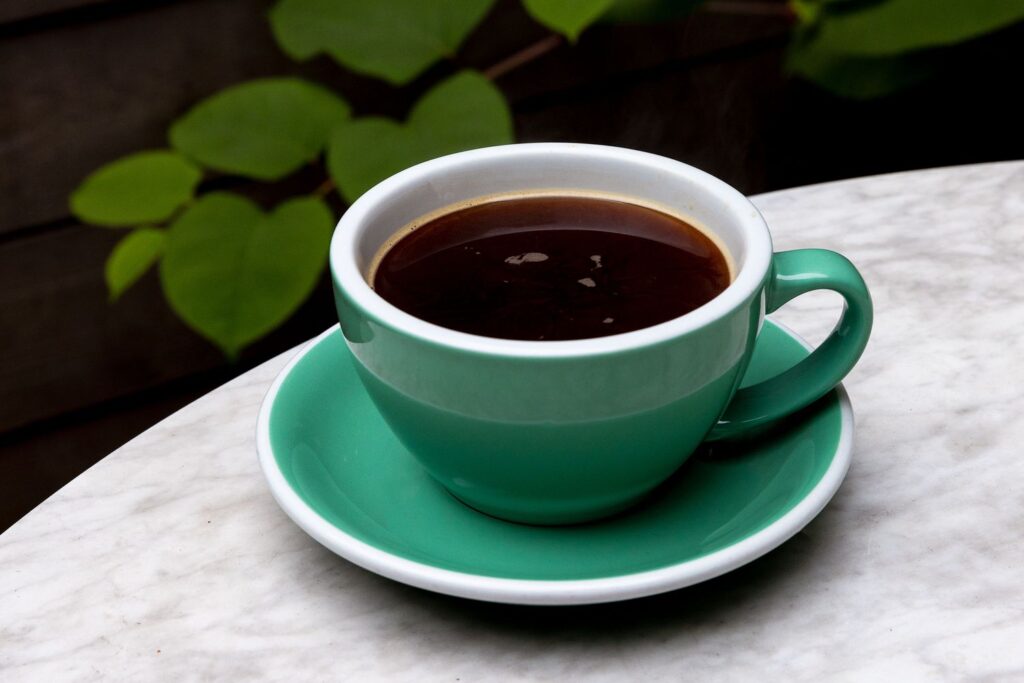
Americano is an espresso-based beverage that is created by diluting one or more shots of Espresso with hot water. This preparation results in a coffee that possesses a similar strength and body to traditional Drip Coffee but retains the unique flavor characteristics associated with the Crema and oils found in pressure-extracted coffee.
The technical definition centers on post-extraction dilution, which distinguishes it from other long-format drinks where the total volume is achieved during the brewing process itself.
In a professional context, the beverage is characterized by its specific Brewing Ratio, which typically ranges from 1:2 to 1:4 depending on regional preferences and the desired intensity of the final cup.
History and Origin
Americano was established as a recognized preparation during the mid-20th century in Italy. Historical records from the World War II era indicate that American military personnel stationed in the Italian theater found local Espresso to be too concentrated and bitter for their palates, which were accustomed to the milder, gravity-filtered Brewed Coffee served in the United States.
To accommodate these servicemen, Italian baristas began serving Espresso in larger vessels accompanied by a side of hot water, allowing the soldiers to dilute the beverage to a familiar strength. This cross-cultural adaptation was eventually formalized under the name Caffè Americano, translating literally to “American Coffee.”
The etymology of the term is sometimes conflated with the Americano Cocktail, which predates the coffee beverage by several decades. The cocktail, consisting of Campari, sweet vermouth, and soda water, was popular with American tourists in the late 19th and early 20th centuries.
However, the coffee-based Americano is a distinct 20th-century innovation born from the specific geopolitical and cultural shifts of the 1940s.
Following the war, the drink migrated back to the United States with returning veterans, eventually becoming a staple of the global Second Wave Coffee movement and the subsequent rise of international coffee house chains.
Preparation
Preparation of an Americano requires a rigorous adherence to temperature and sequence to ensure a balanced extraction. The process begins with the extraction of a standard Double Shot of Espresso using a professional-grade Espresso Machine.
Industry experts typically target an Extraction Yield between 18% and 22% for the base shot to avoid the astringency often found in over-extracted coffee. Once the shot is pulled, hot water is added to the cup.
The temperature of the water is a critical factor; it must be high enough to maintain the beverage’s heat but not so hot that it causes thermal shock to the delicate aromatic compounds in the Espresso.
The standard sequence in most Western markets is to pull the Espresso first and then add the water. This method intentionally breaks up the Crema, integrating its lipids and CO2 into the body of the drink for a smoother texture. This is technically distinct from the preparation of a Long Black, where the water is placed in the cup first, and the Espresso is floated on top.
While the ingredients are identical, the Americano sequence focuses on homogeneity and a cleaner mouthfeel, whereas the Long Black emphasizes the preservation of the crema as a visual and sensory cap.
Ingredients
Ingredients for a standard Americano are limited to high-quality coffee and purified water. The coffee component is almost exclusively a medium-to-dark Espresso Roast, which provides the necessary body to withstand dilution.
The water should be filtered to remove excess minerals that could interfere with the delicate acids of the coffee. A typical Americano uses approximately 60ml of Espresso combined with 120 ml to 300 ml of water.
For the Iced Americano variation, the hot water is replaced with a combination of cold filtered water and ice, requiring a slightly more concentrated Espresso shot to compensate for the melting ice.
Chemical analysis of the ingredients reveals that the Americano has a lower concentration of Total Dissolved Solids (TDS) than a standard Espresso but often maintains a higher percentage of volatile oils than paper-filtered coffee.
This is because the portafilter and its metal basket allow larger molecules and oils to pass through, which are then distributed throughout the diluted volume. The result is a beverage that has the clarity of a filter brew but the aromatic complexity and “weight” of an Espresso.
Variations
Variations of the Americano are often defined by the ratio of dilution or the specific type of coffee used as the base. The Long Black is the most prominent technical variation, common in Australia and New Zealand, where the order of ingredients is reversed to keep the crema intact.
Another variation is the Little Buddy or Italiano, which uses a 1:1 ratio of Espresso to water for a much more intense and syrupy experience. This is often preferred by those who find the standard Americano too thin but still want a longer drink than a standard shot.
In Asian markets, particularly South Korea, the Iced Americano has become a cultural phenomenon, often referred to by the slang term “Ah-Ah.” In this region, the drink is served in very large volumes, sometimes exceeding 500ml, with a focus on high clarity and refreshment.
Other hybrid variations include the Red Eye, where the water is replaced with Drip Coffee to significantly increase the caffeine content, and the White Americano, which includes a small addition of milk or cream to the standard preparation.
Flavor Profile
The flavor profile of a well-prepared Americano is characterized by its balance and accessibility. Dilution allows the drinker to perceive subtle tasting notes—such as citrus acidity, floral aromas, or chocolatey undertones—that might be overwhelmed by the intensity of a concentrated Espresso.
Because the water softens the impact of the coffee’s bitterness, the Americano is often described as having a “stretched” or “elongated” flavor. The mouthfeel is notably lighter and less viscous than a Latte or Cappuccino, appealing to those who prefer black coffee.
Technical sensory analysis indicates that the temperature at which an Americano is consumed also affects its perceived flavor. As the drink cools, the perceived acidity increases, which can reveal the quality of the original Coffee Beans.
A high-quality Single-Origin Americano will show a progression of flavors as it reaches room temperature, often becoming sweeter and more complex. This makes it an ideal beverage for evaluating the profile of a specific Coffee Roast in a format that is more approachable than a straight shot.
Related Drinks
- Espresso: The undiluted base shot extracted under high pressure.
- Long Black: A variant where the order of preparation preserves the surface crema.
- Caffè Lungo: A drink where the total volume is achieved through a single, extended extraction.
- Drip Coffee: A gravity-based brewing method that results in a similar volume and strength.
- Red Eye: A high-caffeine variant that combines espresso with drip coffee.
- Flat White: An espresso-based drink that utilizes milk microfoam for dilution.
References
- Specialty Coffee Association (SCA). (2024). “A System to Assess Coffee Value: Technical Definitions and Standards.”
- Americano Lounge. (2024). “The History of the Americano: From WWII to Modern Coffee Houses.” https://www.americanolounge.com/the-history-of-the-americano/
- Scott Rao. (2020). “How to Choose a Dose and Brewing Ratio: Technical Insights into Espresso Dilution.” https://www.scottrao.com/blog/2020/2/4/how-to-choose-a-dose-and-brewing-ratio
- Crockett Coffee. (2026). “The Americano: A Complete History and Cultural Impact.” https://crockettcoffee.com/blogs/small-batch-coffee/the-americano-a-complete-history
- Black Oak Coffee Roasters. (2019). “Espresso vs Drip Coffee: A Technical and Chemical Comparison.” https://blackoakcoffee.com/blogs/news/espresso-vs-drip-coffee-the-complete-guide