
Kahawa tamu is a sweetened, lightly spiced coffee drunk on the Swahili coast of Kenya, prepared in the same brass kettle and over the same charcoal fire as its bitter counterpart, Kahawa chungu.
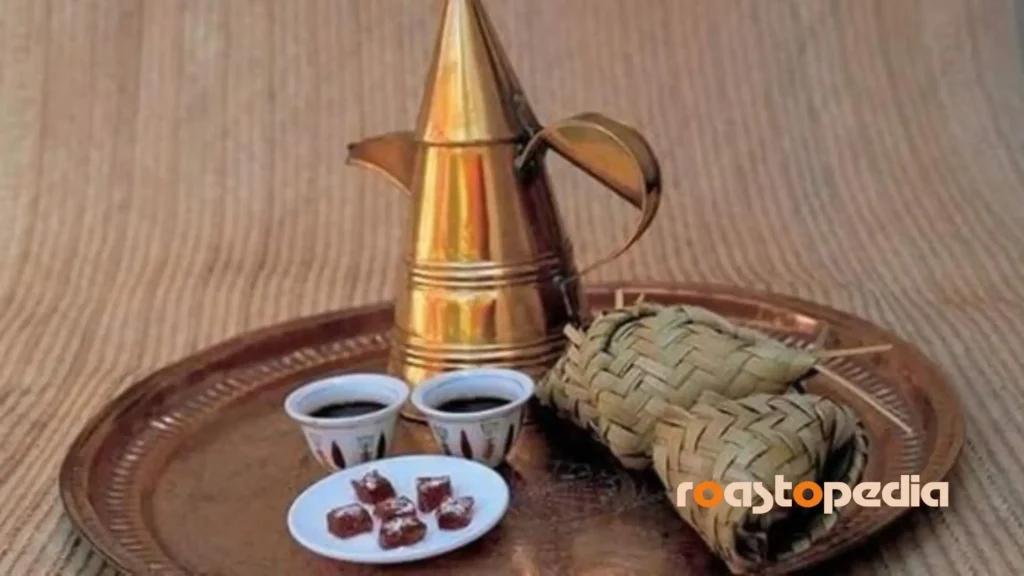
Kahawa tamu — Swahili for sweet coffee — is a diluted, more approachable variation on the coastal coffee tradition, brewed with sugar dissolved directly into the pot during simmering.
Whereas Kahawa chungu belongs to the older male social order of the maskani, Kahawa tamu has historically been the drink that reaches a wider audience: women, younger people, and those who find the concentrated bitterness of the unsweetened cup too intense.
Same Roots, Different Cup
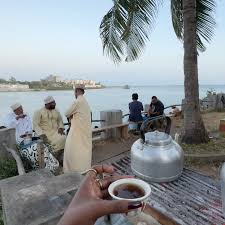
Kahawa tamu did not arrive separately from Kahawa chungu. It is the same tradition expressed with a different hand.
The Swahili coast’s coffee culture, which took shape over centuries of Arab-African cultural exchange along the Indian Ocean trade routes, produced a single preparation method — strong, spiced, decocted in a brass kettle over charcoal — and within that method, the question of sugar became the defining point of differentiation between two named drinks.
In the Arab coffee tradition that informed coastal Kenyan practice, both unsweetened and sweetened preparations were common, with the choice often reflecting personal preference, religious practice, or the context of the occasion.
The Swahili coast absorbed both possibilities and named them. Kahawa chungu — the bitter, unsweetened, concentrated form — became the prestige drink of the elders and the maskani. Kahawa tamu — the sweetened, slightly diluted form — became the more accessible companion, consumed in the same spaces but occupying a different social register.
The earliest documented reference to both drinks as a paired cultural practice comes from the outdoor coffee stations of Mombasa’s Old Town and the waterfronts of Lamu and Malindi, where vendors have historically offered both from the same kettle or from two kettles side by side.
The geographical range of Kahawa tamu is identical to that of Kahawa chungu — Mombasa, Lamu, Malindi, Kilifi, Kwale, Watamu — and the two have never been separated in the physical or cultural landscape of the coast.
How the Sugar Changes the Brew
The fundamental difference between Kahawa tamu and Kahawa chungu is not simply that sugar is added at the end. In traditional preparation, the sugar is added to the kettle during simmering, where it dissolves into the brew and partially caramelizes under prolonged low heat. This is a meaningful distinction.
Sugar that caramelizes in hot coffee contributes a different flavor than sugar stirred into a finished cup — it integrates with the bitterness of the coffee and the warmth of the spices rather than sitting above them.
The brew ratio is typically adjusted as well. Kahawa tamu is described consistently in coastal sources as more dilute than Kahawa chungu — less coffee, more water, or a longer brew with a higher water-to-coffee ratio.
The result is a lighter-colored cup with a perceptibly thinner body and a sweetness that balances rather than masks the underlying spice character. It is not a dessert coffee. It is a more moderate expression of the same flavor logic.
The spice profile in Kahawa tamu mirrors that of Kahawa chungu — cardamom, cloves, cinnamon, sometimes ginger — though the lower concentration of coffee means the spices are proportionally more prominent in the finished cup.
Some vendors simplify the spice selection for Kahawa tamu, using only cardamom and cinnamon and omitting the more pungent cloves, producing a gentler, more floral result. The specific blend varies by vendor and by town, a variation that has never been standardized.
The Social Role of the Sweeter Cup
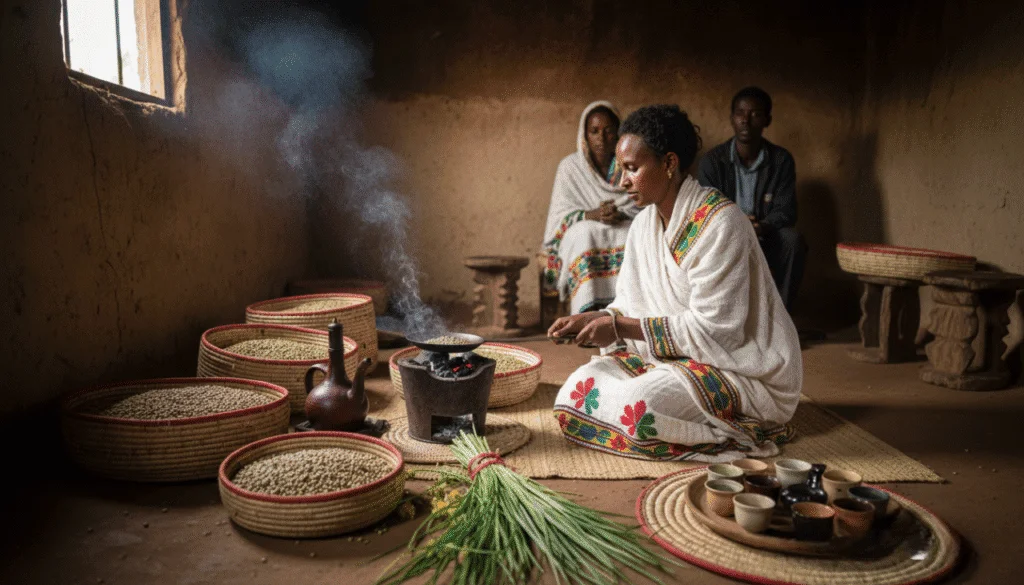
The gendered dimension of the coastal coffee tradition is most clearly visible in the difference between the two drinks. Kahawa chungu, at the outdoor maskani, has been historically a men’s drink — the older men of the coast who gather in the evenings, sit on low benches, play backgammon, and drink the bitter cup.
Kahawa tamu occupies a more inclusive social position. Women who visit or pass through the maskani spaces are more commonly found with Kahawa tamu. Younger men, new to the coffee-drinking culture, typically start with the sweeter cup before, if they develop the taste, moving toward the unsweetened version.
In domestic settings — homes along the coast where coffee is prepared for guests — Kahawa tamu is the more frequent choice precisely because of its accessibility.
Swahili hospitality has long centered on the shared cup of coffee as a gesture of welcome, and Kahawa tamu, less demanding on the palate than its bitter counterpart, functions better as a universal offering to guests of varying backgrounds and preferences. The cultural imperative to offer coffee to a visitor is fulfilled just as fully with the sweetened cup as with the unsweetened one.
Mwanaisha Mohamed, a regular at a Mombasa maskani documented in Kenyan press accounts, described Kahawa tamu simply as the remedy needed after a tiring day — an invigoration that is gentler than the concentrated hit of Kahawa chungu but satisfying in its own register. This is a consistent characterisation across accounts of coastal coffee culture: Kahawa tamu as comfort, Kahawa chungu as intensity. The two drinks serve the same social function but at different temperatures of experience.
The Buli, the Maskani, and Shared Ritual
The physical infrastructure of Kahawa tamu is identical to that of Kahawa chungu. The same tall brass or steel kettle — historically the bronze buli, now more commonly a steel vessel — sits over the same charcoal jiko.
The same small ceramic cups are used. The same accompaniments appear: halwa, dates, kaimati (deep-fried dough balls), or mitai. At most maskani, both drinks are available simultaneously, brewed in separate kettles or drawn from the same base brew with sugar added to a portion of it before serving.
The Fort Jesus buli monument in Mombasa — the large brass kettle and five ceramic cups erected in 1988 and recognized by the National Museums of Kenya — stands as a monument to both drinks without distinguishing between them.
The shared cup it commemorates is the entire coastal coffee tradition, sweetened or not. In the culture that produced both drinks, the distinction between chungu and tamu has never been a point of hierarchy so much as a point of preference — two expressions of the same long history, served side by side in the same alleyways.
What the Drink Tastes Like
Kahawa tamu is warm, round, and lightly spiced, with the bitterness of the coffee softened by the caramelized sugar and diluted by the higher water ratio. The cardamom is the most prominent aromatic note — a fragrant, slightly citrusy warmth that sits above the cinnamon’s background sweetness.
Cloves, when included, add a sharp, almost medicinal edge that lifts the cup out of the merely sweet. Ginger, in preparations that include it, contributes a dry heat that lingers at the back of the throat.
The body is light to medium — noticeably thinner than Kahawa chungu — and the finish is clean, without the prolonged bitterness that follows the unsweetened cup. It is a coffee that is easy to drink quickly, in the two or three sips that a small coastal cup allows, and then return for another. The low per-cup cost of the maskani tradition has always made multiple cups the norm rather than the exception.
Kahawa Tamu Today
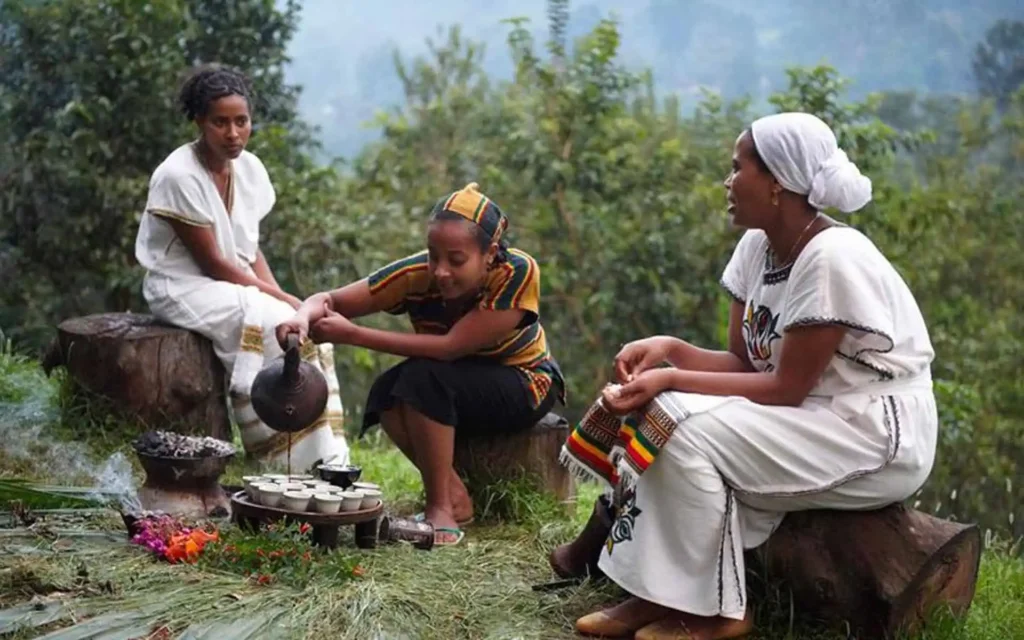
The present situation of Kahawa tamu mirrors that of Kahawa chungu — a living tradition in the coastal towns of Kenya, maintained by a generation of vendors and drinkers who learned it from the generation before them, but not reliably transferring to the generation after. The same pressures that threaten Kahawa chungu — urbanization, changing tastes, the pull of modern café culture — act on Kahawa tamu equally.
Where kahawa tamu may have a slight survival advantage is precisely in its accessibility.
The sweeter cup is easier to introduce to people unfamiliar with the coastal tradition, easier to serve to younger customers who have grown up on sweetened commercial beverages, and easier to position within the emerging Kenyan specialty coffee scene that is increasingly interested in indigenous coffee traditions as a point of cultural identity.
The two drinks are consistently documented together — in press accounts, in cultural histories, in the physical monument at Fort Jesus — and their futures are linked. If the maskani culture that sustains both of them survives the generational transition currently underway on the Kenyan coast, both drinks survive with it. If it does not, both risk becoming historical records rather than living practices — the kind of thing documented in a museum rather than served in an alley at dusk.