
A blind filter is a specialized filter basket that has no holes or perforations, designed to create a total seal within the espresso machine’s group head. This tool is used exclusively for backflushing, a process that forces water and cleaning chemicals backward through the machine’s internal valves and plumbing. It serves as the primary instrument for maintaining the chemical purity and operational longevity of professional espresso equipment.
Origin & History
The requirement for internal pressure-cleaning emerged alongside the development of the three-way solenoid valve in the middle of the twentieth century. Before this innovation, espresso machines had no way to instantly relieve pressure from the group head after a shot was finished. The introduction of the exhaust valve allowed for a cleaner workflow but created a new internal chamber where coffee oils could accumulate.
The evolution of the blind filter allowed baristas to use the machine’s own pump to drive cleaning solutions into these hidden internal passages. Early technicians often used a standard filter basket with a temporary rubber plug to simulate a total seal for maintenance. This improvised method was eventually replaced by the dedicated, stainless steel “blank” basket that is now a standard accessory for almost every commercial machine.
Chemical backflushing became a universal professional standard as the specialty coffee industry recognized the impact of rancid oils on flavor quality. The blind filter enabled a level of hygiene that was previously impossible without disassembling the entire brewing group. This advancement has played a critical role in the global consistency of espresso quality by ensuring that every machine starts the day with a neutral and clean flavor profile.
Etymology
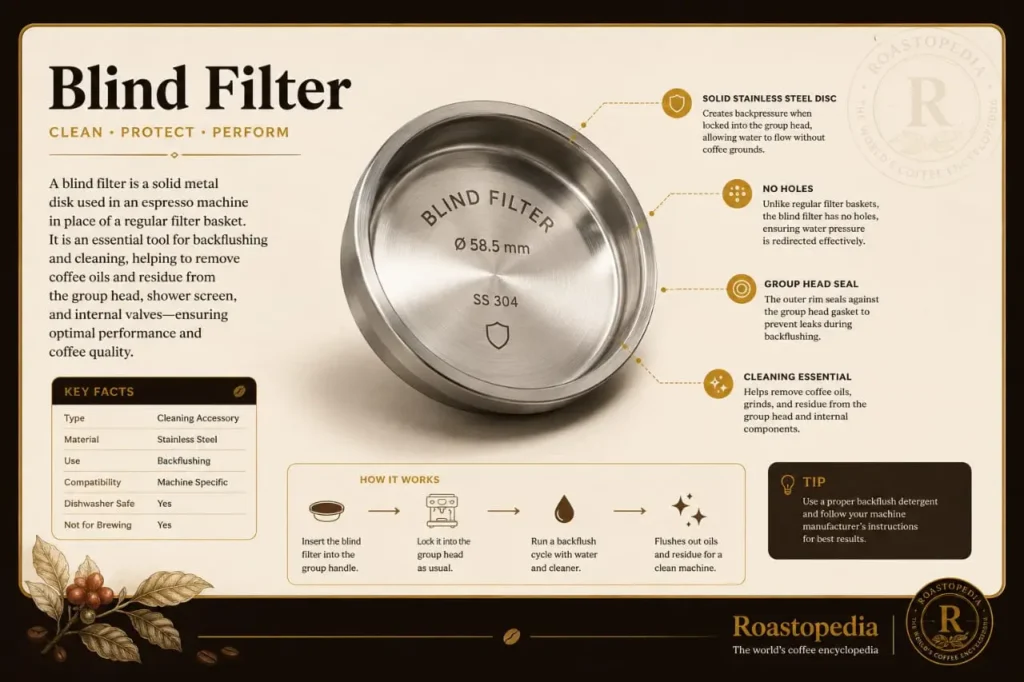
The name of this coffee equipment part is metaphorical, describing a filter that is “blind” because it lacks the “eyes” or holes found in a traditional basket. It is a functional name that highlights the tool’s primary characteristic: its total inability to allow liquid to pass through its floor. This descriptive terminology has been part of the professional coffee lexicon for several decades.
Alternative titles like “blank filter” or “backflush basket” are frequently used interchangeably with the original name in different regions. The term “blank” emphasizes the smooth and empty nature of the stainless steel surface, while “backflush” describes the specific action performed by the tool. All these names identify a component that is used only for maintenance rather than for the actual brewing of coffee.
Technical nomenclature in equipment manuals often refers to the device as a “blind disc” or a “maintenance insert.” These names are typically used to describe the rubber or plastic versions of the tool that fit inside a standard filter basket to create a temporary seal. Understanding these various designations is essential for anyone responsible for the daily care and technical performance of an espresso machine.
Professional Evolution
Technical standards for machine hygiene have institutionalized the use of the blind filter as a non-negotiable part of the daily closing routine. Professionals are taught that a machine must be backflushed with a blind filter at the end of every business day to prevent the buildup of bitter coffee residue. This commitment to cleanliness is the primary indicator of a professional and well-managed coffee program.
The rise of the specialty coffee movement has led to the development of “precision blind filters” made from the same high-grade materials as professional brewing baskets. These premium versions ensure a perfect fit with the group gasket and can withstand the extreme pressure of repetitive cleaning cycles without warping. This focus on the quality of maintenance tools reflects a broader industry-wide dedication to equipment longevity.
Digital maintenance tracking systems now include the “blind flush cycle” as a mandatory event that staff must record. Some advanced espresso machines even feature automated cleaning programs that prompt the operator to insert the blind filter and a cleaning tablet. This integration of technology ensures that the critical task of internal hygiene is never overlooked during a busy shift.
Technical Responsibilities
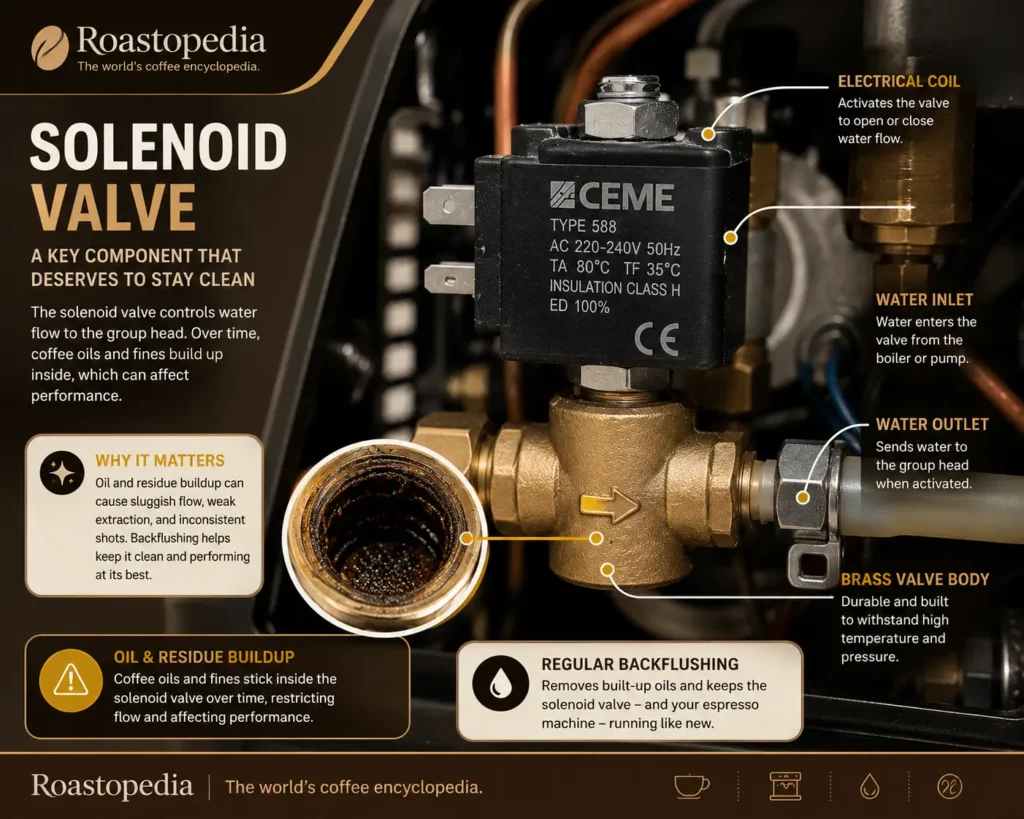
Performing a daily or at least regular backflush with the blind filter and a specialized detergent is the most important maintenance task for any espresso machine. This process removes the sticky coffee oils that naturally accumulate in the solenoid valve and the dispersion block. Failing to perform this task will lead to a gradual degradation of flavor and eventually cause the machine’s internal parts to seize or fail.
Executing a “clear water flush” with the blind filter several times throughout a busy shift helps to keep the flavor profile neutral between different coffee varieties. This simple step removes any loose grounds or oils from the shower screen without the need for chemicals. It is a hallmark of a disciplined barista who is focused on the sensory purity of every shot they serve.
Inspecting the blind filter for signs of wear or damage is a routine task that ensures a safe and effective cleaning cycle. If the rim of the filter becomes bent or scratched, it may prevent a perfect seal with the group gasket, leading to leaks and messy cleaning sessions. Maintaining a clean and functional blind filter is the first step in maintaining a clean and functional espresso machine.
Engineering & Mechanics
Pressure buildup is the primary physical force used by the blind filter to drive cleaning solutions into the machine’s internal plumbing. When the pump is activated, the water has no way to exit the portafilter, causing the pressure to rise to the machine’s maximum operating level. This force is essential for dislodging the stubborn and resilient coffee oils that cling to the internal metal surfaces.
The three-way solenoid valve is the mechanical partner of the blind filter during the backflushing process. Once the pump is turned off, the valve opens a path from the group head to the drip tray, allowing the pressurized water to escape. This sudden release of pressure creates the “backflush” action that carries the dissolved oils and chemicals out of the system.
Stainless steel is the preferred material for professional blind filters due to its extreme durability and non-reactive nature. Unlike plastic or rubber inserts, a steel basket can withstand thousands of high-pressure cycles without losing its shape or integrity. This material ensures that the maintenance process is consistent and that no unwanted odors are introduced into the brewing group.
Notable Facts
The first “blind filters” were often just standard baskets that had been filled with molten lead or solder by resourceful technicians in the early days of espresso. These improvised tools were eventually replaced by mass-produced stainless steel versions as the industry standardized its maintenance protocols. This history of adaptation reflects the pragmatic and engineering-focused roots of the coffee profession.
Some baristas use a blind filter to test the “static pressure” of their machine’s pump as part of a weekly equipment check. By watching the pressure gauge while the blind filter is engaged, a technician can verify that the pump is delivering the correct nine bars of force. This simple diagnostic test is an essential part of maintaining a high-performance espresso workstation.
Using the wrong type of cleaning chemical with a blind filter can damage the internal components of the machine or leave behind harmful residues. Only detergents specifically designed for espresso machine backflushing should be used, as they are formulated to dissolve coffee oils without corroding the metal. Proper education on chemical safety is a vital component of professional barista training.
Related Concepts
Backflushing is the technical name for the maintenance process that requires the use of a blind filter. It is the most critical routine task for ensuring that the internal parts of the espresso machine remain clean and functional. Mastering this process is a prerequisite for anyone operating a professional or domestic espresso setup.
The Group Head is the part of the machine where the blind filter is inserted to perform the cleaning cycle. The condition of the group head’s gaskets and screens is directly linked to the success of the backflushing process. Both the machine and the maintenance tools must be in good repair to achieve a deep and effective internal clean.
The Solenoid Valve is the internal component that redirects the flow of water and pressure when the blind filter is used. It is the specific part of the machine that benefits most from regular backflushing, as it is highly susceptible to being clogged by coffee oils. Protecting this valve is the primary reason the blind filter was invented.