
Café Campesino is a spiced, panela-sweetened black coffee born on Colombia’s highland farms, representing the daily fuel and cultural identity of the country’s rural coffee-growing workforce.
Origin & History
Café Campesino originated in the coffee fincas of Colombia’s Eje Cafetero during the late 19th century. The drink was developed by agricultural laborers who needed a calorie-dense, warming beverage capable of sustaining them through dawn-to-dusk harvesting shifts at altitudes above 1,500 meters.
Panela, the unrefined pressed block of sugarcane juice that sweetens the drink, was historically the only sweetener available on rural farms, as refined sugar remained a luxury concentrated in urban markets until well into the 20th century.
Coffee historians have documented Café Campesino preparation rituals in the oral traditions of Antioquia, Caldas, and Nariño, where recipes were passed between generations of farming families as both culinary knowledge and cultural inheritance.
Etymology
Campesino derives from the Spanish campo, meaning “field” or “countryside,” with the suffix -esino denoting someone who belongs to or works that land, making the full term a direct linguistic tribute to Colombia’s smallholder coffee farmers.
The drink’s name was never formally coined by a single institution but emerged organically from the social identity of the people who consumed it, distinguishing it from the more urbanized and commercialized Tinto served in city cafés.
In contemporary Colombian usage, campesino carries both a socio-economic descriptor and a badge of cultural pride, particularly among farmers affiliated with the Federación Nacional de Cafeteros, whose Juan Valdez mascot embodies the campesino archetype globally.
The Science of the Brew
Panela dissolves differently from refined sugar in hot coffee — its complex matrix of sucrose, glucose, fructose, and mineral salts creates a Maillard-adjacent reaction at brewing temperatures that imparts a caramelized flavor profile absent when white sugar is substituted.
Cinnamon and cloves, when simmered alongside the coffee grounds, release eugenol and cinnamaldehyde — aromatic phenolic compounds that bond partially with coffee’s own chlorogenic acids, chemically moderating perceived bitterness and enhancing perceived sweetness.
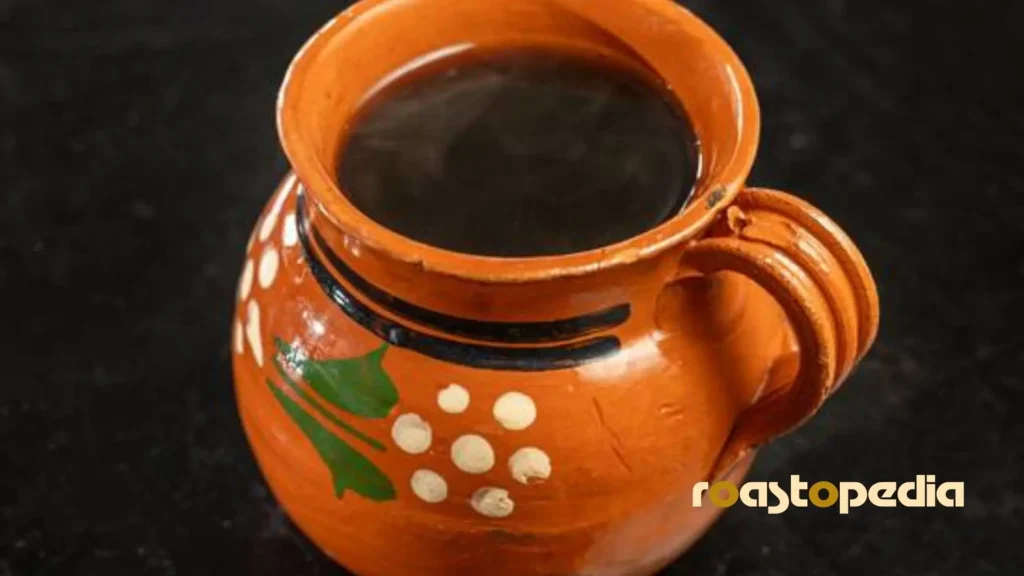
The iron or clay pots traditionally used to brew Café Campesino contribute micro-minerals to the liquid, and research on vessel-mediated flavor transfer suggests these trace elements influence the oxidation rate of volatile aromatic compounds in the final cup.
Taste and Sensory Profile
Café Campesino delivers a sweet, full-bodied cup with warm spice notes of cinnamon and clove layered over a roasted coffee base, producing an aromatic complexity that sensory scientists would categorize under the “spicy-sweet” flavor family.
The panela sweetness is distinctly earthy and molasses-forward, never sharp or crystalline like refined sugar, which means the drink finishes with a long, warm aftertaste rather than the abrupt sweetness drop characteristic of sugar-sweetened coffee.
Temperature plays a decisive role in the sensory experience — served hot, the spice aromatics are most volatile and pronounced, while a cooled cup reveals the deeper, more subdued chocolate undertones of the panela.
Variations
Some Antioqueño families add a small piece of raw cacao to the brewing pot alongside the panela, producing a hybrid drink that blurs the boundary between Café Campesino and the Colombian hot chocolate tradition of chocolate santafereño.
Coastal adaptations sometimes replace cinnamon and clove with anise seed, a variation that reflects the stronger Arab culinary influence present in Colombia’s Caribbean coast, where Middle Eastern immigration in the 19th and early 20th centuries shaped local food traditions.
A cold-steeped version has emerged in specialty Colombian cafés, where the traditional spice blend is infused overnight in room-temperature water before being combined with cold brew concentrate, served over ice as a modern artisanal interpretation.
Notable Facts
Colombia’s altitude range for coffee cultivation — primarily between 1,200 and 2,000 meters above sea level — creates naturally cooler morning temperatures on farms, a climatic reality that made a hot, sweetened, spiced coffee not merely pleasurable but physiologically necessary for early-morning field workers.
Panela production in Colombia dates back to the Spanish colonial period in the 16th century, when sugarcane was introduced to the Cauca Valley — meaning the sweetener used in Café Campesino has a longer documented history in Colombian agriculture than coffee itself.
The Dios Mío coffee brand, founded by a cooperative of Colombian women farmers, formally documented the Tinto Campesino preparation as a Christmas tradition in 2024, contributing to its growing recognition as a ceremonial as well as everyday drink.
Related Facts
Café Campesino preparation shares structural similarities with café de olla from Mexico — both use unrefined cane sugar and spices brewed directly with coffee — reflecting a broader pre-Columbian and colonial exchange of sweetener and spice traditions across Latin America.
The World Coffee Research organization has identified panela’s mineral profile — particularly its potassium and calcium content — as a potential flavor modifier in cupping protocols, opening a new research avenue into sweetener-coffee chemical interactions.
Colombia’s Ministry of Agriculture classifies panela production as a protected artisanal industry, and several municipalities in Boyacá and Cundinamarca have applied for geographical indication status for their panela, underscoring its inseparability from Colombian culinary identity.