
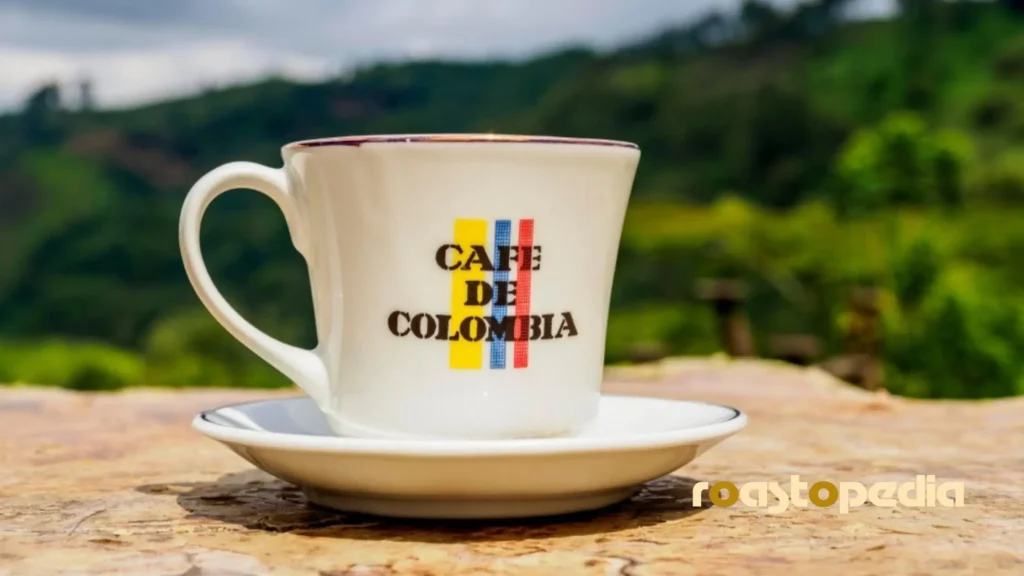
Tinto is Colombia’s quintessential small black coffee, brewed strong and often sweetened, and served in a demitasse-style cup as a daily ritual across every stratum of Colombian society.
Origin & History
Tinto traces its roots to the mid-19th century, when coffee cultivation first spread across Colombia’s Andean highlands following the liberalization of land use policies under the federal government of the Granadine Confederation.
Colombian farmers, unable to afford the premium export-grade beans they themselves cultivated, developed Tinto as a practical way to extract maximum flavor from lower-grade or broken beans that failed export quality inspections.
By the early 20th century, street vendors known as tinteros were a fixture of Bogotá, Medellín, and Cali, carrying iron olletas of Tinto on their backs and selling cups for fractions of a centavo.
Etymology
The word Tinto is derived from the Latin tinctus, meaning “dyed” or “colored,” a root shared with the Spanish word for red wine, also called Tinto.
Colombian linguists note that the term was adopted colloquially to describe the deep, ink-dark color of the brew rather than any shared characteristic with wine.
Some scholars also point to the influence of the Sello Rojo brand — whose red seal became synonymous with everyday Colombian coffee — in cementing the reddish color association embedded in the drink’s name.
The Science of the Brew
Traditional Tinto is prepared using a method called café de olla, where coarsely ground coffee is added directly to boiling water in an iron pitcher called an olleta, then allowed to steep for three to four minutes before the grounds settle naturally.
Iron from the olleta undergoes a mild leaching process during brewing, contributing trace mineral notes that subtly alter the final flavor — a phenomenon documented by food chemists studying traditional Latin American brewing vessels.
Boiling the grounds rather than brewing at the specialty-recommended 93°C extracts higher concentrations of chlorogenic acids, which, paradoxically, also contribute to the characteristic bitterness that Colombians have come to associate with authenticity.
Taste and Sensory Profile
Tinto presents a bold, full-bodied cup with prominent roast bitterness, low acidity relative to specialty-brewed Colombian coffee, and a lingering earthy finish rooted in its coarse grind and extended extraction.
When sweetened with panela — the traditional accompaniment — the drink acquires a molasses-like undertone that rounds out the bitterness and adds a faint caramel complexity absent in refined white sugar versions.
Aromatic compounds released during the boil include guaiacol and 4-vinylguaiacol, which produce the smoky, slightly woody scent that distinguishes Tinto from pour-over or espresso preparations made with the same beans.
Variations
Tinto Campesino adds panela, cinnamon, and cloves to the base brew, producing a spiced, warming version historically associated with rural farm workers in the coffee-growing regions of Caldas, Risaralda, and Quindío.
Tinto con Limón — a coastal adaptation — incorporates a squeeze of fresh lime into the finished cup, cutting through bitterness and adding a citrus brightness favored in the Caribbean departments of Bolívar and Atlántico.
Modern specialty coffee shops in Bogotá and Medellín now serve what they call Tinto de Especialidad, brewed from single-origin beans using the traditional olleta method but with precision temperature control and grind calibration.
Notable Facts
Colombia produces approximately 12 million bags of coffee per year, yet the vast majority of premium export-grade beans never reach the domestic cup. Tinto historically existed as the drink of what remained after export selection.
Street tinteros in Colombian cities charge as little as 300 Colombian pesos per cup, making Tinto one of the most affordable coffee experiences per serving of any nation in the world.
The Colombian government’s Federación Nacional de Cafeteros has recognized Tinto as a cultural heritage drink and has included its preparation techniques in educational programs targeting rural coffee-producing communities.
Related Facts
The olleta, traditionally made of cast iron or beaten aluminum, retains heat far longer than ceramic or glass vessels, meaning a batch of Tinto prepared at 6 a.m. on a Colombian farm may still be served warm past midday.
Colombia’s coffee-growing region — the Eje Cafetero — was declared a UNESCO World Heritage Site in 2011, with Tinto culture cited among the living traditions that define the region’s cultural landscape.
Research published in the Journal of Agricultural and Food Chemistry found that coffee brewed by boiling, as in Tinto preparation, contains measurably higher concentrations of cafestol and kahweol — diterpenes linked to both antioxidant activity and elevated LDL cholesterol — compared to filtered preparations.