
Osmanlı Kahvesi – Ottoman coffee – refers to a category of coffee preparations associated with the culinary traditions of the Ottoman imperial court and elite households, particularly from the 17th through 19th centuries.
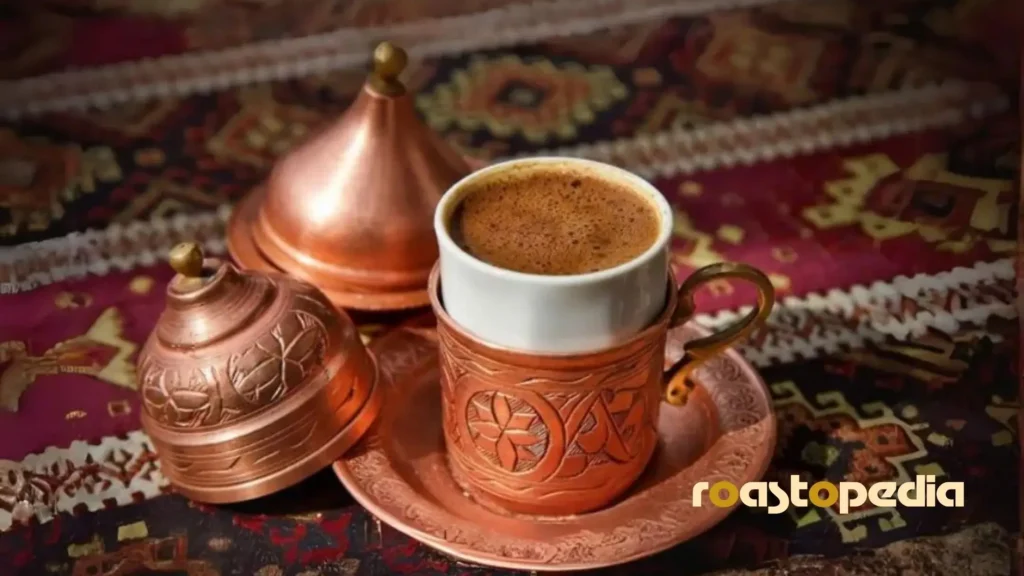
Unlike Türk Kahvesi, which describes a brewing method, Osmanlı Kahvesi denotes an enriched, spiced, or otherwise augmented preparation intended to signal luxury, hospitality, and culinary refinement.
Ottoman palace records (including kitchen ledgers preserved in the Topkapı Palace archives) document the regular procurement of spices, including cardamom, cloves, ambergris, mastic, and cinnamon, explicitly for use in coffee.
The revival of Osmanlı Kahvesi in the 21st century is largely a commercial and cultural nostalgia project, often associated with the Ottoman culinary renaissance in Turkish popular culture.
Etymology
Osmanlı is the Turkish adjectival form of Osman, the founder of the Ottoman dynasty (r. 1299–1326). The Ottoman Empire was called Osmanlı Devleti (the Osmanlı State) in Turkish, and the adjective Osmanlı now broadly connotes anything associated with Ottoman culture, cuisine, or aesthetics. Kahvesi is the possessive form of kahve (coffee).
Together, Osmanlı Kahvesi means “Ottoman-style coffee” or “coffee of the Ottomans” — a culturally loaded phrase emphasizing historical prestige.
The Science of the Brew
There is no single fixed recipe for Osmanlı Kahvesi; preparations vary by region and vendor. Common to most formulations is the addition of aromatic spices during or before brewing.
Cardamom (Elettaria cardamomum) contributes 1,8-cineole and terpinyl acetate aromatics that mask bitterness and add a menthol-adjacent freshness. Mastic resin (from Pistacia lentiscus on Chios island) contributes alpha-pinene and beta-myrcene monoterpenes, providing a distinctive pine-citrus note.
Cloves add eugenol, a potent antimicrobial compound with a sharp, warm flavor. When ambergris was used historically, it contributed a complex animalic and sweet marine aroma derived from ambrein oxidation.
All additives are incorporated into the cezve with coffee and water before brewing.
Taste & Sensory Profile
Osmanlı Kahvesi is richer and more aromatic than the standard Türk Kahvesi. The base coffee is often a medium-dark roast, and the spice additions layer complexity onto the fundamental bitterness and earthiness of the brew.
Cardamom versions are floral and slightly medicinal; mastic versions have a cooling, resinous finish; clove-heavy versions deliver warmth and a mild numbing sensation on the palate.
Sweetness is typically higher than in plain Turkish coffee, with seker (sugar) integrated pre-brew. The overall impression is of a ceremonial, festive drink — dense, perfumed, and lingering.
Variations
Cardamom Ottoman Coffee (most common modern version), Mastic Ottoman Coffee, Clove-spiced Ottoman Coffee, Saffron-enriched versions (rare, high-cost), and blends combining multiple spices.
Some commercial preparations include cream or cream powder to mimic the richness of historical palace preparations that occasionally used dairy.
Notable Facts
Ambergris — a waxy substance produced in the digestive system of sperm whales — was a documented Ottoman coffee additive for elite preparations, valued for its fixative aroma properties and its association with luxury trade.
The ambergris was among the most expensive materials in 17th-century global commerce. Ottoman palace kitchens employed dedicated kahveci usta (master coffee makers), a specialized professional role with apprenticeship hierarchies.
The Topkapı Palace kahve ocağı (coffee hearth) was a distinct section of the imperial kitchen. Coffee was served to Ottoman sultans in gold-filigree zarfs (handleless cup holders) studded with gemstones — functioning as status objects as much as drinkware.
Related Drinks
Türk Kahvesi, Dibek Kahvesi, Mastic Turkish Coffee, Arabic Qahwa, Saudi Coffee (Gahwa), Persian-style spiced coffee.