
When many people read about Salt Coffee, what comes to mind isn’t the Ethiopian version, but the Vietnamese. However, Ethiopia, too, has its salt coffee. Known in some communities as ‘Chabo’ or simply ‘buna be chow’ (coffee with salt), it is a traditional Ethiopian and Eritrean preparation in which salt rather than sugar is added to brewed coffee. It is most prevalent in the highland border regions shared by Ethiopia and Eritrea, particularly among the Tigrinya-speaking communities of Tigray province and the central Eritrean highlands, as well as in some Afar and Saho communities of the Danakil Depression.
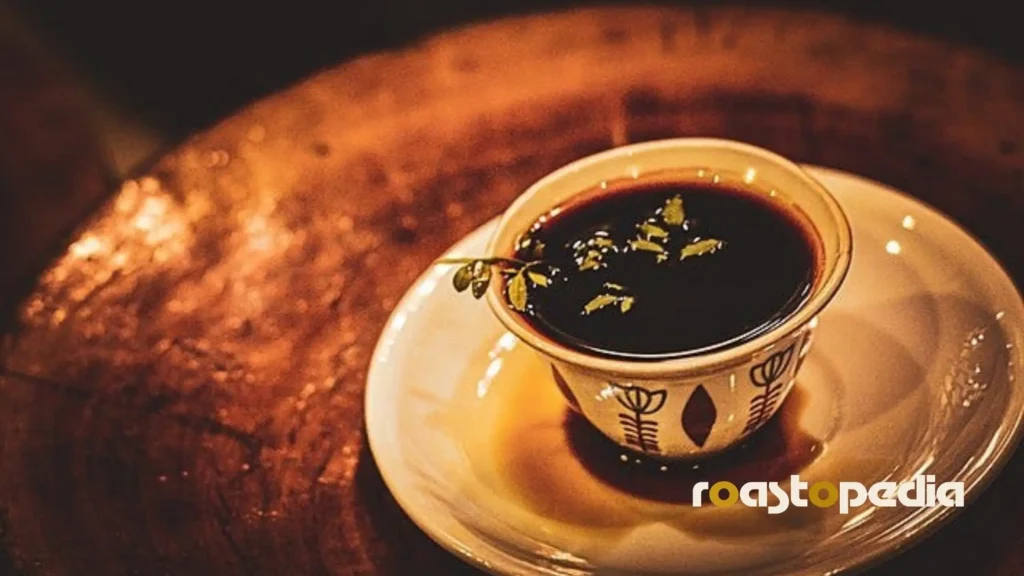
The practice reflects the historical reality that salt — not sugar — was the dominant condiment and trade currency in the highlands of the Horn of Africa for centuries. Salt from the Danakil Depression (the Afar salt flats) was quarried in blocks and transported by camel caravan along routes stretching from the Afar lowlands to the Ethiopian highlands, where it was used as currency, food preservation, and flavoring. Sugar, by contrast, was a luxury import unavailable to most highland communities until the 20th century. Salt coffee, in this context, is not an affectation but a historical record of what was economically accessible.
Etymology
The term ‘Chabo’ is used specifically in parts of Tigray and Eritrea to describe coffee with salt, though its precise linguistic root is debated among Tigrinya linguists. ‘Chow’ is the Amharic word for salt, and ‘buna be chow’ is the straightforward descriptive phrase used in Amhara-speaking communities. In Afar communities, the preparation may be referred to by terms in the Afar language (Qafar af) that have not been widely documented in English-language coffee literature, making Afar salt coffee one of the least-documented coffee traditions in the country.
Salt Coffee is brewed identically to standard Buna in a jebena, with the sole modification that a pinch of fine salt — typically 0.5 to 1 gram per cup — is added either to the brewing water before boiling or directly to the poured cup. The chemistry of salt in coffee is well-documented: sodium ions suppress bitterness perception by blocking bitter taste receptors on the tongue (specifically, sodium interferes with calcium ions that activate bitter-sensing TRPV1-related pathways), effectively reducing the perceived bitterness of dark-roasted coffee without altering its actual chemical composition.
The Science of the Brew
This bitter suppression is the same mechanism exploited by the modern specialty coffee industry’s practice of adding a pinch of salt to reduce harshness in over-extracted espresso. Ethiopian highland communities discovered and institutionalized this effect empirically, centuries before the chemistry was formally understood. The salt also enhances the perception of other flavor compounds — mineral notes, earthiness, and any residual fruit character in the beans — that bitterness would otherwise mask.
Taste & Sensory Profile

Salt Coffee is smooth, mineral, and full-bodied, with a bitterness that is noticeably softer than plain Buna despite identical roast and brewing parameters. The saline addition does not make the coffee taste ‘salty’ at the concentrations used; rather, it produces a cleaner, rounder cup in which the coffee’s earthy and mineral base notes are more accessible.
The finish is dry and slightly mineral, which many habitual drinkers describe as more refreshing than the sticky-sweet finish of sugar-added Buna. First-time drinkers from sugar-coffee cultures often find the preparation austere; habitual drinkers from the Tigray and Eritrean highlands describe sugar-added coffee as unpleasantly sweet by comparison.
Variations
In Afar communities, salt coffee is sometimes combined with butter — particularly camel butter — producing a preparation simultaneously related to both Salt Coffee and Butter Coffee traditions. This fat-and-salt combination mirrors the nutritional logic of many pastoral food cultures that prioritize caloric density and electrolyte replenishment for people engaged in sustained physical activity in extreme heat. A modern iteration of salted coffee has emerged in Ethiopian specialty cafes in Addis Ababa, where baristas add a controlled pinch of fleur de sel to espresso-based drinks — an unacknowledged rediscovery of a century-old highland tradition.
Notable Facts
The Danakil Depression — the source region for the salt used in traditional Salt Coffee — is one of the hottest permanently inhabited places on Earth, with surface temperatures regularly exceeding 50°C (122°F). The Afar people who mine salt there, the ‘ashkars,’ work in conditions that make electrolyte replenishment physiologically critical. Salt coffee consumed by highland traders returning from the Danakil with salt caravans was both a stimulant and an electrolyte supplement — a dual-function beverage born of genuine physiological need.
Historical records from the 19th century indicate that in some highland Ethiopian markets, salt bars (amole) were accepted as a form of currency. A cup of coffee prepared with these salt bars was, therefore, in a very literal sense, a drink made from money.
Related Drinks
- Buna — the standard sweetened preparation from which Salt Coffee diverges
- Butter Coffee — another savory Ethiopian coffee preparation, often combined with salt in Afar communities
- Bunna be Tenadam — a related tradition of adding a non-sugar ingredient for functional or sensory effect
- Jebena Coffee — the brewing method shared by all traditional Ethiopian coffee preparations