
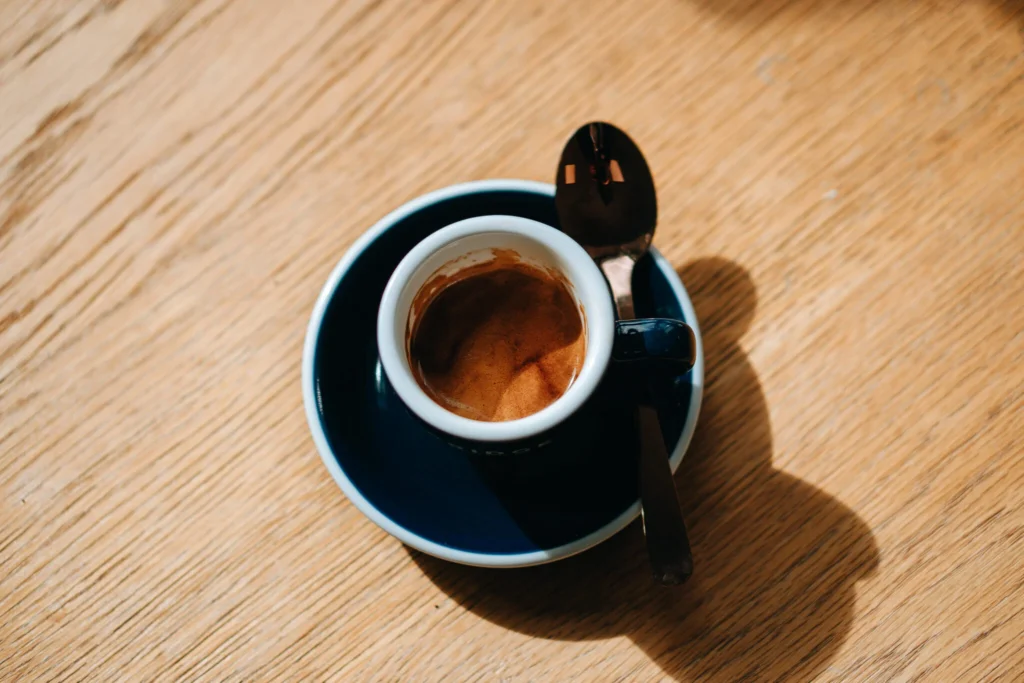
Café Solo is a traditional Spanish coffee beverage consisting exclusively of coffee served without milk, cream, or other additives. Most commonly prepared as a single shot of espresso in modern cafés, Café Solo occupies a foundational position within Spanish coffee culture and serves as the basis for numerous other Spanish coffee drinks, including Café Cortado, Café con Leche, Café Bombón, and Carajillo.
Although often translated simply as “black coffee” or equated with espresso, Café Solo represents a distinct cultural institution within Spain. It embodies centuries of coffee consumption habits, café traditions, and social customs that have shaped Spanish coffee culture since the eighteenth century. Today, it remains one of the most frequently consumed coffee beverages in Spain and continues to serve as the benchmark against which many Spanish coffee preparations are measured.
Café Solo at a Glance
| Attribute | Details |
| Beverage Type | Coffee Drink |
| Place of Origin | Spain |
| First Known Use | 18th–19th century Spain |
| Primary Ingredients | Coffee, Water |
| Traditional Preparation | Espresso-style extraction |
| Serving Temperature | Hot |
| Typical Serving Size | 25–35 mL |
| Caffeine Content | Moderate to High |
| Common Occasions | Breakfast, Mid-Morning, After Meals |
| Related Drinks | Café Cortado, Café con Leche, Café Bombón, Espresso |
Etymology
The term Café Solo translates literally from Spanish as “coffee alone” or “coffee by itself.” The name reflects the beverage’s defining characteristic: coffee served without the addition of milk.
Historically, the phrase distinguished pure coffee from the numerous milk-based coffee drinks that became increasingly popular throughout Spain during the nineteenth and twentieth centuries. The terminology remains widely used throughout Spain and in many Spanish-speaking regions, although local expressions and variations may exist.
Café Solo Origin
Coffee reached Spain during the 18th century through expanding commercial networks connecting Europe, the Ottoman Empire, Africa, and the Americas. Although coffee had been consumed elsewhere in Europe for decades, its adoption within Spain accelerated as maritime trade routes increased the availability of imported coffee beans.
By the mid-eighteenth century, coffeehouses had begun appearing in major Spanish cities such as Madrid, Barcelona, Seville, Cádiz, and Valencia. These establishments quickly evolved into important centers of intellectual, political, and social life.
Spanish cafés mirrored broader European coffeehouse traditions while developing distinct local characteristics. Writers, artists, politicians, merchants, and academics gathered in cafés to exchange ideas, discuss current events, and conduct business. Coffee became intertwined with public life, helping establish the café as a defining institution of Spanish urban culture.
Development of Black Coffee Traditions
During the early stages of coffee consumption in Spain, coffee was commonly prepared using boiling, infusion, or filtration methods. Before the invention of espresso machines, Café Solo generally referred to strong coffee served without milk regardless of brewing technique.
The emergence of espresso technology in the late nineteenth and early twentieth centuries transformed coffee preparation throughout Europe. Spain rapidly adopted commercial espresso machines, particularly after the Second World War. As espresso became increasingly dominant, Café Solo gradually became synonymous with a single serving of espresso.
By the mid-twentieth century, ordering a Café Solo in most Spanish cafés typically meant receiving a concentrated espresso served in a small cup.
Relationship to Espresso
Outside Spain, Café Solo is frequently described as equivalent to espresso. While this comparison is generally accurate in modern contexts, the relationship is more nuanced.
Espresso refers to a brewing method in which hot water is forced through finely ground coffee under pressure. Café Solo refers to a beverage category within Spanish coffee culture.
Historically, Café Solo existed before espresso technology became widespread. Modern Café Solo is usually prepared as espresso, but the cultural concept extends beyond the brewing method itself. The term encompasses traditions, serving customs, and social practices associated with drinking coffee without milk.
Consequently, all modern Café Solo beverages are typically espresso-based, but the historical identity of Café Solo is broader than espresso alone.
Role in Spanish Café Culture
Few beverages are as closely associated with Spanish café culture as Café Solo.
Throughout Spain, cafés have historically functioned as social institutions rather than merely places to consume beverages. Customers often spend extended periods reading newspapers, conducting business meetings, engaging in political discussion, or socializing with friends.
Within this environment, Café Solo became the preferred choice for individuals seeking a concentrated coffee experience. Its small serving size and intense flavor made it suitable for quick consumption at a café counter, while also complementing longer periods of conversation and reflection.
The beverage became especially popular among professionals, intellectuals, writers, and urban workers who valued its strength and efficiency.
Even today, ordering a Café Solo remains one of the most traditional expressions of Spanish coffee culture.
Traditional Preparation
Historically, preparation methods evolved alongside coffee technology.
Before espresso machines became common, Café Solo was prepared using stovetop vessels, metal pots, cloth filters, and other brewing techniques capable of producing strong coffee.
In contemporary Spain, Café Solo is generally prepared using an espresso machine.
The process typically involves grinding roasted coffee beans to a fine consistency before extracting the beverage under pressure. The resulting coffee is served immediately in a small porcelain cup.
Traditional characteristics include:
- Volume of approximately 25–35 milliliters.
- Concentrated flavor profile.
- Dark crema covering the surface.
- Absence of milk or cream.
- Optional sugar added according to personal preference.
Unlike many specialty coffee beverages, Café Solo emphasizes the coffee itself rather than milk texture, flavoring syrups, or decorative presentation.
Sensory Characteristics
Café Solo presents coffee in its most direct form, making flavor evaluation relatively straightforward.
A properly prepared Café Solo exhibits:
- Pronounced aroma.
- Moderate to high body.
- Balanced bitterness.
- Pleasant acidity.
- Lingering aftertaste.
Flavor characteristics vary according to bean variety, roast profile, origin, and extraction parameters.
Traditional Spanish espresso blends have historically favored medium-dark to dark roasting levels, producing flavor notes commonly associated with cocoa, toasted nuts, caramel, dark chocolate, tobacco, and roasted grains.
Modern specialty coffee cafés increasingly employ lighter roasts, allowing fruit, floral, and terroir-driven characteristics to become more apparent.
Regional Variations
Although Café Solo is recognized throughout Spain, regional preferences influence preparation and consumption habits.
In northern Spain, stronger and more concentrated preparations are often preferred. Southern regions may exhibit greater variation in roast style and serving customs.
The Canary Islands, Balearic Islands, and Spanish enclaves have also developed distinctive coffee traditions influenced by local history and trade patterns.
Despite these regional differences, the defining principle remains unchanged: coffee served without milk.
Nutritional Characteristics
Because Café Solo contains only coffee and water, it is among the lowest-calorie coffee beverages available.
A typical serving generally contains:
- Negligible fat.
- Negligible protein.
- Negligible carbohydrates.
- Approximately 1–5 calories.
- Naturally occurring caffeine.
Nutritional values vary depending on bean composition and serving size, but remain substantially lower than milk-based coffee beverages.
Influence on Spanish Coffee Drinks
Café Solo serves as the foundation for many iconic Spanish coffee beverages.
Several notable examples emerged through the modification of Café Solo with additional ingredients:
- Café Cortado adds a small amount of milk.
- Café con Leche combines coffee with a larger proportion of milk.
- Café Bombón incorporates sweetened condensed milk.
- Carajillo adds distilled spirits.
- Barraquito builds upon coffee with milk, condensed milk, liquor, and spices.
- Café Asiático combines coffee with condensed milk, alcohol, and aromatics.
For this reason, Café Solo occupies a position analogous to espresso within Italian coffee culture, functioning as the starting point from which numerous beverage variations developed.
Café Solo in Modern Specialty Coffee
The rise of specialty coffee has renewed interest in traditional coffee beverages, including Café Solo.
Many contemporary coffee professionals view the beverage as an effective means of evaluating coffee quality because it presents the coffee without the masking effects of milk or sweeteners.
Specialty cafés frequently use single-origin coffees, lighter roast profiles, and precise extraction techniques when preparing Café Solo. These practices have expanded the range of flavors associated with the beverage while preserving its traditional identity.
As a result, Café Solo now exists simultaneously as both a centuries-old cultural tradition and a modern tool for sensory evaluation.
Typical Specifications
| Parameter | Typical Range |
| Coffee Dose | 7–10 g |
| Beverage Yield | 25–35 mL |
| Brew Ratio | Approximately 1:2 to 1:3 |
| Extraction Time | 20–35 seconds |
| Water Temperature | 90–96°C (194–205°F) |
| Grind Size | Fine |
See Also
- Café Cortado
- Café con Leche
- Café Bombón
- Carajillo
- Café Asiático
- Barraquito
- Espresso
- Ristretto
- Lungo
- Caffè Latte
References
- Ukers, William H. All About Coffee. Tea and Coffee Trade Journal Company.
- Pendergrast, Mark. Uncommon Grounds: The History of Coffee and How It Transformed Our World. Basic Books.
- Wild, Antony. Coffee: A Dark History.
- Weinberg, Bennett Alan; Bealer, Bonnie K. The World of Caffeine.
- Ellis, Markman. The Coffee-House: A Cultural History.
- Standage, Tom. A History of the World in Six Glasses.
- Davidson, Alan. The Oxford Companion to Food.
- Smith, Andrew F. The Oxford Encyclopedia of Food and Drink in America.
- Albala, Ken. Food Cultures of the World Encyclopedia.
- International Coffee Organization (ICO). Historical Coffee Reports.
- European Coffee Federation. Coffee Consumption Studies.
- Spanish Ministry of Agriculture, Fisheries and Food. National Consumption Reports.
- National Coffee Association. Coffee History Resources.
- Specialty Coffee Association. Coffee Standards and Brewing Resources.
- Smithsonian Institution. Historical Resources on Coffee and Café Culture.