
Roasting is the process of applying heat to green coffee beans, causing physical and chemical changes that transform them into aromatic, brittle, and flavorful roasted coffee beans.
This transformation occurs when controlled heat triggers a series of physical and chemical reactions within the coffee bean. These reactions cause the bean to expand, develop its characteristic aroma, and acquire the properties needed for brewing and flavor extraction.
Origin and Patent History
Roasting technology emerged from primitive domestic practices into a specialized industrial science during the nineteenth century. Early Arabian households processed coffee seeds in shallow, perforated metal pans positioned over open charcoal embers. These domestic methods provided the functional foundation for the first large-scale mechanical roasting systems developed in Europe.
Richard Evans secured a landmark patent in Great Britain in 1824 for a commercial roaster utilizing a large rotating cylinder. This innovation allowed for the processing of significantly larger batches while improving the overall uniformity of the thermal application. The rotating drum became the architectural standard for nearly all subsequent industrial coffee roasting developments.
Jabez Burns introduced the first self-contained roasting machine to the United States market in 1864. His patented design featured a double-jacketed drum and an internal screw mechanism to facilitate even bean agitation. This system allowed for the continuous movement of beans, which effectively reduced the risk of surface scorching during high-temperature cycles.
Modern industrial roasting is governed by precision thermal control systems developed throughout the twentieth century. These advancements allowed roasters to monitor bean temperature and airflow with increasing accuracy. Contemporary facilities now utilize high-capacity centrifugal cooling technology to arrest chemical reactions at the precise moment of peak flavor development.
Functional Evolution
Early roasting methods relied primarily on direct conduction, where beans absorbed heat through physical contact with a heated surface. This method often resulted in uneven thermal transfer and inconsistent flavor profiles across the batch. The evolution of roasting technology gradually introduced convection-dominant systems to provide more stable and predictable heat penetration.
Fluid-bed roasters represent a significant milestone in this functional evolution by utilizing high-velocity hot air to levitate the beans. This transition allowed for greater consistency in heat distribution and reduced the reliance on mechanical agitation. The absence of a rotating drum eliminates the risk of contact-based scorching and simplifies the cleaning process.
Roasting facilities now integrate computerized profiling software to track and maintain specific time-temperature curves. These systems monitor the Rate of Rise (RoR) with millisecond precision to ensure total batch-to-batch uniformity. Digital integration has transformed roasting from a purely sensory craft into a data-driven industrial science.
High-efficiency thermal recovery systems have also been introduced to reduce the energy consumption of modern roasting operations. These systems capture and recirculate heated air to improve the overall thermal efficiency of the facility. This functional refinement reflects a broader industry shift toward sustainable and cost-effective production methods.
Apparatus Description
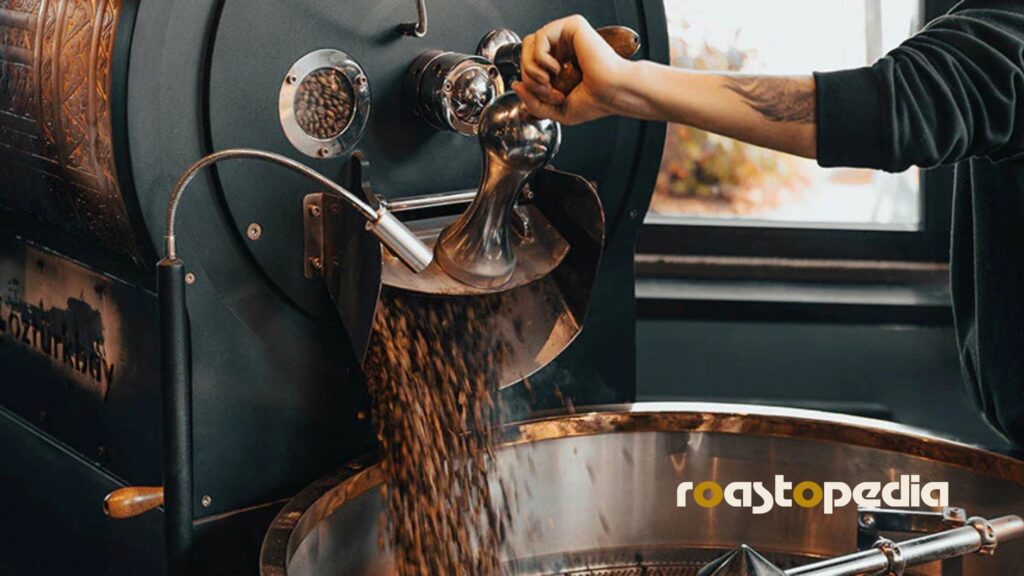
The primary mechanical apparatus used in modern industrial roasting is the drum roaster. This machine consists of a horizontal rotating drum made of high-grade carbon steel or stainless steel. The drum is positioned over a precision-controlled gas burner or an electric heating element to provide a steady thermal source.
Internal vanes or flights are strategically placed within the drum to ensure the continuous agitation of the seeds. This movement prevents the beans from resting against the heated metal for extended periods. The constant motion ensures that each bean is exposed to both conductive and convective heat throughout the cycle.
Secondary systems include the cyclone separator, which is designed to remove the chaff or dried silver skin from the beans. This centrifugal system uses high-velocity air to pull the lighter chaff into a separate collection chamber. Removing these volatile skins is critical for preventing fires and ensuring a clean flavor profile in the final product.
The cooling tray utilizes high-powered fans to draw ambient air through the roasted beans once they are discharged. This rapid cooling process is essential for arresting the chemical reactions and preventing over-roasting. Industrial trays often feature rotating arms to further accelerate the dissipation of residual thermal energy.
Extraction Process
The roasting cycle is divided into distinct thermal phases characterized by specific chemical transitions and physical markers. The initial drying phase begins as green beans are heated to evaporate their residual moisture content. During this stage, the internal structure of the bean transitions from a dense green state to a softer yellow-green hue.
Maillard reactions begin to accelerate at approximately 150°C (302°F) as carbonyl groups from sugars react with amino acids. This phase is responsible for generating hundreds of aromatic compounds and the brown-colored melanoidins that define the bean’s appearance. The complexity of these reactions determines the final depth of the coffee’s flavor and body.
First crack occurs as the internal pressure from steam and carbon dioxide causes the cellular structure to rupture audibly. This physical milestone marks the beginning of the development phase and the light roast stage. Roasters must carefully monitor the heat application at this point to balance the emerging acidity and bitterness.
The second crack signifies the structural collapse of the cellulose matrix for darker roast varieties. This second audible rupture occurs as oils begin to migrate from the internal cells to the surface of the bean. For dark roasts, carbonization becomes the dominant chemical process, resulting in the characteristic smoky and bitter flavor profile.
Sensory Characteristics
The degree of roasting directly determines the chemical composition and sensory characteristics of the final beverage. Light roasts preserve the intrinsic organic acids, such as malic and citric acids, which provide high perceived acidity. These profiles often exhibit floral or fruity notes that are highly valued in specialty coffee circles.
Medium roasts exhibit a balanced relationship between acidity and body due to increased caramelization products. These beans offer a sweeter profile with notes of chocolate and toasted nuts as the sugars reach their peak transformation. This roast level is the most common standard for traditional specialty coffee consumption.
Dark roasts are characterized by the presence of heterocyclic compounds and carbonized sugars that yield a smoky profile. The heavy body of these roasts is a result of the structural breakdown and oil migration during the second crack. Acidity is significantly reduced as the organic acids are consumed by the intense thermal energy.
Sensory evaluation is conducted using the Coffee Flavor Wheel to identify and categorize specific aromatic attributes. This standardized system allows professionals to communicate complex flavor profiles with high precision across the global industry. Consistent sensory output is the primary goal of every professional roasting operation.
Notable Facts
Coffee beans typically lose between twelve and twenty percent of their total mass during the roasting process. This mass loss is primarily due to the evaporation of moisture and the sublimation of various organic acids. Despite this reduction in weight, the beans experience a significant volumetric expansion during the cycle.
Physical volume increases by fifty to one hundred percent as the internal structure expands and becomes highly porous. This structural swelling is caused by the intense pressure of trapped gases and steam within the cellular matrix. The resulting honeycomb-like structure is essential for the eventual penetration of brewing water.
Large industrial operations occasionally utilize water quenching to rapidly lower temperatures during the final cooling phase. This process involves a fine spray of water that adds back a small percentage of weight to the roasted product. While efficient for high-volume production, quenching is often avoided in specialty roasting to preserve delicate aromatics.
Historical Variations
Historically, coffee roasting was a decentralized domestic activity performed immediately before the point of consumption. In fifteenth-century Arabian households, the process was a central part of the daily social and culinary ritual. The rise of centralized industrial facilities in the twentieth century transformed roasting into a specialized global industry.
During the American Civil War, soldiers were frequently issued green coffee beans as part of their standard rations. These soldiers were required to roast their own coffee over campfires using whatever metal containers were available. This decentralized practice highlighted the essential nature of roasting in the preparation of the coffee beverage.
The introduction of pre-roasted and vacuum-sealed coffee in the early twentieth century fundamentally changed consumer habits. This innovation allowed for the long-distance shipping of roasted products without immediate flavor degradation. Industrial science replaced domestic tradition as the primary driver of coffee roasting methodology worldwide.
Modern artisanal roasting has seen a resurgence of small-scale, precision-focused operations that prioritize origin and quality. These roasters often utilize vintage-style drum machines integrated with contemporary digital monitoring systems. This blend of historical apparatus and modern technology defines the current landscape of the specialty coffee industry.
Thermal Kinetics and Heat Transfer
The kinetics of coffee roasting are governed by the transfer of thermal energy through the bean’s cellular structure. Conduction occurs as heat is transferred from the drum surface directly into the outer layers of the bean. Convection is facilitated by the movement of heated air through the roasting chamber and around each seed.
Radiation also plays a minor role as the internal surfaces of the roaster emit infrared energy toward the beans. The balance of these three heat transfer methods determines the overall efficiency and uniformity of the roast. Professional roasters adjust airflow and burner intensity to manipulate these kinetics throughout the cycle.
Internal heat transfer within the bean is a slower process that relies on the thermal conductivity of the cellulose matrix. As the outer layers heat up, energy gradually migrates toward the center of the seed. Achieving a uniform roast requires careful management of the temperature gradient between the exterior and interior of the bean.
Exothermic reactions during the later stages of the roast can cause the bean temperature to rise rapidly and uncontrollably. Roasters must anticipate these shifts and adjust the heat input to prevent the batch from crashing or flicking. Mastering these thermal kinetics is the hallmark of a highly skilled industrial coffee roaster.
Chemical Precursors and Volatiles
The precursors to coffee flavor are found within the complex carbohydrates, proteins, and acids of the green seed. Sucrose is the most significant sugar involved in the caramelization and Maillard reactions during roasting. The thermal breakdown of these sugars produces the sweet and aromatic compounds essential for a balanced cup.
Amino acids act as the building blocks for the nitrogen-containing compounds that contribute to the bean’s savory and toasted attributes. These acids react with sugars to form various volatile molecules, including pyrazines and furans. The specific concentration of these precursors depends on the coffee’s cultivar and the environmental conditions of its growth.
Volatile organic compounds are responsible for the distinct aroma of freshly roasted coffee that is easily detected by the human nose. Thousands of unique volatile molecules are created and destroyed throughout the duration of the roasting cycle. The timing of the discharge from the roaster determines which of these aromatics remain in the final product.
Lipids within the bean provide the tactile sensation of the body and contribute to the overall stability of the roasted product. These fats migrate toward the surface during the second crack and can become rancid if exposed to oxygen for extended periods. Protecting these delicate chemical components is a primary concern for high-quality coffee packaging systems.
Post-Roast Stabilization and Degassing
Immediately following the roasting cycle, coffee beans enter a period of chemical stabilization known as degassing. During this phase, the beans spontaneously release carbon dioxide that was trapped within the cellular matrix. This gas release is a critical part of the roasting process and must be managed carefully before brewing.
The rate of degassing is determined by the roast degree and the physical density of the bean’s structure. Darker roasts with more porous cell walls tend to degas more rapidly than denser, light-roasted beans. Proper rest periods allow the carbon dioxide to dissipate, preventing the gas from interfering with the extraction process.
One-way degassing valves are utilized in modern packaging to allow carbon dioxide to escape while blocking oxygen entry. This technology prevents the internal pressure from bursting the bag while protecting the beans from oxidation. Maintaining an inert environment is essential for preserving the coffee’s volatile aromatics during transport and storage.
Scientific research into degassing kinetics continues to inform the development of more efficient packaging and resting protocols. Understanding the relationship between roasting and gas release allows professionals to optimize the freshness and quality of their products. This stabilization phase ensures that the true flavor profile of the roast is accurately reflected in the final cup.
Scientific Methodology in Industrial Roasting
The application of scientific methodology has revolutionized the industrial roasting process by introducing rigorous data collection and analysis. Roasters now use spectrophotometers to measure the ground and whole-bean color with extreme precision. This objective data allows for the standardization of roast levels across different batches and production facilities.
Moisture meters are used to assess the stability of green coffee before roasting and the efficiency of the drying phase. Monitoring the water activity of the beans helps roasters predict how the coffee will respond to thermal energy. This scientific approach reduces the reliance on subjective sensory markers and improves overall production consistency.
Particle size analysis is often performed on the roasted beans to evaluate the structural integrity and brittleness achieved during the cycle. This data informs the development of specific grinding protocols for different brewing methods. The integration of physics and chemistry into the roasting room has elevated the industry to a new level of technical excellence.
Ongoing collaboration between roasters and food scientists continues to uncover the complexities of coffee chemistry. These partnerships drive the innovation of new roasting technologies and the refinement of traditional methods. The pursuit of scientific truth remains the guiding principle for the most advanced roasting operations in the world today.
Environmental Impact and Sustainability
Industrial roasting operations have a significant environmental footprint due to their high energy consumption and emissions. Large roasters must integrate afterburners or catalytic oxidizers to neutralize the smoke and volatile organic compounds released during the cycle. These systems are essential for meeting local air quality standards and reducing the facility’s impact on the surrounding community.
Sustainability initiatives are increasingly focused on reducing the carbon footprint of the roasting process through technological innovation. Some manufacturers are developing electric-powered roasters that can be fueled by renewable energy sources. This shift away from fossil fuels represents a major step toward a more sustainable future for the coffee industry.
Waste management is another critical area of concern, particularly regarding the disposal of coffee chaff and packaging materials. Chaff is often collected and repurposed as organic fertilizer or animal bedding to minimize landfill waste. Roasters are also transitioning to compostable or recyclable packaging to reduce the environmental impact of their consumer products.
Ethical sourcing and transparent supply chains are integral to the sustainability of the roasting business. Many specialty roasters prioritize direct-trade relationships with producers to ensure fair compensation and environmental stewardship at the farm level. This holistic approach to sustainability considers every stage of the coffee’s journey from the soil to the final cup.
Future Frontiers in Thermal Processing
The future of coffee roasting lies in the continued integration of artificial intelligence and machine learning into the production workflow. Advanced algorithms can now predict the outcome of a roast based on real-time data from the sensors within the machine. This technology allows for the automatic adjustment of burner settings to compensate for environmental variables.
Microwave and infrared roasting technologies are also being explored as alternatives to traditional drum and fluid-bed systems. These methods offer the potential for more precise internal heating and reduced energy consumption. While still in the experimental phase, these innovations could fundamentally change the physics of coffee roasting in the coming decades.
Nanotechnology may eventually play a role in the development of more efficient heat transfer materials for roasting equipment. These advancements could lead to the creation of smaller, more powerful roasters that require less energy to achieve the same results. The pursuit of technical perfection continues to drive the evolution of roasting technology.
As the global demand for specialty coffee grows, the need for consistent and high-quality roasting will only increase. The industry will continue to adapt to new challenges through the application of science and the preservation of craft. The story of coffee roasting is one of constant transformation, fueled by a relentless search for true coffee knowledge.