
Colada is a communal coffee ritual that emerged in the Cuban exile community of Miami, Florida, most prominently in the Little Havana neighborhood, during the 1960s.
When Cuban immigrants settled in South Florida following the 1959 revolution, they carried with them the espresso-based café cubano tradition—and adapted it for a new social context.
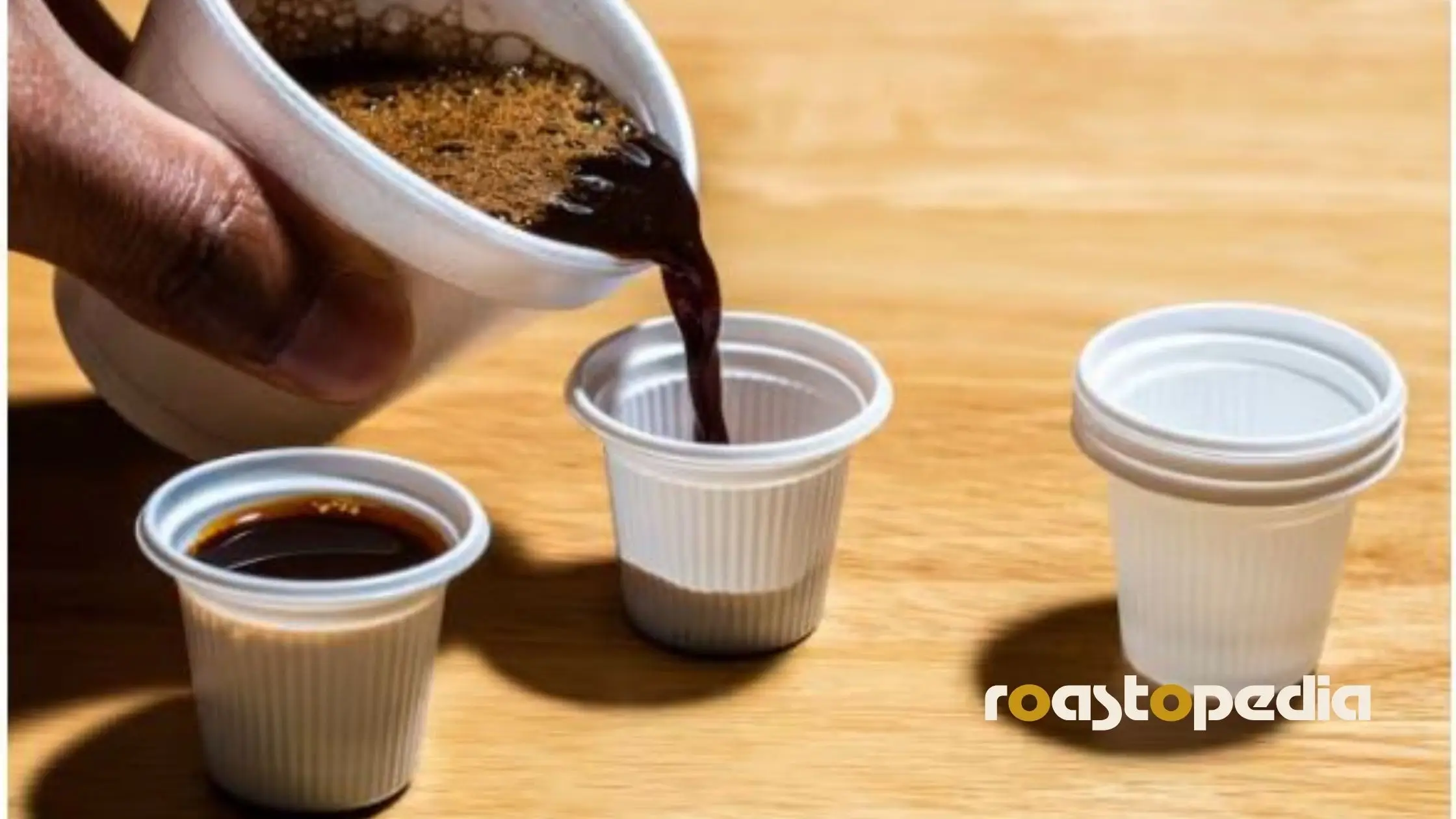
Workplace culture in Miami’s Cuban community gave rise to the colada as a shareable portion: a large shot pulled into a styrofoam cup and distributed in small plastic thimble cups called tacitas.
The drink became a fixture of Miami’s urban street culture, particularly around the ventanitas—walk-up windows attached to Cuban cafeterias—where coladas are still ordered and passed around among coworkers, neighbors, and strangers. It is not a documented product of Cuba itself; records and oral histories consistently place its invention in Miami, not Havana.
Etymology
The word colada derives from the Spanish verb colar, meaning ‘to strain’ or ‘to filter,’ referring to the process of passing water through ground coffee. In broader Spanish usage, café colado simply means filtered or brewed coffee. In the Cuban-American lexicon, however, colada took on a distinct meaning: a large, shared pull of sweetened espresso. The term is specific to the Miami Cuban-exile community and is not widely used with this meaning in Cuba or across Latin America.
The Science of the Brew
A colada is made using a stovetop Moka pot (cafetera) or an espresso machine, producing 4 to 6 ounces of concentrated coffee in a single brew cycle. Cuban coffee is traditionally made with dark-roasted Robusta or dark-roasted Arabica blends—often Café Bustelo or Pilon—which yield higher bitterness compounds, particularly chlorogenic acid lactones and phenylindanes, intensified by the roast level.
The defining chemical process is the espumita: raw cane sugar (approximately 2–4 teaspoons) is placed in the serving cup, and the first few drops of hot espresso are added directly onto it. The mixture is then whipped vigorously with a spoon until a thick, pale-golden foam forms. This foam is a sugar-coffee emulsion stabilized by coffee’s surface-active compounds, primarily melanoidins formed during roasting. The remaining espresso is poured over this base and stirred, distributing the emulsion throughout. The result has a Maillard-enhanced caramel sweetness layered over intense roast bitterness.
Taste & Sensory Profile
A colada is intensely concentrated—bolder than a standard espresso shot due to its dark roast and often slightly longer extraction. The espumita delivers a sweet, frothy top layer with caramelized sugar notes, while the coffee beneath carries bitter chocolate, roasted nuts, and molasses. The sugar does not merely sweeten; it chemically integrates with the coffee compounds during whipping, producing a flavor complexity that is distinct from simply adding sugar after brewing. Finish is long, roasty, and slightly syrupy.
Variations
The colada is served almost exclusively in its traditional form, with minor variation in serving size (typically 4 oz split among 2–5 people) and sugar quantity. Some cafeterias offer a colada grande. Home preparation sometimes uses condensed milk in place of, or alongside, raw sugar, though purists consider this a deviation. Outside Miami, the term colada is sometimes mistakenly applied to individual café cubano shots.
Notable Facts
The colada is not a drink in the traditional sense—it is a social unit. Ordering one alone is considered unusual; the tacitas (thimble cups) distributed with the styrofoam cup are an integral part of the ritual. Miami’s ventanita culture is so embedded that several city blocks in Little Havana have been documented by urban anthropologists as having distinct coffee-sharing patterns tied to colada distribution. The espumita technique is a closely guarded point of pride—many Cuban grandmothers insist only the first drops of espresso, not the full pull, can produce the proper foam density.
Related Drinks
Café Cubano — the individual espresso shot from which the colada is drawn. Cortadito — a Cuban espresso cut with steamed evaporated milk. Café con Leche — a larger, milkier Cuban coffee drink. Cafecito — informal term for a small Cuban espresso. Espresso Romano — Italian espresso served with lemon; shares the dark-roast espresso base.