
Pyrolysis is the thermochemical decomposition of the coffee bean’s organic matrix occurring at high temperatures in an oxygen-limited environment. In the specific context of coffee roasting, it represents the final and most aggressive stage of the roasting cycle, characterized by the catastrophic breakdown of the bean’s primary structural materials, including cellulose, hemicellulose, and lignin.
Overview
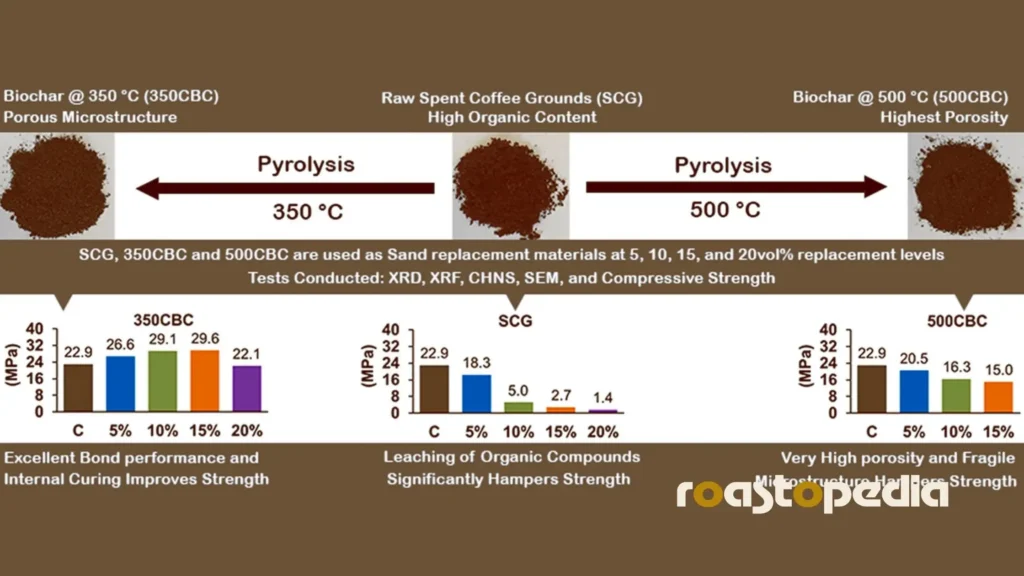
This process follows the initial Maillard reaction and Strecker degradation, marking the transition into the dark-roast profiles where origin-specific characteristics are systematically replaced by intense roasty, smoky, and carbonized sensory attributes. Within the framework of thermodynamics, pyrolysis is distinguished by its strong exothermic nature, where the beans begin to generate their own internal heat through the rapid rupture of chemical bonds and the release of volatile gases.
Thermodynamic initiation of pyrolysis typically occurs once the internal bean temperature surpasses 200°C (392°F), generally coinciding with the later stages of First Crack. During this phase, the application of heat triggers the thermal cracking of the bean’s complex fibers, turning the physical structure from a flexible, browned seed into a brittle, highly carbonized material.
Managing the transition into pyrolysis is the most critical challenge for a production roaster, as the exothermic heat release can lead to a “runaway” roast. If the energy input is not reduced in anticipation of this phase, the batch can quickly accelerate into a state of total carbonization, resulting in the production of smoke and the loss of almost all soluble sweetness.
The sensory profile resulting from successful pyrolysis is dominated by heterocyclic compounds and guaiacols, which provide the “bitter-sweet” and “smoky” notes identified on the Coffee Flavor Wheel. Mastering this balance allows for the creation of traditional dark roasts, such as French or Italian, where the tactile weight and intensity are the primary sensory objectives.
Historical Context
This transformation is driven by the rapid evaporation of remaining moisture and the subsequent decomposition of the cell walls. As the structural cellulose collapses, the internal pressure within the bean’s vacuoles forces natural oils to migrate through the pores, forming a glossy coating on the surface. This migration is the technical hallmark of advanced pyrolytic development, indicating that the bean’s internal defenses against oxidation have been physically breached.
The identification of pyrolysis as a distinct phase in coffee production emerged from the centuries-old tradition of dark roasting in Mediterranean and Central European cultures.
Before the development of modern gas-powered roasters, coffee was frequently roasted over open wood fires or in perforated metal pans, where the intense heat often pushed the beans into deep carbonization. These early roasters utilized the visual appearance of surface oils and the smell of heavy smoke as their primary indicators of maturity.
In many historical contexts, deep pyrolysis was a technical necessity for masking the flavor defects of lower-quality or aged green beans, a practice that eventually led to the distinct regional preferences for “Italian” or “Spanish” roast profiles.
Scientific analysis of pyrolytic pathways intensified during the late nineteenth century as industrial roasters sought to improve the weight-to-volume ratio of their products. Researchers began to quantify the 15% to 20% mass loss associated with the venting of carbon dioxide and steam during this stage. This era also saw the first isolation of phenolic compounds like 4-vinylguaiacol, which provide the specific smoky aroma associated with charred cellulose.
The ability to document these chemical transitions allowed for the standardization of dark-roast degrees across the expanding global coffee market. This historical shift turned the artisanal practice of “roasting for color” into an industrial science focused on the management of volatile mass loss and structural decay.
Contemporary research in the twenty-first century has shifted toward the health and stability implications of pyrolytic products. Modern laboratory studies utilize thermogravimetric analysis to track the degradation of specific biomass constituents, such as hemicellulose and lignin, under varying heat rates.
These findings have identified coffee as a unique source of dietary melanoidins that possess significant antioxidant capacity even at advanced roast degrees. This historical evolution reflects a broader trend in the industry: the move from viewing pyrolysis as a purely destructive event to recognizing it as a targeted chemical process for achieving specific structural and physiological outcomes in the beverage.
Linguistic Foundations
The terminology used to describe the thermal decomposition of the bean is rooted in the Greek word ‘pyr,’ meaning “fire,” and ‘lysis,’ meaning “loosening” or “dissolution.” This etymology perfectly captures the physical reality of the phase, where the application of intense thermal energy literally dissolves the molecular bonds of the coffee seed.
In technical literature, the term distinguishes these high-heat transformations from the earlier, more productive Maillard reaction. Using the word pyrolysis provides a precise description of the carbonization process, moving away from artisanal descriptors like “burning” or “charring” that imply a lack of technical control. Standardizing this vocabulary ensures that professionals can discuss the physical state of the bean with mathematical and chemical accuracy.
Industry nomenclature also differentiates between “early pyrolysis” and “advanced pyrolysis,” which correspond to the windows of First Crack and Second Crack respectively. This vocabulary allows roasters to communicate the specific degree of structural decay they have targeted for a particular profile.
For example, a roaster might describe a batch as having “light pyrolytic development” to indicate a profile that has reached the second crack but has not yet begun to carbonize the bean’s surface. This linguistic precision is essential for the documentation required for roast profiling and quality assurance in the specialty sector. It ensures that the technical record of a roast remains a reliable blueprint for future replication or troubleshooting across different roasting technologies.
Contextual usage of the term also extends to the physical state of the “chaff,” or silverskin, which undergoes total carbonization during this phase. Professionals discuss the “pyrolytic release” of these materials as they are shed from the expanding bean and removed by the Cyclone Separator.
By using such specific technical language, the industry maintains a professional standard that aligns with the broader fields of biomass engineering and thermodynamic modeling. The accuracy of this language ensures that the documentation of a roast profile remains a high-fidelity record of the chemical and physical transformations that occur within the drum. Standardizing this etymology is the prerequisite for the technical mastery of the dark-roast spectrum.
Evolution of Dark Roasting
Technical proficiency in managing deep pyrolysis has evolved from a reliance on physical intuition to a mastery of energy momentum and data logging. In the traditional era, the dark-roast specialist was primarily an operator who used the thickness and color of the smoke to judge the end of the batch.
Today, the role has evolved into that of a “kinetic designer” who monitors the Rate of Rise (RoR) to prevent an uncontrolled thermal acceleration. This proactive approach is necessary because as the cellulose begins to crack, it releases additional thermal energy, creating a feedback loop that can lead to the “flash” of the beans. Consequently, the professional evolution in this area has created a more analytical workforce capable of interpreting complex exothermic curves in real-time.
Professional standards for the Q-Grader now include rigorous training on identifying the sensory hallmarks of pyrolytic maturity. This includes distinguishing between the “bitter-sweet” cocoa notes of a well-executed dark roast and the “ashy” or “rubbery” defects caused by excessive carbonization. This shift in industry standards has prioritized the production of dark roasts that retain their structural sweetness and mouthfeel, rather than just their visual color.
This analytical approach ensures that even at advanced roast degrees, the quality of the raw Arabica Coffee or Robusta Coffee remains the foundation of the sensory experience. This level of scrutiny ensures that the highest possible quality is extracted from every gram of coffee, regardless of the roast degree.
Advanced roasting equipment now features infrared sensors that can measure the surface temperature of the beans with millisecond accuracy, providing an early warning of the onset of pyrolysis. These technological leaps allow for the precise timing of the Quenching phase, which uses a fine spray of water to instantly stop the chemical reactions and lock in the desired flavor profile. This evolution represents the transition from artisanal guesswork to a high-precision science grounded in fluid dynamics and material stress analysis.
The history of dark roasting is thus the history of the industry’s deepening mastery over the structural and chemical decay of the coffee bean. This ongoing innovation continues to drive the production of the world’s most intense and tactile coffee beverages.
Technical Precision and Management
Managing the thermal momentum as the batch approaches the 200°C threshold is the most significant technical responsibility during the pyrolytic phase. As the beans transition into an exothermic state, they begin to generate their own internal heat, which can lead to a “runaway” roast if the burner intensity is not proactively reduced.
A roaster who fails to anticipate this shift will likely produce a batch with a “burnt” exterior and an under-roasted core, a defect known as “tipping” or “scorching.” Maintaining a stable, declining Rate of Rise (RoR) through this transition is the technical prerequisite for achieving a smooth and heavy-bodied dark roast without unpleasantly bitter carbon notes.
Quality control technicians are responsible for logging the exact temperature and time at which surface oils become visible, a marker often referred to as “oil sheen onset.” This technical documentation is essential for maintaining brand consistency across different roasting locations and shifts. Any deviation in the temperature of oil migration can indicate changes in the moisture content or density of the green seeds being processed.
By treating pyrolysis as a measurable industrial procedure, the facility ensures that every batch meets the required chemical and sensory benchmarks for the specific dark-roast product line. This commitment to data-driven quality control is the hallmark of a professional roasting operation.
In industrial facilities, technical responsibilities also include the management of the airflow systems, which must handle the sudden influx of heavy smoke and oils released during pyrolysis. The technician must ensure that the exhaust fans are optimized to clear these byproducts without cooling the beans prematurely or creating a fire hazard in the ductwork.
Furthermore, the regular maintenance of the Cyclone Separator is essential for preventing the accumulation of carbonized Chaff, which can ignite under the high temperatures of a dark roast. This operational focus on safety and hygiene is critical for preserving the technical integrity of the facility and the quality of the final product.
Visual and Auditory Indicators
Acoustic sensitivity is a primary sensory requirement for navigating the pyrolytic phase, as the operator must distinguish the sharp “snap” of Second Crack from the lower-pitched “pop” of the first. The second crack is caused by the fracturing of the bean’s internal cellulose structure under the pressure of expanding gases and oils.
The frequency and intensity of these sounds provide a real-time assessment of the batch’s structural decay. Identifying the “rolling second”—the moment when the frequency of cracks is at its highest—is the technical cue to begin the cooling process for the most intense dark-roast profiles. This auditory skill allows the operator to stay synchronized with the physical reality of the beans regardless of what the digital probes might indicate.
Visual evaluation of the bean surface during and after pyrolysis provides essential information about the state of the melanoidins and surface oils. Following the onset of pyrolysis, the beans should appear significantly larger and their surface wrinkles should be completely smoothed out by internal pressure.
A professional roaster looks for a uniform gloss across the batch, which indicates an even migration of lipids through the porous structure. Any presence of “dull” spots despite the advanced temperature can signal an uneven heat distribution or a defect in the green bean’s density. Sensory experts use these visual markers to predict the body and perceived sweetness of the sample before the final Cupping takes place.
Identifying the specific aroma of “sweet smoke” versus “burnt carbon” is another essential sensory skill related to pyrolysis management. While some smoke is expected during a dark roast, an “acrid” or “stinging” smell signals that the beans have begun to carbonize too rapidly. This olfactory feedback provides an immediate assessment of whether the chemical development is proceeding at the correct rate.
A trained roaster uses the sampling tool to pull beans from the drum and smell the volatile gases as they emerge, allowing for the precise timing of the roast’s conclusion. This ability to link visual and auditory evidence to the chemical state is a hallmark of professional expertise in the field.
Thermodynamics of Carbonization
Thermodynamic principles during pyrolysis are dominated by the conversion of structural mass into volatile gases and pure carbon. As the cellulose and lignin polymers break down, they release carbon dioxide, carbon monoxide, and a variety of light hydrocarbons. This mass loss is the technical reason why dark-roasted coffees are lighter in weight and more porous than their light-roasted counterparts.
The formation of these carbon structures is what provides the characteristic “bitter” and “smoky” notes found in the beverage. From a thermodynamic perspective, pyrolysis is a “runaway” process where the internal energy of the bean mass increases exponentially unless it is arrested by a localized cooling source.
The exothermic shift during this phase causes a profound change in the heat transfer dynamics within the Roaster. Instead of just absorbing energy from the burner, the beans themselves become a heat source, which can lead to a rapid spike in the Rate of Rise (RoR). This kinetic energy must be managed by increasing the airflow or reducing the gas pressure to prevent the beans from igniting.
This operational balance is a pure application of fluid dynamics and heat transfer principles. The accuracy of this management ensures that the chemical potential created during the earlier stages of the roast is not destroyed by the intense heat of carbonization.
Structural expansion during pyrolysis is also a function of the internal vapor pressure overcome by the weakening cellulose walls. As the structural integrity of the bean collapses, it increases in volume by up to one hundred percent while losing nearly twenty percent of its mass. This dramatic change in density is the reason why dark-roasted beans are so brittle and easy to grind.
The porosity established during this phase also makes the beans highly susceptible to oxidation, as the high surface area allows for the rapid exchange of gases with the environment. By documenting these thermodynamic principles, the industry maintains a factual baseline for understanding the physical limits of roasting technology.
Documented Chemical Milestones
Documentary evidence from laboratory roasting studies indicates that the production of guaiacols—the compounds responsible for the smoky aroma—reaches its peak as the beans enter Second Crack. These studies utilize gas chromatography to track the “high activation energy” channel that opens up once the beans have reached temperatures above 215°C.
This recorded data provides a technical explanation for the specific sensory profile of dark roasts, moving the discussion away from subjective preference toward empirical chemical reality. It also highlights the technical importance of reaching specific thermal milestones to achieve the desired aromatic complexity.
Recorded metrics also show that the concentration of organic acids, such as malic and citric acids, drops to nearly zero during the advanced stages of pyrolysis. These acids are systematically destroyed by the intense heat, which is the technical reason why dark-roasted coffees possess almost no perceptible acidity.
Instead, the profile is defined by the presence of quinic and caffeic acids, which provide a more metallic and lingering bitterness. By studying these documented figures, roasters can develop a predictive model for their craft, turning a series of complex chemical transitions into a repeatable industrial procedure with a high degree of technical accuracy across multiple production cycles.
Statistical analysis of mass loss during the pyrolytic phase shows that for every degree of temperature increase beyond 220°C, the bean loses an average of 0.5% of its total mass per minute. This data is used by industrial facilities to calculate the “roast shrinkage” and adjust their inventory management systems accordingly.
This level of technical documentation allows for the “reverse engineering” of roast profiles, where a producer can target a specific mass-loss percentage to achieve a predetermined sensory and physical outcome. This data-driven approach is what separates the modern specialty industry from its less analytical commercial counterparts. By treating these milestones as empirical data points, the industry maintains a strictly scientific and professional standard for coffee production.
Structural Integration and Extraction
Diffusion acts as the primary mechanical force that brings the products of pyrolysis into the liquid beverage during brewing. The extreme porosity created during the carbonization of the cellulose walls allows water to penetrate the grounds with very little resistance.
This is the technical reason why dark-roasted Roaster coffees extract so quickly and why they require a coarser grind to prevent over-extraction of the more bitter carbon compounds. The structural decay established in the thus dictates the operational logic of the Barista in the café. A well-managed pyrolytic profile ensures that the heavy body and smoky sweetness are highlighted without the presence of ashy defects.
The migration of surface oils during pyrolysis also has a direct impact on the mouthfeel and Aftertaste of the final cup. These lipids, which have been forced to the exterior of the bean, are immediately soluble upon contact with hot water, providing a rich and glossy tactile sensation. However, these same oils are highly reactive and can turn rancid quickly if exposed to oxygen, making the freshness of dark-roasted coffee a critical quality variable.
Understanding this relationship between structural breakdown and lipid solubility allows for the precise calibration of extraction recipes to suit the specific degassing state of the beans. This scientific approach ensures that the physical and chemical potential of the roast is fully realized in the customer’s beverage.
Total Dissolved Solids (TDS) measurements in the finished cup are heavily influenced by the high solubility of the carbonized materials and advanced melanoidins. Because the bean structure is so compromised, water can easily dissolve the available solids, leading to a higher TDS at lower brew ratios compared to light-roasted coffees.
Professional brewers use refractometers to verify that the target extraction yield has been achieved, ensuring that the heavy and smoky sensory notes identified on the Coffee Flavor Wheel are clearly perceptible. This analytical approach links the thermal history of the roast to the mathematical reality of the brew, providing a complete technical narrative of the coffee’s transformation from a green seed to an intense, carbon-rich liquid beverage.