
Coffee Flavor Wheel is a specialized infographic and diagnostic tool used by professionals to categorize and describe the diverse aromatic and flavor attributes of coffee.
This visual framework provides a standardized vocabulary that allows cuppers, roasters, and buyers from different global regions to communicate with absolute sensory clarity. It serves as the primary reference for the professional classification of flavor across the entire specialty coffee industry.
Origin & History
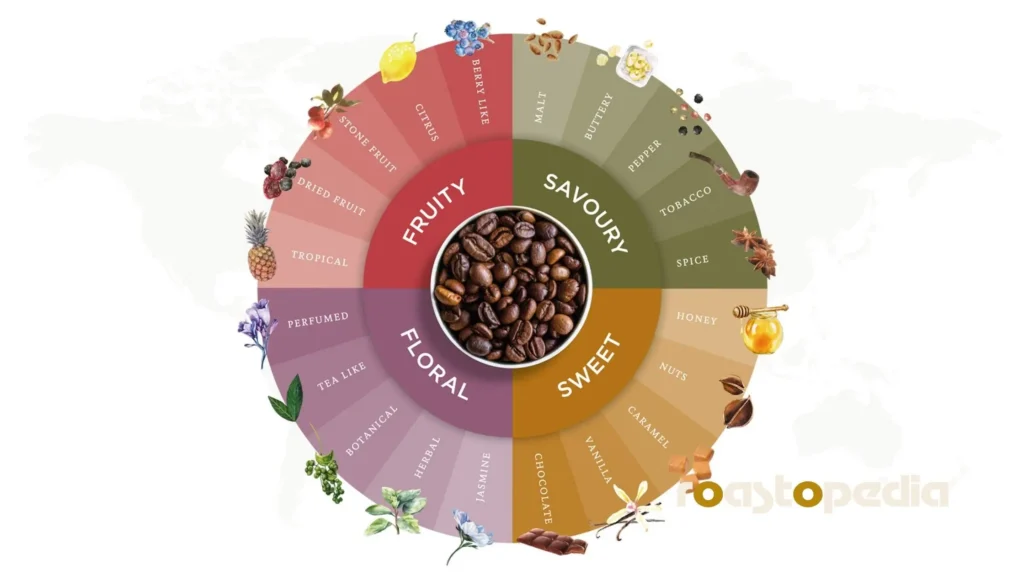
Systematic attempts to map the flavors of coffee began in the middle of the twentieth century as the industry sought to move beyond vague descriptive labels.
In 1995, Ted Lingle and the Specialty Coffee Association of America published the first official Coffee Taster’s Flavor Wheel. This initial version was a landmark achievement that provided the first cohesive structure for describing the sensory experience of a coffee cup.
A major revision occurred in 2016 through a historic collaboration between the Specialty Coffee Association and World Coffee Research. This project utilized advanced sensory science and professional panels to develop the World Coffee Research Sensory Lexicon. This foundational research provided the empirical data required to organize the wheel’s categories based on actual chemical and physical relationships.
Modern versions of the wheel are designed to be dynamic and are frequently updated to reflect discoveries in coffee chemistry and processing. The current iteration is the most collaborative and research-backed tool in the history of the coffee industry. It has successfully turned the subjective art of tasting into a quantifiable and globally recognized scientific discipline.
Etymology
The name is entirely functional, combining the subject of the study with the circular “wheel” shape used to organize the data. The word “flavor” traces back to the Old French ‘flaour,’ which refers to a smell or an odor. This highlights the deep connection between the olfactory and gustatory senses that the tool is designed to explore.
Technical usage of the term within the specialty industry refers specifically to the official SCA publication rather than any generic descriptive chart. It is a proprietary and copyrighted resource that represents the collective knowledge of thousands of professional tasters. This formal identity ensures that the wheel remains a stable and authoritative reference point for international trade.
Global adoption of the wheel has turned its specific categories, such as “stone fruit” or “enzymatic,” into standard industry shorthand. Professionals often refer to “consulting the wheel” when they encounter a flavor that is difficult to name or categorize. Understanding this nomenclature is a fundamental requirement for anyone participating in the professional sensory dialogue.
Structure and Methodology
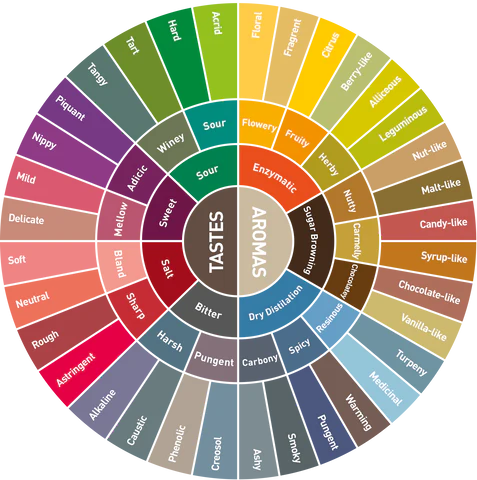
Organization of the wheel follows a hierarchical structure that moves from broad, general categories at the center toward specific descriptors at the outer edge. This design encourages the taster to start with a wide classification, such as “fruity,” before narrowing down to “berries” and finally “raspberry.” This logical progression helps the brain process complex sensory information without becoming overwhelmed.
Colors are used intentionally within the wheel to reinforce the sensory relationship between different flavor groups.
For example, the sections for citrus and floral notes are often presented in bright yellows and purples to match the visual associations of those flavors. This synesthetic approach helps tasters recall and identify notes more quickly during a fast-paced cupping session.
Standardized definitions for every single term on the wheel are provided by the accompanying Sensory Lexicon to ensure objective accuracy. This means that when two professionals use the word “apricot,” they are referring to the same sensory benchmark. This level of precision is what allows the wheel to function as a reliable instrument of professional quality control.
Professional Application
Sensory calibration between team members in a roastery or cafe is the primary use case for the flavor wheel in a commercial setting. Staff members use the wheel as a guide during their morning tastings to ensure they are all describing the coffee’s performance in the same way. This shared vocabulary prevents conflicting marketing descriptions and ensures a consistent customer experience.
Roasters utilize the wheel to map the flavor potential of new green coffee arrivals and to develop their roasting profiles accordingly. By identifying the primary “flavor families” present in a bean, the roaster can choose a thermal trajectory that highlights those specific notes. The wheel acts as a blueprint for the chemical transformation that occurs inside the roasting machine.
Marketing and packaging design often draw directly from the wheel’s lexicon to describe a coffee’s tasting notes to the consumer. This transparency helps customers make informed purchasing decisions based on their personal flavor preferences. It also educates the public about the incredible diversity and complexity that can be found within the world of specialty coffee.
The Science of the Lexicon
Chemical precursors found in the green coffee seed dictate which flavors will eventually appear on the wheel after the roasting process. Compounds such as chlorogenic acids and volatile oils are the primary building blocks of the sensory experience. The flavor wheel provides a way to trace these chemical realities back to the environmental factors of the terroir.
Maillard reaction products are responsible for many of the “savory” and “brown” flavors found in the middle sections of the wheel, such as nut and chocolate. These notes are created through the interaction of amino acids and sugars during the heat of the roast. Managing the intensity of these reactions allows the roaster to shift the coffee’s profile across different zones of the wheel.
Enzymatic compounds produce the delicate floral and fruity notes that are typically found in the lightest roasts on the wheel. These flavors are the most volatile and are easily lost if the roasting process is too long or too hot. Identifying and preserving these enzymatic notes is a primary goal for many specialty roasters who focus on high-elevation Arabica coffee.
Notable Facts
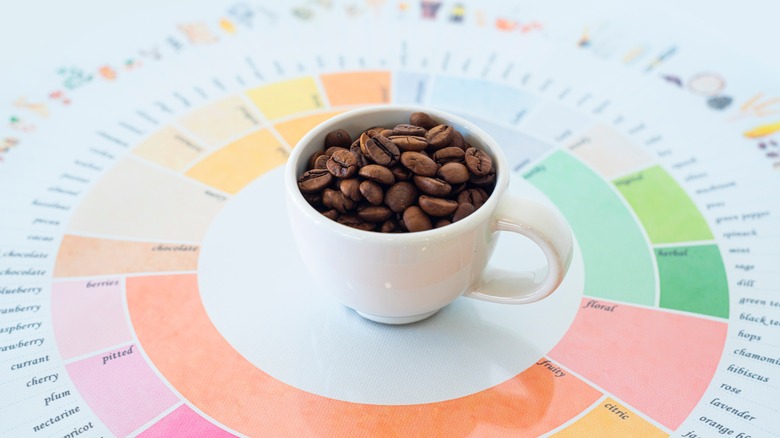
The 2016 revision of the wheel was the largest and most collaborative piece of research ever completed in the history of coffee flavor.
It involved dozens of professional sensory panelists and scientists who spent thousands of hours analyzing thousands of individual coffee samples. This project demonstrated the industry’s commitment to scientific rigor and objective truth.
Psychological factors such as “expectation bias” can influence how a taster interacts with the wheel, as they may find flavors they expect to see.
Professional training teaches tasters to remain objective and to use the wheel as a check against their own preconceptions. The tool is designed to be a guide for discovery rather than a list of pre-determined conclusions.
Some artisanal roasters have created their own “custom wheels” that include specific local or regional flavors that are not found on the global SCA version. For example, a roaster in Southeast Asia might include notes of durian or pandan that are common in their local palate. These variations highlight the dynamic and culturally-dependent nature of the human sensory experience.
Related Concepts
Sensory Lexicon is the comprehensive dictionary of flavor descriptions that serves as the scientific foundation for the flavor wheel. It provides the specific “references” or benchmarks that tasters use to calibrate their palates to the international standard. Every word on the wheel has a corresponding entry in the lexicon that defines its exact sensory profile.
Cupping Protocol is the standardized brewing method used by professionals to evaluate coffee while referencing the flavor wheel. By controlling the brewing variables, the cupper can be sure that any flavor they identify is a result of the coffee’s inherent quality. The protocol and the wheel work together to create a stable environment for sensory analysis.
Q-Grader is the professional title given to individuals who have mastered the use of the flavor wheel and the sensory lexicon. These experts have been tested on their ability to accurately categorize flavors and identify defects using the wheel as their primary guide. Their work is what gives the wheel its practical and commercial value within the global coffee trade.