
Quenching is a technical procedure used to halt the exothermic reactions within coffee beans at the precise conclusion of a roasting profile.
This process involves the rapid application of a cooling medium—typically high-velocity air or a fine mist of water—to lower the bean temperature below the threshold of chemical activity. It ensures that the specific flavor characteristics developed during the roast are preserved without further unwanted transformation.
Origin & History
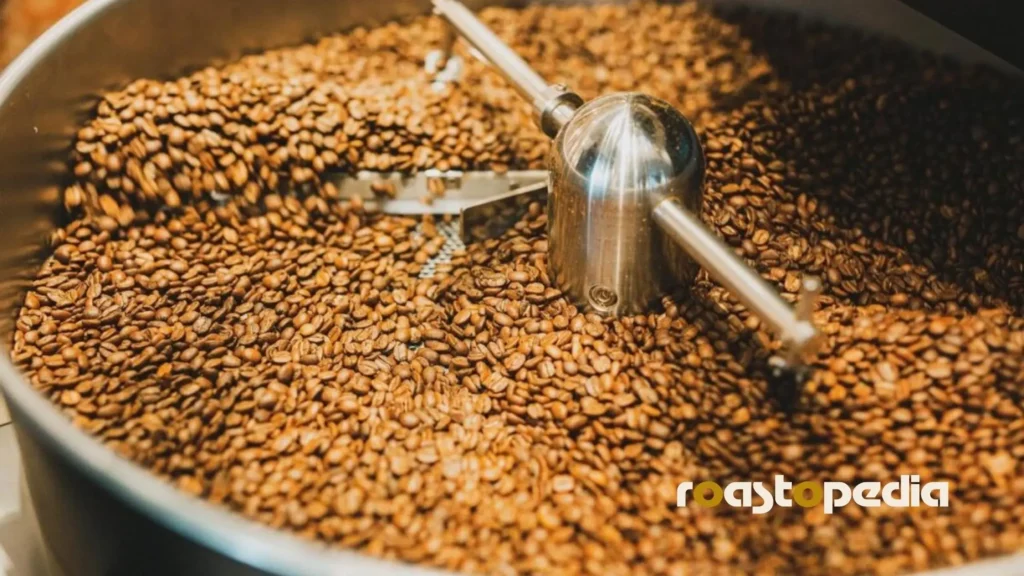
Manual cooling methods were the only means of halting a roast during the earliest centuries of coffee preparation. Roasters would often spread the hot beans across stone floors or large wooden trays to allow the heat to dissipate into the surrounding atmosphere. This primitive form of air quenching was inconsistent and often failed to stop the internal cooking process quickly enough to prevent flavor degradation.
Industrialization in the late nineteenth century led to the development of the dedicated cooling tray as a standard component of the drum roasting machine. These early engineering feats utilized mechanical arms and suction fans to pull ambient air through a perforated floor.
This innovation allowed for the first repeatable and rapid thermal arrest in commercial coffee production, marking a significant leap in quality control.
Commercial-scale roasteries in the middle of the twentieth century introduced water quenching to manage the massive heat loads of industrial batch sizes.
By spraying a controlled amount of water into the drum or cooling tray, roasters could leverage the power of evaporative cooling. This method allowed for near-instantaneous temperature drops, ensuring that large volumes of coffee could be processed without the risk of internal fires or over-roasting.
Etymology
Quenching comes from the Old English ‘cwencan,’ which literally translates to “extinguish” or “make to go out.” This historical association with the dousing of fire perfectly describes the roaster’s goal of “extinguishing” the thermal energy within the bean mass.
The term highlights the protective nature of the process in safeguarding the delicate organic compounds created during the roast.
Technical usage of the word became standard in the metallurgical and chemical industries before its widespread adoption in coffee science. It distinguishes the intentional and rapid cooling of a material from the natural and slow process of cooling to room temperature. This linguistic precision helps roasters communicate about the efficiency and speed of their thermal management systems.
Global adoption of the word within the specialty coffee sector has increasingly shifted to favor the term “cooling” over “quenching” when referring to air-based systems.
The word “quenching” now often carries a specific connotation of water-assisted thermal arrest in modern professional lexicons. Recognizing this distinction is essential for understanding the equipment specifications and quality standards of the contemporary coffee trade.
The Physics of Thermal Arrest
Exothermic reactions within the coffee bean continue to generate internal heat even after the external energy source is removed. This phenomenon, often called “carry-over cooking,” can cause a roast to progress toward darkness and bitterness if not immediately halted.
Quenching provides the necessary energy sink to absorb this residual heat and stabilize the bean’s chemical structure.
Evaporative cooling serves as the primary mechanism when water is used as the quenching medium during a commercial roasting cycle. As the water hits the surface of the beans, it absorbs a massive amount of thermal energy to transition from liquid to steam. This rapid phase change extracts heat from the interior of the bean far more quickly than air alone can achieve.
Convection acts as the dominant force in air-based quenching systems, where high volumes of ambient air are drawn through the bean pile. The moving air carries away the heat released by the beans, gradually lowering their temperature to a stable point. Professional roasters target a total cooling time of less than four minutes to ensure the sensory clarity of the final product.
Air Quenching Standards
Technical standards in the specialty coffee industry almost exclusively favor air quenching for its clean and non-invasive nature. This method relies on the thermal mass of the beans and the velocity of the cooling fan to reach room temperature. It preserves the integrity of the roasted surface and ensures that the coffee remains completely dry for subsequent storage and grinding.
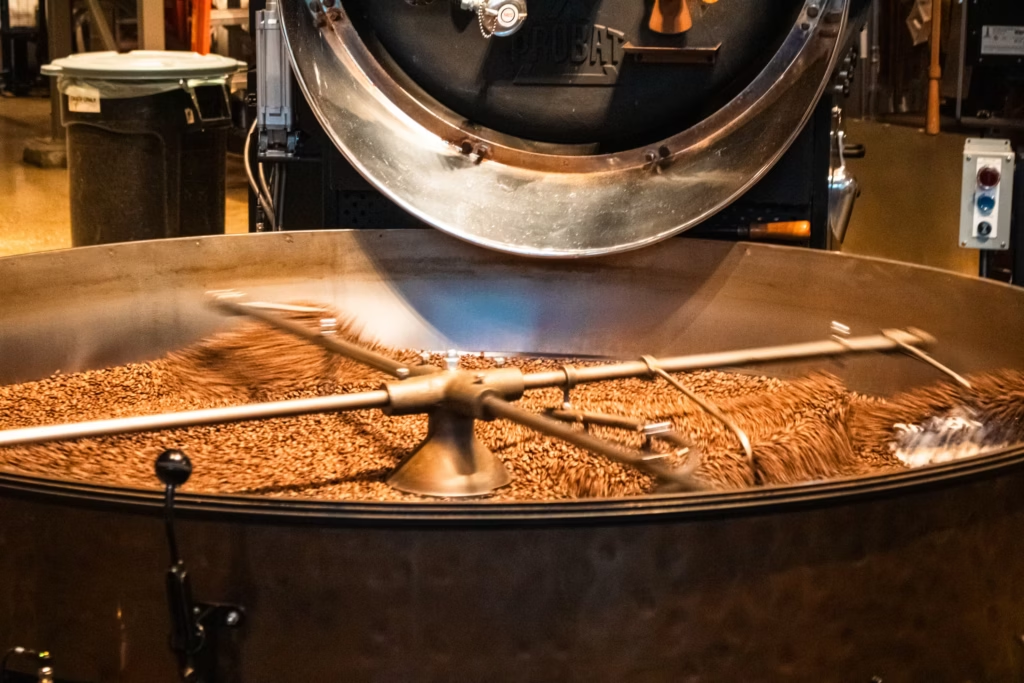
Mechanical cooling trays utilize a series of rotating arms to keep the beans in constant motion during the air quenching process. This agitation prevents the formation of “hot spots” within the pile where beans might otherwise continue to roast against one another.
Even cooling is a non-negotiable requirement for maintaining the uniformity and repeatability of a professional roasting profile.
Monitoring the exhaust temperature of the cooling tray provides the roaster with a final data point to verify the success of the thermal arrest. If the tray takes too long to reach ambient levels, it may indicate a failure in the fan system or a lack of proper airflow.
A disciplined roaster always prioritizes the speed of this final stage as much as the precision of the roast itself.
The Science of Water Quenching
Water quenching requires an extremely precise measurement of the liquid used to avoid rehydrating the roasted coffee seeds. Most industrial systems use a fine mist that is designed to evaporate completely upon contact with the hot beans.
If too much water is applied, the coffee will gain weight and lose its shelf stability, leading to rapid staling and flavor loss.
Commercial roasters often use water quenching for large batch sizes where the total thermal mass is too great for air cooling to manage effectively. The near-instantaneous halt of the roasting reactions allows for a tighter control of the final color and flavor profile. This efficiency is a primary driver for its continued use in the high-volume commodity and institutional coffee markets.
Sensory critics of water quenching argue that the process can lead to a “steamed” or muted flavor profile if not managed with absolute precision. The moisture can interfere with the development of the brittle, porous structure that is required for a clean and efficient extraction.
For this reason, water quenching is rarely found in the production of high-end specialty lots where flavor clarity is the top priority.
Sensory Impact and Stability
Halting the roast at the exact moment of flavor peak is the primary goal of any quenching or cooling strategy. A successful thermal arrest preserves the vibrant acidity and delicate aromatics that define a premium harvest.
If the process is too slow, these subtle notes will be replaced by heavy, smoky, and unpleasantly bitter compounds. Density and structural integrity of the roasted bean are directly influenced by the speed of the temperature drop.
A rapid quench helps the bean “set” its internal cellular structure, which is vital for maintaining a consistent grind profile. Slow cooling can lead to a more brittle and fragile bean that shatters irregularly during the brewing process.
Degassing and shelf life are also linked to the success of the final cooling stage of the roasting cycle. Beans that are cooled correctly will release their carbon dioxide at a steady and predictable rate over the following days.
Improperly quenched beans may suffer from internal heat damage that compromises their ability to age gracefully and maintain their flavor during storage.
Notable Facts
The cooling tray is the only part of a roasting machine that does not use an external fuel source for its primary operation. Instead, it leverages the physics of airflow and mechanical movement to perform its critical task of thermal arrest. This simplicity makes it one of the most reliable and long-lasting components of a professional coffee roastery.
Weight gain through water quenching is a controversial practice that some commercial roasters have used to artificially increase their final yield.
Because coffee is sold by weight, even a small increase in moisture content can lead to significant financial gains across large volumes. This practice is strictly monitored and often forbidden by specialty coffee quality standards and trade agreements.
Exhaust air from the cooling tray can be recycled in some advanced roaster designs to pre-heat the next batch of green beans. This sustainable engineering feat reduces the total energy requirement of the roastery by capturing the heat that would otherwise be lost. It is a hallmark of the modern roaster’s commitment to environmental stewardship and operational efficiency.
Related Concepts
First Crack is the physical rupture of the bean that occurs just minutes before the quenching process typically begins. It represents the point where the internal pressure of the steam and gas overcomes the strength of the cell walls. The roaster must time the quench carefully after this event to achieve the desired level of development and sweetness.
Exothermic Flash describes the sudden surge in internal temperature that can occur as the beans approach the end of the roast. This flash can cause the temperature to spiral out of control if the roaster does not prepare for the quench in advance. Managing this energy surge is a primary skill for any professional operator working with high-capacity equipment.
Cooling Bin is the specialized area where beans are stored immediately after quenching to reach their final ambient stability. While the mat provides the initial arrest, the bin ensures that the beans do not re-absorb moisture or odors from the surrounding environment. It is the final waypoint for the roasted coffee before it moves to the packaging or shipping area.