
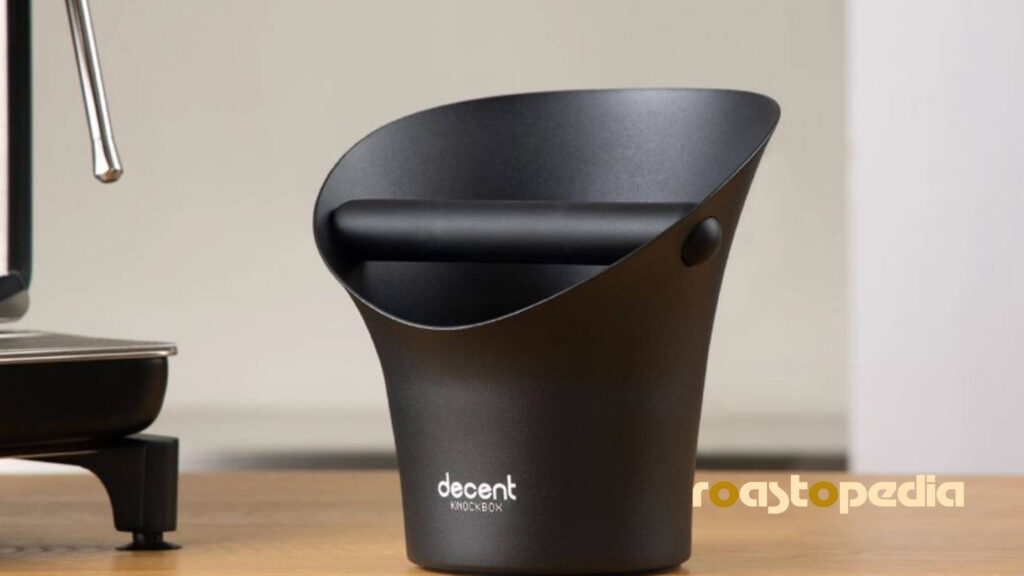
A knockbox is a specialized receptacle used in coffee preparation to facilitate the rapid and hygienic removal of spent espresso pucks from a portafilter. This container features a reinforced horizontal bar, often referred to as a “bash bar,” designed to absorb the impact of a handheld portafilter striking it. It serves as an essential logistical hub within both commercial and domestic espresso environments.
Origin & History
Manual disposal of coffee waste was a relatively informal process during the early decades of the Italian espresso tradition. Operators often emptied their filter baskets by shaking them over trash bins or using small spoons to scrape out the compressed grounds. These methods proved inefficient as the demand for high-speed service increased in the bustling urban cafes of Milan and Rome.
The evolution of the dedicated knockbox occurred in tandem with the rise of modern commercial bar layouts in the middle of the twentieth century. Manufacturers recognized that baristas required a stable, dedicated location to empty portafilters without moving away from the machine. This led to the development of integrated counter-top bins and under-grinder drawers that could withstand thousands of impacts per day.
Specialization in materials and acoustics has defined the modern history of the knockbox within the global specialty coffee movement. Early bins were often loud and could transmit vibrations through the entire service counter, causing noise pollution and structural wear. Contemporary designs prioritize noise-dampening rubbers and heavy-duty stainless steel to provide a quieter and more sustainable workstation.
Etymology
The term “knock” traces back to the Old English ‘cnocian,’ which means to strike a hard surface. Combining this action with the physical container created a functional name that is understood universally across the coffee industry.
Alternative titles like “bang box” or “bash bin” are frequently used in the United Kingdom, Australia, and New Zealand. These synonyms emphasize the forceful nature of the mechanical interaction required to dislodge a high-pressure coffee puck. Regardless of the specific dialect, the term identifies a tool designed to withstand repetitive physical trauma for the sake of efficiency.
Technical nomenclature in some manufacturing catalogs refers to the device as an “espresso waste drawer” or a “puck disposal unit.” These formal names are typically reserved for higher-end integrated systems that are built directly into the cabinetry of a professional coffee bar. Understanding these various designations helps navigate the procurement and design stages of a commercial cafe.
Professional Evolution
Technical standards for knockbox placement have become a primary focus for ergonomic consultants working in the specialty coffee industry. Placing the bin too far from the group head or at an incorrect height can lead to repetitive strain injuries for the barista. Modern bar designs often feature “cut-out” bins that sit flush with the counter to minimize the physical reach required during service.
Industrial innovation has introduced “automated” knockboxes that use motorized brushes or vibrating plates to clean the filter basket. These devices aim to reduce the physical impact on the barista’s arm and increase the lifespan of the portafilter handles. While increasingly popular in high-volume environments, many traditionalists still prefer the tactile feedback and reliability of a manual bash bar.
Sustainability initiatives are transforming the knockbox from a simple trash bin into a collection point for secondary agricultural resources. Many modern cafes partner with local composters or mushroom farmers who value the nitrogen-rich nature of spent coffee grounds. This shift highlights the role of the knockbox as the first step in a circular economy for coffee waste.
Engineering & Mechanics
Mechanical integrity of the striking bar represents the most critical engineering challenge in the design of a professional knockbox. The bar must be rigid enough to transfer the force required to break the vacuum seal of the coffee puck. However, it must also be covered in a high-grade rubber or silicone sleeve to protect the metal rim of the portafilter from dents and scratches.
Weight and stability are achieved through the use of heavy-gauge stainless steel or weighted bases that prevent the bin from sliding during use. Standalone bins often feature non-slip rubber feet that anchor the device to the counter even under heavy impact. This stability is essential for maintaining a clean and safe environment where the barista can work with confidence.
Acoustic dampening is achieved by isolating the striking bar from the main body of the box using specialized gaskets or dampers. This prevents the “drum effect” where the hollow container amplifies the sound of every strike across the room. Reducing the decibel level of the knockbox is a hallmark of a professional and well-curated cafe atmosphere.
Technical Responsibilities
Sanitation is the most important technical responsibility associated with the management of a knockbox in a commercial environment. Spent grounds are high in moisture and organic material, making them a perfect breeding ground for mold and bacteria if left unemptied. Most professional protocols require the bin to be emptied and sanitized several times throughout the business day.
Inspecting the striking bar for signs of wear and tear is a routine maintenance task that prevents damage to expensive portafilter handles. If the rubber sleeve becomes cracked or worn down to the metal core, it will lose its shock-absorbing properties. Replacing the sleeve is a simple and inexpensive way to protect the long-term health of the cafe’s brewing equipment.
Management of the “overflow point” is a logistical necessity for ensuring a smooth and uninterrupted workflow during peak hours. A full knockbox can cause coffee grounds to spray back onto the barista or the service counter, leading to a messy and unprofessional appearance. Maintaining a clear and empty disposal path is a primary indicator of an organized and efficient station.
Notable Facts
The average commercial knockbox can hold between fifty and one hundred spent coffee pucks before it requires emptying. High-volume urban cafes may generate several hundred pounds of waste per week, making the knockbox one of the busiest tools on the bar. Managing this waste stream effectively is a significant part of the hidden labor of coffee service.
Customized knockbox drawers are often built with integrated “ventilation holes” to allow steam and heat from the fresh pucks to escape. This prevents the buildup of condensation inside the drawer, which can lead to unpleasant odors and the rapid degradation of the metal components. Proper airflow is a subtle but vital feature of high-quality integrated disposal systems.
Some baristas use a “puck splitter” or a small internal wedge inside the knockbox to help break apart the compressed coffee as it falls. This prevents the spent pucks from stacking like coins, which maximizes the available space and allows for more shots before emptying. Small technical innovations like this continue to refine the efficiency of the modern espresso bar.
Related Concepts
Knockbox Drawer is a specialized version of the tool that sits directly underneath a coffee grinder or espresso machine. This design saves valuable counter space and provides a tidy look for the workstation. It is the preferred choice for many home baristas and boutique cafes where aesthetics and space are high priorities.
Bash Bar is the common industry name for the horizontal striking point located across the center of the knockbox. It is usually the only part of the device that requires regular replacement due to physical wear. A high-quality bash bar should feel firm but resilient, providing a satisfying “thud” rather than a metallic “ping.”
Spent Grounds refers to the waste material that is collected inside the knockbox after a shot of espresso is completed. While no longer useful for brewing, these grounds are highly valued for garden fertilizer, body scrubs, and industrial biofuels. The knockbox serves as the primary gateway for these materials to enter their next life cycle.