
Tamping is the mechanical process of compressing ground coffee into a compact, level puck within a filter basket. This action creates a uniform barrier that provides resistance to the high-pressure water used during espresso extraction. Proper execution of this step prevents uneven water flow and ensures a balanced flavor profile in the final cup.
Origin & History
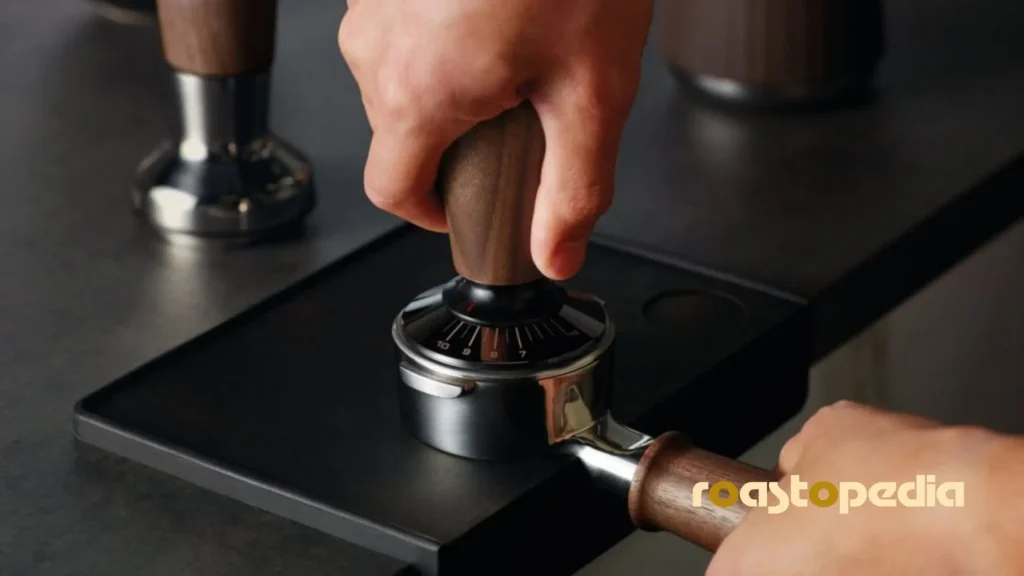
Manual compression of coffee grounds became a standard requirement with the invention of the vertical boiler espresso machine.
Early twentieth-century baristas used basic wooden or metal pistons to flatten the coffee bed before brewing. These primitive tools were often attached directly to the grinder or the machine itself for convenience.
Specialized handheld tampers gained popularity as the specialty coffee movement emphasized individual craft and precision.
Pioneers like David Schomer popularized the idea of a specific, repeatable pressure to ensure consistency across different shots. This era transformed tamping from a casual gesture into a highly debated technical skill.
Industrial innovation has recently introduced automated tamping devices that eliminate human physical variability entirely. Machines like the Puqpress can apply a perfectly level and consistent force across thousands of cycles without tiring.
Such advancements have significantly reduced the prevalence of repetitive strain injuries among professional coffee workers.
Etymology
The etymological roots of the word trace back to the Middle English ‘tampen,’ which means to drive in or pack down. It shares a common ancestor with the French ‘tamponner,’ referring to the act of plugging or stopping a hole. This historical context accurately describes the barista’s goal of sealing the filter basket to manage water pressure.
Global usage of the term remains consistent across both professional and domestic coffee brewing circles. It is almost exclusively used to describe the preparation of espresso rather than filter or immersion coffee. This linguistic specificity highlights the unique pressure requirements of the espresso brewing method.
Alternative terms like “compression” or “packing” are occasionally used in technical engineering contexts but rarely in the café. The word “tamper” refers specifically to the tool used, while “tamping” describes the action performed by the operator. Both terms are essential for any discussion regarding the mechanics of espresso extraction.
Professional Evolution
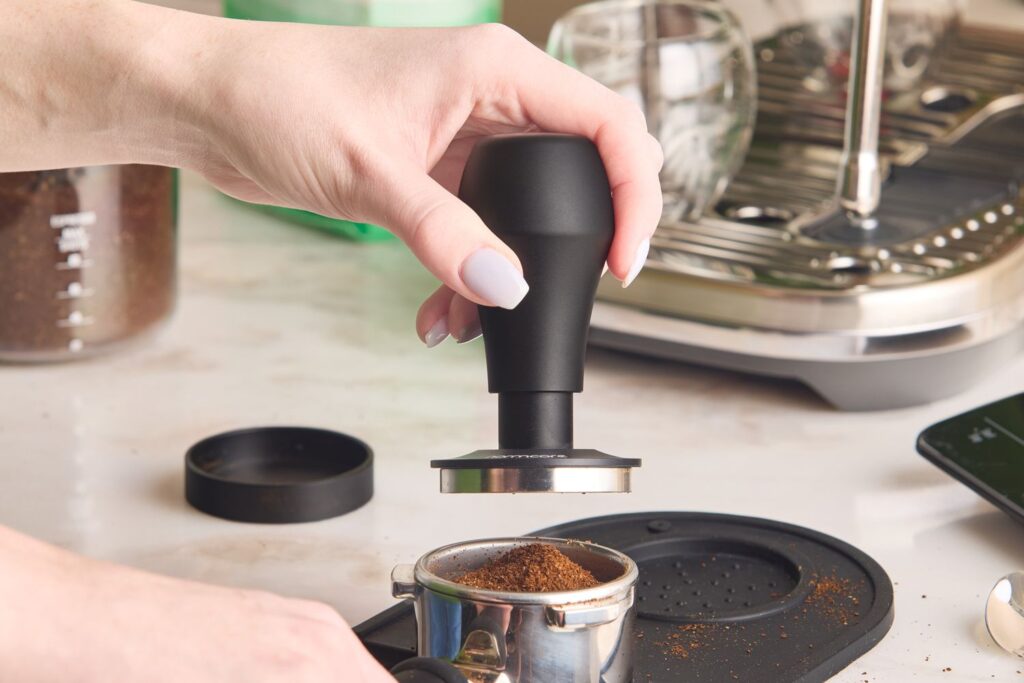
Technical standards for tamping have shifted away from sheer force toward the importance of a perfectly level surface. Modern research suggests that once the coffee is fully compressed, additional pressure does not significantly change the flow rate. Consequently, contemporary training focuses more on ergonomic alignment and visual levelness.
Distribution tools have become a vital prerequisite to the tamping process in many high-end specialty cafés. These devices ensure that the coffee grounds are spread evenly across the basket before any vertical pressure is applied. Combining distribution and tamping minimizes the risk of structural weak points within the coffee puck.
Ergonomic design has become a primary focus for manufacturers of professional tamping equipment. Heavy, stainless steel bases and custom-fitted handles allow baristas to apply pressure without straining their wrists or shoulders. This evolution reflects a growing industry-wide concern for the long-term health and sustainability of the workforce.
Technical Responsibilities
Maintaining a perfectly horizontal coffee bed is the most important technical goal during the tamping process.
If the puck is even slightly tilted, the brewing water will naturally rush toward the lower side where there is less resistance. This uneven flow, known as channeling, leads to a mixture of over-extracted and under-extracted flavors.
Pressure consistency allows a barista to isolate other brewing variables like grind size and dose weight. Most professionals aim for enough force to remove all air pockets and achieve full compaction of the grounds.
While the exact poundage is often debated, repeatability remains more important than the specific amount of force used.
Cleaning the edges of the filter basket after tamping is a non-negotiable step for maintaining equipment health.
Stray grounds left on the rim can damage the rubber gasket of the espresso machine and cause leaks during extraction. A clean portafilter ensures a perfect seal and a professional presentation for every guest.
Sensory Requirements
Identifying the tell-tale signs of channeling through taste is a core skill for any professional coffee evaluator. A channeled shot often exhibits a sharp, salty acidity paired with a hollow and watery body. These sensory defects indicate that the tamping or distribution was unsuccessful in creating a uniform coffee bed.
Visual inspection of the spent coffee puck provides valuable feedback on the quality of the tamping technique. Small holes or cracks in the surface of the puck suggest that water found a path of least resistance during the brew. Skilled baristas use these visual cues to refine their physical movements for subsequent shots.
Consistency in mouthfeel is a primary sensory indicator that the tamping process is being executed correctly. A well-tamped shot will have a creamy, syrupy texture that remains stable across multiple orders throughout a shift. Sudden changes in the weight of the liquid on the tongue often signal an issue with puck integrity.
Physics of the Puck
Water follows the path of least resistance as it is forced through the coffee bed under high pressure. If the tamping process leaves any gaps or loose areas, the water will bypass the majority of the grounds. This phenomenon prevents the full extraction of desirable oils and sugars from the coffee.
Compaction reaches a point of diminishing returns once the air between the grounds has been eliminated. Scientific tests have shown that tamping at thirty pounds of pressure produces nearly identical flow rates to tamping at twenty pounds. The primary function of the force is to ensure the puck can withstand the initial impact of the brewing water.
Adhesion between the coffee grounds and the walls of the filter basket is critical for preventing side-channeling. A properly sized tamper should fit the basket with minimal clearance to ensure the edges are fully compressed. This tight seal forces the water to move vertically through the coffee rather than around it.
Notable Facts
Custom tampers can be manufactured to match the exact diameter of a specific filter basket down to a tenth of a millimeter. These precision tools maximize the surface area of the coffee bed that is effectively compressed during preparation. Such attention to detail is a hallmark of the highest levels of specialty coffee service.
Dynamic tamping machines can now simulate the exact physical feel of a manual tamp while maintaining robotic precision. These devices allow café owners to maintain a consistent flavor profile even when employing baristas with different experience levels. They have become a standard feature in high-volume environments where speed and quality are both required.
International Barista Championship rules once strictly mandated a specific tamping pressure, but these requirements have since been relaxed. Modern judges focus more on the result in the cup and the overall efficiency of the workflow. This change acknowledges that there are many valid ways to achieve a high-quality extraction.
Related Concepts
Headspace refers to the small gap between the top of the coffee puck and the shower screen of the espresso machine. If the coffee is overdosed or under-tamped, the puck may expand and press against the screen, causing a messy extraction. Managing this physical space is essential for a clean and consistent brewing cycle.
Polishing is the optional act of spinning the tamper on top of the compressed puck to create a smooth, shiny finish. While aesthetically pleasing, many experts argue that this step does not significantly improve the quality of the extraction. It remains a common stylistic flourish for baristas who value a traditional presentation.
Tamping mats protect the surface of the service counter and provide a stable base for the portafilter during compression. These heavy rubber pads prevent the portafilter from slipping and potentially injuring the operator. They are an essential piece of auxiliary equipment for any professional espresso workstation.