
Barista is the professional title for a specialist trained in the preparation and service of diverse coffee beverages. This individual possesses a mastery of extraction science, milk chemistry, and customer hospitality within a café or commercial setting.
Their work serves as the final link in the coffee production chain between the roaster and the consumer.
Origin & History

The modern definition of the barista emerged during the early twentieth century alongside the invention of the espresso machine in Italy. Luigi Bezzera and Desiderio Pavoni pioneered these high-pressure devices, which required dedicated operators to manage steam and water flow. These early pioneers transformed coffee preparation from a simple culinary task into a technical performance.
Italian coffee houses became the central stage for these skilled workers as the espresso culture expanded across Europe. Professionalism in the role increased as mechanical improvements allowed for more consistent shot extraction and milk steaming. The term itself gained international recognition as the espresso-based menu became a global standard for premium coffee service.
Expansion into the North American market during the late twentieth century further refined the identity of the barista. Companies like Starbucks popularized the title and the specific drink recipes associated with Italian espresso culture. This era saw the transition of the role from a general service worker to a specialized craftsperson.
Etymology
The etymological roots of the word trace back directly to the Italian noun for a male or female bartender. It is derived from the word ‘bar,’ which refers to the counter where beverages are served to customers. The suffix ‘-ista’ denotes a person who practices a specific craft or belongs to a certain profession.
In its native Italy, the term remains gender-neutral and applies to any person serving behind a counter. This includes individuals who serve alcoholic drinks, snacks, and various non-coffee beverages. The distinction between a coffee specialist and a general bartender is often contextual within Italian culture.
Global adoption of the word has narrowed its meaning to focus exclusively on coffee professionals. Most English-speaking countries use the term to describe someone who operates an espresso machine. This linguistic shift reflects the specialization of the coffee industry over the past several decades.
Professional Evolution
Technical standards for the role shifted significantly with the rise of the specialty coffee movement. Practitioners began to focus more on the scientific variables of extraction, such as water temperature and particle size. This period elevated the position from a transitional job to a respected career path.
Competitions such as the World Barista Championship have institutionalized these high professional standards since the year 2000. These events require competitors to demonstrate extreme precision in sensory evaluation and technical execution. Such rigorous testing has fostered a global community of experts dedicated to advancing coffee quality.
Modern baristas often engage in continuous education regarding coffee botany, roasting profiles, and chemical analysis. They act as educators for the public by explaining the nuances of different origins and processing methods. This educational component ensures that the value of the entire supply chain is communicated to the end user.
Technical Responsibilities
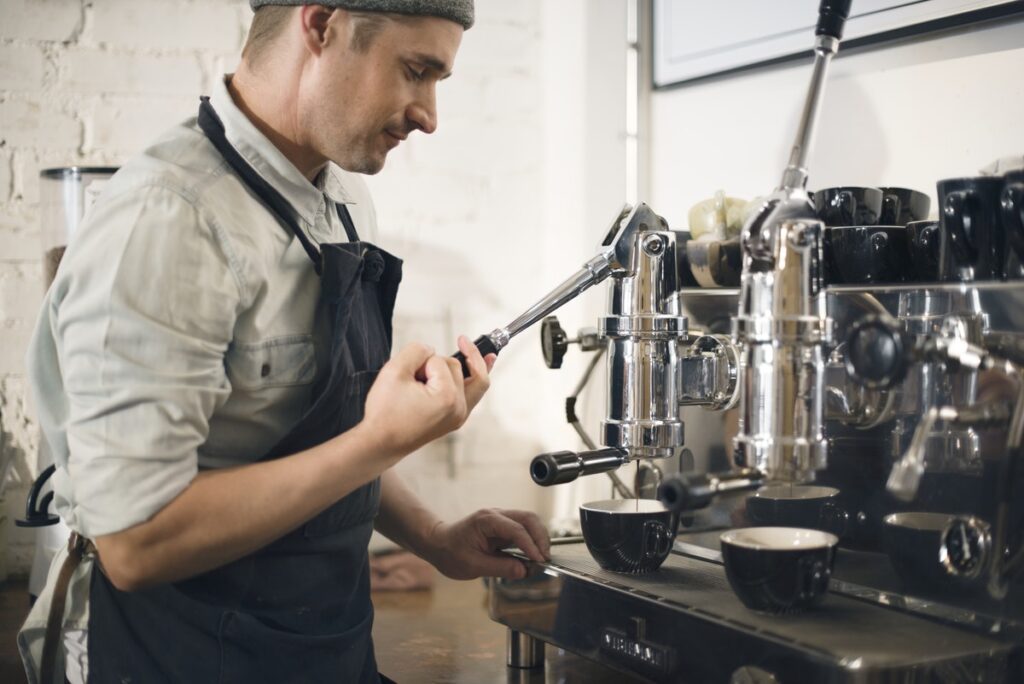
Primary duties involve espresso grinder calibration to account for daily changes in humidity and temperature. A barista must adjust the grind size and dose weight to ensure that the coffee extracts within specific parameters. This process, known as “dialing in,” is essential for maintaining flavor consistency throughout the service day.
Milk texturing represents another critical technical skill required for professional coffee preparation. The operator must manipulate steam to create microfoam, which is a stable suspension of air bubbles within milk fats. High-quality microfoam allows for the creation of latte art and provides a creamy mouthfeel for the beverage.
Maintenance of the espresso machine and surrounding equipment is a non-negotiable part of the daily workflow. Regular cleaning prevents the buildup of rancid coffee oils and mineral scale that could ruin the flavor of the brew. A clean workspace ensures both the longevity of the expensive machinery and the safety of the product.
Sensory Requirements
Palate development is a foundational requirement for any person aspiring to reach the elite levels of the profession. Baristas must be able to identify defects in a shot of espresso, such as over-extraction or under-extraction. They use this sensory feedback to make real-time adjustments to their brewing recipes.
Balance between acidity, sweetness, and bitterness is the ultimate goal of the extraction process. Specialists learn to recognize how different roast levels and bean varieties respond to various water chemistries. This sensitivity allows them to maximize the unique characteristics of every coffee they serve.
Fragrance and aroma evaluation provide the first indicators of coffee quality during the brewing process. A skilled professional can detect the subtle notes of fruit, chocolate, or spices that define a specific origin. Sharing these sensory experiences with customers helps build a deeper appreciation for the beverage.
The Barista in Modern Culture
Contemporary society views the barista as a cultural figure who bridges the gap between artisan and service provider. They often curate the atmosphere of a neighborhood, providing a sense of community through daily interactions. This social role is as important as the technical skill used to prepare the drinks.
Digital platforms have further amplified the visibility of the profession through the sharing of latte art and brewing tutorials. This visibility has inspired a new generation of coffee enthusiasts to seek professional training and certification. Consequently, the standards for entry into the specialty coffee industry continue to rise.
Sustainability and ethical sourcing have become central themes in the modern barista’s professional identity. Many practitioners advocate for fair wages for farmers and environmentally friendly practices within the café. Their influence helps drive consumer demand toward more responsible and high-quality coffee production.
Notable Facts
International Barista Day is celebrated annually on March 1st to honor the contributions of these professionals to the global economy. This day highlights the labor-intensive nature of coffee preparation and the skill required to master it. Many cafés host special events and educational workshops to mark the occasion.
Certification programs from organizations like the Specialty Coffee Association provide formal recognition of technical proficiency. These credentials verify that a professional has mastered the standards for brewing, sensory analysis, and green coffee knowledge. Such certifications are increasingly required for leadership roles within the industry.
Innovations in automation have introduced new tools that assist but do not replace the human element of coffee service. Machines can now handle repetitive tasks like milk steaming or tamping with incredible precision. This allows the human operator to focus more on customer engagement and sensory quality control.