
Melanoidins are high-molecular-weight, nitrogenous brown polymers formed as the final products of the Maillard reaction during the thermal processing of coffee seeds. These complex macromolecular structures define the fundamental physical and chemical identity of roasted coffee by providing its characteristic deep pigmentation and structural viscosity.
Within the framework of organic chemistry, they are identified as heterogeneous macromolecules that integrate proteins, polysaccharides, and phenolic compounds into a stable polymeric matrix. Their presence is the technical prerequisite for the development of body, mouthfeel, and the stabilization of emulsions in the final beverage.
Origin & History
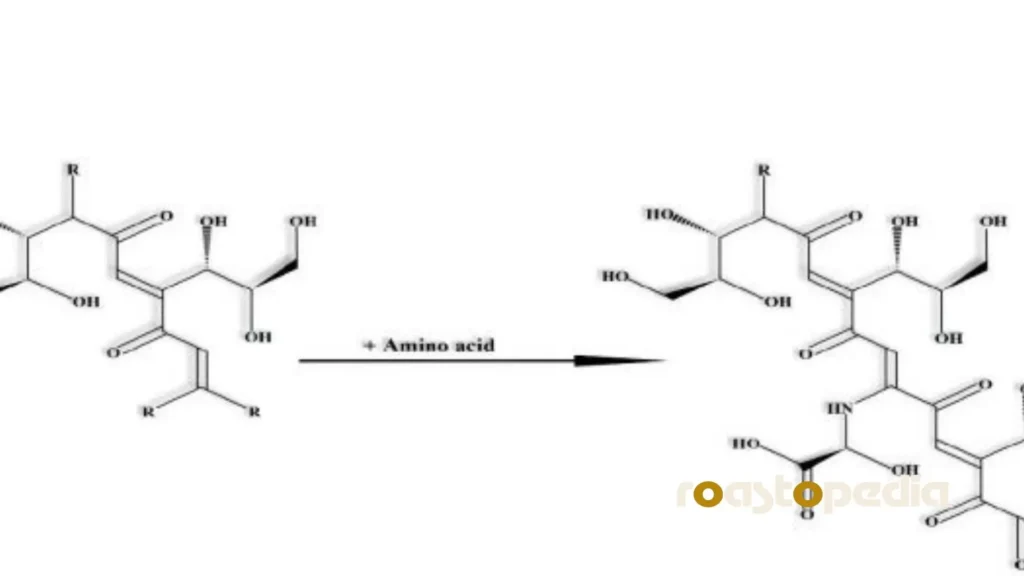
The scientific recognition of the browning processes that lead to melanoidin formation began with the pioneering work of French chemist Louis Camille Maillard in 1912. Maillard initially investigated the interaction between amino acids and reducing sugars to understand protein synthesis, but his discoveries laid the foundation for modern food science.
While the general phenomenon of food browning had been observed for millennia, the specific isolation of these polymers in coffee required the advancement of high-precision analytical chemistry in the mid-twentieth century. Early coffee researchers focused primarily on volatile aromatics, often overlooking the non-volatile polymeric mass that constitutes a significant portion of the roasted bean’s weight.
Systematic analysis of coffee-specific melanoidins gained momentum as industrial roasters sought to standardize the visual and tactile qualities of their products. During the 1950s and 1960s, researchers began to distinguish between simple caramelization products and the more complex nitrogen-containing polymers that define coffee. These studies revealed that coffee roasting produces a unique class of melanoidins due to the high concentration of chlorogenic acids in the raw seeds.
The integration of these acids into the polymeric structure was identified as a distinct chemical event that separates coffee chemistry from the browning reactions observed in malted grains or baked goods.
The contemporary history of melanoidin research is characterized by a focus on the physiological and structural benefits of these compounds. Late twentieth-century studies pivoted toward the antioxidant properties of roasted coffee, identifying melanoidins as the primary source of radical-scavenging activity. This transition moved the technical understanding of the compound from a mere coloring agent to a functional health component.
In the current era of specialty coffee, the historical emphasis on “darkness” has been replaced by a sophisticated understanding of how these polymers interact with water during Extraction to create specific mouthfeel profiles.
Etymology
Lexical roots of the term trace back to the Greek word ‘melas,’ which translates to “black” or “dark,” combined with the suffix ‘-oeides,’ meaning “resembling” or “having the appearance of.” This linguistic construction was adopted by early chemists to describe the dark, often amorphous pigments resulting from the degradation of organic matter.
The term serves as a broad taxonomic umbrella for any brown-colored, nitrogenous polymer formed through non-enzymatic browning. In scientific literature, it specifically distinguishes these complex macromolecules from simpler carbonized materials or pure sugars.
Usage of the word within the coffee industry specifically identifies the polymers formed during the transition from the Drying Phase to the browning phase of a roast. It provides a technical alternative to subjective descriptors like “roastiness” or “color intensity,” allowing for a more precise discussion of chemical development. Professional roasters use the term to categorize the non-volatile compounds that contribute to the Aftertaste and body of the beverage. This precision is essential for differentiating between the results of the Maillard reaction and those of Pyrolysis.
Linguistic precision in the classification of melanoidins helps researchers categorize the different stages of polymer complexity. Smaller, lower-molecular-weight precursors are often discussed as “intermediate Maillard products,” while the term melanoidin is reserved for the fully developed polymeric network. This distinction is critical when analyzing the Coffee Roast Level and its impact on solubility. By identifying these compounds by their correct technical name, the industry maintains a standard vocabulary that links the chemical laboratory to the Cupping table.
Professional Evolution
Technical understanding of melanoidins has evolved from a focus on visual aesthetics to a deep mastery of physical body and mouthfeel. In the early stages of commercial roasting, the production of dark polymers was primarily used as a marker for consistency and the masking of lower-quality raw material.
Modern Roaster operators now manipulate heat application to specifically target the molecular weight of these polymers. This evolution has turned the management of the Rate of Rise (RoR) into a tool for fine-tuning the tactile density of the brewed beverage.
The rise of the Espresso culture significantly accelerated the professional interest in melanoidin chemistry. Baristas and engineers recognized that these polymers were the secret to creating a stable Crema, which is the defining visual characteristic of the drink. This realization prompted the development of high-pressure extraction equipment designed to maximize the surfactant properties of these compounds. As a result, the professional specialist today is as concerned with the structural integrity of the polymers as they are with the flavor notes on the Coffee Flavor Wheel.
Advanced certification programs, such as those for the Q-Grader, now include rigorous training on identifying the sensory hallmarks of melanoidin development. This professional evolution ensures that the evaluation of coffee quality is grounded in an understanding of chemical maturity rather than personal preference.
Specialists are trained to recognize the metallic bitterness and heavy viscosity associated with over-developed melanoidins versus the thin, acidic profile of under-developed samples. This analytical approach has elevated the status of the coffee professional to that of a technical expert in food polymer science.
Technical Responsibilities
Managing the thermal profile to ensure the correct concentration of melanoidins is the primary responsibility of a production roaster. This task requires a precise balance between time and temperature to allow the Maillard reaction to proceed without crossing into excessive Pyrolysis. Extending the browning phase can increase the complexity of the polymers, providing a more robust body in the cup. However, maintaining high heat for too long can lead to the carbonization of these structures, resulting in an unpleasantly ashy flavor profile.
Quality control technicians utilize colorimetric tools and Agtron scales to verify the degree of melanoidin formation across different batches. This technical responsibility ensures that every shipment meets the specific color benchmarks required for a particular product line. Beyond simple color matching, these professionals must also account for the density and moisture content of the Arabica Coffee or Robusta Coffee being processed. Different species and cultivars react uniquely to heat, necessitating frequent adjustments to the roasting protocol to maintain a consistent polymeric output.
In the retail environment, the Barista is responsible for adjusting Extraction parameters to suit the melanoidin content of the roast. For instance, coffees with a high concentration of developed polymers are more porous and extract more quickly. This requires a coarser grind and a lower water temperature to prevent over-extraction of the more bitter, highly carbonized molecules. Conversely, light-roasted coffees with less developed melanoidins require finer grinding and higher heat to pull sufficient material from the denser cellular matrix.
Sensory Requirements
Perceiving the weight and viscosity of a beverage is the foundational sensory requirement for evaluating melanoidin quality. A professional taster focuses on the tactile sensation on the tongue, often described as the “body” of the coffee.
High-quality melanoidin formation results in a smooth, velvety texture that lingers in the mouth without being cloying. This sensory experience is distinct from the brightness of Coffee Acidity and provides the structural balance necessary for a harmonious profile.
Visual evaluation of the roasted bean surface provides immediate clues about the chemical state of the polymers. A matte appearance suggests that the melanoidins are integrated into the internal cellulose structure, while a glossy, oily surface indicates that advanced thermal degradation has caused the lipids to break through the cell walls.
Sensory experts use these visual markers to predict the solubility and mouthfeel of the sample before the first sip is taken. This ability to link visual evidence to sensory outcomes is a hallmark of professional expertise in the field.
Identifying the specific bitterness associated with melanoidins is another critical sensory skill. While some bitterness is expected and desirable, an “ashy” or “charred” bitterness signals that the polymers have begun to carbonize during Second Crack.
This defect is technically different from the bitterness caused by over-extraction or poor Calibration of brewing equipment. A trained palate can isolate these chemical nuances, providing essential feedback to the roasting team to refine the thermal profile for future batches.
The Science of the Brew
Diffusion acts as the primary mechanical force that releases melanoidins from the roasted coffee grounds into the water. These polymers are highly soluble and are among the first high-molecular-weight compounds to migrate from the bean to the liquid.
Their presence in the extract significantly increases the viscosity of the solvent, creating the characteristic “thickness” of the brew. This physical change in the liquid is essential for the sensory perception of body and weight that consumers expect from a premium cup.
Surfactant properties of melanoidins allow them to act as stabilizers for the gases and oils present during the brewing process. This is particularly evident in the formation of crema, where the polymers coat the carbon dioxide bubbles released during the Degassing phase.
By lowering the surface tension of the water, melanoidins prevent these bubbles from collapsing, creating a persistent and stable foam. This structural role is a pure application of fluid dynamics and emulsion science within the context of coffee preparation.
Total Dissolved Solids (TDS) measurements are heavily influenced by the concentration of melanoidins in the beverage. Because these polymers constitute a large portion of the soluble mass, their extraction efficiency directly impacts the strength of the final drink.
Professional brewers use refractometers to verify that the target extraction yield has been achieved, ensuring that the mouthfeel is neither thin nor excessively heavy. This scientific approach ensures that the physical potential created during the roasting process is fully realized in the customer’s cup.
Notable Facts
Approximately twenty-five percent of the total dry weight of a dark-roasted coffee bean can consist of melanoidins. This makes them one of the most abundant classes of chemical compounds in the roasted product, second only to the structural cellulose itself.
Their mass contribution is significantly higher in Robusta Coffee compared to Arabica, which accounts for the generally heavier body found in Robusta-based blends. This technical difference is a key consideration when formulating recipes for commercial espresso applications.
Antioxidant capacity of coffee is largely attributed to the presence of melanoidins formed during the roasting cycle. These polymers possess the ability to trap free radicals and inhibit lipid peroxidation, providing significant protective benefits.
Scientific research has indicated that the radical-scavenging activity of coffee actually increases as the roast progresses toward medium levels, peaks, and then slowly declines as the beans enter the carbonization stage. This finding challenges the traditional assumption that lighter roasts are inherently “healthier” than their more developed counterparts.
Melanoidins also possess documented antimicrobial and anti-inflammatory properties that contribute to the overall health profile of the beverage. They have been shown to inhibit the growth of certain pathogens in the oral cavity and may act as a form of dietary fiber that promotes healthy gut flora.
These biological functions are a direct result of the complex heterocyclic structures created during the Maillard reaction. By documenting these facts, the industry can better communicate the technical and nutritional value of the product to a more informed consumer base.
Related Concepts
Chemical precursors to melanoidin formation are primarily studied within the framework of the Maillard reaction and Strecker degradation. These intermediate steps are responsible for generating the reactive molecules that eventually polymerize into the final brown pigments.
Understanding the relationship between these reactions allows for a complete narrative of how flavor and body are developed simultaneously. This knowledge is essential for any professional looking to master the art of roast profiling.
Physical behavior of the bean during the roasting cycle is marked by critical milestones such as First Crack and Second Crack. These events are the audible signals that the internal pressure of gases and steam has overcome the physical integrity of the cellular walls.
The expansion of the bean during these stages facilitates the later extraction of melanoidins by increasing the surface area and porosity of the material. Therefore, the mechanical structural changes and the chemical polymeric changes are two sides of the same technical coin.
Extraction efficiency is also dependent on the maintenance and cleanliness of the brewing equipment. Concepts such as Backflushing and the regular cleaning of the Shower Screen ensure that the pathways for the liquid remain unobstructed.
Accumulated coffee oils and old polymers can create off-flavors that mask the clean, sweet profile of freshly developed melanoidins. Proper technical hygiene is thus a prerequisite for anyone wishing to showcase the true chemical potential of a high-quality roast.