
Doppio, Espresso Doppio, or colloquially recognized as the “double shot,” is a beverage defined by the simultaneous extraction of two portions of Espresso from a single Portafilter basket. In the taxonomy of coffee preparations, the Doppio serves as the functional standard for modern Specialty Coffee service, largely displacing the traditional single shot in professional environments.
It is characterized by a specific technical relationship between Dose, Yield, and Extraction Time, designed to produce a highly concentrated liquid with a complex chemical profile.
Unlike the single shot, which historically utilized 7 grams of coffee, the Doppio utilizes a larger volume of grounds to achieve a more balanced and consistent extraction, minimizing the structural vulnerabilities often found in smaller coffee pucks.
What is a Doppio Espresso?
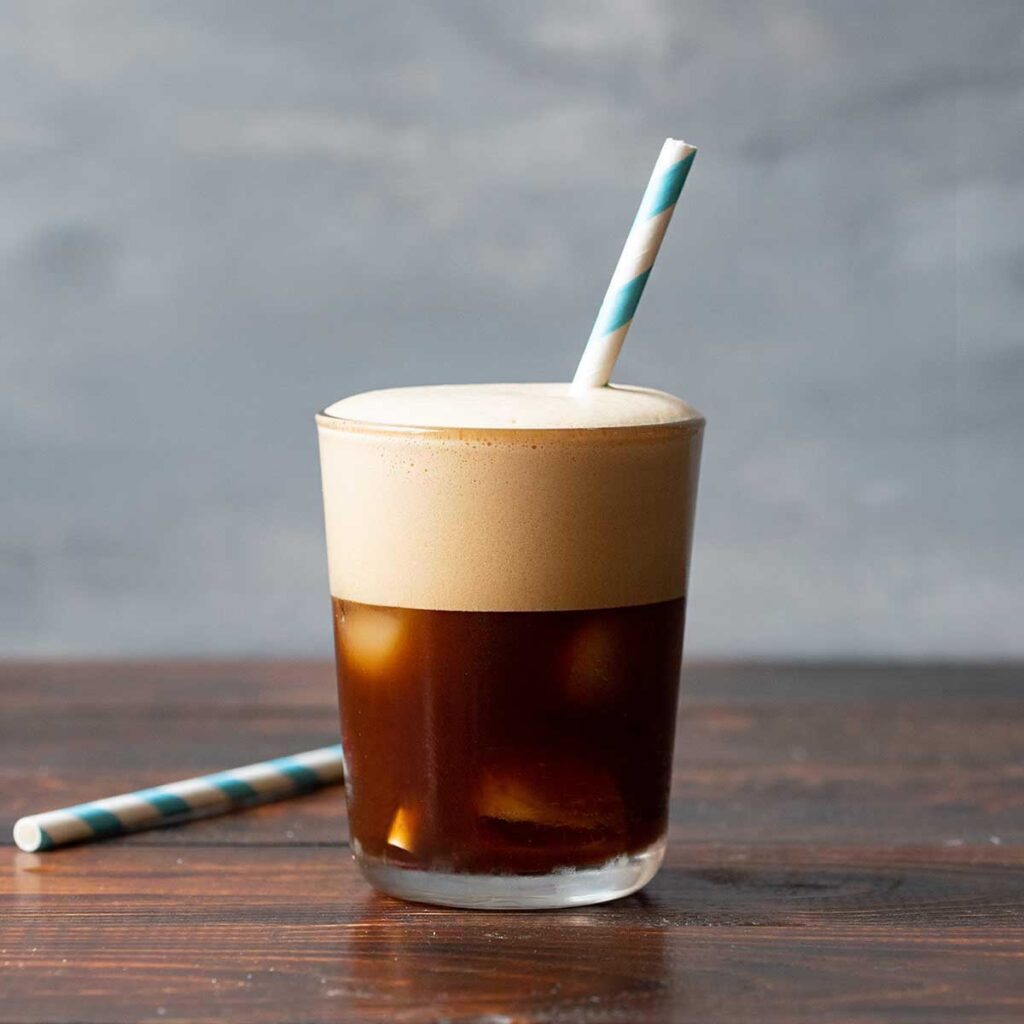
Doppio Espresso is a technical term of Italian origin, translating literally to “double coffee.” It consists of two shots of Espresso extracted through a double-spouted Portafilter or into a single vessel from a double-sized basket.
The beverage is defined not merely by its volume, but by its Brewing Ratio, which typically adheres to a 1:2 ratio of dry grounds to liquid output. For example, a modern Doppio might involve an 18-gram Dose producing a 36-gram Yield.
This relationship ensures that the Total Dissolved Solids (TDS) and Extraction Yield remain within the parameters of a balanced sensory experience, avoiding both the under-extraction of a short brew and the over-extraction of a long brew.
History and Origin
Espresso Doppio emerged as a distinct category alongside the development of the Espresso Machine in early 20th-century Italy. While the first steam-driven machines produced large quantities of coffee, the invention of the spring-lever machine by Achille Gaggia in 1947 allowed for the pressurized extraction of smaller, more concentrated portions.
Initially, the “normale” or single shot was the industry standard, typically requiring 7 grams of ground coffee. As coffee culture expanded and demand for larger, more intense beverages grew, the Doppio was formalized to provide a consistent way to serve double the quantity without diluting the strength.
The adoption of the Doppio as the global standard accelerated during the Second Wave Coffee movement in the 1970s and 1980s.
During this period, international coffee chains began using the double shot as the base for larger milk-based drinks like the Latte and Cappuccino. In the subsequent Third Wave Coffee movement, the Doppio became the preferred method for evaluating the quality of Single-Origin beans.
Professionals found that the larger Portafilter baskets required for a Doppio provided a more stable environment for extraction, leading to fewer channeling issues and a more reproducible flavor profile than the shallower single-shot baskets.
Preparation
The preparation of an Espresso Doppio is a high-precision process involving the management of several technical variables. It begins with the selection of a double Portafilter basket, which is designed to hold between 14 and 22 grams of finely ground coffee.
The Dose must be distributed evenly and compressed with a Tamper to create a level, high-density coffee puck. This puck acts as a resistance barrier when hot water is forced through it at a pressure of approximately 9 Bars.
The goal is to achieve an Extraction Time of 25 to 30 seconds, during which the water dissolves the coffee’s soluble solids, lipids, and gases.
Technical standards set by organizations such as the Specialty Coffee Association (SCA) emphasize the importance of water chemistry and temperature stability during the preparation of a Doppio. The water should be heated to between 90°C and 94°C to ensure optimal dissolution of the coffee’s aromatic compounds.
If the extraction is too fast, the resulting liquid will be sour and thin (under-extracted); if it is too slow, it will be bitter and astringent (over-extracted). A successful Doppio is characterized by a thick, persistent layer of Crema on the surface, which contains the concentrated oils and carbon dioxide that contribute to the drink’s aroma and mouthfeel.
Ingredients
Ingredients for an Espresso Doppio are restricted to roasted coffee beans and filtered water. The choice of Coffee Roast significantly impacts the chemical composition of the final shot. Darker roasts often yield a higher TDS due to the increased porosity of the bean structure, resulting in a more viscous and chocolatey profile.
Conversely, lighter roasts maintain more of the bean’s original acids and sugars, requiring a more precise Grind Size to achieve a balanced extraction. The water used must be filtered to remove chlorine and balanced in mineral content, as magnesium and calcium ions play a functional role in binding to the coffee’s flavor molecules during extraction.
From a chemical perspective, the Doppio contains a high concentration of Caffeine and Chlorogenic Acids, but its hallmark is the emulsion of insoluble oils. These oils are forced out of the coffee cells by the high pressure of the machine and suspended in the liquid.
When the Doppio is served, these oils trap aromatic gases, creating the sensory experience of the Crema. Because the Doppio uses a larger Dose than a single shot, it provides a more robust chemical “buffer,” making the final flavor less susceptible to minor variations in water temperature or pressure.
Variations
Variations of the Espresso Doppio are primarily defined by the volume of water used during extraction. A Doppio Ristretto uses the same 14–20 gram Dose but restricts the Yield to a 1:1 ratio, resulting in an exceptionally thick, syrupy liquid with intense sweetness and low acidity.
Conversely, a Doppio Lungo extends the extraction to a 1:3 or 1:4 ratio, providing a larger volume and a more developed flavor profile, though often at the risk of increased bitterness.
In some regions, the Doppio is also served as a Café Touba or other culturally specific preparations that incorporate spices or local roasting techniques.
In modern specialty cafes, the “split shot” is a common variation where a Doppio is extracted into two separate cups, effectively serving as two single shots. This is often done to ensure that each “single” is produced with the technical stability of a double-sized basket.
Another variation is the Triple Shot, which utilizes even larger baskets (21–24 grams), though this is less common in traditional Italian service. The Iced Doppio is another frequent variation, where the double shot is pulled directly over ice to preserve the volatile aromatics before they can dissipate into the air.
Flavor Profile
The flavor profile of an Espresso Doppio is a concentrated representation of the coffee’s terroir and roasting style. It is characterized by a high degree of “body” or tactile weight on the tongue, often described as creamy or buttery.
The initial sensory impact is usually a combination of intense sweetness and balanced acidity, followed by a long, lingering finish. Because the Doppio contains a higher volume of liquid than a single shot, the cooling process is slower, allowing the drinker to experience the flavor evolution as the temperature drops.
In a professional Cupping or tasting context, the Doppio is evaluated for its clarity and balance. A high-quality double shot should not be overwhelmingly bitter; instead, it should exhibit a range of tasting notes such as dark berries, toasted nuts, or caramel.
The Crema provides a specific textural component, adding a slight bitterness that balances the sweetness of the underlying liquid. If the Doppio exhibits “ashy” or “medicinal” notes, it is typically a sign of over-extraction or poor-quality green coffee.
Related Drinks
- Espresso: The standard single shot (7–9g) from which the Doppio is derived.
- Ristretto: A “restricted” shot with a lower water-to-coffee ratio.
- Lungo: A “long” shot with a higher water-to-coffee ratio.
- Caffè Macchiato: An espresso shot “marked” with a small amount of milk foam.
- Cortado: A double shot balanced with an equal volume of steamed milk.
- Americano: A double shot diluted with hot water to increase volume.
References
- Specialty Coffee Association (SCA). (2024). “Espresso Preparation Standards: Dose, Yield, and Temperature.”
- Gaggia Milano. (2022). “The History of the Lever Machine and the Evolution of Crema.”
- Scott Rao. (2020). “The Professional Barista’s Handbook: Technical Extraction in Modern Espresso.” https://www.scottrao.com/blog/2020/2/4/how-to-choose-a-dose-and-brewing-ratio
- Penningtons Tea & Coffee. (2024). “Italian Coffee: History, Culture & Types.” https://penningtonscoffee.co.uk/italian-coffee-history-culture-types/
- Espresso Outlet. (2025). “Extraction Yield in Espresso: A Comprehensive Overview.” https://espressooutlet.com/blogs/blog-articles/extraction-yield-in-espresso-a-comprehensive-overview