
Piloncillo Coffee, universally recognized as Café de Olla, originated in Mexico during the early 20th century. The beverage rose to prominence between 1910 and 1920, aligning with the temporal landscape of the Mexican Revolution.
Historical accounts credit the Adelitas—women who served as soldiers, cooks, and caretakers—with the drink’s creation. Faced with the necessity of providing sustained energy and thermal comfort to revolutionary troops, these women utilized locally accessible ingredients to transform bitter coffee into a high-calorie stimulant.
The inclusion of unrefined cane sugar and warming spices served a dual functional purpose: masking the harshness of low-grade beans and providing a significant glucose boost for soldiers in the field.
Etymology
The name is derived from its two defining components: piloncillo, the unrefined sugar used for sweetening, and the olla de barro (clay pot) in which it is traditionally brewed. The term piloncillo itself translates to “little pylon” or “small cone,” referencing the conical molds used to shape the sugar during production.
Apparatus Description
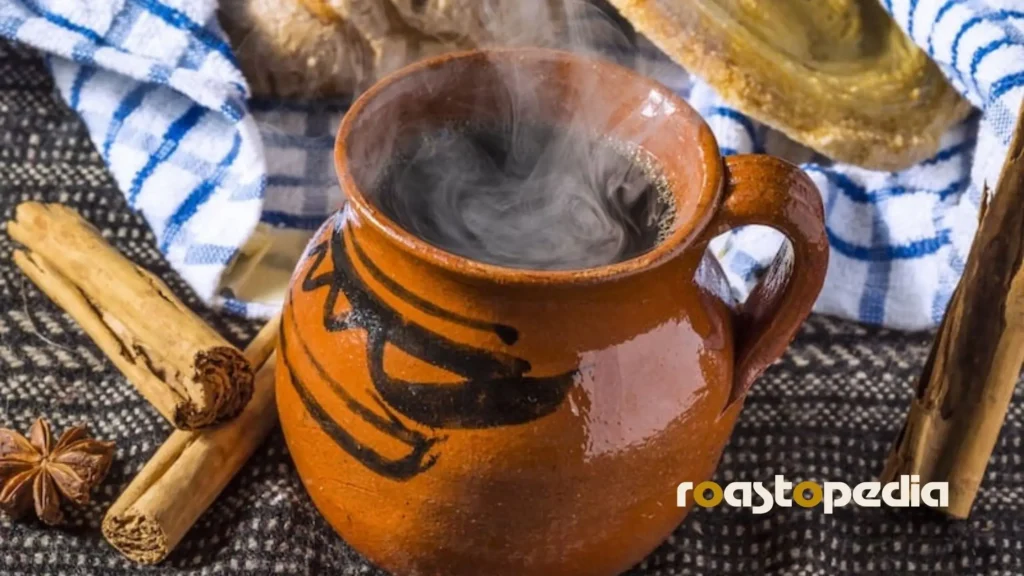
The primary apparatus for extraction is the olla de barro, a deep, wide-mouthed vessel fashioned from kiln-fired clay. Unlike metallic or glass containers, the porous nature of the earthenware interacts with the liquid during the simmering process.
The clay acts as a thermal regulator, distributing heat evenly and slowly, which prevents the spices from scorching. Over time, these pots undergo a “seasoning” process where the clay absorbs the oils of the coffee and the essence of the cinnamon, contributing to a cumulative flavor profile that evolves with the age of the vessel.
Modern variations sometimes utilize peltre (enamelware), though the thermal and mineral properties of the clay remain the traditional standard.
Extraction Narrative
Extraction occurs through a slow simmering method rather than high-pressure filtration. The process begins by boiling water in the clay pot alongside piloncillo and whole cinnamon sticks. Once the piloncillo—which possesses a dense, rock-like consistency—has completely dissolved and the cinnamon has released its essential oils, the heat is reduced.
Medium-to-coarse ground coffee is then integrated into the spiced syrup. The mixture is allowed to steep without reaching a second boil, a critical step that prevents the release of excessive tannins and bitterness.
After several minutes of infusion, the solids are strained through a fine mesh or cloth, though some traditional preparations allow the grounds to settle naturally at the base of the pot.
Sensory Output
The sensory profile is characterized by a high degree of viscosity and a complex sweetness. Unlike refined white sugar, piloncillo retains high concentrations of molasses, imparting notes of burnt caramel, smoke, and earth.
The aroma is dominated by the volatile organic compounds of Cinnamomum cassia, which provide a sharp, woody, and sweet olfactory entrance.
On the palate, the coffee provides a heavy mouthfeel with low acidity, balanced by the capsaicin-like warmth of the cinnamon and, in some regional variations, the subtle licorice notes of star anise or the pungent depth of cloves.
Flavor Composition
The chemical composition of the drink is a synergy of sucrose, minerals, and essential oils. Piloncillo provides iron, calcium, and magnesium, which are absent in refined sugars.
The primary flavoring agent, cinnamon, contributes cinnamaldehyde, while the optional addition of cacao or cloves introduces flavonoids and eugenol. When brewed in traditional earthenware, trace minerals from the clay may also enter the solution, providing a distinctive “earthy” finish that is chemically distinct from coffee brewed in stainless steel or paper-filtered environments.
Variations
Regional iterations of Piloncillo Coffee exist throughout Mexico and its diaspora. In Oaxaca, the addition of roasted cacao beans or chocolate disks is common, bridging the gap between coffee and traditional Mexican hot chocolate.
In Veracruz, the focus often shifts toward the purity of the bean, with fewer spices added to highlight the local high-altitude Arabica.
Modern urban variations have transitioned the drink into cold formats, including “Café de Olla Cold Brew” or “Café de Olla Lattes,” which use a concentrated spiced syrup to maintain the flavor profile within contemporary espresso-based frameworks.
Cultural Significance & Rituals
Piloncillo Coffee is deeply embedded in the social fabric of rural Mexican communities, where it serves as a staple of el velorio (wake) and other nocturnal gatherings. It is traditionally served in jarritos de barro—small, glazed clay mugs that mirror the material of the brewing pot.
The act of sharing the drink from one large pot represents communal resilience and hospitality. While once a rural necessity born of war, the drink has transitioned into a symbol of national identity and “slow coffee” philosophy, increasingly appearing in specialized urban cafes as a rejection of mechanized, instant coffee cultures.
Notable Facts
- The Adelitas initially used the drink as a medicinal tonic to suppress hunger and provide energy during long marches.
- Traditionalists maintain that a new clay pot must be “cured” with water and lime or rubbed with garlic before its first use to seal the pores and prevent a “raw clay” taste.
- The density of piloncillo is such that it was historically used as a stable form of currency and long-term food storage in humid climates.