
The Third Wave of Coffee is a cultural, commercial, and intellectual movement that redefined what coffee could mean — not just as a beverage, but as an agricultural product, a craft discipline, a social statement, and an economic relationship.
At its core, it is built on a single radical proposition: that coffee, like fine wine or artisanal cheese, deserves to be understood, celebrated, and consumed with the same seriousness given to any great food product.
Its defining characteristics are traceability — knowing exactly where a coffee came from, down to the farm or even the specific lot within that farm; transparency — honest communication about sourcing, pricing, and roasting decisions; craftsmanship — the application of precision, skill, and scientific understanding to roasting and brewing; and quality — an uncompromising commitment to the finest green coffee and its careful preparation.
These values stand in explicit contrast to the industrialized, commodity-driven model of mainstream coffee that preceded the movement. The Third Wave did not merely seek to sell better coffee. It sought to change the way the world thought about coffee — where it comes from, who grows it, what it tastes like at its best, and what it is worth.
The Naming of the Wave
The term “Third Wave of Coffee” was coined by American coffee professional and roaster Trish Rothgeb — also published under her married name Trish Skeie — in a 2002 essay written for the Roasters Guild newsletter. Rothgeb used the phrase to describe a shift she observed already well underway: a generation of coffee people who treated their work not as a service industry but as a craft, not as commodity trading but as agricultural advocacy, and not as product promotion but as genuine connoisseurship.
Her framing was deliberately sequential. The implication was that coffee culture had evolved through distinct phases, each building on but departing from what came before. Rothgeb was not claiming to have invented a movement — she was naming one that had been gathering force for nearly a decade.
When it Began
Pinning an exact start date to the Third Wave is contested, and historians of coffee culture differ. Some trace its origins to the mid-1990s, when Intelligentsia Coffee was founded in Chicago in 1995 and Counter Culture Coffee in Durham, North Carolina, also in 1995. Others point to the opening of Stumptown Coffee Roasters in Portland, Oregon, in 1999 as the moment the movement acquired a public face recognisable enough to attract widespread attention.
A reasonable consensus places the movement’s formative period between approximately 1995 and 2005 — a decade in which its key institutions, sourcing philosophies, roasting aesthetics, and brewing practices were established — with its wider cultural breakthrough and global diffusion occurring through the 2010s.
What is clear is that the Third Wave did not appear from nowhere. It was a response to specific conditions: the dominance of a corporate coffeehouse model that had homogenized quality; growing consumer interest in food provenance and artisanal production; the emergence of a specialty coffee industry infrastructure through the Specialty Coffee Association of America (SCAA); and the passion of a small group of individuals who believed that the world’s most widely traded agricultural commodity was being catastrophically undervalued.
Part II: The Pioneers, Movers, and Shapers
The Founders of the Institutional Framework
Before the Third Wave had a name, it had an institution. The Specialty Coffee Association of America (SCAA), founded in 1982, provided the organisational backbone without which the movement could not have achieved its reach or coherence. The SCAA established standardized cupping protocols, the 100-point coffee scoring scale, green coffee grading standards, and a professional community within which ideas about quality, sourcing, and craft could circulate.
Erna Knutsen, a coffee broker who coined the term “specialty coffee” in a 1974 interview with Tea & Coffee Trade Journal, is arguably the movement’s intellectual godmother. Her insight — that certain coffees, grown in specific microclimates with specific care, possessed flavor profiles so distinct and superior that they warranted a separate commercial and cultural category — was the foundational idea on which the entire Third Wave was eventually built.
Alfred Peet, the Dutch-born founder of Peet’s Coffee in Berkeley, California (1966), is a more complex forefather. Peet was among the first people in the United States to source high-quality Arabica beans, roast them fresh in small batches, and insist that coffee should taste like something. His philosophy of freshness and quality was decades ahead of its time. However, Peet favored dark roasting — a style the Third Wave would ultimately repudiate — and his direct disciples founded Starbucks, which became the emblematic institution of everything the Third Wave defined itself against. Peet’s influence is thus foundational but complicated.
The Three Original Pillars
Three companies are universally identified as the founding institutions of the Third Wave in the United States. Their founding, philosophy, and practices defined what the movement was and what it stood for.
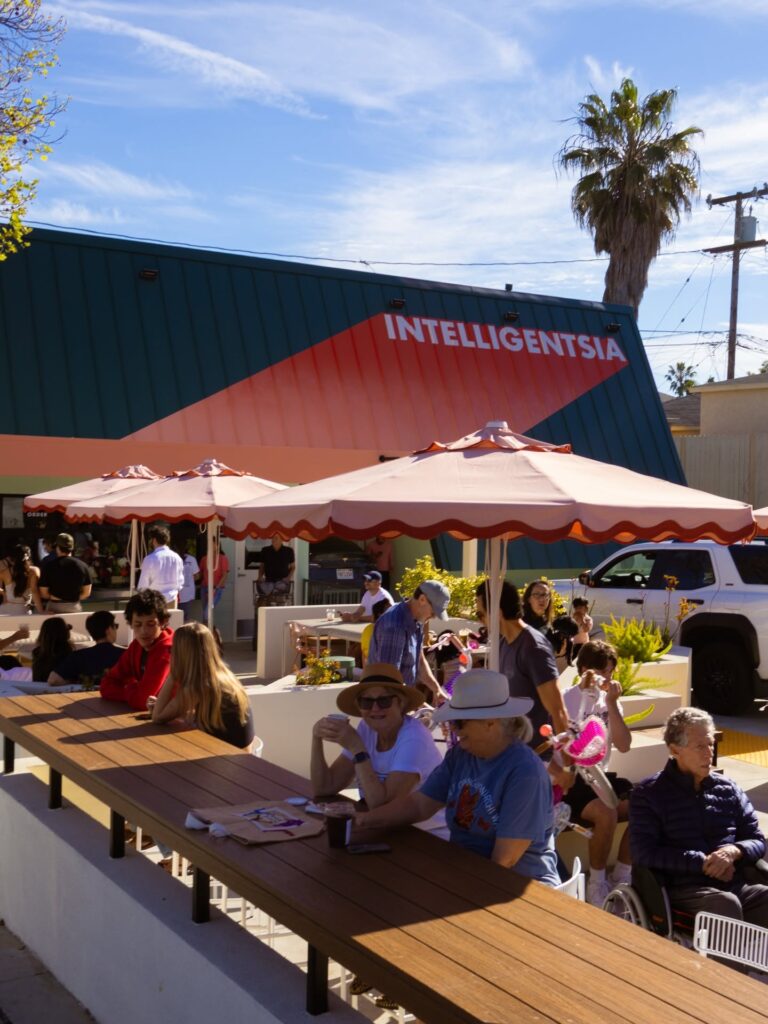
Intelligentsia Coffee, founded in Chicago in 1995 by Doug Zell and Emily Mange, introduced two ideas that would become movement cornerstones. The first was a relentless focus on coffee quality at every stage of the chain — from sourcing to roasting to barista preparation.
The second, and more consequential, was the formalization of direct trade: the practice of a roaster travelling to coffee-producing countries, establishing personal relationships with farmers, and paying prices negotiated directly and transparently rather than through commodity markets or certification bodies. Geoff Watts, Intelligentsia’s head of green coffee sourcing, is widely credited with turning direct trade from a vague ethical aspiration into a concrete, replicable commercial model.
Counter Culture Coffee, also founded in 1995 in Durham, North Carolina, by Brett Smith and Fred Houk, distinguished itself through an extraordinary commitment to transparency and education. Counter Culture was among the first specialty roasters to publish detailed annual transparency reports documenting the prices it paid to producers, the names and locations of its sourcing partners, and its environmental metrics.
It also invested heavily in barista training, establishing training centers in multiple cities and producing educational materials that helped raise the professional standard of café work across the industry. Counter Culture’s approach modeled what it meant to take institutional accountability seriously.
Stumptown Coffee Roasters, founded in Portland, Oregon, in 1999 by Duane Sorenson, became the movement’s most publicly visible early institution. Sorenson brought a rock-and-roll intensity to specialty coffee — personal, passionate, and relentlessly quality-focused. He built direct relationships with coffee farmers in Ethiopia, Rwanda, Colombia, and elsewhere, often paying prices dramatically above Fair Trade minimums. Stumptown’s Hair Bender espresso blend and its single-origin offerings became touchstones of the early movement, and its Portland cafés became pilgrimage sites for coffee professionals worldwide.
The Competition Champions
The World Barista Championship (WBC), founded in 2000 and held annually, became one of the Third Wave’s most important institutions — simultaneously a competitive forum, a research conference, and a global stage for new ideas. Its champions were often the people who most visibly advanced the movement’s intellectual frontiers.
James Hoffmann, the British barista who won the WBC in 2007, represented a new archetype: the barista as scientist-communicator. Hoffmann was not merely technically accomplished; he wrote, researched, and articulated the intellectual case for specialty coffee with unusual clarity.
After winning, he co-founded Square Mile Coffee Roasters in London and later became arguably the world’s most influential coffee educator through his YouTube channel, where he translated advanced coffee science — extraction theory, water chemistry, grinder physics, roast profile analysis — into accessible language for millions of viewers worldwide.
Tim Wendelboe, a Norwegian barista and roaster who won the WBC in 2004, became one of the most influential figures in European specialty coffee. His Oslo micro-roastery and café became models of the integrated Third Wave operation: farm-direct sourcing, precise light roasting, and meticulous brewing in a spare, focused environment. Wendelboe has also worked directly with coffee farmers in Ethiopia, Guatemala, and Colombia on processing and agricultural improvements.
Gwilym Davies, the 2009 WBC champion, focused his winning routine on the centrality of water quality to coffee extraction — a then-underappreciated variable that his performance helped bring into mainstream specialty coffee discussion.
Sasa Sestic, the 2015 WBC champion, used his winning routine to introduce anaerobic fermentation — a novel coffee processing technique — to a global audience. His victory is widely credited with triggering an explosion of interest in fermentation as a tool for flavor development, dramatically expanding the range of processing methods the industry now explores and celebrates.
Matt Perger, a multiple WBC finalist, pioneered several now-standard espresso extraction techniques, including insights around puck preparation, distribution, and the relationship between grind size and extraction yield that have shaped how baristas worldwide approach espresso.
The Scientists and Researchers
The Third Wave is unusual among food movements in the degree to which it has actively engaged with scientific research. Several figures at the intersection of chemistry, physics, and coffee craft have had significant influence.
Christopher Hendon, a computational chemist who collaborated extensively with baristas and roasters, produced peer-reviewed academic work on water chemistry and coffee extraction — notably demonstrating that specific mineral compositions in brewing water preferentially extract different flavor compounds, giving café operators a scientific basis for water treatment decisions. His work, including the book Water for Coffee co-authored with Maxwell Colonna-Dashwood, bridged the gap between laboratory science and café practice in a way the industry had never previously seen.
Scott Rao, a coffee consultant and writer, produced a series of books — including The Professional Barista’s Handbook and The Coffee Roaster’s Companion — that became the closest thing the Third Wave has to canonical technical texts. Rao’s meticulous approach to roast profiling, extraction mathematics, and brewing science helped professionalize both roasting and barista work.
Rob Hoos produced accessible writing on roast development and extraction that helped micro-roasters understand and control their roast profiles with greater precision.
Part III: What the Third Wave Was About
The Philosophy
The Third Wave was built on a set of interlocking philosophical commitments that, taken together, amounted to a comprehensive critique of how the world’s second-most-traded commodity (after oil) had been grown, processed, traded, roasted, and consumed.
The first commitment was to coffee as an agricultural product with intrinsic flavor character — character that originates in the soil, altitude, rainfall, variety, and processing of the farm, and that is the roaster’s and barista’s job to reveal rather than mask. This stood in direct contrast to the industrial model, in which coffee’s inherent variation was treated as a problem to be overcome through dark roasting (which homogenized flavor) and blending (which averaged out differences).
The second commitment was to traceability. A Third Wave coffee should have a name — a farm, a region, a producer — not merely a commercial label. Knowing where coffee comes from was treated as both an ethical imperative and a quality indicator. An anonymous blend from unnamed origins could not be held accountable for its quality or its impact on the people who grew it.
The third commitment was to direct relationships. The Third Wave sought to collapse the long, opaque supply chain between coffee farmer and coffee consumer — a chain that, in commodity markets, typically saw most of the value accumulate at the trading, roasting, and retail ends while the farmer received a tiny fraction of the final price. Direct trade, long-term sourcing partnerships, and farm visits were not merely sourcing strategies; they were expressions of a values commitment.
The fourth commitment was to craft during the preparation stage. If exceptional green coffee was being sourced and carefully roasted, it deserved to be prepared with equal care. The Third Wave raised the bar for barista knowledge and skill — expecting that a professional barista would understand extraction chemistry, grinder calibration, water quality, brew ratios, and sensory evaluation at a level that had previously been found only among scientists and specialists.
What It Was Meant to Achieve
The Third Wave’s goals were simultaneously economic, ethical, cultural, and culinary.
Economically, it sought to redirect value toward quality-producing farmers by paying premium prices that rewarded exceptional coffee and incentivized improvement. The argument was that commodity markets systematically undervalue quality — paying the same or nearly the same for excellent coffee as for mediocre coffee — destroying the incentive to produce better. Direct trade and specialty market premiums were meant to fix this misalignment.
Ethically, it sought to make the coffee trade more transparent and fair — not through certification bureaucracy but through personal accountability. A roaster who knew a farmer by name, who had visited their farm, who had agreed a price before the harvest, was accountable in a way that no anonymous commodity transaction could be.
Culturally, it sought to elevate the status of coffee in the culinary hierarchy — to give it the same serious attention that wine, cheese, chocolate, and other artisanal foods received. Part of this was consumer education: teaching people to taste coffee attentively, to appreciate acidity, sweetness, body, and aftertaste as positive qualities rather than defects to be masked with milk and sugar.
Culinarily, it sought quite simply to make coffee taste better — to unlock the extraordinary range of flavors that the coffee plant is capable of producing when grown, processed, roasted, and brewed with care.
Part IV: What the Third Wave Involved
The Sourcing Revolution
At the supply end, the Third Wave transformed how specialty roasters sourced green coffee. The dominant pre-Third Wave model involved roasters purchasing through commodity brokers or importers who aggregated coffee from multiple sources, often without detailed information about origin or quality.
Third Wave roasters replaced this with direct engagement: travelling to coffee-producing countries, visiting farms, meeting farmers and cooperative leaders, evaluating green coffee samples, and negotiating prices based on quality and personal relationship rather than market indices. This required significant investment of time and resources — and a fundamental willingness to think of sourcing as a relationship rather than a transaction.
The Cup of Excellence (CoE) program, launched in 1999 in Brazil by the Alliance for Coffee Excellence, became one of the movement’s most important sourcing institutions. The CoE holds national competitions in participating countries, with panels of trained Q Graders evaluating hundreds of submitted lots through multiple rounds of cupping. Winning lots — those scoring above 87 points — are offered for international online auction, with the results publicly published. The CoE created transparent price signals for quality at the farm level, incentivizing producers to pursue excellence and enabling roasters to identify and purchase exceptional coffees with verified quality scores.
The Roasting Revolution
Third Wave roasting philosophy represents a fundamental break from what preceded it. The shift from dark to light roasting was not merely aesthetic — it reflected a completely different theory of what roasting should accomplish.
In the dark roasting model, heat is applied aggressively and for extended periods, driving pyrolysis deep into the bean and producing flavors dominated by caramelization, carbon, and bitterness. The bean’s original character is largely obliterated; the result tastes primarily of the roasting process itself. This makes commercial sense when working with lower-quality green coffee — dark roasting is an effective way to mask defects — but it defeats the purpose when the green coffee is exceptional.
Third Wave roasters take a different approach. The goal is to apply precisely enough heat to develop the bean’s inherent sugars and aromatic compounds through the Maillard reaction — the chemical browning process that creates complexity — while stopping well short of the pyrolysis that destroys origin character. This typically means roasting to a light or medium-light profile, ending around or shortly after first crack (the audible fracturing of the bean at approximately 195–205°C).
The development of data-logging software — tools such as Cropster and Artisan that allow roasters to track and record the precise temperature curve of every roast batch — transformed roasting from an intuitive craft into a reproducible, analyzable science. A roaster could now compare roast profiles across batches, identify the precise moments that produced different flavor outcomes, and systematically improve.
Degassing — the release of CO₂ from roasted beans in the days following roasting — became a subject of serious attention. Third Wave roasters and baristas developed a detailed understanding of how degassing affects extraction: beans that have not adequately degassed repel water during brewing, producing uneven, underextracted results. The concept of rest time after roasting — waiting for adequate degassing before brewing — became standard practice, with different recommended windows for different brewing methods.
The Brewing Revolution
In the café, the Third Wave transformed both what was brewed and how it was prepared.
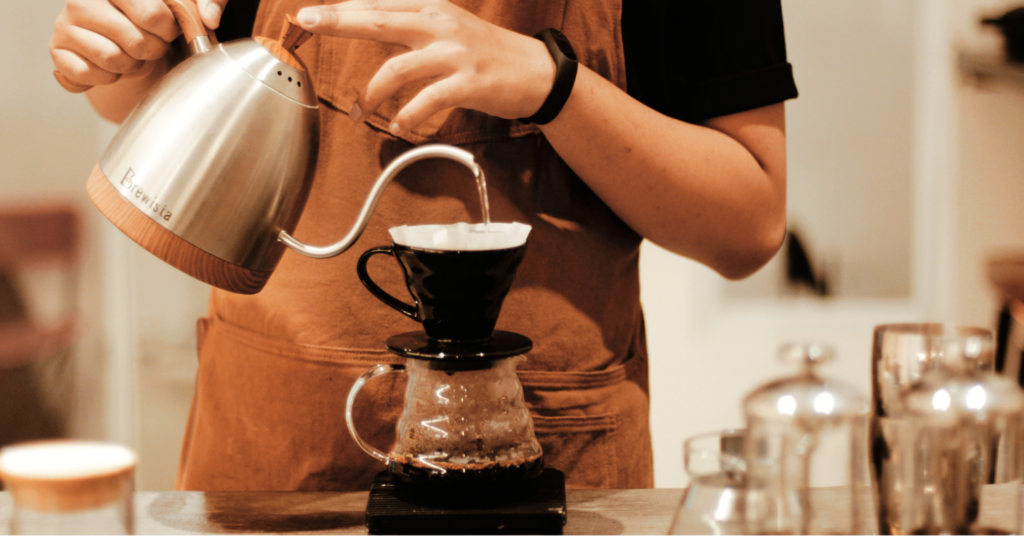
Pour-over brewing — manual preparation using devices such as the Hario V60, Chemex, and Kalita Wave — became the emblematic preparation method of Third Wave cafés. Its appeal was philosophical as much as practical: pour-over requires the barista to be present and attentive throughout the brew, making visible the craft and knowledge that go into preparation. It is slow, individual, and demonstrably intentional — everything that a button-press drip machine is not.
Espresso preparation was also radically reimagined. Third Wave baristas introduced the practice of weighing both the dose (the amount of ground coffee) and the yield (the amount of liquid espresso produced) in real time, using precise brew ratios to target specific extraction yields calculated with a refractometer. Pressure profiling — varying the water pressure during an espresso extraction to optimize flavor development — became an advanced tool of serious espresso practitioners.
The AeroPress, invented in 2005 by American engineer Alan Adler, became a beloved Third Wave brewer precisely because of its versatility and accessibility. Inexpensive, portable, and forgiving, it allowed both professional baristas and home enthusiasts to experiment with variables and produce excellent coffee without expensive equipment.
Grinder technology received unprecedented attention. The insight that grind consistency — the uniformity of particle size in ground coffee — is arguably as important as any other brewing variable led to significant investment in high-quality burr grinders. The distinction between blade grinders (which produce wildly inconsistent particle sizes, leading to uneven extraction) and burr grinders (which crush beans between precisely calibrated surfaces, producing consistent particle size distributions) became widely understood even among home coffee enthusiasts.
Water chemistry became a serious subject of study and practice. The insight, formalized by Christopher Hendon and others, that mineral content in brewing water directly affects which flavor compounds are preferentially extracted — and therefore affects the final cup profile significantly — led Third Wave cafés to invest in water treatment systems, reverse osmosis equipment, and mineral dosing protocols.
Part V: Did It Achieve Its Goals?
The Successes
By most measures, the Third Wave achieved extraordinary things. The quality of coffee available to consumers in cities across the developed world improved dramatically and measurably over the two decades following the movement’s emergence. The range of flavor profiles accessible in a good specialty café — from the sparkling citrus acidity of a washed Ethiopian Yirgacheffe to the dark chocolate richness of a natural Sumatran to the perfumed complexity of a Panamanian Gesha — expanded beyond what most consumers had previously imagined possible in a cup of coffee.
Farmers who engaged with Third Wave roasters through direct trade relationships received prices significantly above commodity market rates — in many cases two, three, or more times the C price. The Cup of Excellence auctions created transparent quality signals and direct economic rewards for exceptional producers, incentivizing investment in farm quality and processing infrastructure. There are documented cases of coffee farms in Ethiopia, Colombia, Guatemala, and elsewhere that transformed their economic circumstances through specialty market engagement.
Barista work was profoundly elevated as a profession. The World Barista Championship and associated global competition circuit created an international community of highly skilled, intellectually serious coffee professionals who advanced the craft collectively. The SCA’s Coffee Skills Program provided a structured educational pathway. The emergence of barista educators, coffee consultants, and specialty coffee media created an ecosystem of knowledge-sharing that raised standards broadly.
Consumer knowledge about coffee increased substantially. Millions of people who previously knew only that they liked or disliked coffee now understood the difference between washed and natural processing, could discuss origin character, appreciated freshness and proper storage, and made active choices about where and from whom they purchased coffee. This was a genuine cultural achievement.
The Shortcomings
Just like the First and the Second Waves, the Third Wave has also been honestly assessed by its own participants and critics as falling short in significant respects.
Reach into the mainstream was limited. Despite the movement’s cultural influence and media coverage, specialty coffee remained a relatively small fraction of total coffee consumption by volume even at its peak cultural influence. The majority of coffee consumed globally continued to be commodity-grade, heavily dark-roasted, and anonymously sourced. The Third Wave changed the premium end of the market profoundly; its impact on the mass market was far more modest.
Economic benefits to farmers were unevenly distributed. The direct trade model, for all its genuine achievements, reached only a tiny fraction of the world’s coffee farmers — primarily those with relatively large, well-organized operations, who could reliably produce consistently high-quality lots, speak English, host visiting roasters, and navigate the demands of international specialty buyers.
The vast majority of smallholder coffee farmers — who grow the majority of the world’s coffee on plots of less than five hectares, often without access to roads, processing equipment, or market information — were largely untouched by Third Wave premiums. Some critics argued that the movement’s emphasis on exotic rarities (expensive Geshas, limited naturals, micro-lot experiments) distracted from the more urgent task of improving prices and conditions for ordinary coffee farmers growing ordinary coffees.
Accessibility and elitism. The Third Wave’s premium pricing, specialized vocabulary, and aesthetic seriousness created real barriers to participation for many consumers. A single-serve pour-over in a Third Wave café might cost three or four times what a cup of comparable volume costs at a mainstream chain.
The culture of the Third Wave café — spare, minimalist, knowledgeable, sometimes deliberately austere — was experienced by many potential customers as unwelcoming. Critics, including some within the movement, noted that Third Wave spaces tended to be predominantly white and middle-class, in both their staff and their clientele, and that this represented both a missed commercial opportunity and an ethical failure for a movement that claimed solidarity with coffee-growing communities in the Global South.
Part VI: The Controversies
Direct Trade vs. Certification
One of the movement’s most persistent internal debates concerned direct trade versus established certification programs like Fair Trade.
Direct trade advocates argued that certification schemes were bureaucratic, expensive for producers to maintain, insufficiently quality-focused, and prone to gaming — and that a genuine personal relationship between roaster and farmer was more accountable and more beneficial than a paper certification. Many direct trade roasters could demonstrate that they paid prices significantly above Fair Trade minimums.
Fair Trade defenders countered that direct trade was an unregulated term that any roaster could use without accountability; that personal relationships depended on the individual ethics of particular roasters and could not be verified by consumers; and that Fair Trade’s collective, cooperative model provided benefits — democratic governance structures, community funds, stable advance pricing — that direct trade did not. They also noted that direct trade tended to benefit the most commercially sophisticated and best-connected producers, while Fair Trade cooperatives often reached more marginal farmers.
The debate was never resolved. What emerged instead was a more pluralistic landscape in which the more rigorous specialty roasters increasingly combined elements of both — maintaining direct relationships while also supporting certification where appropriate to producer circumstances.
The Acquisition Question
The Third Wave built its identity around independence, craft, and values-based business. This made the acquisitions of its flagship institutions by large corporations a flashpoint of significant controversy.
Stumptown Coffee Roasters was acquired by Peet’s Coffee in 2015. At the time, Peet’s was itself partly owned by a German coffee conglomerate. The specialty coffee community’s reaction was sharply divided. Some argued that the acquisition gave Stumptown resources to maintain quality at a greater scale and that nothing fundamental had changed. Others saw it as the inevitable co-option of an independent movement by the very commercial forces it had defined itself against — and pointed to subsequent changes in sourcing practices and product quality as evidence.
Blue Bottle Coffee’s sale to Nestlé in 2017, in which the Swiss food giant acquired a majority stake, was even more intensely debated. Nestlé is among the world’s largest commodity coffee companies and has historically represented everything the Third Wave stood against. Blue Bottle’s founder, James Freeman, insisted the company’s values and independence would be preserved. Critics were skeptical, and many in the specialty coffee community viewed the transaction as a straightforward commercial capitulation.
These acquisitions raised fundamental questions the movement has never fully answered: Can Third Wave values survive at commercial scale? Is independence a structural requirement for quality and ethics, or merely a biographical accident of the movement’s origins? Can large corporations genuinely adopt the sourcing philosophy and craft commitments of specialty coffee, or do their scale and profit requirements inevitably compromise them?
Light Roasting Dogmatism
The Third Wave’s strong preference for light roasting became, in the eyes of some critics, an ideological rigidity rather than a principled quality commitment.
The internal critique — voiced increasingly by experienced roasters and baristas within the movement — was that light roasting had become fetishized to the point where roasters were producing underdeveloped, sour, grassy coffees in the name of origin preservation, and that the dogmatic rejection of dark roasting had led to condescension toward consumers who simply preferred a richer, less acidic cup. The argument was not that dark roasting was better, but that roast level should be determined by what best serves a specific coffee and a specific preparation context, not by ideological allegiance.
This debate also surfaced cultural tensions. Dark roasting traditions — Italian espresso culture, French café culture, and the coffee preferences of many communities of color in the United States — were sometimes dismissed or belittled in Third Wave discourse with a condescension that critics found revealing. The implicit suggestion that consumers who preferred dark-roasted coffee simply needed education to appreciate lighter profiles was experienced by many as cultural imperialism dressed up as connoisseurship.
The Milk Question
A related controversy concerned the Third Wave’s ambivalent relationship with milk-based espresso drinks. For much of the movement’s early phase, the dominant culture of serious Third Wave cafés prized black coffee — pour-over, filter, black espresso — and regarded milk as something that masked rather than complemented coffee flavor.
This created real tensions with how most consumers actually preferred to drink coffee. Lattes and cappuccinos remained the dominant sales drivers in virtually every café, including the most serious specialty operations. The movement’s occasional disdain for milk-based drinks and for consumers who ordered them was widely noted and widely resented.
In time, a more mature position emerged: that the preparation of milk-based drinks was itself a craft — requiring skill in steaming, texturing, temperature control, and latte art — and that a well-made flat white or cortado with excellent espresso and correctly textured milk was as legitimate an expression of Third Wave values as a pour-over.
Gentrification
The Third Wave café became, in many cities, an index of neighborhood gentrification — a first-arrival marker of the displacement of lower-income, often minority communities by higher-income, often white newcomers. This association was not coincidental. Third Wave cafés typically required premium retail rents, targeted an affluent clientele, and physically embodied an aesthetic associated with a particular demographic.
The political and social discomfort this created was widely discussed. The movement that claimed ethical solidarity with coffee farmers in the Global South was simultaneously, in its retail dimension, an agent of displacement in urban communities of color in the Global North. Some Third Wave entrepreneurs and commentators engaged seriously with this contradiction; others dismissed it as irrelevant to their project. It remains an unresolved tension.
Cultural Appropriation and Credit
The Third Wave built much of its flavor vocabulary, sourcing enthusiasm, and aesthetic inspiration around coffee-producing cultures — Ethiopian coffee ceremony traditions, Yemeni qishr culture, Guatemalan smallholder farming heritage — while those cultures’ economic beneficiaries were often far removed from the premium margins the movement generated.
Critics noted that Third Wave marketing and storytelling frequently romanticized origin cultures and farming communities in ways that positioned them as picturesque backdrops to a narrative whose commercial value accrued primarily in wealthy consumer countries. The farmers whose faces appeared on coffee bags and websites rarely had meaningful equity in the roasting and retail businesses that traded on their stories.
Part VII: The Misunderstandings
“More Expensive Means Better”
One of the most common misunderstandings of Third Wave principles — and one the movement itself sometimes encouraged — was the conflation of price with quality. As specialty coffee premiums became widely understood, a secondary market emerged of high-priced coffees that traded on Third Wave aesthetics and vocabulary without the underlying quality to justify them. Minimalist packaging, farm-named single origins, and claims of direct trade became marketing tools deployable independently of actual sourcing rigor or roasting quality.
The result was consumer confusion and, in some cases, exploitation. A coffee that costs $30 for 250g is not automatically better than one that costs $15; it may reflect genuine premiums paid to exceptional producers, or it may reflect brand positioning, packaging design, and retail location.
“Black Coffee Is Always Better”
The Third Wave’s valorization of black coffee as the authentic expression of coffee’s flavor was frequently misunderstood as a prescriptive rule rather than a flavor argument. The actual position — that high-quality single-origin coffee brewed with care has sufficient complexity and sweetness to be enjoyed without milk or sugar, and that appreciating it without additions allows access to its full range of character — was reasonable but became, in its popular reception, a form of coffee gatekeeping.
This misunderstanding caused real harm to Third Wave culture by making it feel exclusionary and judgmental to the millions of people who prefer their coffee with milk, sugar, or both — preferences that are entirely legitimate and that in no way indicate an unsophisticated palate.
“Light Roast Means Weak Coffee”
Among mainstream consumers unfamiliar with Third Wave principles, light roasting was persistently misunderstood as producing weak or under-brewed coffee. This confusion arises from the visual association between a dark brew color and strength — itself a legacy of over-extracted, poorly prepared dark-roasted coffee.
In fact, light-roasted coffee brewed correctly typically produces a beverage of comparable or greater TDS and caffeine content to its dark-roasted equivalent. Its flavor is not weak but different: brighter, more acidic, more aromatic, and more varied. The perception of weakness often reflects unfamiliarity with these flavor characteristics rather than an actual deficiency in the brew.
“Direct Trade Is Always Ethical”
The marketing power of the direct trade concept led to widespread misuse. Because the term was never formally defined, standardized, or audited, any roaster could claim a direct trade relationship without accountability. Some did so with genuine sourcing partnerships that delivered real benefits to producers; others used it loosely to describe single purchasing visits or relationships mediated by importers.
Consumers who assumed that a “direct trade” label on a coffee bag guaranteed specific ethical outcomes — higher prices to farmers, long-term relationships, quality feedback — were sometimes misled. The lack of a credible independent standard for direct trade remains a structural weakness of the Third Wave sourcing model.
“Specialty Coffee and Third Wave Are the Same Thing”
The terms “specialty coffee” and “Third Wave coffee” are often used interchangeably, but they are distinct. Specialty coffee is a quality designation — any coffee that scores 80 points or above on the SCA 100-point scale qualifies as specialty grade, regardless of how it is sourced, roasted, or sold. The Third Wave is a broader cultural and values-based movement that uses specialty coffee quality as its material foundation but adds philosophical commitments about sourcing transparency, direct trade, craft preparation, and consumer education that are not inherent to the specialty designation itself.
A large commercial roaster could theoretically source, roast, and sell specialty-grade coffee without embodying any Third Wave values. Conversely, a small Third Wave operation committed to direct trade and craft roasting might, on any given batch, produce a coffee that falls below the 80-point threshold by cupping standards. The concepts overlap substantially but are not synonymous.
Part VIII: Legacy and Significance
What It Changed Permanently
Certain changes catalyzed by the Third Wave appear irreversible regardless of what cultural phase follows:
The vocabulary and tools of coffee evaluation — cupping, Q Grading, extraction yield measurement, brew ratio calculation — are now standard professional practice across the industry globally. The professional barista as a skilled, knowledgeable practitioner is now an established category. Single-origin and farm-named coffees are now offered even by large commercial roasters who would never describe themselves as Third Wave — evidence that the sourcing transparency norm has migrated into mainstream practice. Light and medium roasting of high-quality Arabica is now commercially accepted even in markets that previously preferred only dark roasts.
Perhaps most durably, the economic case that quality in coffee can command meaningful price premiums — that there is a viable and growing market for coffee that costs more because it is genuinely better — has been conclusively demonstrated. This may ultimately be the Third Wave’s most significant contribution: proving that the race to the bottom in coffee pricing was not inevitable, and that consumers, given the opportunity to taste the difference, would pay for quality.
Where It Fell Short
The Third Wave did not fundamentally transform the economics of coffee farming for the majority of the world’s coffee producers. The commodity market, with its price volatility and structural disadvantage for smallholder farmers, remains dominant. Climate change continues to threaten the coffee belt, and the movement’s engagement with this challenge has been more aspirational than systemic.
The cultural accessibility problem was never solved. Specialty coffee remains significantly less diverse in its consumer base, workforce, and ownership than the global coffee-growing communities it claims to honor.
The Ongoing Conversation
The Third Wave is perhaps best understood not as a completed movement but as an ongoing argument — about quality, ethics, culture, and commerce — that the global coffee industry is still having with itself. Its core insight, that coffee deserves to be taken seriously as an agricultural product and a craft, appears durable. The specifics of how to honor that insight — in sourcing, roasting, preparation, pricing, and community — continue to evolve.
The movement gave the world better coffee. It gave farmers more money, at least some of them. It gave baristas a professional identity. It gave consumers a vocabulary for what they were tasting. Whether it gave the coffee world a fully coherent and equitable vision of itself is a question its inheritors are still working to answer.
See Also
- First Wave of Coffee
- Second Wave of Coffee
- Fourth Wave of Coffee
- Fifth Wave of Coffee
- The Coffee Belt
- Coffee Flavors
- The Coffee Flavor Wheel
Reference Archive
- George Howell: Roasting Philosophy Since 1975 – Documentation of the light-roast “terroir” approach developed at The Coffee Connection, which served as a precursor to the modern Third Wave.
- Trish Rothgeb: Norway and Coffee (The Flamekeeper, 2003) – The influential essay that first framed the coffee industry’s growth through the lens of social “waves.”
- SCA Specialty Coffee Standards (80+ Point Scale) – Technical definition of the 100-point grading system used to distinguish commercial coffee from specialty lots.
- VST Precision: Refractometry & Extraction Science – Specifications for the coffee refractometer, a critical Third Wave tool for measuring Total Dissolved Solids (TDS).
- Hario V60: Physics of the 60-Degree Cone – An analysis of the spiral rib design and its impact on degassing and flow rate during manual extraction.
- Timothy J. Castle: The 1999 Third Wave Origin – Historical evidence of the term’s first appearance in Tea & Coffee Asia, providing earlier context than the 2003 Rothgeb article.
- Peet’s Coffee: Stumptown and Intelligentsia Consolidation (2015) – Corporate records detailing the acquisition of two “Big Three” roasters, signaling the movement’s transition to large-scale market influence.
- James Hoffmann: Square Mile and the London Scene – Insights into how the 2007 World Barista Championship victory catalyzed the UK’s shift toward specialty coffee.
- Jonathan Gold: Defining the Third Wave (LA Weekly, 2008) – The Pulitzer-winning critic’s review that introduced “coffee connoisseurship” to a mainstream culinary audience.
- Verve Coffee Roasters: Farmlevel Sourcing Model – An exploration of the “Farmlevel” philosophy, emphasizing the direct relationship between roaster and producer.
- Nestlé: Blue Bottle Coffee Majority Stake Acquisition (2017) – Press release documenting the entry of global conglomerates into the artisanal Third Wave sector.
- Cup of Excellence: Economic Sustainability in Specialty Coffee – Technical data on the international auction system that enabled small-lot farmers to bypass commodity pricing.
- NPR: The Rise of Barista Competitions (2005) – Early radio coverage that highlighted the professionalization and “rockstar” status of modern baristas.
- Counter Culture Coffee: Sustainable Sourcing Reports – Transparency data focusing on environmental impact and long-term farm relationships in the specialty sector.
- Scott Rao: The Roaster’s Companion Technical Data – Scientific benchmarks for roast curves and thermal stability required for Third Wave flavor profiles.
- Auber Instruments: PID Controller Implementation – Technical specs for the temperature stability modules used to upgrade manual espresso machines for consistency.
- La Marzocco: Evolution of the Linea PB – Engineering details on the machine that became the technical standard for high-volume Third Wave cafes.
- Philz Coffee: Custom Grind & Drip Methodology – A look at an alternative Third Wave model focused on individualized drip brewing rather than espresso.
- Melbourne Coffee Capital: Regional History & Statistics – Data on the high density of specialty cafes in Australia and their global influence on the “Flat White” culture.
- Slayer Espresso: Flow Profiling & Extraction Control – Documentation on the needle-valve technology that allowed Third Wave baristas to manipulate extraction pressure manually.
Article prepared by the Roastopedia Team, encyclopedic content series.