
Selective picking, also referred to as hand picking or selective harvesting, is a coffee harvesting method in which trained workers move through a plantation and remove, by hand, only those cherries that have reached full physiological maturity, leaving all unripe and overripe fruit on the branch for subsequent passes.
The technique is widely regarded within the specialty coffee trade as the harvesting method most closely associated with cup quality, a view expressed by practitioners and researchers alike, though it carries high cost and labor implications that make it impractical in many production contexts.
According to the National Coffee Association (NCA), pickers conducting selective harvesting typically return to the same trees at intervals of eight to ten days throughout the harvest season, making multiple rotations over several weeks as successive cherries ripen.
The Specialty Coffee Association (SCA) has identified cherry selection at harvest as one of the foundational variables determining cup quality, holding that downstream processing is unable to fully compensate for defects introduced by the inclusion of immature or degraded fruit.
Historical Background
Industry historians and researchers broadly agree that hand-based selective harvesting represents the oldest documented form of coffee cherry collection. According to the Encyclopædia Britannica, coffee plants were first cultivated in Yemen in the fifteenth century, having originated in the highland forests of Ethiopia, and the earliest records of harvesting describe the manual collection of ripe fruit — a practice consistent with the principles of selective picking as understood today.
Lincoln & York, a coffee trading company with published research on harvesting practices, notes that, historically, selective harvesting has been regarded as the preferred method in most producing countries, with prominent exceptions occurring only when agronomic and economic conditions of large-scale production prompted a shift toward less selective methods.
The Fair Trade movement, which gathered momentum from the 1970s onward, drew renewed attention to the labor conditions of the workers whose manual skill underpins selective harvesting, and advocacy organizations have since linked the livelihood of hand-pickers to the premiums commanded by selectively harvested, specialty-grade coffee.
Method and Operational Practice
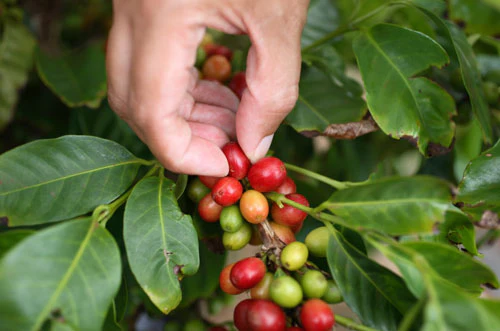
In its standard form, selective picking requires harvesters to visually and tactilely assess each cherry on a tree before removal. According to the Agriculture Institute, ripe coffee cherries are typically deep red or, in certain cultivars such as Yellow Bourbon, yellow or orange in coloration.
The cherries are firm to the touch but yield slightly under light pressure, and they contain the highest concentration of fermentable sugars, which researchers and cuppers alike associate with the sweetness, body, and complexity of the resulting beverage.
Pickers are trained to leave green, underripe cherries — which researchers note produce sour and astringent flavor compounds — as well as overripe cherries that have begun to ferment on the branch, introducing undesirable off-tastes.
In selective picking, an experienced picker conducting selective harvesting is capable of collecting approximately six to seven baskets per working day. Growers targeting the specialty coffee market are noted in the same source to specifically instruct pickers to avoid immature green berries, as the seeds within unripe fruit are not fully formed.
Agriculture Institute further observes that some farms incentivize quality by compensating pickers on the basis of the weight of cherries collected, noting that ripe cherries are heavier than underripe ones, a structural incentive that tends to encourage selective behavior among the workforce.
Pickers conducting selective rounds also perform an informal monitoring function on the health of the plantation: because workers must examine each branch closely, they are positioned to observe and report early indicators of plant disease, fungal infection, pest damage, and branch deterioration.
This incidental quality-control function is cited by some producers as an additional argument in favor of selective harvesting beyond its direct impact on cherry maturity at collection.
Cherries should be collected in clean, washed receptacles — never in bags previously used to store fertilizers or agrochemicals, as residual contamination may introduce off-flavors into the collected fruit.
The FAO further recommends that harvested cherries be submitted to processing on the same day of collection, as mixing freshly picked fruit with that from a prior day creates fermentation risk capable of spoiling an entire batch.
Geographic Distribution
Selective picking is most prevalent in producing regions characterized by steep, mountainous terrain where mechanized harvesting equipment cannot safely or practically operate.
According to the Agriculture Institute, the method is often the only practical option on the steep slopes of Colombia, Ethiopia, Kenya, Guatemala, and parts of Central America — regions whose high-altitude topography is closely associated with the cultivation of premium Arabica varieties.
KimEcopak, a packaging company with published research on global coffee harvesting, reports that farmers in Ethiopia continue to practice selective hand-picking largely on small family-run farms.
The journal says the method is a production structure that has been linked by researchers and trade observers to the distinct, complex flavor profiles — including floral and citrus notes — historically associated with Ethiopian coffees.
Similarly, researchers and industry commentators associate Kenya’s reputation for bright, high-scoring cup profiles in part with the disciplined selective harvesting practices common in that country’s cooperative and estate systems.
In El Salvador, Honduras, and other Central American producing nations, hand-based selective picking is reported by Perfect Daily Grind to remain the dominant harvesting practice across farms of varied sizes, supported by relatively available rural labor and by an orientation toward premium market segments where selective harvesting commands a financial premium.
Quality Implications
The relationship between selective picking and cup quality is a subject of consistent attention in specialty coffee literature. Red, ripe cherries are distinguished from their unripe counterparts by a higher aromatic oil content and a lower organic acid concentration, properties that are described as producing a more fragrant, smoother, and mellower cup profile.
Lots incorporating significant proportions of unripe fruit are, by contrast, characterized in the same source as producing a displeasingly bitter or astringent flavor and a sharp odor.
Selective picking is widely recommended by specialty buyers precisely because strip and mechanical methods tend to introduce underripe and overripe cherries into the harvest stream.
The SCA’s 100-point evaluation framework, under which a minimum score of 80 is required for a coffee to qualify as specialty grade, is widely understood in the industry to favor coffees that have been selectively harvested, as cherry uniformity at the point of collection reduces the sources of sensory defect that trained cuppers identify in the evaluation process.
Headcount Coffee, an industry research publisher, describes selective picking as a system in which precision is concentrated at the harvesting stage itself, contrasting this with strip harvesting, in which variability is permitted to enter the harvest stream and is addressed through subsequent sorting and processing interventions.
It argues that the point at which quality control is applied — whether at harvest or post-harvest — is a fundamental structural distinction between the two philosophies of production.
Economic and Labor Considerations
Selective picking is consistently identified in industry literature as the most costly and labor-intensive of the three principal coffee harvesting methods. According to research compiled by 40 Thieves Coffee, hand-picking is estimated to cost between three and five times more per unit than machine harvesting.
The same source notes that selective harvesting also reduces overall volume per tree by an estimated twenty-five to thirty-five percent compared to non-selective methods, a trade-off that producers argue is offset by the quality premium and the higher green coffee prices associated with a selectively harvested lot.
Labor scarcity is an increasing constraint on selective harvesting even in historically hand-picking-dominant countries.
A researcher quoted in the same publication observes that rural workers in regions such as Minas Gerais, Brazil, increasingly seek urban employment and higher education, reducing the availability of the large, skilled labor pools on which selective harvesting depends.
This demographic shift is noted by industry observers as a structural pressure that may, over time, accelerate adoption of mechanized or strip methods even in markets that have historically favored hand selection.
Despite its cost, producers targeting specialty markets — including those supplying direct trade relationships and certified origins — commonly argue that the financial returns from selectively harvested coffees are enormous.
40 Thieves Coffee, quoted earlier, says that carefully selected coffee may command premiums of fifty to one hundred percent above commodity prices in direct trade arrangements.
Emerging Technologies
Some large-scale operations have begun exploring remote sensing technologies — including drones equipped with multispectral cameras — to assess cherry ripeness across entire plantations, enabling pickers to be directed to areas of peak maturity with greater precision.
Near-infrared spectroscopy is also noted as being investigated as a non-destructive means of analyzing cherry composition, potentially allowing for objective ripeness assessment in the field.
The same source acknowledges, however, that these tools are not yet in common use among smallholder farmers, who constitute the majority of selective picking practitioners globally.
References and Further Reading
- Specialty Coffee Association (SCA) — Standards and Quality Protocols
- National Coffee Association (NCA) — The Lifecycle of Coffee
- Perfect Daily Grind — Hand-Picked vs Mechanized Coffee Harvesting (2017; updated 2022)
- Agriculture Institute — Harvesting Coffee: Best Practices for Maximum Quality (2026)
- Wikipedia (sourced) — Coffee Production
- Encyclopædia Britannica — Coffee Production; History of Coffee
- Lincoln & York — How Is Coffee Harvested? (2024)
- Headcount Coffee — Selective vs Strip Picking Coffee Harvest Explained (2026)
- 40 Thieves Coffee — What Is Specialty Coffee? (2026)
- Food and Agriculture Organization (FAO) — Guidelines on Coffee Harvesting
- KimEcopak — Global Coffee Harvesting: How Coffee Is Harvested Around the World (2024)
- Global Living Wage Coalition — Living Wage Report: Rural Brazil (2016)